
🧭 What to Expect
Ideal for: a cultural weekend in Cosenza Highlight: the Swabian Castle with valley views Don't miss: the Bilotti Open-Air Museum and the Rendano Theatre Practical tip: walk, everything is within reach
Cosenza deserves a stop. It's not just a city to pass through, but a concentration of history, art, and culture that tells centuries of dominations. Start from the Swabian Castle, the city's symbol perched on the hill, with breathtaking views of the Crati valley. Then immerse yourself in the historic center among alleys and noble palaces. Don't miss the Rendano Theatre, a 19th-century jewel, and the Bilotti Open-Air Museum, an open-air modern art gallery along Corso Mazzini. If you love archaeology, the Museum of the Brettii and the Enotri will reveal the city's ancient roots. The National Gallery houses masterpieces from the Middle Ages to the 20th century. And for a dive into the sacred, the Diocesan Museum offers precious religious testimonies. End with a walk in Villa Vecchia, the city's green lung, and visit the Ara dei Fratelli Bandiera for a leap into the Risorgimento. This guide takes you straight to the heart of Cosenza, no fuss.
Overview
- Swabian Castle of Cosenza
- Rendano Theatre: History, Art, and Spectacle
- Bilotti Open-Air Museum: A Dive into Contemporary Art
- National Gallery of Cosenza
- Museum of the Brettii and the Enotri: A Journey into Ancient History
- Diocesan Museum of Cosenza
- Villa Vecchia: A Dive into History and Greenery
- Ara dei Fratelli Bandiera: a corner of history among cypresses and tricolor lights
Itineraries nearby


Swabian Castle of Cosenza
- Via del Castello, Cosenza (CS)
- Open in Google Maps
- View on Google Images
 Perched on Pancrazio Hill at 380 meters above sea level, the Swabian Castle of Cosenza is a must-see for anyone visiting the city. Its origins date back to the Bretii, but the current structure is the result of Norman and Swabian expansions. Roger II fortified it in the 12th century, and Frederick II of Swabia gave it the typical imprint of his castles: a rectangular layout, corner towers, and crenellated walkways. The earthquake of 1184 destroyed it, but it was rebuilt around 1239. Strolling through the halls, you'll notice ribbed ogival vaults, columns with foliage capitals, and the famous "corridor of the fleur-de-lis" with Angevin coats of arms carved into the arches. The surviving octagonal tower, with its narrow arrow slits, is a 13th-century gem. The castle has lived a thousand lives: princely residence for Louis III of Anjou, mint during the Angevin-Aragonese struggles, and political prison under the Bourbons. After a long abandonment, restorations from 2008 to 2015 gave it back to the city. Today it hosts events and exhibitions, and from the upper floor you can enjoy a spectacular view of the Crati Valley and the Sila Mountains. Visiting is easy: Tuesday to Saturday 9:30 AM–6:00 PM, Sunday and holidays 10:00 AM–6:00 PM; full ticket €4, reduced €2. A traveler's tip: come at sunset – the golden light on the tufa walls is magical.
Rendano Theatre: History, Art, and Spectacle
- Go to the page: Teatro Rendano: Perfect Acoustics and Historic Curtain in the Heart of Cosenza
- Salita Carmine Garofalo "Mimmo", Cosenza (CS)
- Open in Google Maps
- View on Google Images
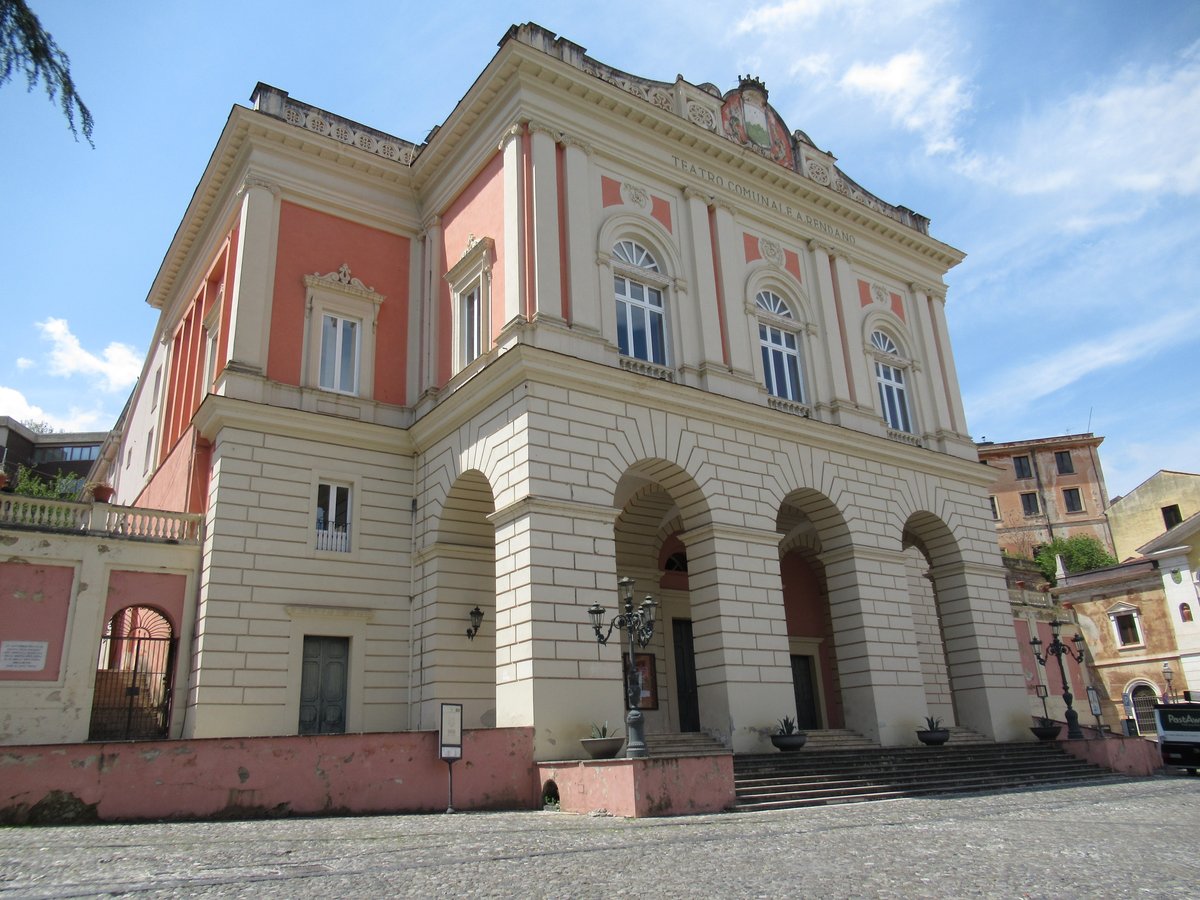 Overlooking Piazza XV Marzo, the Rendano Theatre is much more than a simple performance venue: it is the beating heart of Cosenza's culture. Inaugurated on November 20, 1909 with Verdi's Aida, this theatre has a troubled yet glorious history. During World War I, it was used as a barracks, and in 1943 a bomb destroyed the frescoed ceiling by Enrico Salfi. After reconstruction by architect Ezio Gentile, it reopened on January 7, 1967 with La Traviata. In 1976 it was recognized as a Theatre of Tradition, the only one in Calabria. The interior is a neoclassical jewel: the horseshoe-shaped hall has 800 seats between the stalls (336) and three tiers of boxes (479). The stage is large and well-equipped, with a carpentry workshop and costume atelier. Not to be missed is the historic curtain painted by Paolo Vetri in 1901, depicting the arrival in Cosenza of Louis III of Anjou and Margaret of Savoy. For music lovers, the theatre hosts the Brutia Symphony Orchestra and offers a rich season: opera, dance, drama and concerts. In summer, the program moves outdoors with the Rendano Arena, featuring artists like Loredana Bertè and Cristiano De André. Visiting is easy: you can join guided tours by reservation (cost €1.50) during box office hours (Monday, Wednesday, and Friday). If you're in Cosenza, don't miss this treasure chest of art and history.
Bilotti Open-Air Museum: A Dive into Contemporary Art
- Go to the page: Bilotti Museum Cosenza: 24 Contemporary Sculptures for Free in the Historic Center
- Corso Giuseppe Mazzini, Cosenza (CS)
- Open in Google Maps
- View on Google Images
 Walking along Corso Mazzini, you'll find something unexpected: dozens of modern and contemporary sculptures turning the pedestrian street into an open-air gallery. This is the Bilotti Open-Air Museum (MAB), founded in 2005 thanks to a donation by patrons Carlo and Enzo Bilotti from Cosenza. Today the collection includes over thirty works, declared of historical interest by the Ministry of Culture. The route stretches for about a kilometer, from Piazza dei Bruzi to Piazza Bilotti, featuring masterpieces by 20th-century giants. You'll find Salvador Dalí with his St. George and the Dragon, Giorgio De Chirico with Hector and Andromache and Great Metaphysician, and Amedeo Modigliani with the Head of Caryatid over two meters tall. There are also works by Mimmo Rotella, such as the Wolf of Sila paying homage to Calabria, and the Bronzes of Riace by Sacha Sosno. Admission is free, always open, and at night the sculptures are illuminated, creating a magical atmosphere. An experience that blends art and daily life, perfect for a curious stroll.
National Gallery of Cosenza
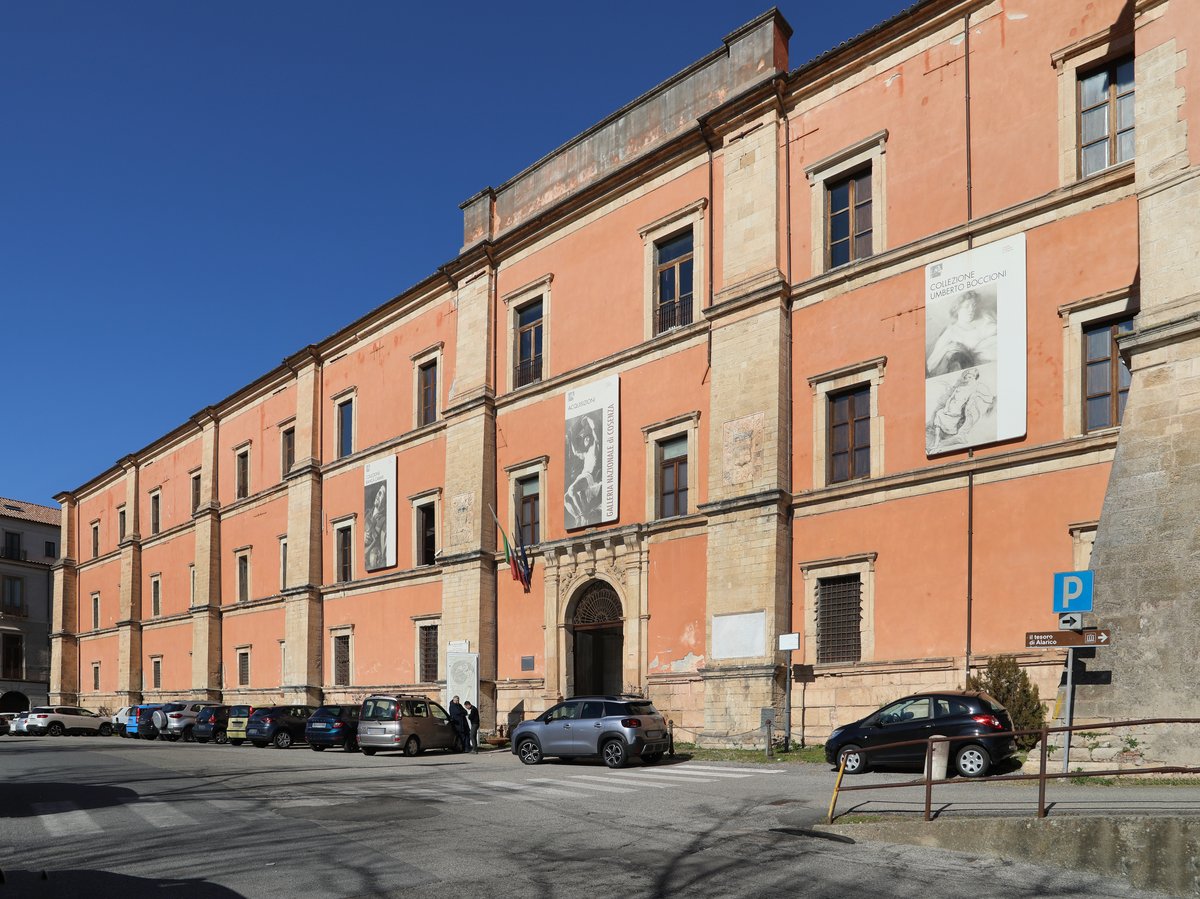 If you're in Cosenza, stop by the National Gallery, housed in the historic Palazzo Arnone (16th century) on Triglio Hill. It's Calabria's most important art gallery, featuring masterpieces from the 16th to the 20th centuries. Highlights include canvases by Mattia Preti – such as *Sophonisba Taking the Poison Cup* – and works by Luca Giordano, Marco Cardisco, and Pietro Negroni. Don't miss the section dedicated to Umberto Boccioni, a Futurist born in Reggio Calabria: here you'll find a bronze copy of *Unique Forms of Continuity in Space* (the same as on the 20-cent coin) and preparatory studies for *The Laugh*. Since 2010, the museum has hosted the Banca Carime/Intesa Sanpaolo collection on loan, with works from the 15th to the 20th centuries, including a *Christ Carrying the Cross* attributed to Lazzaro Bastiani. The tour is enhanced by contemporary sculptures by artists such as Giorgio de Chirico, Mimmo Rotella, and Alfredo Pirri. Admission is free (according to many reports) and the museum is wheelchair accessible. Official hours seem variable: better to check the Facebook page or call 0984 795639 before going. Either way, some rooms offer a beautiful view of the historic center – one more reason to visit.
Museum of the Brettii and the Enotri: A Journey into Ancient History
- Via Vallone di Rovito 3, Cosenza (CS)
- https://www.museodeibrettiiedeglienotri.it/
- Open in Google Maps
- View on Google Images
- museo@comune.cosenza.it
- +39 0984 23303
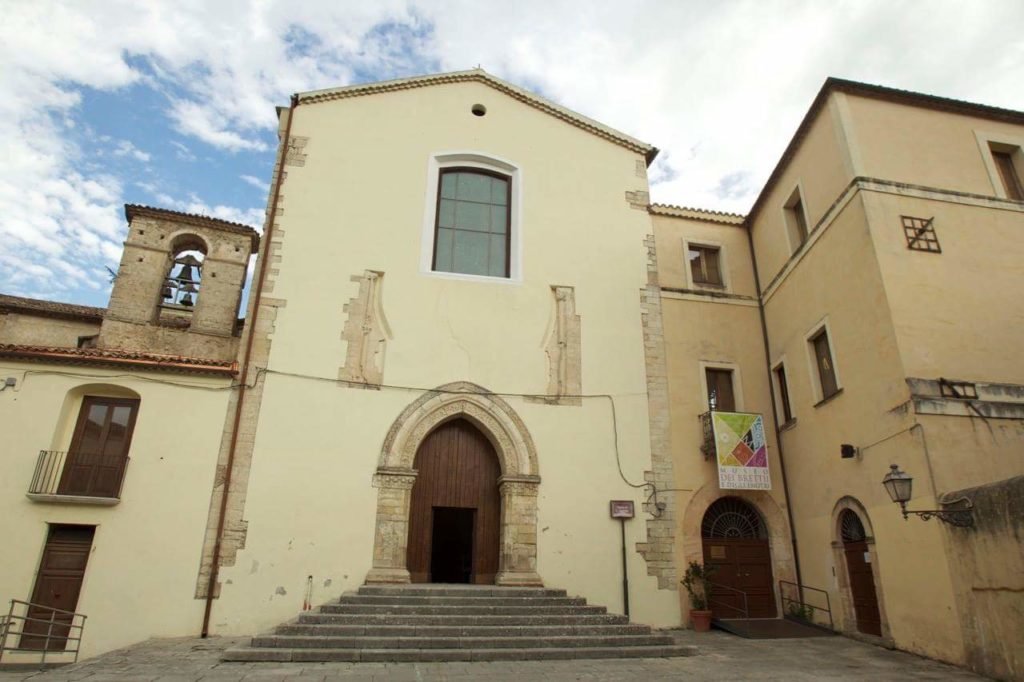 If you're passing through Cosenza, the Museum of the Brettii and the Enotri is worth a stop. Housed in the 15th-century Sant'Agostino complex, it tells the story of Calabria from the Paleolithic to the Romans. The artifacts are well displayed, with colors and symbols distinguishing the different eras. The highlight? The Torre del Mordillo necropolis, with Enotri ceramics and bronze objects. There's also a violin-bow fibula that made me dream. Then you move on to the Greeks, with fragments from the sanctuary of Cozzo Michelicchio, and to the Brettii, who made Cosenza their capital. The Roman artifacts are also beautiful, including a funerary stele. On the second floor, there's a section on the Risorgimento linked to the Bandiera brothers. The museum is accessible, has a bookshop, and organizes concerts. Open Tuesday to Sunday, closed Monday. Admission is 4 euros, reduced 3. A place that makes you understand the stratification of history, without too many frills.
Diocesan Museum of Cosenza
- Corso Bernardino Telesio 16, Cosenza (CS)
- https://www.museodiocesanocosenza.it/
- Open in Google Maps
- View on Google Images
- info@museodiocesanocosenza.it
- 0984 6877 30
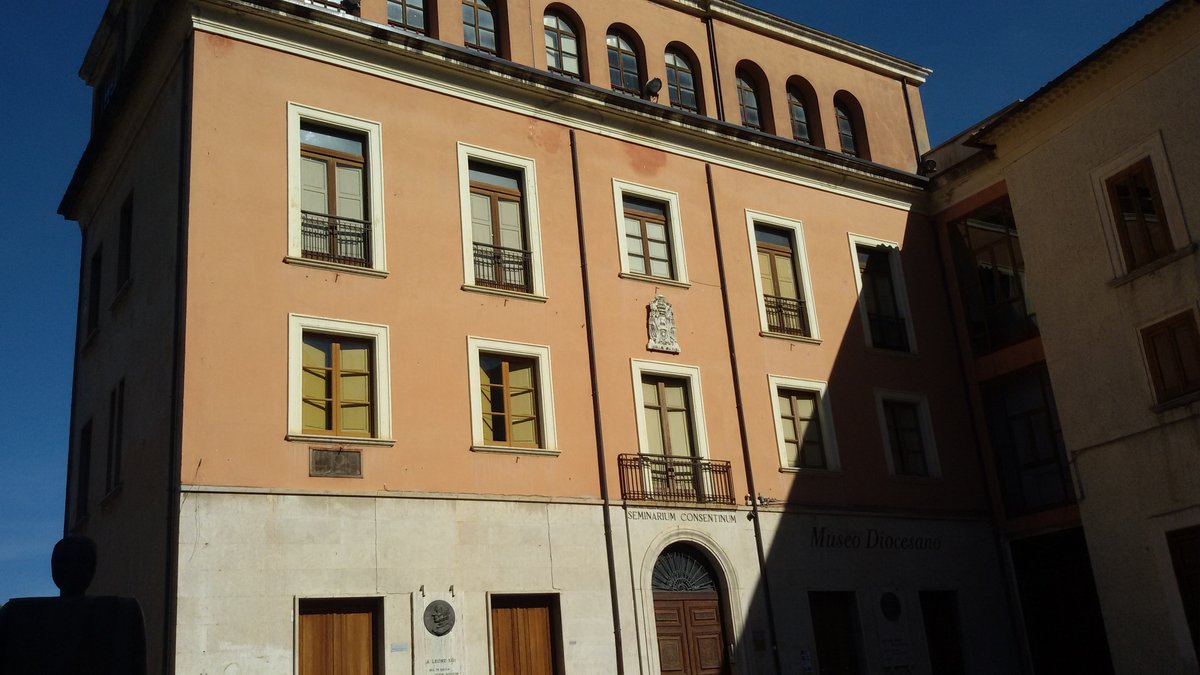 In the heart of Cosenza, right next to the Cathedral, there's a small treasure chest that tells centuries of faith and art: the Diocesan Museum. Opened in 2013 inside the former Diocesan Seminary, it houses works from the cathedral and other churches in the diocese. It's not a huge museum, but every room is full of jaw-dropping pieces. The undisputed star is the Stauroteca, a 12th-century reliquary cross in gold, enamel, and rock crystal. Legend has it that Frederick II of Swabia donated it on the occasion of the cathedral's consecration in 1222. Imperial stuff, indeed. But it doesn't end there: the Polyptych of the Annunciation (1545), attributed to the school of Negroni, is a riot of color and detail. Then there are precious chalices, like the one used by Pope John Paul II during his 1984 visit, and the ivory statuette of St. Sebastian. The art gallery features the Immaculate Conception by Luca Giordano, a Baroque masterpiece worth the visit alone. Curious? The itinerary unfolds across eight rooms, each with a theme: from bishop commissions to sacred vestments, up to the treasure of the Madonna del Pilerio, the city's protector. Admission is free, but hours are flexible: usually open in the morning from Monday to Saturday, while afternoons and Sundays it's best to book. I'd visit it at a leisurely pace, maybe after a trip to the castle: a dive into history that enriches your day.
Villa Vecchia: A Dive into History and Greenery
- Cosenza (CS)
- Open in Google Maps
- View on Google Images
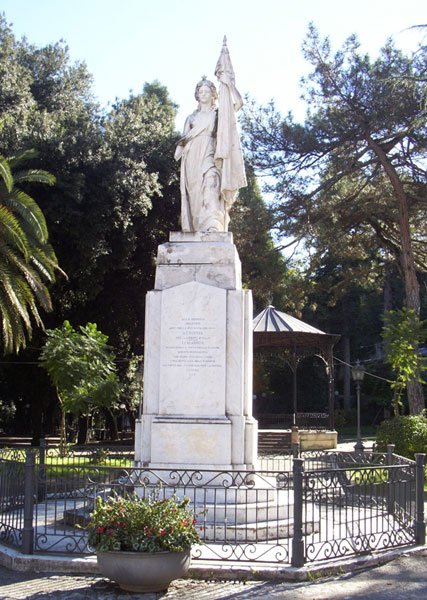 If you stroll through Cosenza Vecchia, you can't miss Villa Vecchia. It is a historic garden that seems to come from another era: born as a walled garden of the Monastery of Santa Maria di Costantinopoli (1711), it became a public park in the 1800s. After a €2.7 million restoration (completed in June 2025), it's more beautiful than ever. 20,000 new plants, brick and river pebble pathways, a renovated kiosk, and – listen up – a statue of the Bather Venus that possibly comes from the 19th-century Fontana Nuova. The highlight? The monument to the martyrs of March 15, 1844 at the entrance, sculpted by Giuseppe Pacchioni. But the real magic lies in the water features: the Fontana del Paradiso, still active, and the tuff stone steps that lead to a breathtaking view of the city. The lighting is discreet – they say so as not to disturb the stars – and in the evening it is enchanting. Free admission, open all year. Ideal for a break among the alleys or for summer events like the Cosenza Summer Fest. In short, a place with soul, rediscovered by the people of Cosenza after years of neglect.
Ara dei Fratelli Bandiera: a corner of history among cypresses and tricolor lights
- Via Vallone di Rovito, Cosenza (CS)
- Open in Google Maps
- View on Google Images
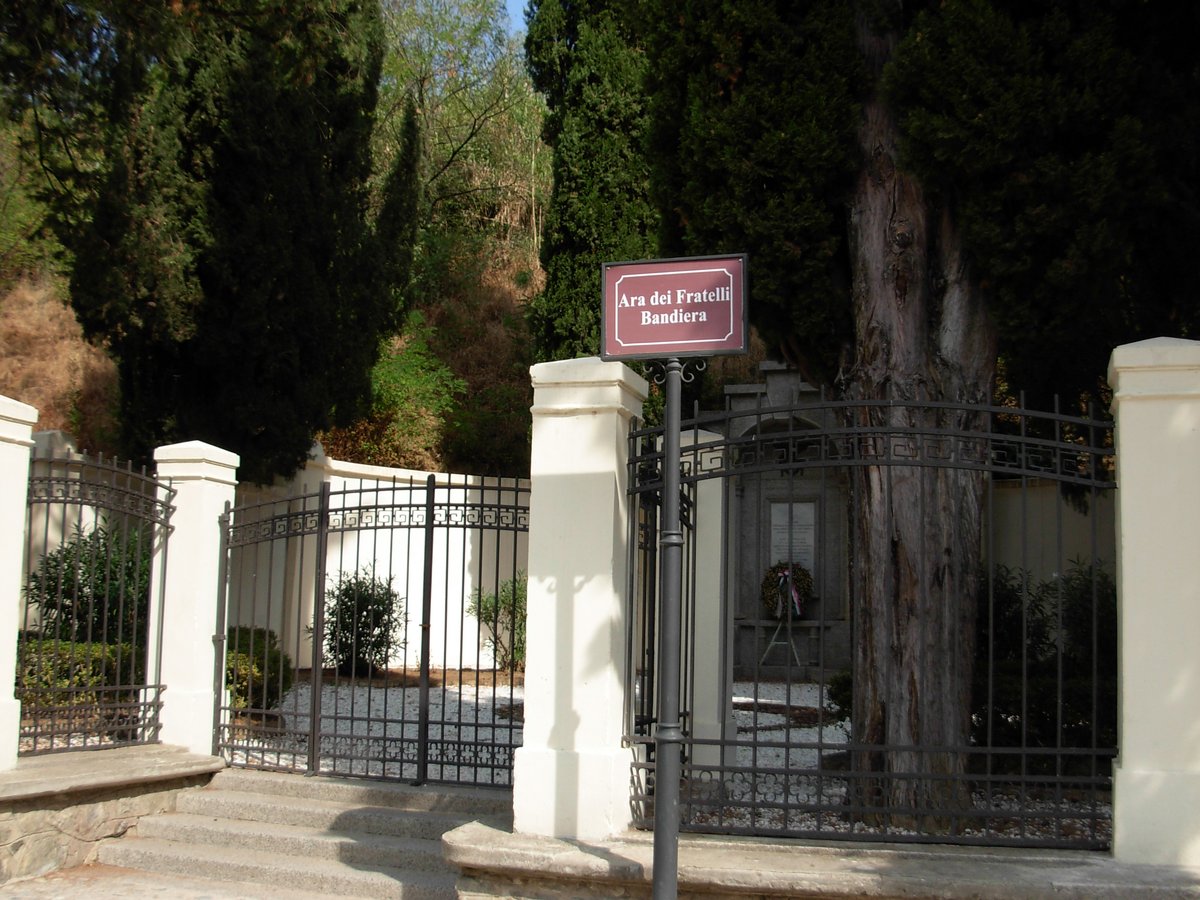 If you find yourself in Cosenza, don't miss the Ara dei Fratelli Bandiera, a small monument nestled in the greenery of the Vallone di Rovito. Here, on July 25, 1844, the Venetian patriots Attilio and Emilio Bandiera were executed along with seven other companions, after a failed attempt at an anti-Bourbon insurrection. The current altar, built in 1937, replaced a votive column from 1860. Walking among the nine elegant cypresses that shade the site (one for each executed patriot), you'll notice a special lighting system: for the 150th anniversary of Italian unification, projectors with red and green filters were installed, which at evening tint the cypress tops with the colors of the Italian flag. A striking, almost magical effect. The area is enclosed by a wall and small pillars, and offers a beautiful view of the Presila mountains. Nearby, you can glimpse the arches of the ancient Roman aqueduct and the old bridge of the Calabrian Railways. Unfortunately, after some restoration efforts, the site is now in a state of semi-neglect, but it still retains all its historical charm. To learn more about the Bandiera brothers, I recommend a visit to the Risorgimento section of the Museo dei Brettii e degli Enotri, where a tricolor flag from the 1844 uprising is kept, one of the oldest Italian flags.