
🧭 What to Expect
- Best for city-breakers and history and street food enthusiasts
- Highlights: authentic historic center, Romanesque basilica, Swabian castle, lively markets, traditional cuisine
- Unique for the combination of art, culture, and gastronomy in a genuine setting
Events nearby

Welcome to Bari, an Adriatic gem blending millennia of history, art, and authentic flavors. Strolling through its historic center means getting lost among narrow alleys and lively squares, where Romanesque architecture coexists with bustling markets. The city's symbol is the Basilica of Saint Nicholas, a masterpiece of Apulian Romanesque art and a pilgrimage destination. Nearby, the Swabian Castle tells the story of Norman and Swabian dominations. Art lovers cannot miss the Metropolitan Art Gallery and historic theaters like Petruzzelli and Margherita. But Bari is also flavors: from the fish market district to the Mercato Coperto, every corner offers local street food such as panzerotti, sgagliozze, and the famous Bari focaccia. This article guides you through must-see stops, with practical tips to experience the city to the fullest.
Overview
- Basilica of Saint Nicholas: History, Art, and Devotion
- Basilica of Saint Nicholas: History, Art, and Devotion
- Swabian Castle of Bari: History and Spectacle
- The Petruzzelli Theatre: The Temple of Opera Reborn from the Ashes
- The Petruzzelli Theatre: The Temple of Opera Reborn from the Ashes
- Cathedral Succorpo: A Journey Through Bari's Layers
- Cathedral Succorpo: A Journey Through Bari's Layers
- Teatro Margherita: a theater on water turned museum
- Piazza Giuseppe Garibaldi: The Garden That Tells the Story of the New Bari
- Santa Scolastica Archaeological Museum: A Journey Among Millennia-Old Artifacts
- Corrado Giaquinto Metropolitan Art Gallery: A Dive into Puglian Art
- Punta San Cataldo Lighthouse: 380 Steps to the Sea
- Punta San Cataldo Lighthouse: 380 Steps to the Sea
- Nicolaian Museum: Saint Nicholas's Treasure in Old Bari
- Palazzo Fizzarotti: Venetian Gothic in the Heart of Bari
- Fortino Sant'Antonio: History and Breathtaking Views
- Arch of Wonders: A Love Bridge Among the Alleys
- The Pillar of Shame: Pillory and Symbol of Old Bari
- Monument to Umberto I: Equestrian Statue in Piazza Umberto
Itineraries nearby


Basilica of Saint Nicholas: History, Art, and Devotion
- Go to the page: Basilica of Saint Nicholas in Bari: relics of the saint and Apulian Romanesque architecture
- Lago Abate Elia 13, Bari (BA)
- Open in Google Maps
- View on Google Images
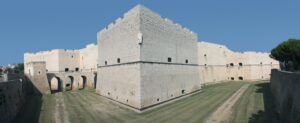
 No visit to Bari is complete without stopping at the Basilica of Saint Nicholas in the heart of the old town. This place strikes you immediately with its massive, solemn appearance—more like a fortress than a church. Built between 1087 and 1197, the basilica was erected to house the relics of Saint Nicholas, stolen by Bari sailors from Myra (in present-day Turkey) and arriving precisely on May 9, 1087. Abbot Elias wanted it built on the site of the ancient Byzantine catapano's palace, a gesture that already tells a story of power and faith.
Stepping inside, your eyes are drawn to the twelve reused columns dividing the three naves, with the first four paired—a detail I find fascinating. The carved and gilded wooden truss ceiling, with 17th-century paintings by Carlo Rosa, adds warmth. But the true gem is the 12th-century ciborium above the high altar: four columns of red and violet breccia support a two-tiered canopy, considered the oldest in Apulia. And then the Abbot Elias's cathedra, a sculptural masterpiece with telamones and lionesses that seem to guard something. In the crypt, supported by 26 columns, rest the saint's bones. The atmosphere is intimate and mystical, especially during Orthodox celebrations, which are common here—the basilica is a symbol of ecumenism between Catholics and Orthodox.
Don't miss the Lions' Portal on the left side, with reliefs depicting battles and grape harvests, and the Arabic inscriptions along the outer walls: remnants of the Emirate of Bari. If you can, visit on May 8 or December 6, when the saint's feast animates the entire neighborhood. Admission is free, and the basilica is open daily from 6:30 am to 8:30 pm (Sundays until 10 pm).
Basilica of Saint Nicholas: History, Art, and Devotion
- Go to the page: Basilica of Saint Nicholas: The Romanesque Masterpiece of Bari
- Lago Abate Elia 13, Bari (BA)
- Open in Google Maps
- View on Google Images
No visit to Bari is complete without stopping at the Basilica of Saint Nicholas in the heart of the old town. This place strikes you immediately with its massive, solemn appearance—more like a fortress than a church. Built between 1087 and 1197, the basilica was erected to house the relics of Saint Nicholas, stolen by Bari sailors from Myra (in present-day Turkey) and arriving precisely on May 9, 1087. Abbot Elias wanted it built on the site of the ancient Byzantine catapano's palace, a gesture that already tells a story of power and faith.Stepping inside, your eyes are drawn to the twelve reused columns dividing the three naves, with the first four paired—a detail I find fascinating. The carved and gilded wooden truss ceiling, with 17th-century paintings by Carlo Rosa, adds warmth. But the true gem is the 12th-century ciborium above the high altar: four columns of red and violet breccia support a two-tiered canopy, considered the oldest in Apulia. And then the Abbot Elias's cathedra, a sculptural masterpiece with telamones and lionesses that seem to guard something. In the crypt, supported by 26 columns, rest the saint's bones. The atmosphere is intimate and mystical, especially during Orthodox celebrations, which are common here—the basilica is a symbol of ecumenism between Catholics and Orthodox.
Don't miss the Lions' Portal on the left side, with reliefs depicting battles and grape harvests, and the Arabic inscriptions along the outer walls: remnants of the Emirate of Bari. If you can, visit on May 8 or December 6, when the saint's feast animates the entire neighborhood. Admission is free, and the basilica is open daily from 6:30 am to 8:30 pm (Sundays until 10 pm).
Swabian Castle of Bari: History and Spectacle
- Go to the page: Swabian Castle of Bari: Frederick II's Fortress with Courtyards and Towers Overlooking the Sea
- Via Boemondo, Bari (BA)
- Open in Google Maps
- View on Google Images
 If there is one place that embodies the history of Bari, it is the Swabian Castle. Located on the edge of the old town, this imposing fortress is a concentration of centuries of power, art, and transformations. Its origins date back to 1131, when the Norman king Roger II had it built on pre-existing Byzantine structures. But its current form is due to Frederick II of Swabia, who rebuilt it between 1233 and 1240 after its destruction in 1156. Since then, every era has left its mark: the Angevins, the Aragonese, and above all Isabella of Aragon and her daughter Bona Sforza, who in the 16th century transformed it into a refined Renaissance residence, adding powerful lance-shaped bastions and an elegant double staircase. Visiting the castle today means getting lost in a labyrinth of courtyards, frescoed halls, and archaeological excavations. Not to be missed: the Federician Portal, a masterpiece of Gothic architecture with the imperial eagle, and the Bona Sforza Hall, with its curious tiles depicting servants in the act of inviting silence. Just outside, the ancient moat and crenellated walls tell the story of the city's defense. And if you have some time left, the Gipsoteca houses plaster casts of the most important monuments of Puglia, made in 1911. Oh, and don't forget to look up at the Torre dei Minorenni: a 19th-century graffiti of Saint Nicholas will surprise you. Today the castle is a living museum, with temporary exhibitions and multimedia installations. It is open almost every day (except Wednesday; check the hours on the official website) and is a 15-minute walk from the station. My advice: visit early in the morning, when the light illuminates the limestone and the courtyard is still all yours.
The Petruzzelli Theatre: The Temple of Opera Reborn from the Ashes
- Go to the page: Teatro Petruzzelli: The Rebirth of the Lyric Temple in Bari
- Corso Cavour, Bari (BA)
- https://www.fondazionepetruzzelli.it/
- Open in Google Maps
- View on Google Images
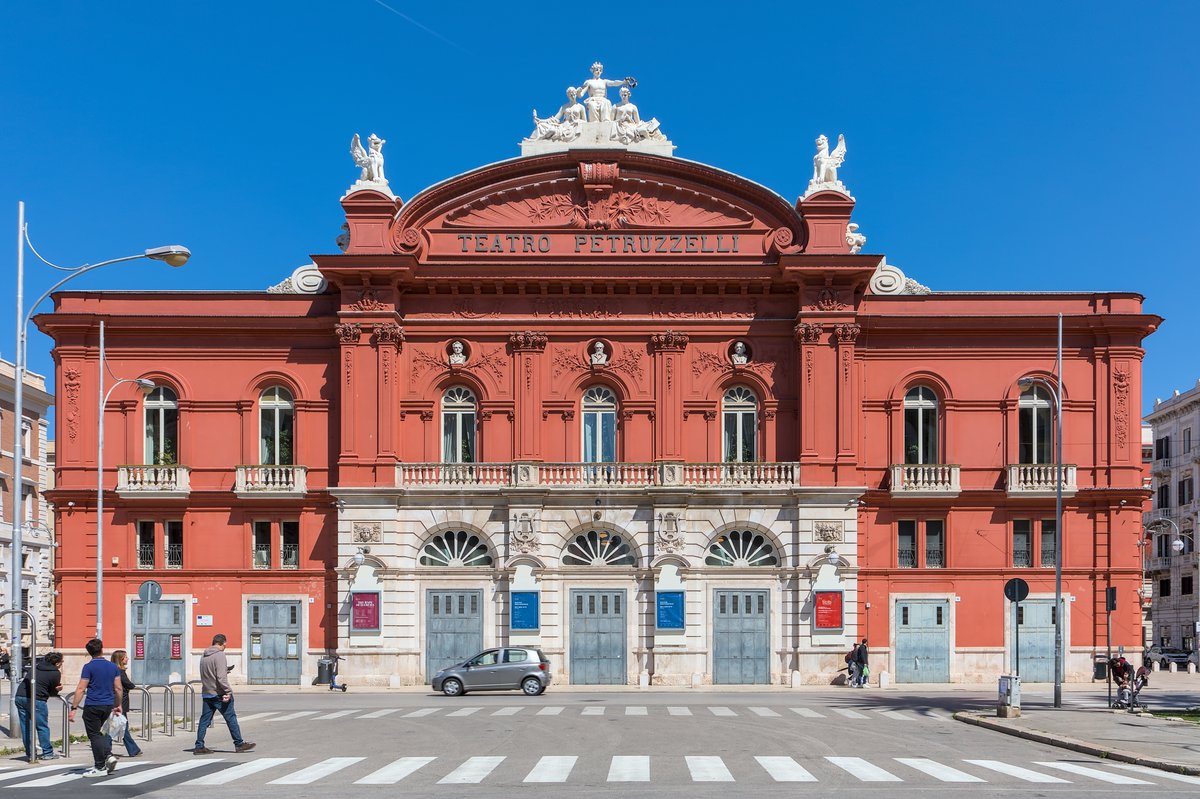 If you're in Bari, a must-see is the Petruzzelli Theatre, one of Italy's largest theatres with 1,482 seats. Inaugurated in 1903, commissioned by the Petruzzelli brothers, it's a neoclassical masterpiece: an imposing facade, a horseshoe-shaped auditorium with four tiers of boxes and a gallery, and a ceiling frescoed by Raffaele Armenise with mythological scenes. At the time of its opening, it was cutting-edge with central heating and electric lighting. But its history is marked by a tragic arson fire on the night of October 27, 1991, which destroyed almost everything. After a long reconstruction, it reopened in 2009, faithful to the original layout but with modern technology. Today, it's a vibrant cultural hub, hosting opera and symphony seasons, ballet, concerts, and the Bif&st. Its stage has welcomed Luciano Pavarotti and Maria Callas. You can visit it with guided tours, but to truly experience it, book a ticket for a performance. The theatre is located at Corso Cavour 12, a few minutes' walk from the central station. A tip: dress formally if you attend an opera. The atmosphere is magical, steeped in history and art.
The Petruzzelli Theatre: The Temple of Opera Reborn from the Ashes
If you're in Bari, a must-see is the Petruzzelli Theatre, one of Italy's largest theatres with 1,482 seats. Inaugurated in 1903, commissioned by the Petruzzelli brothers, it's a neoclassical masterpiece: an imposing facade, a horseshoe-shaped auditorium with four tiers of boxes and a gallery, and a ceiling frescoed by Raffaele Armenise with mythological scenes. At the time of its opening, it was cutting-edge with central heating and electric lighting. But its history is marked by a tragic arson fire on the night of October 27, 1991, which destroyed almost everything. After a long reconstruction, it reopened in 2009, faithful to the original layout but with modern technology. Today, it's a vibrant cultural hub, hosting opera and symphony seasons, ballet, concerts, and the Bif&st. Its stage has welcomed Luciano Pavarotti and Maria Callas. You can visit it with guided tours, but to truly experience it, book a ticket for a performance. The theatre is located at Corso Cavour 12, a few minutes' walk from the central station. A tip: dress formally if you attend an opera. The atmosphere is magical, steeped in history and art.Cathedral Succorpo: A Journey Through Bari's Layers
- Go to the page: Bari Cathedral Crypt: 6th-Century Paleochristian Mosaics and Archaeological Finds
- Piazza dell'Odegitria, Bari (BA)
- Open in Google Maps
- View on Google Images
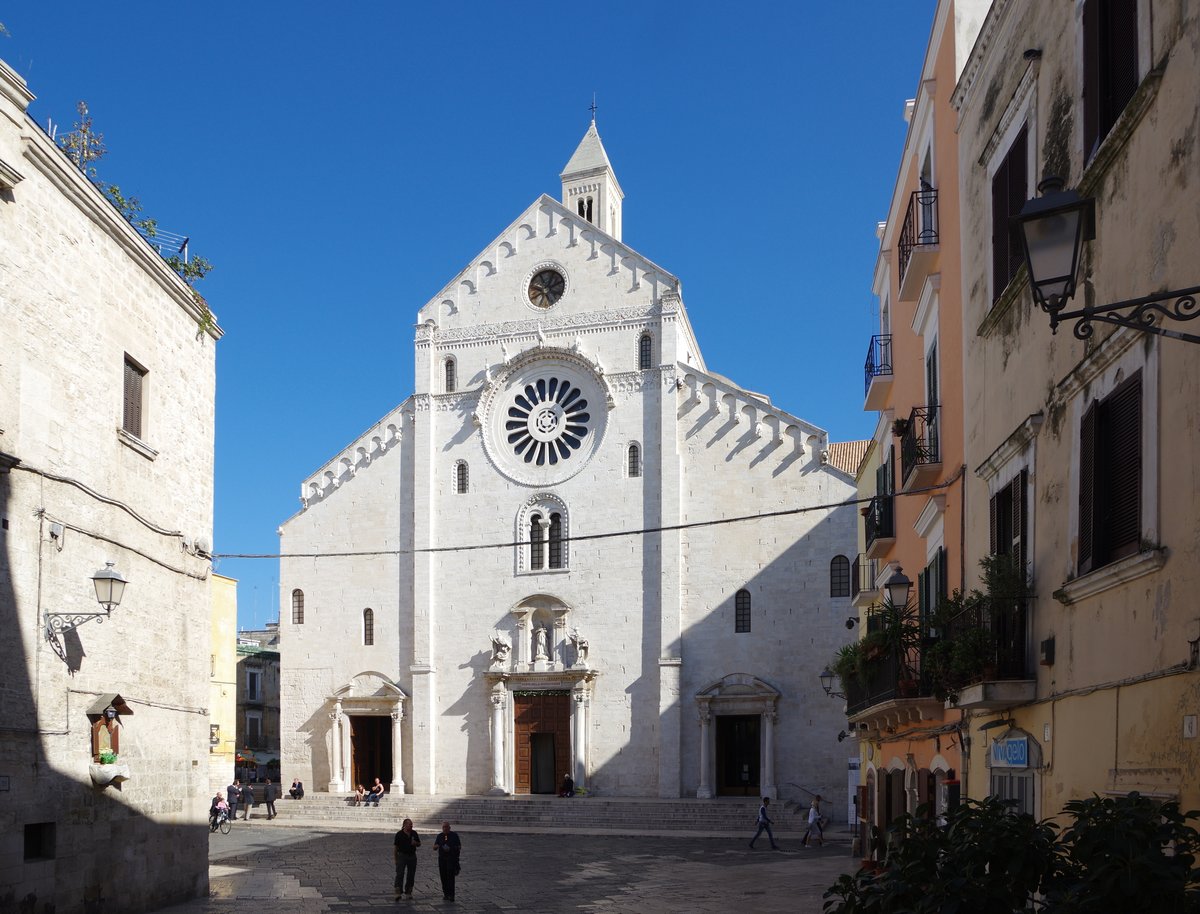 If you think you've seen all of Bari Vecchia, think again. Beneath the Cathedral of San Sabino lies an archaeological treasure that will take you back two thousand years. The Succorpo, reopened to the public in 2009, is an underground chamber preserving remains from four different eras: Roman, early Christian, medieval, and modern. Discovered at the end of the 19th century by engineer Pietro Fantasia, this site long served as a burial ground for Bari's noble families – a bit macabre, but fascinating.
The highlight? The mosaic of Timoteo, a sixth-century polychrome floor depicting fish, an octopus, and a Latin inscription – a sort of 'snapshot' of the Christian community of that time. But that's not all: you can walk on a stretch of the ancient Via Traiana, observe the remains of an early Christian basilica with apse and columns, and discover a Byzantine church with original frescoes. All at about 5 meters deep, with an atmosphere of mystery.
Entrance costs €3 (reduced €2), and hours vary: better to call ahead. The cathedral is in Piazza dell'Odegitria, in the heart of the historic center. After the visit, treat yourself to a stroll through the narrow streets of Bari Vecchia and maybe taste a freshly baked focaccia. The Succorpo is one of those experiences that make you realize how much history lies beneath our feet – literally.
Cathedral Succorpo: A Journey Through Bari's Layers
- Go to the page: Succorpo of Bari Cathedral: Mosaics and Underground History
- Piazza dell'Odegitria, Bari (BA)
- Open in Google Maps
- View on Google Images
If you think you've seen all of Bari Vecchia, think again. Beneath the Cathedral of San Sabino lies an archaeological treasure that will take you back two thousand years. The Succorpo, reopened to the public in 2009, is an underground chamber preserving remains from four different eras: Roman, early Christian, medieval, and modern. Discovered at the end of the 19th century by engineer Pietro Fantasia, this site long served as a burial ground for Bari's noble families – a bit macabre, but fascinating.The highlight? The mosaic of Timoteo, a sixth-century polychrome floor depicting fish, an octopus, and a Latin inscription – a sort of 'snapshot' of the Christian community of that time. But that's not all: you can walk on a stretch of the ancient Via Traiana, observe the remains of an early Christian basilica with apse and columns, and discover a Byzantine church with original frescoes. All at about 5 meters deep, with an atmosphere of mystery.
Entrance costs €3 (reduced €2), and hours vary: better to call ahead. The cathedral is in Piazza dell'Odegitria, in the heart of the historic center. After the visit, treat yourself to a stroll through the narrow streets of Bari Vecchia and maybe taste a freshly baked focaccia. The Succorpo is one of those experiences that make you realize how much history lies beneath our feet – literally.
Teatro Margherita: a theater on water turned museum
- Lungomare Imperatore Augusto, Bari (BA)
- Open in Google Maps
- View on Google Images
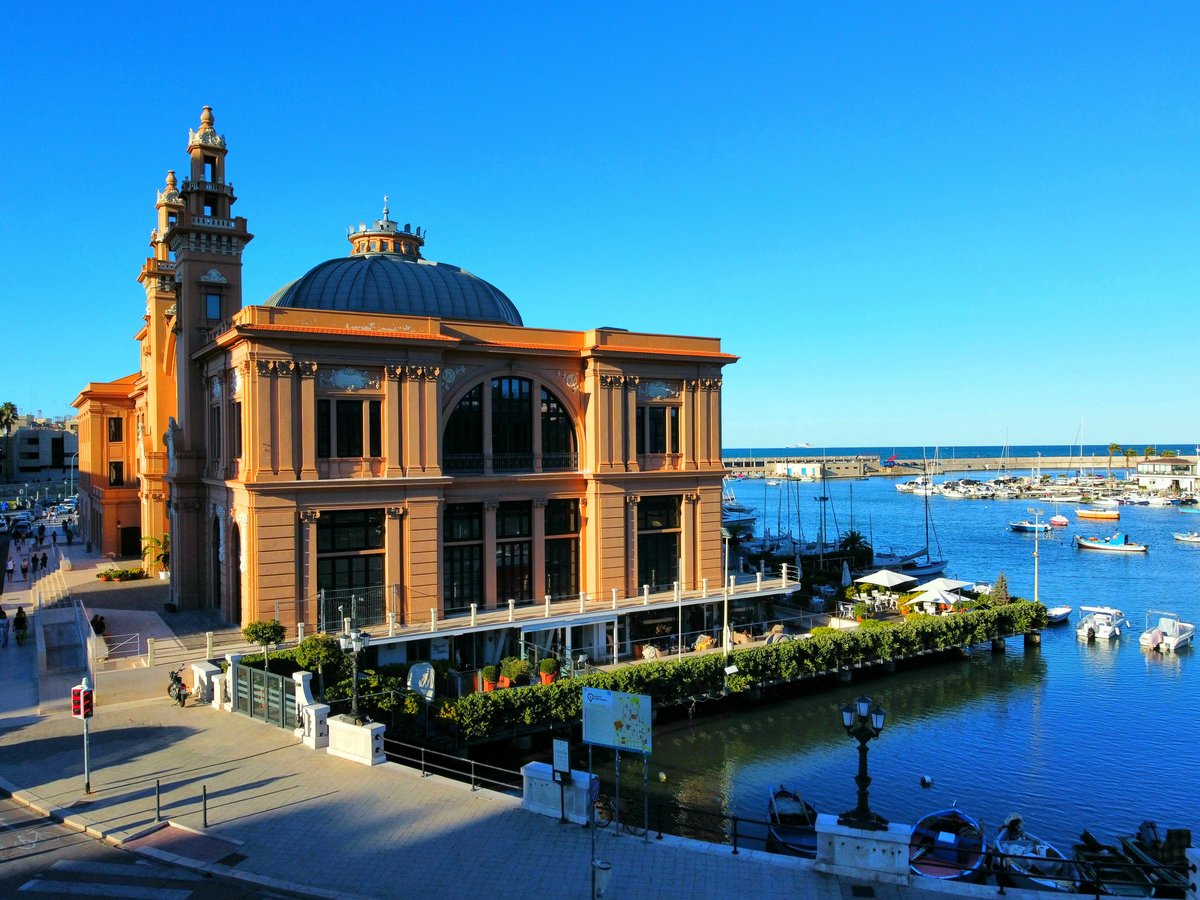 Did you know that in Bari there is a theater literally built on water? The Teatro Margherita is unique in Europe for its stilt structure, created to circumvent the ban on building new theaters on dry land. Designed by Francesco De Giglio and Luigi Santarella, it was the city's first reinforced concrete building, inaugurated on August 22, 1914, as the Kursaal Margherita. After World War II, it served as a cinema until 1979, then fell into abandonment. Since 2018, after a €5 million restoration, it has been reborn as the Museum of Contemporary Art (BAC), hosting temporary exhibitions, the Bari International Film Festival, and performances. The Art Nouveau façade with its arch and towers retains its period charm, while inside, the dome decorated by the Colonna brothers stands out. Don't miss the sea-view terrace, enclosed by wrought-iron fixtures shaped like butterflies. Admission is free (except for events), and it's located in Piazza IV Novembre, a stone's throw from Bari Vecchia.
Piazza Giuseppe Garibaldi: The Garden That Tells the Story of the New Bari
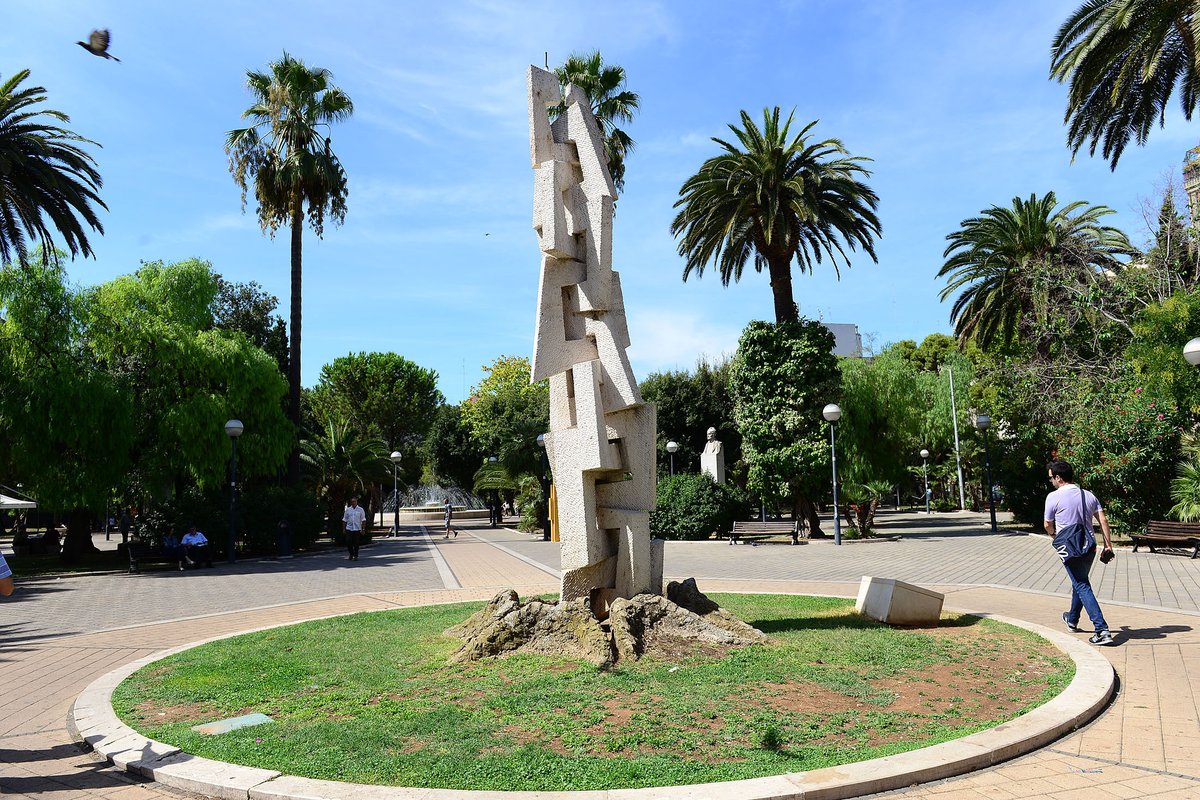 Piazza Giuseppe Garibaldi is one of the most significant squares in Bari, situated between the Murat district and the Libertà district. It was the first square designed for the new Murattian borough, and still today it serves as a landmark for those wanting to immerse themselves in the city's urban history. At its center, a large garden named after Garibaldi offers an oasis of green: two main paths cross perpendicularly in a small clearing, creating a peaceful corner ideal for a break. Strolling among the benches and trees, you breathe in a relaxed atmosphere, far from the bustle of the center. The square is surrounded by important streets like Via Dante Alighieri, Via Principe Amedeo, and Via Quintino Sella, and is well-connected to the rest of the city. Don't miss a stop here: it's the perfect place to observe local life, with children playing and elderly chatting in the shade. If you're looking for street food, you'll find excellent panzerotti and focaccia nearby, but the square itself invites you to take a moment of tranquility. The garden is open all day, but the best time is at sunset, when golden light filters through the trees. In short, a must-see stop for anyone visiting Bari who wants to understand the city's soul.
Santa Scolastica Archaeological Museum: A Journey Among Millennia-Old Artifacts
- Via Venezia 73, Bari (BA)
- https://www.museoarcheologicosantascolastica.it/index.php/it/
- Open in Google Maps
- View on Google Images
- +39 080 099 0882
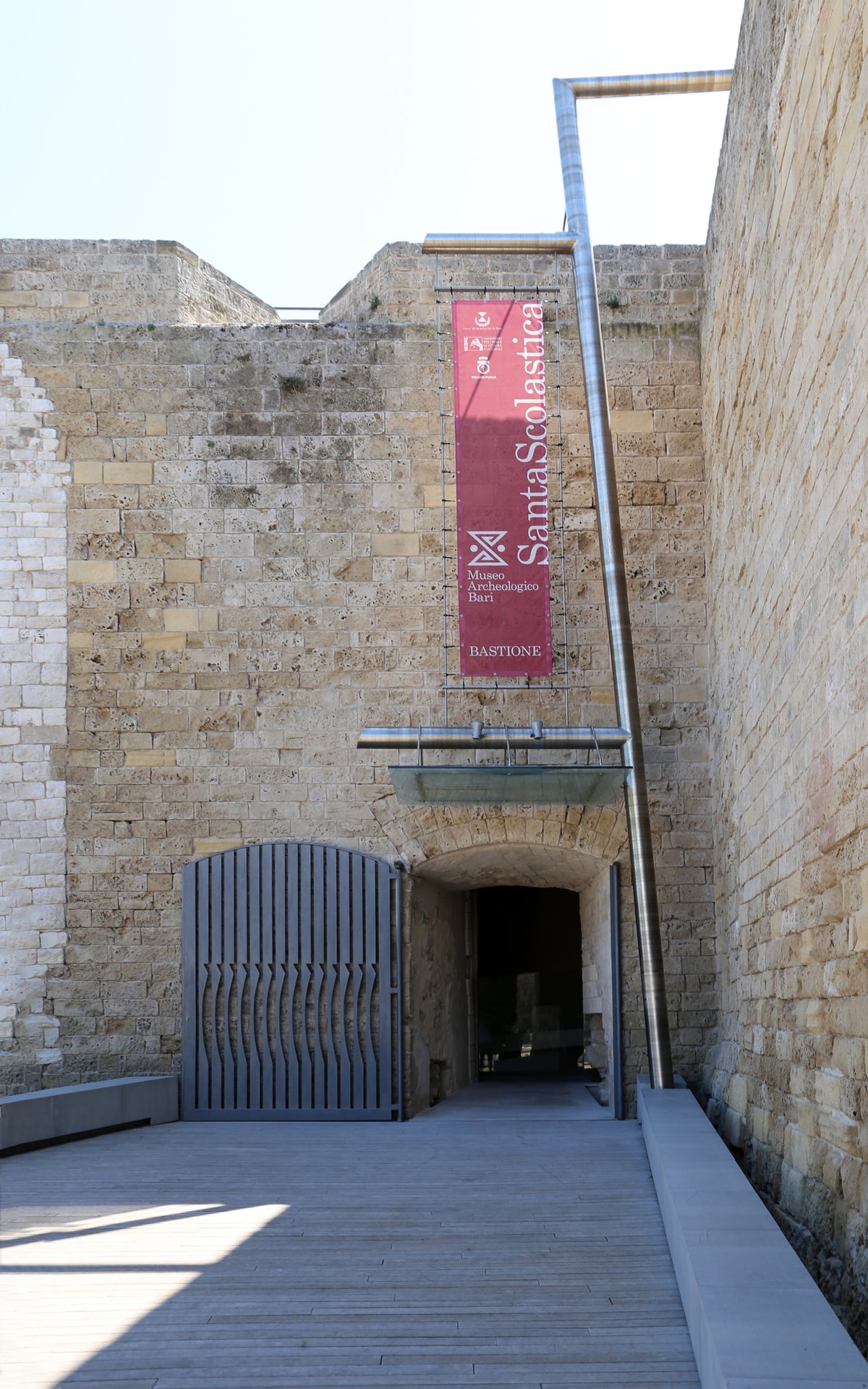 If you think Bari is just street food and nightlife, think again. In the heart of Bari Vecchia, among alleys and the scent of focaccia, lies a museum that will take you back 4,000 years: the Santa Scolastica Archaeological Museum. Housed in an ancient Benedictine monastery from the 10th-11th century, with an imposing 16th-century bastion commissioned by Bona Sforza, the museum opened in its current form in 2021 after extensive renovations. As soon as you enter, the contrast between medieval walls and modern lights strikes you. The route winds through six sections, but two truly moved me: the Peucetian section, with the famous bronze statuette of Apollo from the 5th century BC found in Ceglie del Campo, and the Byzantine church of Saints John and Paul, with an original floor mosaic straight out of a movie. Don't miss the adjacent San Pietro archaeological area: excavations here have uncovered remains from the Bronze Age to the Middle Ages, soon to be enhanced by an installation by artist Edoardo Tresoldi. The museum is small but incredibly rich: for just 5 euros (free on the first Sunday of the month) you can see unique artifacts like Neolithic clay heads linked to the Mother Goddess cult. Hours: Tuesday-Saturday 9-7, Sunday 9-1, closed Monday. Address: Via Venezia 73. A traveler's tip: go early in the morning so you can enjoy the sea view from the bastion before entering. Then, after your visit, wander through the streets of Bari Vecchia and grab a panzerotto. Trust me, it's the perfect mix.
Corrado Giaquinto Metropolitan Art Gallery: A Dive into Puglian Art
 Climbing to the fourth floor of the Palazzo della Provincia on Bari’s seafront feels like stepping into another era. The Corrado Giaquinto Metropolitan Art Gallery, named after the 18th-century painter from Molfetta, was officially founded on July 12, 1928 and today houses one of the richest art collections in Southern Italy. The itinerary unfolds across 22 rooms arranged chronologically: it starts with the Middle Ages, featuring stone sculptures and 12th-century Byzantine icons, then moves on to the Venetian Renaissance. Here, works by Giovanni Bellini, Paolo Veronese, and even Jacopo Tintoretto appear—the kind of art that makes you forget you're in Bari. But the best part is that many of these paintings come from Puglian churches, a piece of local history tied to Venice. The 17th-century Neapolitan section is a Baroque explosion: Luca Giordano, Francesco Solimena, and then the core dedicated to Corrado Giaquinto, with his light-filled altarpieces. The 19th century offers masterpieces by Giuseppe De Nittis and Giovanni Boldini, while the Grieco Collection (donated in 1985) brings the Tuscan Macchiaioli: Fattori, Lega, Signorini. Fun fact: there's a Presepe Caleno with about 500 18th- and 19th-century figurines and a collection of Puglian majolica. And don't miss Raffaele Armenise's “Festa di San Nicola a Bari,” a dive into the city as it once was. Practical info: the gallery is at Via Spalato 19, 4th floor. Open Tuesday–Saturday 9:00 AM–7:00 PM, Sunday 9:00 AM–1:00 PM, closed Monday. Full ticket €5, reduced €2 (students under 26, COOP and Touring Club members), free for under 18 and over 65. First Sunday of the month is free. Tip: allow at least a couple of hours—there's so much to see. And if you're short on time, head straight for the Venetians: they're worth the trip.
Punta San Cataldo Lighthouse: 380 Steps to the Sea
- Go to the page: Punta San Cataldo Lighthouse: Panoramic View of Bari and Port from the Outer Breakwater
- Lungomare Giambattista e Pietro Starita, Bari (BA)
- Open in Google Maps
- View on Google Images
 If you're in Bari, don't miss the Punta San Cataldo Lighthouse, one of the city's landmarks. Built in 1869, it is Italy's third tallest lighthouse at 62 meters (66 meters above sea level). To reach the top, you'll climb 380 steps of a spiral staircase, but the effort is rewarded with a 360-degree view of Bari, the port, and the Fiera del Levante. The octagonal tufa tower is still active: its light flashes three times every 20 seconds and is visible up to 24 nautical miles. Inside, on the ground floor, is the Museum of the Lighthouse and Radio, dedicated to the first commercial wireless telegraph connection made by Guglielmo Marconi on August 3, 1904, with the city of Antivari (now Bar, Montenegro). It houses historical artifacts and films from 1910 to 1950. Don't miss the surrounding garden, with flowers, fruit trees, and an old bread oven. Note: the lighthouse is owned by the Navy and access inside is only by appointment or during special events, such as Heritage Days. Outside, you can admire it while walking along the Starita waterfront at any time. The best time for the view is late afternoon, when the sun sets over the sea. A place that combines history, technology, and breathtaking panoramas, absolutely not to be missed.
Punta San Cataldo Lighthouse: 380 Steps to the Sea
- Go to the page: Punta San Cataldo Lighthouse: History, Views, and the Radio Museum
- Lungomare Giambattista e Pietro Starita, Bari (BA)
- Open in Google Maps
- View on Google Images
If you're in Bari, don't miss the Punta San Cataldo Lighthouse, one of the city's landmarks. Built in 1869, it is Italy's third tallest lighthouse at 62 meters (66 meters above sea level). To reach the top, you'll climb 380 steps of a spiral staircase, but the effort is rewarded with a 360-degree view of Bari, the port, and the Fiera del Levante. The octagonal tufa tower is still active: its light flashes three times every 20 seconds and is visible up to 24 nautical miles. Inside, on the ground floor, is the Museum of the Lighthouse and Radio, dedicated to the first commercial wireless telegraph connection made by Guglielmo Marconi on August 3, 1904, with the city of Antivari (now Bar, Montenegro). It houses historical artifacts and films from 1910 to 1950. Don't miss the surrounding garden, with flowers, fruit trees, and an old bread oven. Note: the lighthouse is owned by the Navy and access inside is only by appointment or during special events, such as Heritage Days. Outside, you can admire it while walking along the Starita waterfront at any time. The best time for the view is late afternoon, when the sun sets over the sea. A place that combines history, technology, and breathtaking panoramas, absolutely not to be missed.Nicolaian Museum: Saint Nicholas's Treasure in Old Bari
- Largo Urbano II, Bari (BA)
- Open in Google Maps
- View on Google Images
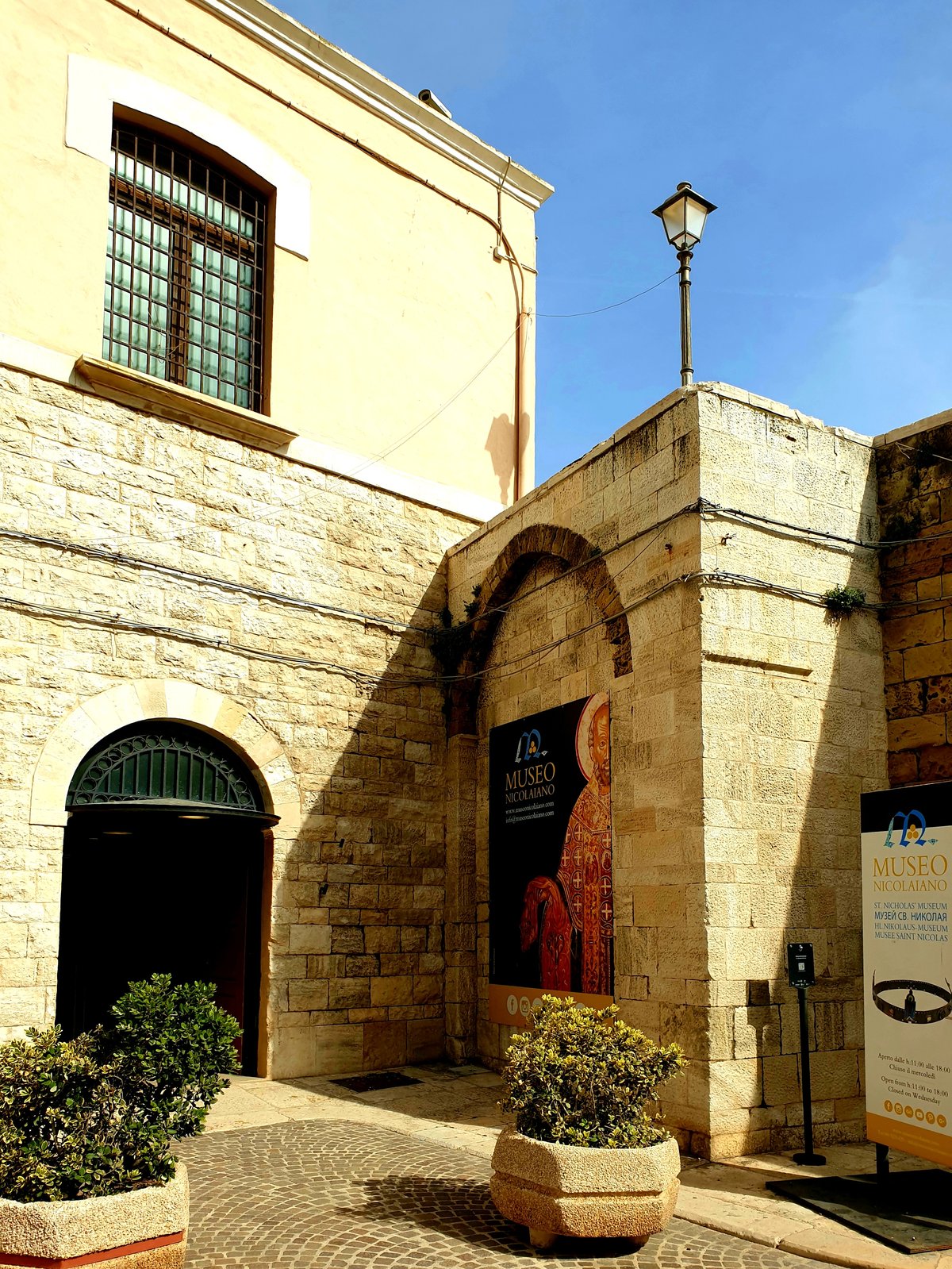 In the heart of Old Bari, just a few steps from the Basilica of Saint Nicholas, there's a museum that feels like a treasure chest. I'm talking about the Museo Nicolaiano, opened in 2010 and renovated in 2019, which holds centuries of history across three floors. Let me warn you: don't expect a boring museum. Here, every piece has a story, and the multimedia setup helps you dive into the eras. On the ground floor, among Roman statuettes and Byzantine capitals, you discover ancient Bari. Then you go up and find yourself surrounded by ex-votos donated by faithful from all over the world, and finally on the top floor, the real treasure is kept. Among the highlights: the enameled crown of Roger II, a parchment from 1175 with the names of the sailors who brought the relics of Saint Nicholas to Bari, and a gold seal of Charles of Anjou. The museum is accessible, with audio guides in 4 languages, and the café is a nice bonus after the visit. Open every day except Wednesday from 10 am to 5 pm, ticket €8 (reduced €3). A tip: combine the visit with a walk in the nearby old town, among handmade orecchiette and the lively atmosphere of Bari.
Palazzo Fizzarotti: Venetian Gothic in the Heart of Bari
- Corso Vittorio Emanuele Secondo, Bari (BA)
- https://palazzofizzarotti.com/
- Open in Google Maps
- View on Google Images
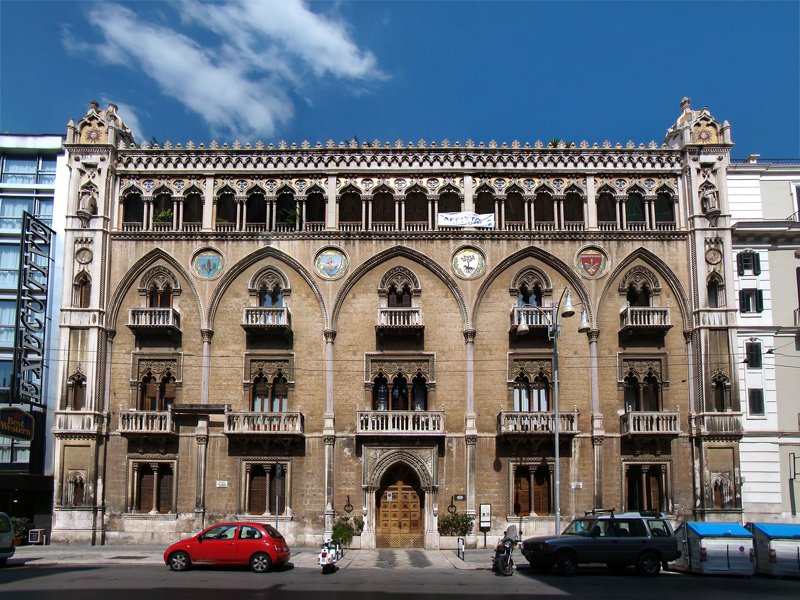 If you stroll along Corso Vittorio Emanuele II, you might look up and be captivated by Palazzo Fizzarotti. Built in 1910 for banker Emanuele Fizzarotti, it is a masterpiece in Venetian Gothic style by architect Ettore Bernich. The façade is a riot of five pointed arches flanked by two towers with gold-leafed domes: look closely, they depict the rising sun. Four polychrome mosaic medallions tell the symbols of the city and the family, with the Latin motto “quamquam fractae vulnerant.” Step inside and prepare to be amazed: the entrance hall opens onto an internal garden with a fountain and a statue of Neptune, while the monumental staircase culminates in a celestial vault with the twelve zodiac signs. The four reception rooms – Hall of Arts and Labor, Trecento Room, Pink Room, and Little Fireplace Room – each have unique decorations: frescoes, stuccoes, mosaics. And don’t forget to look down: in the waiting room there is a floor mosaic with the winged head of Mercury. Today the palace houses the Poli Archive, with documents and photos from 1915 to 1969 (visits by appointment). It often hosts events and fashion shows, but even just admiring it from outside is worth the stop. A traveler’s tip: look up at the lace-like stone balconies and notice the contrast between the solid stone and the pointed arches. A place that seems straight out of a Venetian fairy tale, but it’s all Bari.
Fortino Sant'Antonio: History and Breathtaking Views
- Via Venezia, Bari (BA)
- Open in Google Maps
- View on Google Images
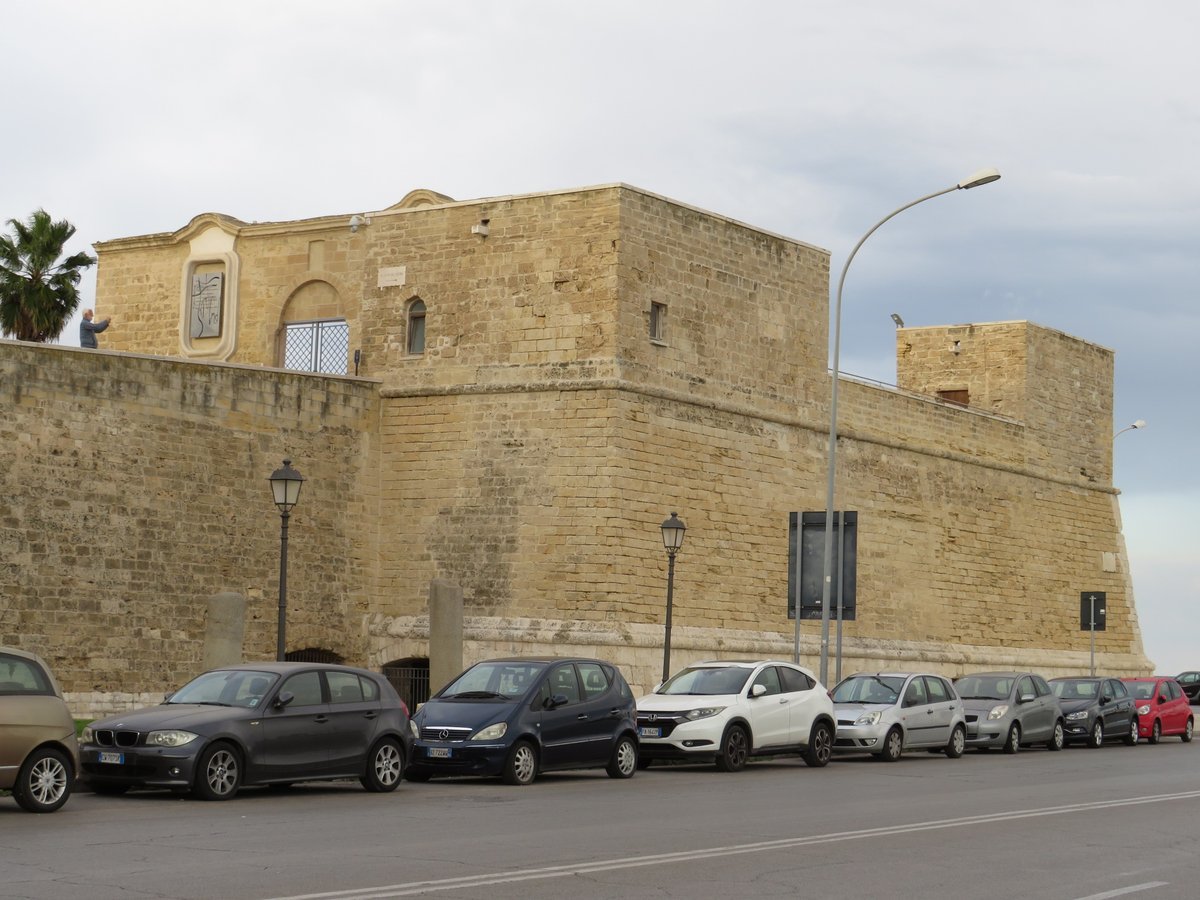 If you're strolling through Bari Vecchia, don't miss the Fortino Sant'Antonio. Perched at the northeastern corner of the old town, it is the sole survivor of the four defensive bastions that once guarded the coast. Its history begins in 1071, when the Norman Robert Guiscard built a watchtower to control the port during the siege of Bari. Over the centuries, the structure underwent various modifications: in 1440 it was expanded by Giovanni Antonio Del Balzo Orsini, then destroyed by the people of Bari and finally rebuilt by Isabella of Aragon and Bona Sforza between 1501 and 1524, taking on its current fortified appearance.
Today, after a restoration completed in 2000, the Fortino serves as a cultural center, hosting exhibitions, debates, and even civil weddings on its panoramic terrace. From up there, the view stretches over Molo Sant'Antonio, the medieval walls, and the Novecento waterfront—a must-see spectacle at sunset.
Inside, hidden within the walls, there is a chapel dedicated to Saint Anthony Abbot, featuring a wooden statue of the saint. Every January 17, the feast day, the chapel opens for the blessing of animals and those suffering from Herpes Zoster, following a centuries-old tradition. Until a few years ago, during Ascension, three cannon salutes were fired to commemorate the liberation of Bari from the Saracens.
The Fortino is accessible for free from the outside all year round, but to visit the interior you need to catch an event. Check the program; it's worth it. And if you get the chance, stop and gaze at the sea: it feels like touching history with your hands.
Arch of Wonders: A Love Bridge Among the Alleys
- Strada Filioli, Bari (BA)
- Open in Google Maps
- View on Google Images
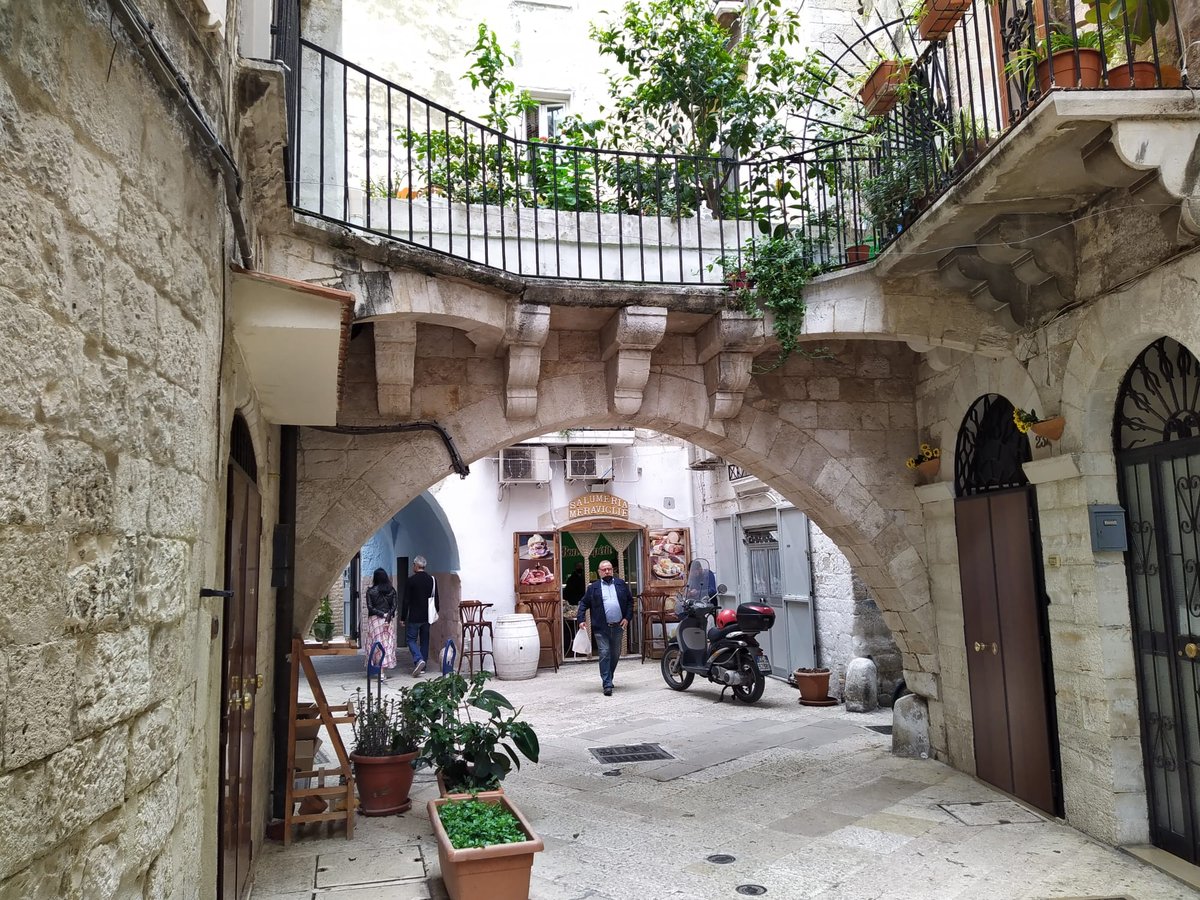 Among the narrow alleys of Bari Vecchia, the Arch of Wonders is one of those places that makes you stop. It's not imposing, actually: it's a small stone overpass connecting Filioli Street to Zonnelli Street. But its legend is everything. It is said that about 500 years ago a young man in love, with the girl's family opposed to their union, built this arch in a single night so he could reach her from window to window. Stuff from a novel, right? The name comes from the Meraviglia (or Meravigli) family, rich Milanese in the retinue of Bona Sforza who moved here in the 1500s. Walking under the arch, it's easy to imagine the scene: the two lovers meeting in secret, defying the ban. Today the arch is a romantic symbol of the city, even if some say the name has more to do with the palace owners than the love story. But I like to think it's true. Around, the neighborhood is a maze of narrow streets, noble palaces, and sudden vistas. A short walk away you'll find the church of San Gaetano and Palazzo Zeuli. If you pass by here, look up: the arch is small, but its story stays with you.
The Pillar of Shame: Pillory and Symbol of Old Bari
- Piazza Mercantile, Bari (BA)
- Open in Google Maps
- View on Google Images
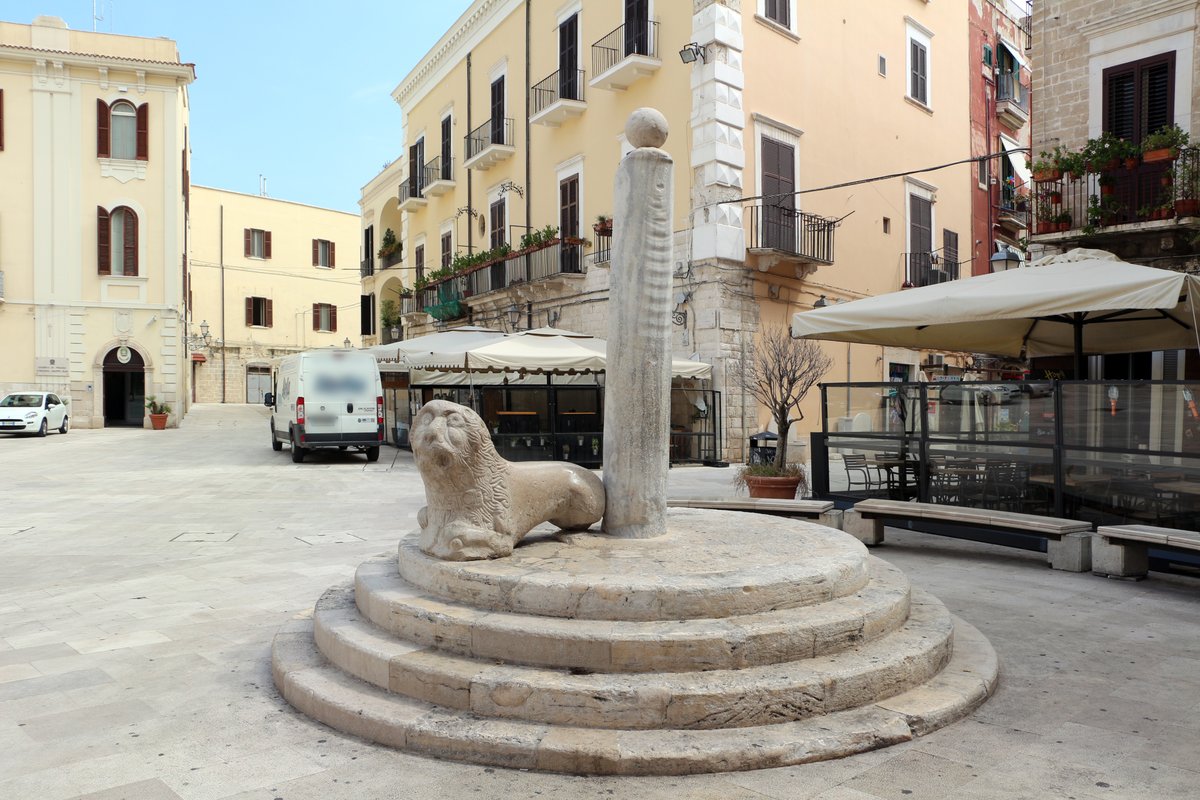 The Pillar of Shame, also known as the Column of Justice, is one of the most photographed monuments in Bari. It stands in Piazza Mercantile, in the heart of Old Bari, just steps from Palazzo del Sedile. Seeing it today, surrounded by café tables and children jumping on it (yes, it's still climbable!), it almost looks like a stone toy. Yet for centuries, it was a place of public humiliation. Insolvent debtors were stripped and tied to the marble pillar, straddling the stone lion, before the eyes of the entire square. A punishment that destroyed reputation more than the body.
The column is topped by a stone sphere, possibly a ballista ball, and at its base stands a lion carved from calcareous breccia, about 90 cm high, with a collar bearing the inscription 'Custos Iusticiae' (guardian of justice). Its origins are a historical mystery: some date it to the Norman period (12th century), while others place it in the 16th century, commissioned by the Spanish viceroy Pedro de Toledo. The lion itself is a reuse of a Roman tomb from the 1st century BC to the 1st century AD, later reworked. A layering of history that makes this corner of Bari even more fascinating.
Today, the Pillar of Shame is a symbol of the city, beloved by locals and tourists alike. The square is lively at all hours: in the morning for the market, in the evening for aperitivo. The monument is always accessible and free. A tip: visit it at sunset, when the light caresses the marble and the lion seems to come to life. And if you're lucky, some local elder will tell you stories of when the column was truly 'infamous'.
Monument to Umberto I: Equestrian Statue in Piazza Umberto
- Via Sparano da Bari, Bari (BA)
- Open in Google Maps
- View on Google Images
 In the heart of Bari, right in front of the University, stands the Monument to Umberto I, an equestrian statue that dominates Piazza Umberto I. Created by Filippo Cifariello from Molfetta, it was inaugurated on June 11, 1905, in the presence of King Vittorio Emanuele III and Queen Elena. The king is depicted in military uniform, with a saber at his side, while the steed moves forward dynamically. The work, 5 meters high on an 8-meter Apulian stone pedestal decorated with Carrara marble friezes, is the only example in Apulia of an equestrian statue dedicated to a sovereign.
The monument's history is full of curiosities: due to financial issues, Cifariello kept the bronze horse's tail in the foundry until just before the inauguration, forcing the mayor to at least partially settle the debt. The sculptor himself was not fully satisfied, finding the king's pose too choreographic. In 2012, a restoration under the "I Luoghi della Memoria" project for the 150th anniversary of Italian Unification cleaned the bronze from aggressive sea spray and applied anti-corrosion treatments.
Today, the monument is a meeting point for locals at the intersection of Piazza Umberto I and Via Sparano. Pause for a moment to observe the details: the tension of the horse, the king's gaze toward the city. It's a piece of Savoy history that blends with the daily life of Bari.