
🧭 What to Expect
Ideal for: travelers seeking history, sea, and authentic nature. Highlights: well-preserved archaeological sites, less crowded beaches, charming villages. Must-see: Scolacium Park, Castle of Squillace, Capo Suvero Lighthouse. Best time: spring and autumn for mild weather, summer for the sea.
The province of Catanzaro is a concentration of wonders: from the Ionian coast to the Tyrrhenian, through hills and ancient villages. Here you’ll find the Scolacium Archaeological Park with its Roman remains, and the Castle of Squillace, a medieval symbol. Don’t miss the beaches of Soverato and Santa Caterina dello Ionio, perfect for relaxation. For nature lovers, the Capo Suvero Lighthouse offers breathtaking views. The museums of Lamezia Terme and Taverna hold archaeological and artistic treasures. This guide leads you to discover unmissable places, with practical tips to best organize your visit. From archaeological excursions to seaside walks, every corner of the province of Catanzaro will surprise you.
Overview
- Scolacium Archaeological Park: A Dive into Magna Graecia
- Scolacium Archaeological Park: A Dive into Magna Graecia
- Squillace Castle: A Norman Fortress Between History and Scenery
- Terina Archaeological Excavations: A Greek City to Rediscover
- Lametino Archaeological Museum: From Prehistory to the Middle Ages
- Norman Castle of Lamezia Terme: Between History and Legend
- Bastione di Malta: The Knights' Fortress in Lamezia Terme
- Abbey of Santa Maria di Corazzo: History and Mystery Among the Ruins
- Abbey of Santa Maria di Corazzo: History and Mystery Among the Ruins
- Torre Sant'Antonio: Medieval Tower and Seaside Resort
- Capo Suvero Lighthouse: A Beacon Between History and the Sea
- Taverna Civic Museum: A Dive into Art Between Baroque and Contemporary
- Castel Sant'Angelo: A Balcony over the Isthmus
- Carlo V Tower: The Sea Sentinel of Soverato
- Soverato Vecchia: Among Ruins and Panoramas
- Mediterranean Biodiversity Park: A Green Lung Between Art and Nature
- Politeama Theatre: A Modern Gem in the Historic Center
Itineraries nearby


Scolacium Archaeological Park: A Dive into Magna Graecia
- Go to the page: Scolacium Archaeological Park: Roman Theatre, Norman Basilica and Gulf Views
- Viale Cassiodoro, Roccelletta (CZ)
- www.scolacium.it
- Open in Google Maps
- View on Google Images
- +39 0961 391356
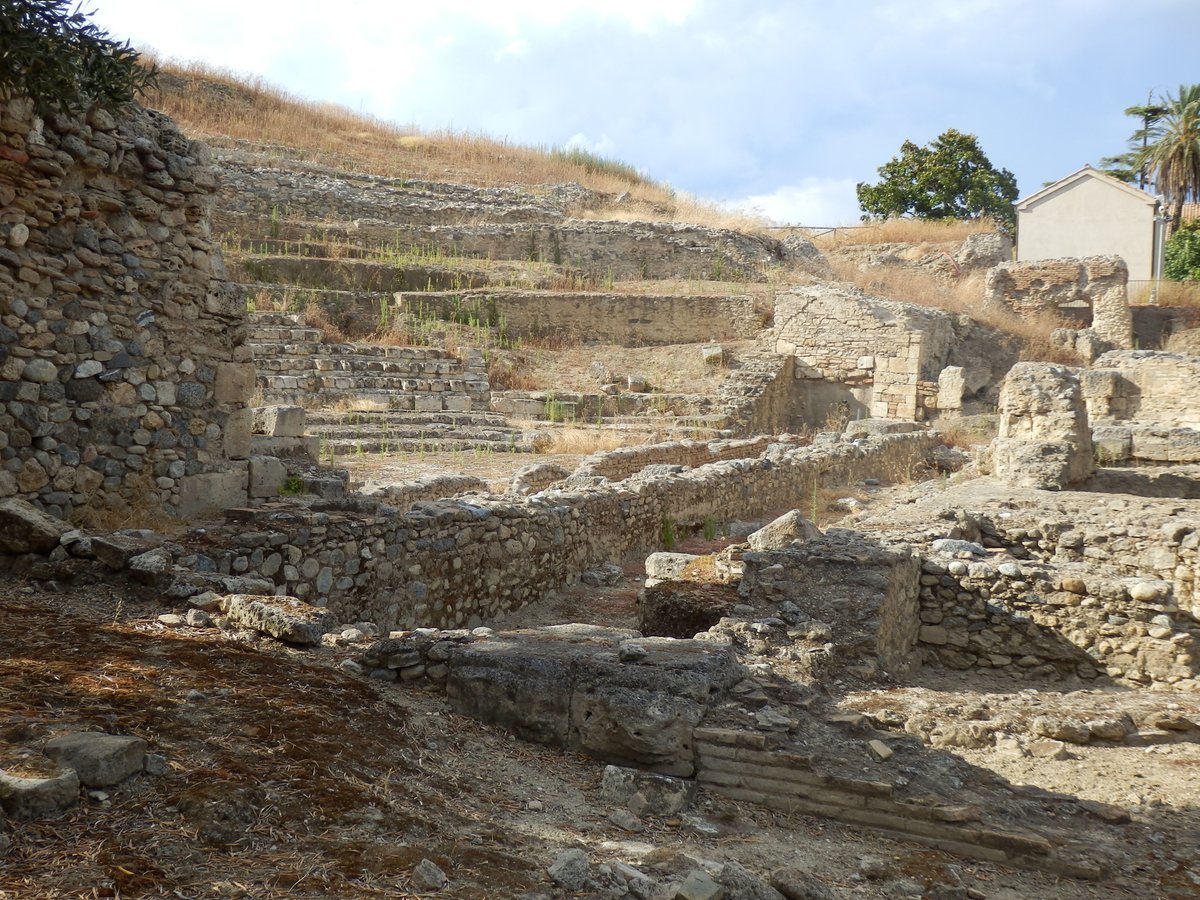 If you're passing through the Costa degli Aranci, don't miss the Scolacium Archaeological Park in Roccelletta di Borgia. It's one of those places where history embraces you from every side: here once stood the ancient Greek Skylletion, later the Roman colony Minervia Scolacium. The first thing you'll see is the imposing Abbey of Santa Maria della Roccella, a Norman gem in red bricks left unfinished by an earthquake. Inside, amidst meadows and olive trees, you'll find the Roman Forum with its brick paving and the Decumanus Maximus. The theater (up to 5,000 spectators!) still evokes the atmosphere of ancient performances, while the amphitheater, unique in Calabria, tells tales of gladiators. In the museum, don't miss the colossal bronze arm discovered by Paolo Orsi – a hand that seems to wave from across the centuries. And then there's the old olive mill of Baron Mazza, witness to a more recent past. The park is open Tuesday to Sunday (approx. 9:00-18:00, better to check), ticket €3. In summer it hosts events like 'Armonie d'Arte' and contemporary sculpture exhibitions. A place that combines archaeology, nature, and culture, just a stone's throw from the sea.
Scolacium Archaeological Park: A Dive into Magna Graecia
- Go to the page: Scolacium Archaeological Park: The Only Amphitheater
- Viale Cassiodoro, Roccelletta (CZ)
- www.scolacium.it
- Open in Google Maps
- View on Google Images
- +39 0961 391356
If you're passing through the Costa degli Aranci, don't miss the Scolacium Archaeological Park in Roccelletta di Borgia. It's one of those places where history embraces you from every side: here once stood the ancient Greek Skylletion, later the Roman colony Minervia Scolacium. The first thing you'll see is the imposing Abbey of Santa Maria della Roccella, a Norman gem in red bricks left unfinished by an earthquake. Inside, amidst meadows and olive trees, you'll find the Roman Forum with its brick paving and the Decumanus Maximus. The theater (up to 5,000 spectators!) still evokes the atmosphere of ancient performances, while the amphitheater, unique in Calabria, tells tales of gladiators. In the museum, don't miss the colossal bronze arm discovered by Paolo Orsi – a hand that seems to wave from across the centuries. And then there's the old olive mill of Baron Mazza, witness to a more recent past. The park is open Tuesday to Sunday (approx. 9:00-18:00, better to check), ticket €3. In summer it hosts events like 'Armonie d'Arte' and contemporary sculpture exhibitions. A place that combines archaeology, nature, and culture, just a stone's throw from the sea.Squillace Castle: A Norman Fortress Between History and Scenery
- Piazza Castello, Squillace (CZ)
- www.squillaceonline.it/castello.html
- Open in Google Maps
- View on Google Images
 Perched on the highest hill of the village, Squillace Castle overlooks pastel-colored houses and the blue of the Gulf. The view spans from the beaches of Caminia to Capo Rizzuto, a panorama worth the climb alone. Built by the Normans in 1044 with local granite, the heart of the fortress is the donjon, a rectangular tower over 10 meters wide. Here in 1098, Roger of Hauteville met Saint Bruno of Cologne, granting him the lands for the Certosa di Serra San Bruno. Centuries of expansions followed: Frederick II added a polygonal tower, an escape route carved into the rock, and a palace with hot and cold baths. The Angevins completed the walls with a circular tower, while the Borgias—whose coat of arms adorns the portal—erected a grand unfinished palace. The 1783 earthquake devastated the castle, reducing it to ruins for centuries. Today, after careful restoration, it can be visited in under an hour: you climb the stone walkways, admire the polygonal walls, and discover the remains of a late antique necropolis with 22 tombs and rich grave goods. A romantic touch: two embracing skeletons, unearthed during excavations, tell a love legend. Admission is €3 (Friday, Saturday, and Sunday, 10–12:30 and 3–5 PM). Wear comfortable shoes and stop by the ceramic workshops, masters of the ancient sgraffito technique.
Terina Archaeological Excavations: A Greek City to Rediscover
- Go to the page: Terina Excavations: Ancient Greek city with walls, houses, and ceramic artifacts
- Via Giardini di Renda, Lamezia Terme (CZ)
- Open in Google Maps
- View on Google Images
 If you think Calabria is only about beaches and villages, get ready to change your mind. In Lamezia Terme, in the Iardini di Renda district, lies a piece of Magna Graecia: the Terina Archaeological Excavations. Founded by the people of Croton around 480 BC, this city flourished thanks to its port and strategic position on the isthmus. Today, after years of excavations and a one-million-euro restoration, the archaeological park was inaugurated in 2016. But the reality is different: when I arrived, the gate was closed and weeds had covered the ancient streets. However, it is worth knowing its history. The excavations have uncovered a residential district with two parallel streets 6.30 meters wide, a rainwater drainage system, and house foundations made of river pebbles. The most spectacular finds? The Treasure of Sant'Eufemia (now at the British Museum) and two bronze tablets: one from the 5th century BC, the oldest public inscription on bronze on the Tyrrhenian coast, confirming ties with Croton. If you want to learn more, the Lamezia Archaeological Museum houses many of these objects. Despite its state of neglect, Terina is a key piece in understanding Greek colonization in Calabria. We hope it will soon shine again.
Lametino Archaeological Museum: From Prehistory to the Middle Ages
- Piazzetta San Domenico, Lamezia Terme (CZ)
- https://musei.calabria.beniculturali.it/musei?mid=1362&nome=museo-archeologico-lametino
- Open in Google Maps
- View on Google Images
- +39 0968 441947
- 3351732323
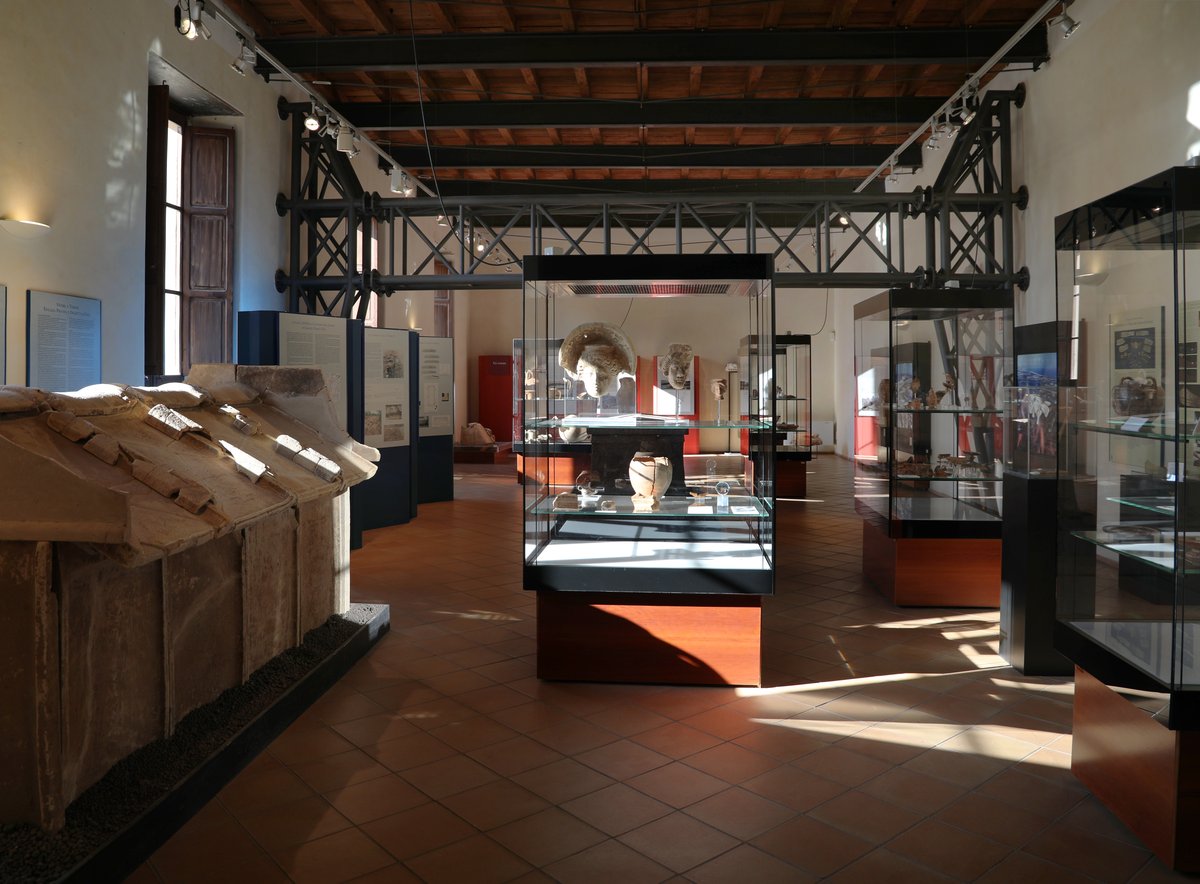 Set within the former convent of San Domenico (where Tommaso Campanella studied), the Lametino Archaeological Museum is a must for anyone wanting to understand the history of Calabria. The prehistoric section displays the choppers of Casella di Maida, the oldest lithic tools in the region (nearly 500,000 years old), and an educational workshop with a Neolithic furnace. The classical section revolves around Terina, a colony of Crotone: here stand out the Acquafredda hoard (530 BC) with 55 incuse staters from Sybaris, and the Cerzeto hydria, a red-figure vase from 380-370 BC depicting wedding preparation scenes – the museum's true gem. Don't miss the Roman marble female statue either. The medieval section offers artifacts from the Castle of Nicastro and an intact 15th-century bombard cannon. A small note: the museum is currently closed for efficiency upgrades (PNRR). When it reopens (hours: Tuesday-Saturday 9-2pm), admission is free, but it's best to call to confirm. Phone: 0968 441947. A place that tells the most authentic side of Calabria, between obsidian and Magna Graecia coins.
Norman Castle of Lamezia Terme: Between History and Legend
- Via SS. Salvatore, Lamezia Terme (CZ)
- Open in Google Maps
- View on Google Images
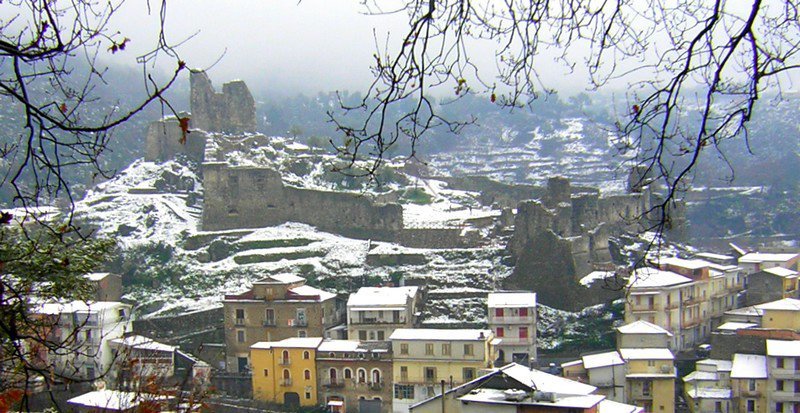 Perched on the rocky spur of San Teodoro, overlooking the Canne and Niola streams, the Norman Castle of Lamezia Terme is a true treasure chest of history. Built by the Normans between the 11th and 12th centuries on the remains of a Byzantine fortress, it was later expanded by Frederick II of Swabia, who made it one of his favorite castles. Here the emperor imprisoned his rebellious son Henry VII, who died under mysterious circumstances. The castle also housed the state treasury during the Swabian period – a detail that adds to its allure.
Today, the scene is that of a romantic ruin: four cylindrical towers, a pentagonal keep, bastions, and a buttress with a blind loggia emerge from the vegetation. The 1638 earthquake and the one in 1783 compromised its structure, but excavation and restoration campaigns have brought ceramic artifacts and new sections to light.
Walking among the remains, you breathe in the medieval atmosphere. Local legends add a touch of magic: tales of a hen with golden chicks guarded by a sorceress, and the spirit of the page Gerlando who still rides through the ruins on horseback. From here, the view opens up over the Sant'Eufemia plain and the sea: a panorama that alone is worth the climb.
Note: access to the interior is currently limited for safety reasons, but the castle is perfectly visible from the outside. A landmark is the statue of Frederick II nearby, pointing to the ancient fortress. An unmissable place for history and archaeology enthusiasts.
Bastione di Malta: The Knights' Fortress in Lamezia Terme
- SP99, Lamezia Terme (CZ)
- Open in Google Maps
- View on Google Images
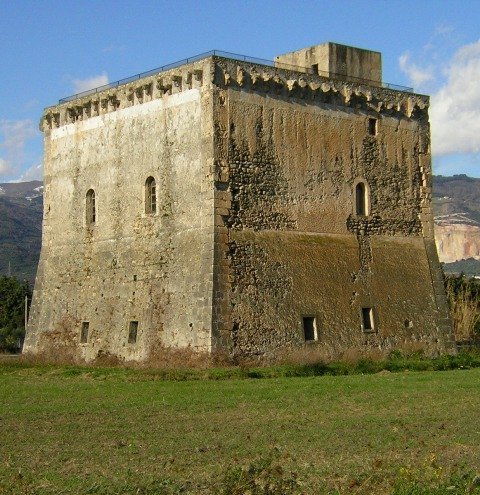 It’s impossible to miss when arriving in Lamezia Terme. The Bastione di Malta stands tall along the straight road connecting the highway, airport, and train station, so much so that it has become part of the city’s coat of arms. Built around 1550 by order of the Viceroy of Naples, Don Pedro de Toledo, this bastion was part of the coastal defense system against Saracen raids. The work was entrusted to the Knights of Malta, from whom it takes its name, as they owned the nearby fiefdom of Sant'Eufemia at the time. The structure is imposing: a truncated square-based pyramid, with walls several meters thick – a rarity among coastal towers – designed to withstand cannon fire. Inside, there are four large rooms with barrel vaults, while on top, a terrace offers a view that is unfortunately inaccessible today. Above the entrance door is the coat of arms of Balì Fra Signorino Gattinara, dated 1634, commemorating the bastion's arming with war machines. Over the centuries, the bastion suffered damage from earthquakes in 1638 and 1783, and in 1806 it became private property after the suppression of ecclesiastical lands. During World War II, it was used as an anti-aircraft position. Recently, the municipality purchased it and started restoration, but suspended work and disputes have left the area in a state of neglect, with weeds and closed gates. A true shame, because visiting it would be a dive into history. For now, it remains a symbol to be admired from afar.
Abbey of Santa Maria di Corazzo: History and Mystery Among the Ruins
- Go to the page: Corazzo Abbey: Benedictine Ruins from 1157 with Views over the Corace Valley
- Cammino di Gioacchino da Fiore tracciato ostello Soveria Mannelli Abbazia di Corazzo, Carlopoli (CZ)
- Open in Google Maps
- View on Google Images
 Nestled in the heart of the Sila Piccola, in Carlopoli, the Abbey of Santa Maria di Corazzo is a place that speaks for itself. The imposing ruins, surrounded by woodlands, tell a story nearly a thousand years old. Founded in the 11th century by the Benedictines and later rebuilt by the Cistercians, this is where Joachim of Fiore, the famous mystic abbot mentioned by Dante, lived and wrote his works. Even Bernardino Telesio, a Renaissance philosopher, stayed here. Walking among the walls, you can still make out the Latin cross layout of the church, the square cloister, and the evocative Door of the Dead that led to the cemetery. Legends abound: it is said the abbey once guarded sacred relics and was the last refuge of the Grand Master of the Knights Templar. The site has free admission, and despite centuries of decay (earthquakes in 1638 and 1783, Napoleonic suppression), the atmosphere is charged with spirituality. Recent restoration work has begun thanks to the Development and Cohesion Fund, aimed at restoring dignity to this forgotten gem. If you love places steeped in history and mystery, add it to your list. And remember: many of the original furnishings are now scattered in nearby churches in Soveria Mannelli and Cicala – well worth a visit there too.
Abbey of Santa Maria di Corazzo: History and Mystery Among the Ruins
- Go to the page: Santa Maria di Corazzo Abbey: The Monastery of Joachim of Fiore
- Cammino di Gioacchino da Fiore tracciato ostello Soveria Mannelli Abbazia di Corazzo, Carlopoli (CZ)
- Open in Google Maps
- View on Google Images
Nestled in the heart of the Sila Piccola, in Carlopoli, the Abbey of Santa Maria di Corazzo is a place that speaks for itself. The imposing ruins, surrounded by woodlands, tell a story nearly a thousand years old. Founded in the 11th century by the Benedictines and later rebuilt by the Cistercians, this is where Joachim of Fiore, the famous mystic abbot mentioned by Dante, lived and wrote his works. Even Bernardino Telesio, a Renaissance philosopher, stayed here. Walking among the walls, you can still make out the Latin cross layout of the church, the square cloister, and the evocative Door of the Dead that led to the cemetery. Legends abound: it is said the abbey once guarded sacred relics and was the last refuge of the Grand Master of the Knights Templar. The site has free admission, and despite centuries of decay (earthquakes in 1638 and 1783, Napoleonic suppression), the atmosphere is charged with spirituality. Recent restoration work has begun thanks to the Development and Cohesion Fund, aimed at restoring dignity to this forgotten gem. If you love places steeped in history and mystery, add it to your list. And remember: many of the original furnishings are now scattered in nearby churches in Soveria Mannelli and Cicala – well worth a visit there too.Torre Sant'Antonio: Medieval Tower and Seaside Resort
- Via Nazionale, Santa Caterina dello Ionio (CZ)
- Open in Google Maps
- View on Google Images
 The Torre Sant'Antonio, also known as Torre Cavallara, is a 13th-century gem blending historic charm with modern comfort. This cylindrical tower (7m diameter, 12m height) once served as a lookout against pirates: two guards on horseback patrolled the coast, hence its name. Today it is a private resort preserving original lacework, an external staircase, and original plaster. Inside, apartments and villas offer independent stays. The private beach club features a beach, bocce court, ping pong, and a farm-to-table bistrot. From the tower, enjoy stunning coastal views. Documents from 1576 mention the tower keeper Francesco Tropiano; after the 1638 earthquake, the tower was damaged. In 1778, Abbé Saint-Non described it as flea-infested. Acquired by the Badolato family in the late 19th century, it is now managed by their heirs. Nearby, the village of Santa Caterina dello Ionio and the archaeological park of Kaulonia are unmissable. A vacation here is a dive into history, with all modern comforts.
Capo Suvero Lighthouse: A Beacon Between History and the Sea
- Strada Statale 18 Tirrena Inferiore, Gizzeria (CZ)
- Open in Google Maps
- View on Google Images
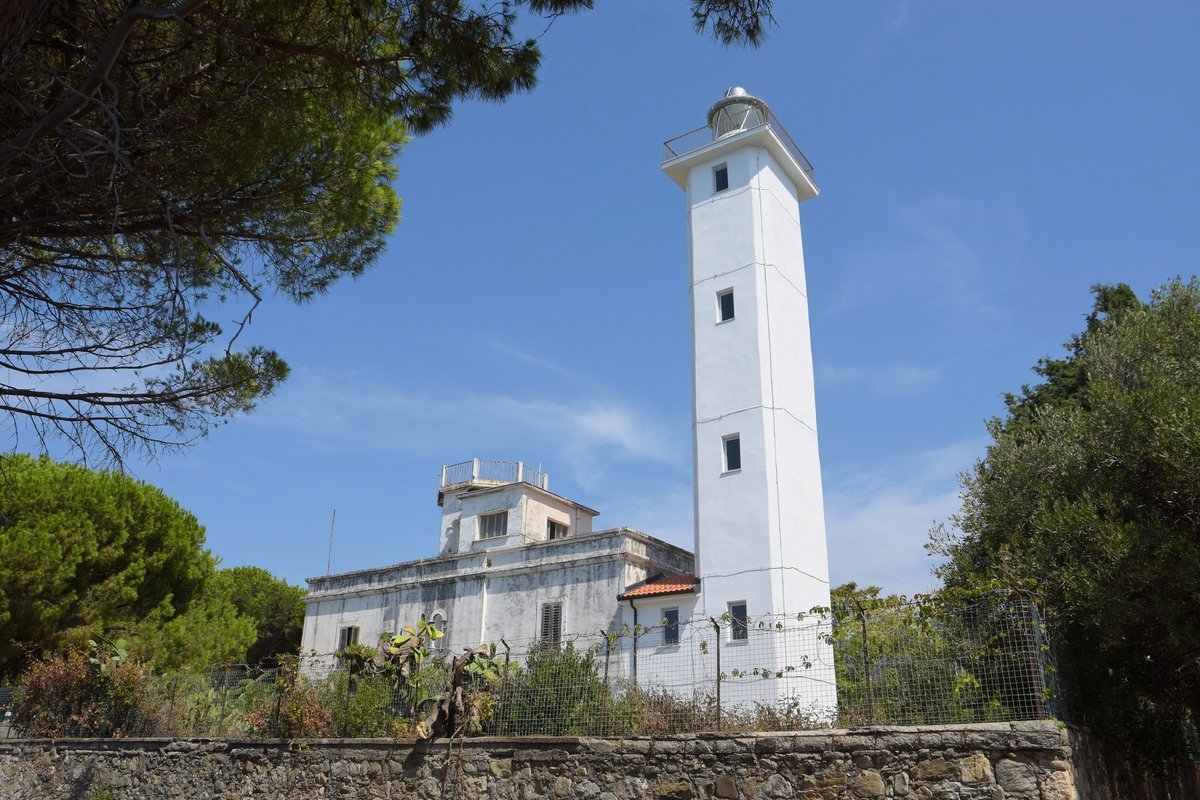 If you're passing through Gizzeria, don't miss the Capo Suvero Lighthouse. This lighthouse, active since 1869, marks the northern entrance to the Gulf of Sant'Eufemia. The current structure, built in 1984, is a square masonry tower 25 meters high, white with a metallic gray dome. It emits two white flashes every 10 seconds, visible up to 16 nautical miles (about 30 km). I was fascinated by the contrast between the white of the lighthouse and the blue of the sea. At its foot lies Spiaggia del Turrazzo, perfect for a walk. The lighthouse is managed by the Italian Navy and is part of an itinerary that connects archaeology and coastal landscapes from Capo Suvero to Punta Alice. It has been repeatedly listed among the FAI's Places of the Heart, deservedly so. The view over the Tyrrhenian coast of the Lametino area is spectacular, especially at sunset. Nearby stands the old octagonal tower from 1869 and some ruined watchtowers, reminiscent of Saracen raids. A place that combines history, architecture, and nature.
Taverna Civic Museum: A Dive into Art Between Baroque and Contemporary
- Piazza del Popolo 14, Taverna (CZ)
- https://www.museocivicotaverna.it/
- Open in Google Maps
- View on Google Images
 If you're passing through Taverna, the Civic Museum is a stop that holds its own against the big museums. Housed in the former convent of San Domenico – a 15th-century building that is worth a visit in itself – it gathers a collection spanning from the 1600s to the contemporary. The real highlight is the collection dedicated to Mattia Preti, the 'Cavalier Calabrese' born here in 1613. You'll find his canvases like the 'Madonna degli Angeli' and a rare preparatory drawing for the frescoes in Modena. But it's not just Baroque: the museum has a modern soul, with works by Mimmo Rotella, Angelo Savelli, and other 20th-century artists. One of the most intriguing rooms is the one dedicated to the ancient Piterà Quattromani pharmacy, with hand-carved 19th-century furniture. And if you like contemporary art, on the ground floor there's a gallery with temporary exhibitions. The visit is completed by the church of San Domenico, which houses other paintings by Preti. Admission costs 5 euros (reduced 3 for over 65, free for under 6) and the museum is closed on Mondays. They open in the morning and afternoon, but hours change between summer and winter, so it's best to check. In 2023 it became part of the National Museum System, a recognition that says it all about the quality of the visit.
Castel Sant'Angelo: A Balcony over the Isthmus
- Via Castello, Tiriolo (CZ)
- Open in Google Maps
- View on Google Images
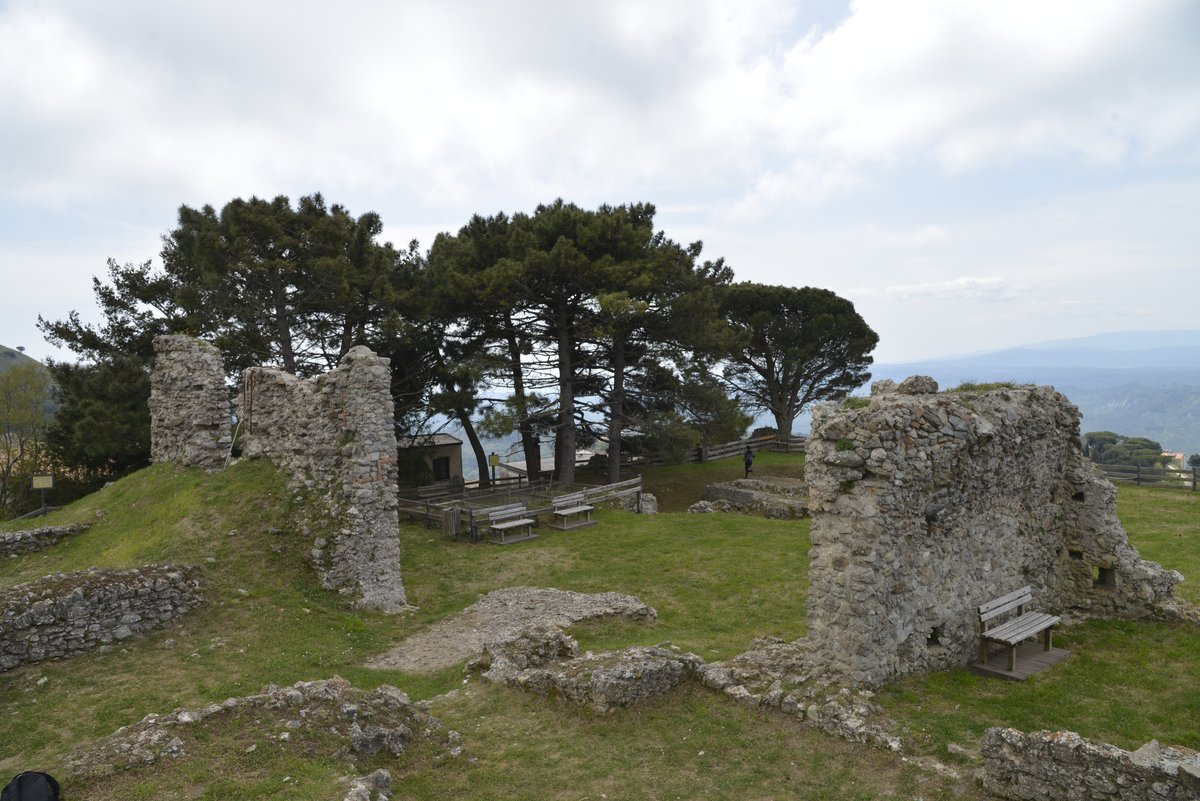 Perched atop Mount Lairta in Tiriolo, Castel Sant'Angelo is one of those places that makes you understand why Calabria was fought over for centuries. Its location is mind-blowing: from the clearing among the ruins, with a single glance you can see both the Ionian and Tyrrhenian Seas. Yes, exactly: the Isthmus of Catanzaro narrows here, and the castle once controlled it all. Built by the Normans in the 11th century under Hugh of Falloc, it witnessed battles, earthquakes, and shifts in power. In 1282, during the War of the Sicilian Vespers, Charles of Anjou fortified it and entrusted it to Bertrand of Artois. In 1497, the people of Tiriolo rebelled against the feudal lord Galeotto Carafa and opened the gates to the French. Like something out of a movie, really. Then, in the 16th century, it became the seat of the General Governor of Justice and even a prison. The earthquakes of 1638 and 1783 reduced it to rubble, but excavations in the 1990s uncovered Aragonese circular towers and a rainwater cistern. Today it is a fascinating archaeological site, a bit left to itself, but precisely for that reason authentic. Climb up there for the view: it's worth every step. Bring water and comfortable shoes, and maybe binoculars to scan the two seas.
Carlo V Tower: The Sea Sentinel of Soverato
- Via della Galleria, Soverato (CZ)
- Open in Google Maps
- View on Google Images
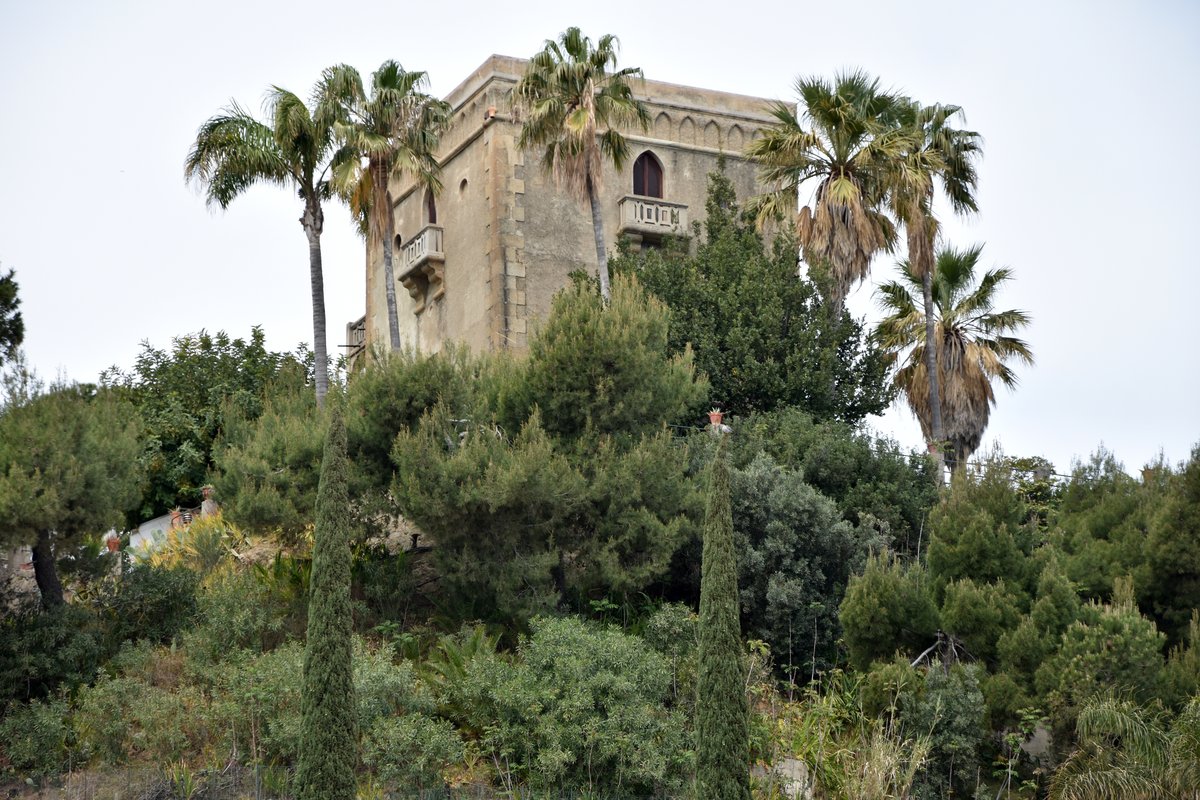 The Torre di Carlo V, which locals call Turrazzo, is the most recognizable symbol of Soverato. Strolling along the waterfront, you see it rise between palm trees and modern houses: it is a square tower perched on a rocky spur north of the center, overlooking the Ionian Sea. Yet the name is misleading: it was not built for Charles V, but between the late 16th and early 17th centuries, when the Kingdom of Naples defended itself against Turkish and Saracen pirates. It was part of the system of 339 coastal towers, managed by the cavallari – men on horseback who spread the alarm. Beneath the tower, an underground tunnel led to the sea, useful for supplies or escapes. It was once surrounded by a moat with a drawbridge, now all gone. The structure is privately owned, but occasionally opened to the public for special events. Nearby, the Santicelli Botanical Garden offers a great view of the tower, and a little further up, in the medieval village of Soverato Superiore, you can breathe a medieval atmosphere. Suberatumella? According to legend, a beautiful princess has lived here for centuries, protected by goddesses. Who knows. In 2018, the tower appeared on a postage stamp issued by the Ministry of Economic Development, in the 'Tourism' series, testifying to its timeless charm. If you happen to be in Soverato, stop for a moment and look at it: it's one of those structures that tell stories of the sea, defense, and daily life.
Soverato Vecchia: Among Ruins and Panoramas
- Via Giuseppe Verdi, Soverato (CZ)
- Open in Google Maps
- View on Google Images
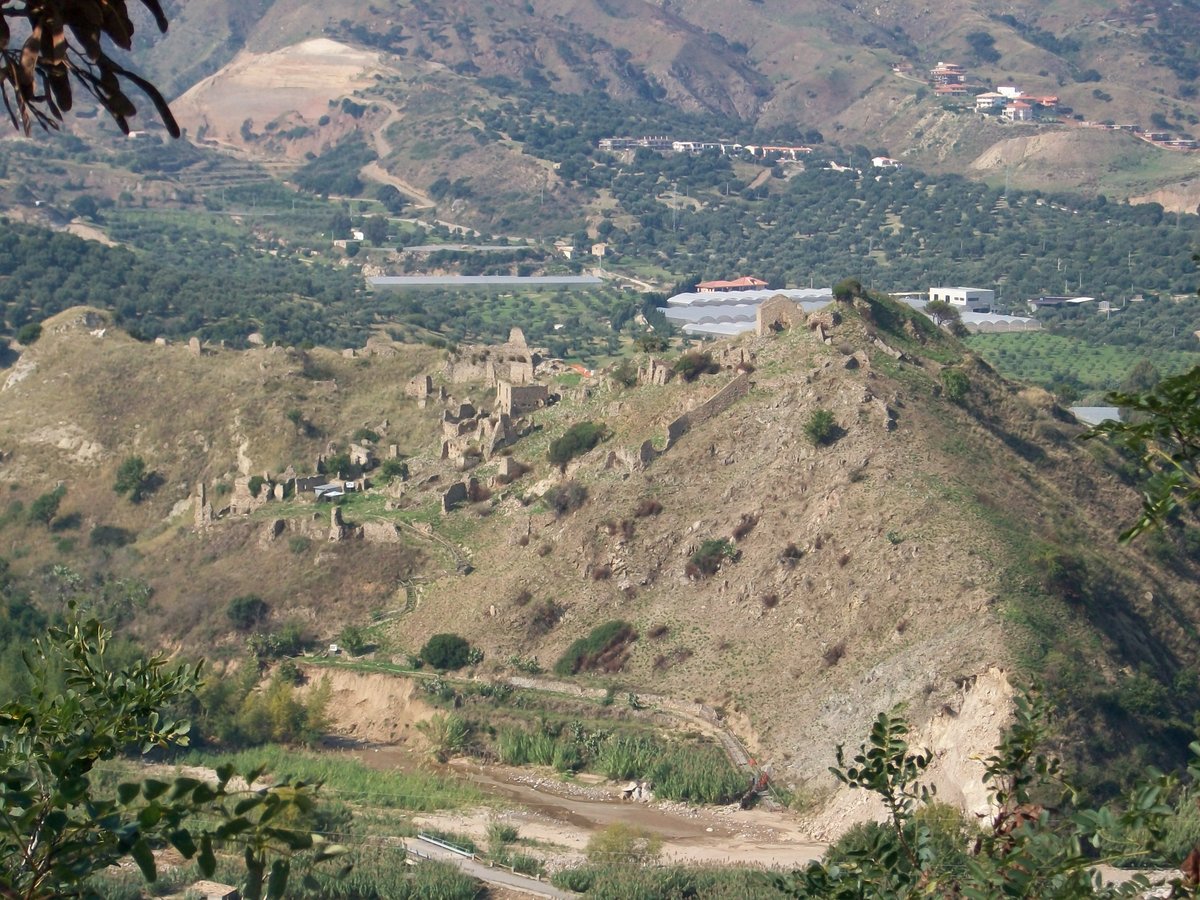 Perched on a hill 95 meters high, Soverato Vecchia is the ancient heart of Soverato, a fortified village that tells centuries of history. Its origins date back to the 10th century, when the population took refuge here to escape Saracen raids. The earthquake of 1783 razed it to the ground, and today only fascinating ruins remain, enveloped by Mediterranean scrub. Reaching it is an adventure: a 30-minute walk on a trail suitable even for families with children, which offers a breathtaking view of the Gulf of Squillace. Among the ruins stand out the Palazzo Baronale, with its two floors and over 100 square meters, and the Chiesa Matrice, which once housed the famous Pietà by Antonello Gagini (now in Soverato Superiore). Strolling through the narrow alleys and tower-houses, you breathe an atmosphere suspended in time. According to local legend, among these stones lies a hidden treasure – who knows, you might find it! Bring comfortable shoes, water, and a camera: the view from the top is worth every step. A perfect place for those who love history, nature, and authentic emotions.
Mediterranean Biodiversity Park: A Green Lung Between Art and Nature
- Catanzaro (CZ)
- Open in Google Maps
- View on Google Images
 If you think a park is just trees and benches, the Mediterranean Biodiversity Park in Catanzaro will change your mind. With its 60 hectares, this green space is far more than a simple garden: it's an open-air museum, an animal rescue center, and a paradise for sports enthusiasts. Opened in 2004 on the initiative of then-provincial president Michele Traversa, it was born from the redevelopment of an abandoned area and has become the city's green lung. The best part? Admission is free, and it's open daily until late evening (until midnight in winter, until 1:30 am in summer).
Strolling along the tree-lined avenues – from Viale dei Carrubi to Viale dei Ciliegi – you'll come across 25 contemporary art works by artists such as Jan Fabre, Antony Gormley, and Mimmo Paladino. My favorite? Fabre's Man Measuring the Clouds, a bronze sculpture that seems to challenge the sky. Don't miss the MUSMI, the Military Historical Museum dedicated to the Catanzaro Brigade, with relics from the Napoleonic era to World War II (ticket about €3).
For nature lovers, the CRAS (Wild Animal Rescue Center) is a must-see: here they care for eagle owls, eagles, parrots, and deer. And there's also the swan lake, the laurel labyrinth, the Valley of the Mills with its trails and breathtaking views. In short, a place to get lost and find yourself.
Politeama Theatre: A Modern Gem in the Historic Center
- Go to the page: Teatro Politeama Catanzaro: Liberty Architecture and Theatre Season in the Historic Center
- Via Italia, Catanzaro (CZ)
- Open in Google Maps
- View on Google Images
 In the heart of Catanzaro, on Via Jannoni, stands the Teatro Politeama Mario Foglietti, inaugurated on November 29, 2002 with a concert by the Arena di Verona Orchestra. It is the newest of the great Italian theatres, but it already tells a long story: in its place were the Politeama cinema-theatre and the covered market, demolished to make way for this masterpiece by architect Paolo Portoghesi. The curved façade is inspired by Borromini's Oratorio dei Filippini, and inside you'll find a horseshoe-shaped auditorium with five tiers of boxes: a true jewel box with 930 seats. The stage is enormous – 22 meters wide – and the acoustics are famous, improved when they replaced the carpet with parquet flooring in 2009. The details leave you speechless: nearly 4,000 light fixtures, 60 km of electrical cables, and a scenic shell at the top. The program ranges from drama to musicals, symphony concerts to opera: in 2025, Arturo Brachetti, Stefano Bollani, and even Verdi's Aida are coming. The box office is open Monday to Saturday, 10-13 and 16-19 (tel. 0961 501818). Arrive at least 20 minutes early, because once the show starts, you cannot enter. A traveler's tip: book a box to feel a bit aristocratic, and before the show enjoy the artistic fountain in the entrance square.