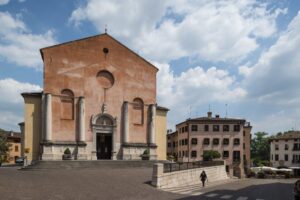
Valvasone: Medieval Village with 16th-Century Monumental Organ and Pumpkin Festival

Valvasone, or Voleson in the Friulian language, is a perfectly preserved medieval village in the Friulian plain, featuring ancient walls, stone houses, and an authentic atmosphere. The Castle of Valvasone dominates the landscape and hosts cultural exhibitions, while the Church of Saints Peter and Paul houses a precious monumental organ from the 16th century. The village is famous for its autumn Pumpkin Festival and offers typical products such as San Daniele ham and Friulian wines.

  • Medieval castle with towers, an inner courtyard, and frequent cultural exhibitions and events
  • Monumental 16th-century organ in the Church of Saints Peter and Paul, one of the oldest in Friuli Venezia Giulia
  • Autumn Pumpkin Festival with traditional dishes and a festive atmosphere
  • Local typical products such as San Daniele ham and Friulian wines in artisan shops

Copertina itinerario Valvasone: Medieval Village with 16th-Century Monumental Organ and Pumpkin Festival
Valvasone Arzene in the province of Pordenone offers a perfectly preserved medieval historic center with a castle, a church featuring a 16th-century organ, and culinary traditions like the autumn Pumpkin Festival.

Good to know


Introduction

Valvasone Arzene, also known as Voleson Darzin in Friulian, is a medieval village that captures your attention at first glance. As soon as you arrive, you’re greeted by an atmosphere suspended in time, with its ancient walls that seem to tell centuries-old stories. The heart of the village is dominated by the Castle of Valvasone, an imposing structure that towers over the landscape of the Friulian plain. Walking along the cobblestone streets, you breathe in an authentic air, far from tourist chaos, perfect for those seeking a corner of tranquility and beauty. This place is not just a postcard: it’s an experience that makes you feel part of a living history, where every stone has meaning. Ideal for a day trip or a relaxing weekend, Valvasone surprises with its genuineness and its unique character in the panorama of Italian villages.

Historical Overview

The history of Valvasone is closely tied to the eponymous family that ruled the town for centuries. The earliest records date back to the 12th century, when the castle was built as a defensive fortress. In the 14th century, the town became an important commercial hub along the trade routes between Venice and Austria, fostering a vibrant economy. During the 18th century, under the rule of the Republic of Venice, Valvasone experienced a period of prosperity, marked by the construction of noble buildings and the enhancement of its artistic heritage. Today, the town preserves this past intact, with visible traces in its architecture and local traditions.

  • 12th century: Construction of Valvasone Castle as a fortress.
  • 14th century: Development as a strategic commercial center.
  • 18th century: Flourishing under Venetian rule.
  • Today: Preservation of medieval and Renaissance heritage.

The Castle and Its Monumental Organ

The Castle of Valvasone is the undisputed symbol of the village. Built in stone, with towers and battlements, it dominates the landscape and offers a breathtaking view of the surrounding countryside. Inside, don’t miss the Church of San Giovanni Battista, which houses a unique treasure: the monumental organ from 1795, crafted by the famous organ builder Gaetano Callido. This instrument, perfectly preserved, is considered one of the most valuable in Friuli-Venezia Giulia and is still used for concerts and musical events. Visiting the castle means immersing yourself in centuries of history, among frescoed halls and period furnishings, while also appreciating a masterpiece of Italian organ art. It’s an experience that unforgettable combines architecture, music, and culture.

The Pumpkin Festival and Culinary Traditions

Valvasone isn’t just about history: it’s also about taste! If you visit the village in autumn, you might come across the famous Pumpkin Festival, an event celebrating this vegetable with traditional dishes, market stalls, and entertainment. Pumpkin takes center stage here in recipes like pumpkin gnocchi or typical desserts, which you can sample at local trattorias. But the local cuisine also offers other authentic flavors, such as alpine cheeses and Friulian cured meats, perfect to pair with local wines like Refosco. This focus on food and wine tradition makes Valvasone an ideal destination for foodies, who can discover genuine flavors in a charming medieval setting. It’s a way to experience the village not just with your eyes, but also with your palate!

Why Visit It

Valvasone is worth a visit for at least three concrete reasons. First, the Castle and Callido Organ offer a unique cultural experience, rare to find in villages of this size. Second, the authentic and non-touristy atmosphere allows you to explore at a leisurely pace, without crowds, enjoying every corner in tranquility. Third, its proximity to Pordenone and other Friulian attractions makes it perfect as a base for discovering the area, perhaps paired with a wine tasting or a walk along the Tagliamento River. Additionally, if you love photography, you’ll find medieval scenes perfect for memorable shots, especially at dawn or dusk.

When to Go

The most enchanting time to visit Valvasone is undoubtedly in autumn, when the warm hues of the Friulian countryside blend with the medieval atmosphere of the village. During this season, you can also take part in the Pumpkin Festival, experiencing a traditional event that brings the streets to life. If you prefer spring, you’ll find the village in bloom and perfect for outdoor strolls. For a more intimate experience, I recommend going early in the morning or late in the afternoon, when the light is soft and visitors are few, allowing you to savor the peace of the place at your own pace.

In the Surroundings

To enrich your visit to Valvasone, explore the surroundings with two thematic suggestions. First, head to Pordenone, the provincial capital, where you can admire the Duomo di San Marco and the Museo Civico d’Arte, featuring works by local and national artists. Second, if you love nature, take a trip to Spilimbergo Castle Park, another medieval gem of Friuli known for its mosaics and scenic landscape. Both locations are connected by historical-artistic themes and allow you to discover other facets of Friuli without venturing too far.

Itineraries nearby


💡 Did You Know…?

A curiosity that makes a visit to Valvasone unique is linked to its ancient name, Voleson, which means ‘place of foxes’. According to legend, the village was founded by a group of hunters chasing a fox, considered a sacred animal. Another peculiarity is the church’s monumental organ, built in 1532 by Vincenzo Colombi: it is one of the few still-functioning Renaissance organs in Italy and is played during concerts and celebrations, offering a unique auditory experience. Additionally, the castle preserves traces of 15th-century frescoes, discovered during recent restorations, depicting scenes of courtly life and heraldic symbols of the families who lived there.