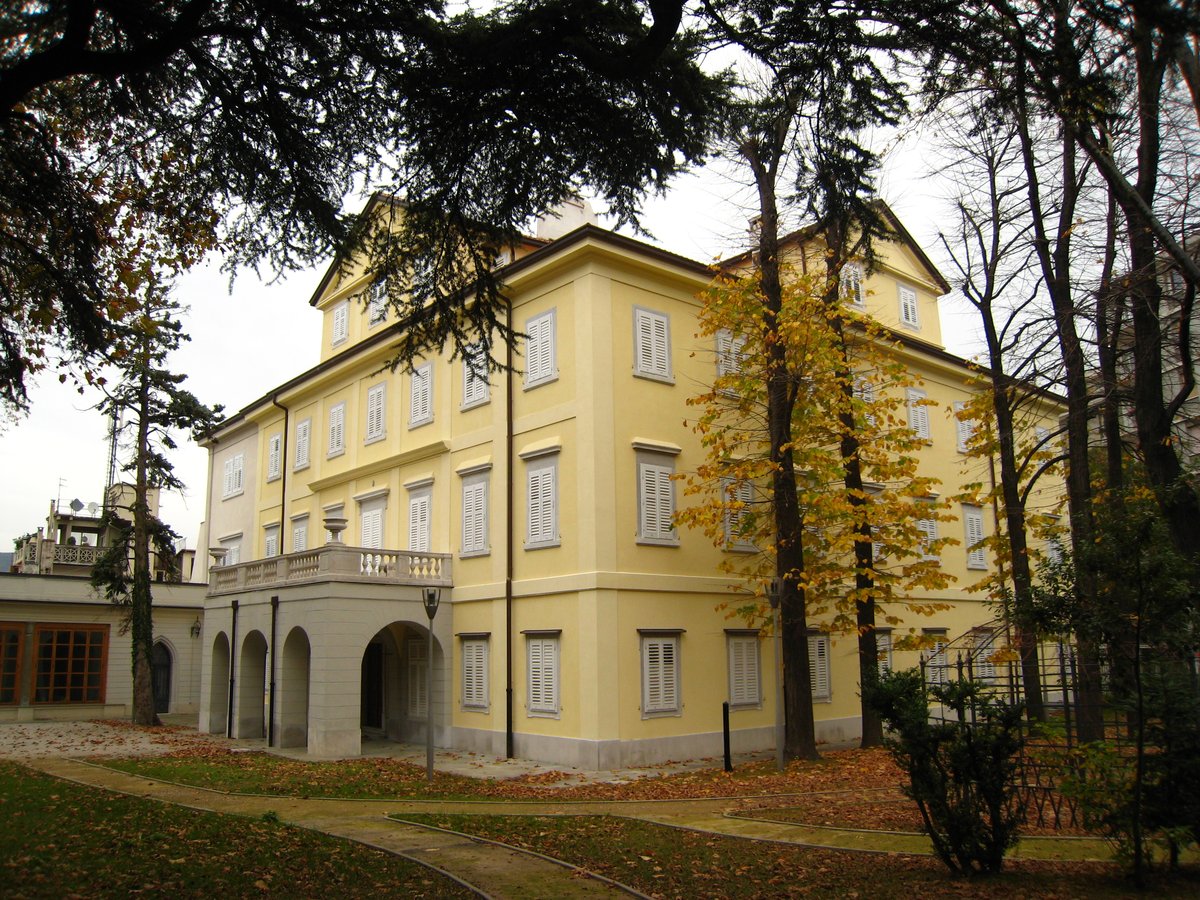
The Civico Museo Sartorio is a neoclassical palace that was the residence of the Sartorio family, wealthy Trieste merchants. The rooms preserve the atmosphere of a lived-in home with original 19th-century furnishings, offering an authentic glimpse into the bourgeois life of Trieste between the 19th and 20th centuries. Its location in a tranquil residential area makes it an oasis of calm away from tourist noise.
- Original 19th-century furnishings that recreate the domestic atmosphere of a bourgeois residence
- Paintings by local artists such as Giuseppe Tominz and Giuseppe Bernardino Bison
- Ceramic collection featuring maiolica from Deruta and Montelupo, as well as Oriental pieces
- Intimate and cozy atmosphere without the crowds of busier museums
Introduction
The Civico Museo Sartorio is one of those places that surprises you, hidden as it is in an elegant yet not overly showy neoclassical palace in a residential area of Trieste. Don’t expect the crowds of more famous museums: here the atmosphere is intimate, almost homely. Upon entering, you get the feeling of being a guest in a house from another era, where each room tells a different story. The art collections, ceramics, and furnishings aren’t displayed in a cold, detached manner but seem to still live in the spaces they were intended for. Personally, I was struck by the contrast between the sober exterior and the richness of the interiors, a true gem that many hurried tourists risk missing. It’s the ideal place for those seeking culture without the hustle and bustle, to immerse themselves in the more authentic, reflective side of Trieste.
Historical Overview
The museum’s history is closely tied to the Sartorio family, one of Trieste’s most influential families between the 18th and 19th centuries, who amassed wealth through maritime trade. The palace served as their residence and was donated to the city in 1947 along with all its collections, becoming a civic museum. It is not merely a house-museum but a genuine glimpse into Trieste’s bourgeois life, featuring objects spanning from the 18th to the 20th century. A key figure is Anna Segrè Sartorio, the last heir, who envisioned this public purpose. The timeline summary:
- Late 18th century: The Sartorio family settles in Trieste.
- 1846: The neoclassical palace is built based on Nicolò Pertsch’s design.
- 1947: Donation to the city and establishment of the museum.
- 2000s: Restorations and reinstallations to enhance the collections.
Ceramics: A Journey Through Taste
One of the most fascinating sections is dedicated to ceramics, which are not just museum pieces but tell the story of taste and cultural exchanges within the family. Here you’ll find 18th-century majolica from Deruta and Montelupo, as well as Oriental and European porcelain, evidence of Trieste’s commercial trade. I was impressed by the variety: from refined tableware to decorative figurines, each piece has its own story. They are not displayed in anonymous cases but in living rooms and rooms that enhance their beauty. It’s like taking a journey through time via tableware and furnishings, discovering how applied art was an integral part of the daily life of the upper middle class. Perhaps they are not universally known masterpieces, but they have a unique charm that makes you appreciate the details.
Art and Furnishings: The Domestic Atmosphere
What makes Sartorio special is its atmosphere: it’s not a traditional museum, but a house that has preserved its character. The original furnishings, from inlaid wooden furniture to period textiles, blend with paintings and sculptures, creating coherent and evocative environments. Works by local artists like Giuseppe Tominz and Giuseppe Bernardino Bison stand out, portraying Triestine figures and landscapes. Walking through the rooms, one breathes the discreet elegance of a bourgeois residence, with personal touches like family portraits or toiletries. Sometimes I wonder whether the art or the context in which it is placed is more interesting: here the two merge, offering an immersive experience. It’s a place that invites you to slow down and observe carefully, almost as if you were invited to a tea party from the past.
Why Visit It
Visiting the Civico Museo Sartorio is worthwhile for at least three practical reasons. First, it’s an oasis of tranquility compared to Trieste’s more crowded museums, perfect for a relaxed visit without queues. Second, it offers an authentic perspective on the city’s history through the objects of a family, not just dates and events: you better understand how Trieste’s bourgeoisie lived. Third, the collections are varied but not overwhelming, concentrated in manageable spaces, ideal even for those with little time or who don’t want to overload themselves with information. Plus, the location in a residential building lets you discover a less touristy corner of Trieste, away from the city center’s chaos. In short, it’s a smart choice for those seeking quality without effort.
When to Go
The best time to visit the museum, in my experience, is a weekday afternoon, when there are fewer people and natural light filters through the windows, highlighting the interior details. Avoid summer weekends if possible, as you might encounter more casual visitors. In terms of season, autumn and winter are ideal: Trieste’s grey weather complements the intimate atmosphere of the palace, and after your visit, you can take refuge in a historic café without rushing. In summer, however, the museum offers a cool break from the heat, but check the opening hours as they may vary. Generally, choose a time when you can take it easy, without hurrying: here, beauty lies in the details.
In the Surroundings
After the museum, you can explore the surrounding residential area, filled with historic villas and palaces that tell the story of bourgeois Trieste. A short walk away is the Villa Revoltella Park, a tranquil and well-maintained public garden, perfect for a refreshing stroll. If you wish to continue with the art and culture theme, you can easily reach the Civic Museum of History and Art, which completes the picture with archaeological finds and broader collections. Both locations are within walking distance, requiring no transportation, and allow you to see a different side of Trieste, away from the more beaten paths. It’s a way to enrich your visit without straying too far from the intimate atmosphere of the Sartorio.