Basilica Cathedral of Santa Maria Assunta: Carrara Marble and Romanesque Crypt in Sarzana

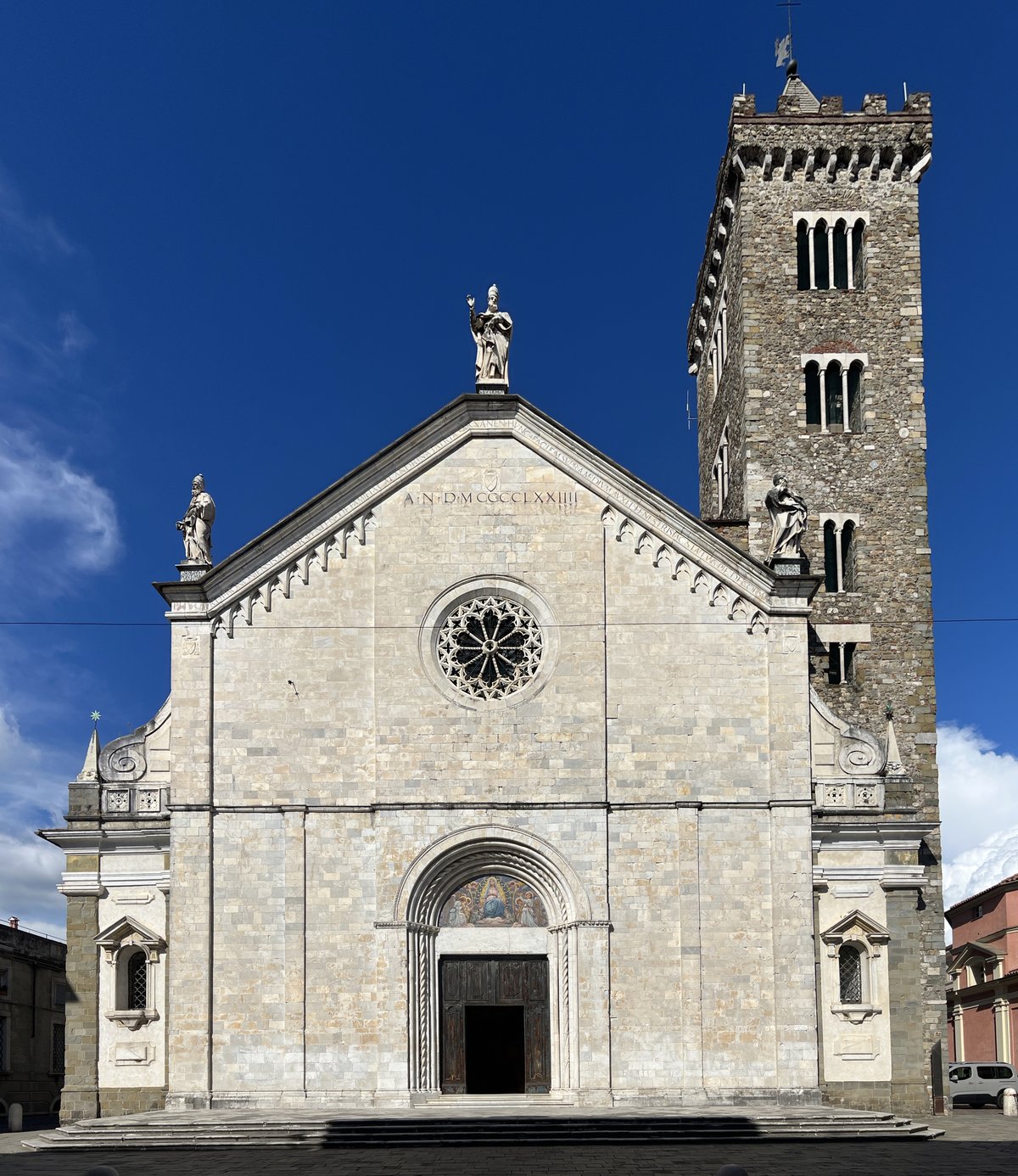
The Basilica Cathedral of Santa Maria Assunta in Sarzana is a gem of Ligurian Romanesque architecture in the heart of the historic center. Its facade of white Carrara marble, characteristic rose window, and decorated portal welcome visitors into an atmosphere of peace and solemnity. Inside, majestic naves, carved capitals, and artworks tell centuries of history, with the Romanesque crypt preserving ancient relics.

  • Facade of white Carrara marble with a rose window and decorated portal
  • Accessible Romanesque crypt with sturdy columns and a mystical atmosphere
  • 15th-century wooden crucifix suspended above the main altar
  • Relic of the Most Precious Blood preserved in the crypt
Copertina itinerario Basilica Cathedral of Santa Maria Assunta: Carrara Marble and Romanesque Crypt in Sarzana
Ligurian Romanesque basilica with a facade of white Carrara marble, majestic naves, and a historic crypt in the medieval center of Sarzana. Discover the 15th-century wooden crucifix and the relic of the Most Precious Blood.

Good to know


Introduction

The Basilica Cathedral of Santa Maria Assunta in Sarzana welcomes you with a white marble facade that seems to shine against the blue sky of Lunigiana. It’s not just a church, but a visual landmark that dominates the historic center, with its slender bell tower rising above the red rooftops. Upon entering, you breathe an atmosphere of peace and solemnity, far from the tourist bustle of the nearby Cinque Terre. I was immediately struck by the light filtering through the windows, creating plays of shadow on the ancient stones. Sarzana itself, with its medieval walls, seems to protect this Romanesque jewel like a precious treasure.

Historical Notes

The history of the cathedral is closely intertwined with that of Sarzana. Construction began in the 12th century, but it took centuries to complete, with subsequent additions enriching its appearance. A crucial event was the transfer of the episcopal seat from Luni to Sarzana in 1204, which elevated the church to cathedral status. In the 15th century, under Bishop Filippo Calandrini, significant artworks were added. It is not just a religious building, but a symbol of the city’s power and faith through the centuries. I think of the many pilgrims and local residents who have passed through those doors.

  • 12th century: Construction begins in Romanesque style.
  • 1204: Transfer of the episcopal seat from Luni, making the cathedral the religious center of the area.
  • 15th century: Addition of Renaissance works, such as the wooden crucifix attributed to local craftsmen.
  • Subsequent centuries: Modifications and restorations that have preserved the original essence.

Art and Details Not to Be Missed

Inside, the eye is drawn to several elements. The 15th-century wooden crucifix, suspended above the main altar, has an intense expression that seems to speak to the visitor. Then there are the frescoes, somewhat faded by time but still evocative, telling sacred stories. But in my opinion, the real treasure is the Romanesque crypt, accessible via a side staircase. It’s a low, intimate space with stout columns and an almost mystical atmosphere. Here, relics and ancient remains are preserved, and the feeling is of being in a place outside of time. It’s not as grand as other Italian cathedrals, but it has an authentic character that makes you feel part of the local history.

Architecture That Tells a Story

Looking at the structure, you immediately notice the mix of styles. The façade is Romanesque, with that central rose window and decorated portals, but the bell tower has more Gothic lines, added later. Inside, the naves are wide and majestic, with rounded arches guiding the eye toward the apse. The materials used speak of the territory: white Carrara marble for the exterior, local stone for the interior. I like to think that each stone was carefully chosen by the artisans of the time. The building is not perfectly symmetrical, and perhaps that’s what makes it human and fascinating. You can sense the work of generations who left their mark.

Why Visit It

Visiting this cathedral is worthwhile for at least three concrete reasons. First, it’s a well-preserved example of Ligurian Romanesque, distinct from the more famous styles of central Italy, immersing you in local art without tourist crowds. Second, the crypt is a corner of silence and mystery, perfect for a reflective break during a stroll through Sarzana. Third, its location in the heart of the medieval village allows you to combine the visit with a walk along cobblestone streets and typical shops, perhaps sampling a cheese focaccia. It’s not a mandatory stop for those in a hurry, but for those wanting to understand the soul of Lunigiana.

When to Go

The best time? I suggest visiting early in the morning or late in the afternoon, when the sunlight hits the marble facade, creating golden reflections that highlight the details. In summer, avoid the midday hours because it can get warm inside, and prefer intermediate seasons like spring or autumn, when the atmosphere is more tranquil and the air is fresh. If it happens, a local holiday can offer the thrill of hearing the bells ring, but in general, any time is good to enjoy its quiet. Personally, I found an autumn afternoon magical, with leaves fluttering in the square.

In the Surroundings

After visiting the cathedral, explore the historic center of Sarzana, with the Fortezza di Sarzanello dominating the hill: it’s within walking distance and offers breathtaking views of the Magra Valley. Another idea is to stop by the Diocesan Museum, which preserves sacred artworks connected to the basilica, including vestments and ancient manuscripts. If you enjoy nature, Lunigiana is full of trails for short walks among olive groves and vineyards, where you can discover local products like Colli di Luni wine. Sarzana itself has a lively weekly market, perfect for tasting Ligurian specialties.

💡 Did You Know…?

A unique curiosity that makes the visit special: the cathedral’s crypt houses the relic of the Most Precious Blood, brought to Sarzana in 782 according to tradition. It is a small ampoule believed to contain drops of Christ’s blood, brought by a soldier returning from the Holy Land. Every year, on May 3rd, a solemn procession is held in its honor, an event that attracts faithful from across the region. Also, observe the bell tower closely: built in the 13th century, it has been damaged by earthquakes and restored multiple times but still retains its original structure. Climbing it (when possible) offers a panoramic view over Sarzana and the surrounding hills, a reward for those seeking unusual perspectives.