Gualtieri Tower: 14th-Century Medieval Tower in San Benedetto’s Historic Center

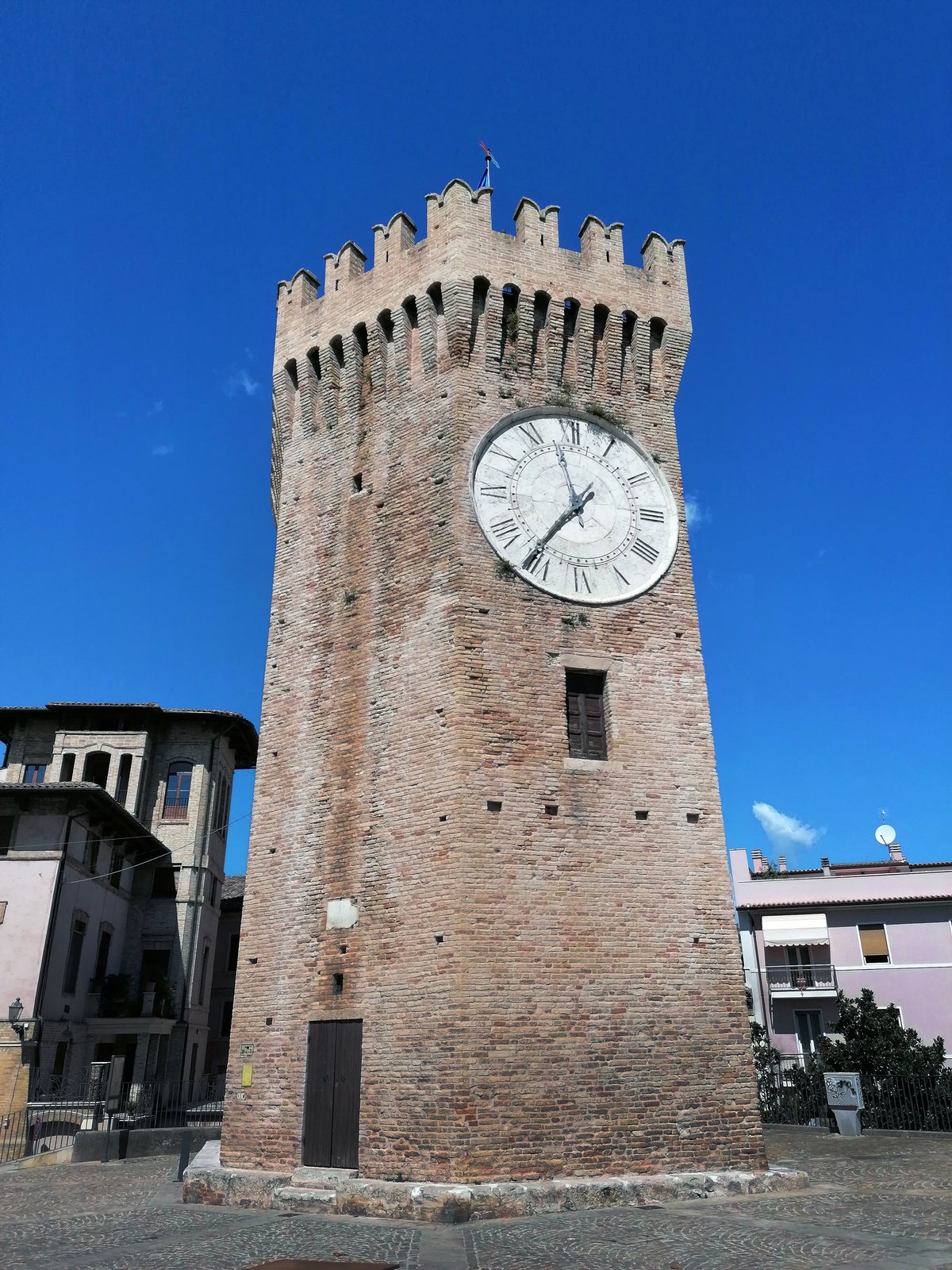
Gualtieri Tower is a 14th-century medieval tower, one of the few remaining parts of San Benedetto del Tronto’s ancient defensive system. Located in the historic center, it offers a journey into the past with its brick and stone structure, perfect for sunset photography. The surrounding area is rich with artisan shops and traditional eateries.

  • 14th-century medieval tower with brick and stone structure
  • Located in the historic center, just steps from Piazza Matteotti and the covered market
  • Ideal for photography, especially at sunset, with reddish bricks and slender shape
  • Near restaurants serving local specialties like Ascolana olives and brodetto fish stew

Copertina itinerario Gualtieri Tower: 14th-Century Medieval Tower in San Benedetto's Historic Center
A 14th-century medieval tower in the heart of San Benedetto del Tronto’s historic center. Externally accessible structure with reddish bricks, near Piazza Matteotti, the covered market, and restaurants serving local specialties.

Good to know


Introduction

The Torre dei Gualtieri in San Benedetto del Tronto is not just a monument; it’s a landmark that immediately captures your attention. You see it towering above the houses in the historic center, its warm color contrasting with the blue of the sea in the background. It’s strange to think that here, just steps from the beach and local establishments, there’s such an ancient piece of history. The feeling is of being in a corner suspended in time, where the sound of the waves blends with the silence of the stones. For me, it’s the perfect symbol of this city: modern and lively, yet with deep roots. It’s not an isolated tower in the countryside, but an integral part of the urban fabric, and that makes it even more interesting to discover.

Historical Overview

The tower’s history dates back to the Middle Ages, linked to the powerful Gualtieri family, who held property and influence here. It was not merely a watchtower, but rather a symbol of power and control over the surrounding territory. Over the centuries, it has undergone transformations and witnessed wars, dominations, and social changes. Today, after careful restorations, it stands in excellent condition, allowing us to admire its massive structure and architectural details. It is a history book in stone, telling centuries of life in San Benedetto.

  • 13th-14th century: Likely period of construction, linked to the Gualtieri family.
  • Subsequent centuries: Used for various purposes, including defensive and residential ones.
  • Modern restorations: Conservation interventions that have ensured its accessibility.

Architecture and Details

What struck me most was its solid simplicity. There are no elaborate decorations, but a clean geometry that speaks of practical function. The base is wide and robust, built to withstand, and tapers slightly upward. The materials are local: brick and stone, which take on warm, almost golden tones in the sunlight. If you pay attention, you’ll notice the narrow arrow slits, designed for archers, and the crenellations at the top, though today they have a more ‘tamed’ appearance. Climbing up (when possible) offers a unique view: on one side, the maze of alleyways in the historic center, on the other, the endless horizon of the Adriatic Sea. It’s a contrast that leaves a lasting impression.

The Neighborhood’s Atmosphere

The tower shouldn’t be seen in isolation. The real beauty lies in immersing yourself in the surrounding neighborhood: a maze of cobblestone alleys, low houses with soft colors, and small artisan shops. In the evening, the soft lighting creates plays of light and shadow on the tower’s walls, offering an almost magical atmosphere. You’ll often come across residents chatting at their doorsteps or sleepy cats basking in the sun. It’s an authentic corner, away from the crowds of the riviera, where time seems to flow more slowly. I recommend getting a bit lost among these little streets, perhaps ending up in one of the nearby small wine bars for a glass of Marche wine.

Why Visit It

First, because it’s a privileged observation point to understand the dual soul of San Benedetto: sea and history. Second, because its accessibility makes it an easy stop even on a seaside day, without needing extensive travel. Third, and perhaps most importantly, because it’s a ‘lived-in’ monument, integrated into the city’s daily life, not an isolated museum relic. Visiting it gives you the feeling of touching the continuity of local history firsthand, directly and unfiltered.

When to Go

I would recommend the late summer afternoon, when the heat begins to subside. The light is more slanted, golden, and enhances the warm colors of the stone. Plus, the air becomes cooler, allowing you to enjoy a stroll through the neighborhood without the stifling humidity. Alternatively, spring or autumn mornings are perfect: there’s a clear, crisp light, and the atmosphere is tranquil, without the summer crowds. I would avoid the midday hours on a sweltering August day—you’d risk rushing away too quickly.

In the Surroundings

Just a short walk away is the Sea Museum, which tells the city’s maritime tradition through artifacts and historic boats: a perfect complement to understand the context in which the tower was born. Then, if you want a taste experience, take a quick trip to the wholesale fish market (early in the morning), where you can breathe the authentic soul of San Benedetto: a whirlwind of colors, smells, and voices that brings you back to the fishing roots of the place.

💡 Did You Know…?

A little-known fact: the tower hasn’t always looked as it does today. Over the centuries, it has undergone several modifications, even to adapt to civilian uses. During some restoration work, fragments of pottery and ancient coins emerged, witnesses to daily life in the past. Additionally, according to some local sources, the tower was connected by underground passages to other defensive structures, though they are no longer passable today. A detail that makes the visit even more fascinating is the contrast between the medieval architecture of the tower and the surrounding modern buildings, a mix that tells the story of San Benedetto’s evolution from a fortified village to a modern seaside resort.