
The Santa Giulia Museum is Brescia’s main museum, housed in the ancient Lombard monastery. It tells the story of the city from prehistory to the Venetian era, with unique masterpieces and a monumental complex that is a UNESCO World Heritage site. Here’s what not to miss:
– The Roman domus of the Ortaglia with mosaics and frescoes
– The Basilica of San Salvatore and the Lombard crypt
– The Desiderius Cross, Carolingian goldsmith work with 212 gems
– The frescoed Nuns’ Choir and the Martinengo Mausoleum
Events nearby


A 14,000 sqm route through Roman and Lombard artifacts and masterpieces like the Desiderius Cross. A UNESCO World Heritage site in Brescia.
- https://www.bresciamusei.com/santagiulia.asp
- Via dei Musei 81b, Brescia (BS)
- +39 030 2977833
- Open in Google Maps
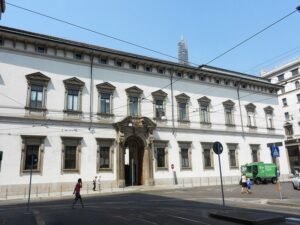
- View on Google Images Museo di Santa Giulia a Brescia
Good to know
Introduction
Entering the Museo di Santa Giulia is like opening a 3D history book. It’s not just any museum: here you walk on Roman mosaics, get lost in medieval cloisters, and meet the gaze of Lombard queens. All this across 14,000 square meters of a monastery that seems built specifically to tell you Brescia’s story. The first thing that strikes you is the stratification: beneath your feet are Roman domus, above rise Lombard bell towers. And in between, artworks that leave you speechless, like the Cross of Desiderius with its 212 gems. Prepare for a journey that starts in prehistory and reaches the 1700s, but feels like a single, intense breath.
Historical Notes
The museum is housed in the monastery of San Salvatore-Santa Giulia, founded in 753 AD by the last Lombard king Desiderio and his wife Ansa. They wanted a symbol of power, and they got it: the basilica of San Salvatore is one of the finest examples of Lombard religious architecture. After the fall of the kingdom, the monastery continued to grow until the Napoleonic suppression in 1798. Then, excavations and restorations transformed it into the museum we see today, opened in 1999. Since 2011, it has been part of the UNESCO World Heritage site ‘The Lombards in Italy’. Here are the key moments:
- 753 AD – Foundation of the monastery by Desiderio and Ansa.
- 8th-9th centuries – Expansions and treasure (Cross of Desiderio).
- 1798 – Napoleonic suppression, complex becomes a barracks.
- 1998-1999 – Opening of the City Museum after restorations.
- 2011 – UNESCO inscription.
Beneath the Asphalt, Ancient Rome
One of the most fascinating things about the museum is discovering what existed before the monastery. Beneath the cloisters and churches, excavations have uncovered two entire Roman domus: the Domus of Dionysus and the Domus of the Fountains, inhabited from the 1st to the 4th century AD. You walk on suspended walkways, and below you see incredibly preserved mosaics, colorful frescoes, and even the heating system. The Domus of the Fountains features a reconstructed garden (the Viridarium) with fruit trees and hedges. It’s like stepping back 2,000 years, but with the comfort of a modern museum.
The Nuns’ Treasure: the Cross of Desiderius
If there is one work that alone is worth the visit, it is the Cross of Desiderius. Housed on the upper floor of Santa Maria in Solario, this processional cross in wood and gold was crafted in the 9th century. It is studded with 212 gems, cameos, and glass pastes. The light filtering through the window makes it shine like a sunset. Next to it, the Lipsanoteca: a 4th-century ivory casket, finely carved. The nuns kept their most precious treasure here. Today we can admire it just a few centimeters away, and be left breathless.
Why visit it
First: it’s a museum that encapsulates millennia in a single place – perfect for anyone wanting to understand Brescia in just a few hours. Second: it’s part of the UNESCO site, and the combined ticket with the Archaeological Park (Capitolium) gives you a total immersion into history. Third: it’s never as crowded as other Italian museums, so you can enjoy the artworks in relative peace, even on weekends.
When to Go
The museum is closed on Mondays (except holidays), so plan for Tuesday-Sunday. The best time? Early morning at opening time 10:00, when the first rays illuminate the Cross of Desiderio. In autumn or spring, the Viridarium is stunning with the colors of the leaves. Avoid the midday hours on weekends if you want total silence – but even mid-afternoon is nice.
Nearby
Just a few steps away (via dei Musei continues) is the Archaeological Park of Roman Brescia, with the Capitolium and the theater. Not to be missed. Then, if you have time, climb up to the Castle of Brescia for a stunning view of the city. Or, for a dive into modern art, the Pinacoteca Tosio Martinengo is a 10-minute walk away. All these places are connected by the Brescia Museums Card, which saves you money.
Itineraries nearby
💡 Did You Know…?
Legend has it that Ermengarda, daughter of Desiderius and repudiated by Charlemagne, found refuge in the monastery. Manzoni’s tragedy made her immortal, and even today the atmosphere of the Nuns’ Choir seems to hold her sorrow.