Evocative Introduction
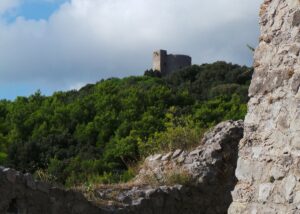
Castello Fienga is no ordinary castle: perched on the hill of Sant’Andrea, it overlooks the Sarno Valley with a view that stretches all the way to the sea. Here, medieval history intertwines with ghost legends, among Norman ruins and an elegant 19th-century palace. A hiking trail just over 3 km long takes you to the top, rewarding you with breathtaking panoramas. It is a place that speaks of illustrious imprisonments, tragic loves, and unsolved mysteries. If you love authentic villages and atmospheres suspended in time, this is the place for you.
Historical Notes
The first traces of the castle date back to the 10th century, with a mention in 984 in the Cavese Diplomatic Code. During the Angevin period, Charles I of Anjou expanded it and turned it into a residence. Figures of the caliber of Helen of the Angels (widow of Manfred of Hohenstaufen, who died within these walls in 1267) and Queen Joanna I of Anjou (imprisoned in 1381 and later transferred and killed) were imprisoned here. In the 14th century, Dante Alighieri and Giovanni Boccaccio stayed here as guests of Niccolò Acciaiuoli. In 1385 Pope Urban VI was confined here. Over time the castle lost its importance, and in the 19th century the Fienga family built the current palace, leveling part of the ancient structures. Today the site is publicly owned and hosts cultural events.
Architecture and Ruins
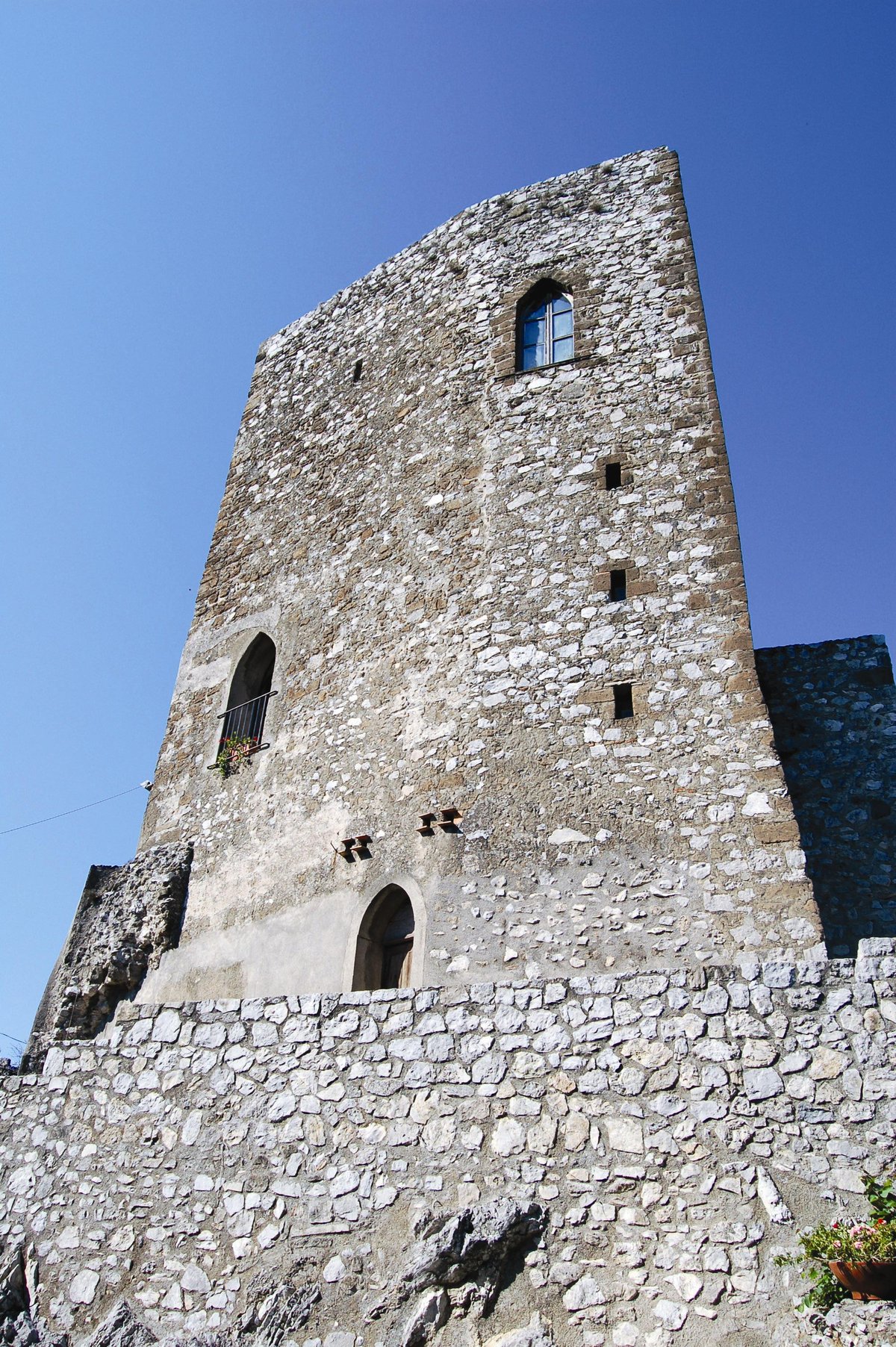
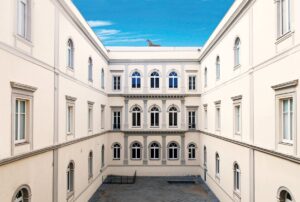
Of the ancient manor, the most prominent remnant is the pentagonal Norman tower, dating back to the 12th-13th centuries, rising from the highest point. A bit further, the so-called ‘aviary’ preserves three Gothic arches that frame the sky. Walking among the ruins, you can see the remains of two of the three original curtain walls and some cisterns. The 19th-century Fienga palace extends over two levels with a rectangular layout, surrounded by courtyards: one closer to the tower, the other larger, a true merloned parade ground. A small-domed chapel, built around the mid-19th century, adds an intimate touch. The contrast between medieval stone and the bourgeois style of the palace makes the place fascinating.
Legends and Ghosts
It is said that the castle is haunted. The most famous is Elena degli Angeli, who roams on full moon nights in search of her husband Manfredi. Then there is Giovanna I d’Angiò, who according to tradition wanders the walls accompanied by the souls of her lovers. And it doesn’t end there: stories tell of Cencia di Trastevere, a lovesick jailer, and Basilio di Levante, who died in the castle in 1406. Visitors report sudden screams and drops in temperature. Whether true or not, these stories add a mysterious charm to the visit.
Why Visit It
1) A dive into history: popes, kings, and poets like Dante and Boccaccio have walked here. 2) The trek to the castle: a loop trail of about 3.2 km with an elevation gain of 205 m, suitable for moderate hikers, offering breathtaking views. 3) The unique atmosphere of the place, where the silence of the ruins mingles with legends. In addition, in summer the Jazz in Parco festival takes place (although it has now moved, the castle still hosts cultural events organized by the association ‘Ridiamo Vita al Castello’).
When to Go
The best time? At sunset. The warm light illuminates the pentagonal tower and the Sarno valley turns red. If you love mysterious atmospheres, try a nighttime visit during a full moon: it is said that Elena’s ghost appears. In spring or autumn the climate is ideal for trekking, avoiding the summer heat. Early morning is cooler and less crowded.
Nearby
Just a few steps away, the center of Nocera Inferiore is worth a stroll among churches and historic buildings. If you have time, visit the Santuario di Santa Maria degli Angeli (also known as ‘la Bruna’), a beloved place of worship. And don’t miss the chance to explore the Amalfi Coast, just over half an hour by car: a perfect contrast between medieval history and the sea.