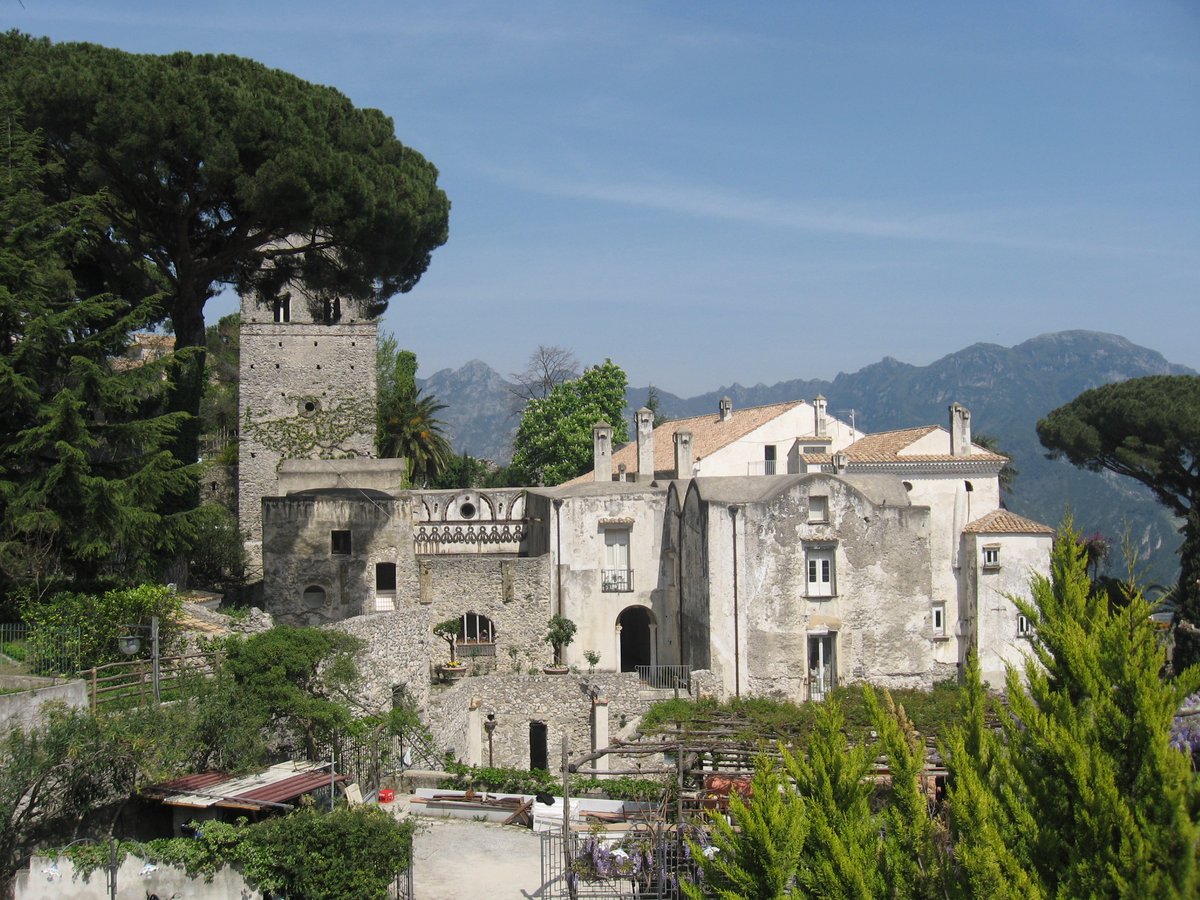
Villa Rufolo is a medieval jewel in the heart of Ravello, famous for its lush gardens that seem to hang over the sea. Here, Richard Wagner found inspiration for his Parsifal, and today the site hosts summer concerts with panoramic views. Admission costs €7 and the visit takes about an hour. Highlights include:
– The terraced gardens with rare botanical species and views stretching from Minori to Maiori
– The Moorish tower from the 14th century, a symbol of Ravello
– The cloister with interlaced arches in Arab-Norman style
– The palace from the 13th century, of which imposing ruins remain
Introduction
Arriving at Villa Rufolo is like stepping into a dream suspended between sky and sea. It’s not just a garden or a palace, but an experience that grabs you by the heart. The first thing that strikes you is that breathtaking view of the Amalfi Coast, with the blue of the Tyrrhenian Sea seeming to merge with the horizon. Then, as you walk among the flower beds, you realize that every corner tells a story, from the Middle Ages to today. And if you think it’s just a picture-perfect spot, wait until you discover that here, every summer, Wagner’s music echoes through the ancient walls during the Ravello Festival. Personally, I lost myself gazing at the details of the Moorish tower, with its interwoven arches that seem to come straight out of an Arabian fairy tale. It’s one of those places that make you say: ‘It’s truly worth being here.’
Historical Overview
The history of Villa Rufolo is a blend of power, art, and abandonment. Founded in the 13th century by the Rufolo family, wealthy merchants from Ravello, it was a symbol of prestige with its palace and lush gardens. Over the centuries, it experienced periods of decline, nearly forgotten, until
Richard Wagner visited in 1880 and was so inspired that he drew inspiration for his Parsifal. Today, thanks to careful restorations, we can admire the remains of the medieval palace and the Moorish tower, which dominates the panorama. An interesting fact: the gardens were redesigned in the 19th century, blending Arabic and Norman styles, creating that unique atmosphere still felt today. It is not just a monument, but a piece of life that has spanned different eras.
- 13th century: construction by the Rufolo family
- 1880: visit by Richard Wagner and inspiration for Parsifal
- 20th-21st centuries: restorations and home of the Ravello Festival
The Hanging Gardens
The gardens of Villa Rufolo are the beating heart of this place, and not just because of the flowers. Called ‘hanging gardens’ because they seem to float above the sea, they offer a unique sensory experience. Walking among the terraces, you’ll encounter exotic plants like agaves and palms, mixed with Mediterranean species, creating a stunning contrast. I adored the central avenue, where vibrant colors explode in spring, and the lower terrace, with that direct view of Amalfi and Minori that takes your breath away. But it’s not just about beauty: these gardens are designed to evoke emotions, with pathways that invite exploration. Sometimes I wonder how they managed to create such a balance between nature and architecture, especially considering Ravello’s steep terrain. It’s a place where you lose track of time, among flower scents and the sound of the wind.
The Festival and the Moorish Tower
If the gardens are the soul, the Ravello Festival and the Moorish tower are the spirit of Villa Rufolo. The festival, founded in 1953, transforms the place into an open-air stage, with concerts ranging from classical to contemporary. Attending an event here, perhaps at sunset, is an unforgettable experience: the music spreads among the ancient walls, and the natural acoustics amplify every note. On the other hand, the Moorish tower, tall and slender, is a symbol of medieval power. Climbing it (when possible) offers a different perspective on the gardens and the sea, although visits are sometimes limited for preservation. I recall a chamber music concert, with few spectators, which made everything more intimate. It’s not just about events, but how art dialogues with history, creating something alive and engaging.
Why Visit It
Visiting Villa Rufolo is not just a tourist stop, but an immersion in something special. First, for the unique panoramic view of the Amalfi Coast, which alone is worth the trip: you won’t find many places where the sea and mountains embrace like this. Second, for the atmosphere of the Ravello Festival, which in summer offers magical evenings of music and history, even if you’re not a classical music enthusiast. Third, for architectural details like the Moorish tower and the palace ruins, which tangibly tell centuries of life. I’d return for that sense of peace you feel in the gardens, away from the crowds, even though it can sometimes be busy. It’s a place that combines beauty, culture, and relaxation, without needing complicated explanations.
When to Go
The best time to visit Villa Rufolo depends on what you’re looking for. If you want to experience the festival, summer is ideal, with warm evenings and concerts under the stars, though it can be more crowded. To enjoy the gardens in peace, try spring or early autumn, when the flowers are in full bloom and the air is fresh. I prefer the late afternoon hours, when the sun sets and bathes everything in warm colors, creating an almost surreal atmosphere. In winter, it can be quieter, but some events might be missing. There’s no wrong time, but if I had to choose, I’d opt for a sunny day in May, when the light is perfect for photos and the crowds aren’t excessive.
In the Surroundings
After Villa Rufolo, Ravello offers other gems to discover. Just a few steps away is Villa Cimbrone, with its famous Terrace of Infinity, a balcony that seems suspended in mid-air, perfect for more breathtaking shots. Then, heading down towards the sea, you can explore Amalfi, with its Cathedral and historic alleyways, ideal for a lunch of fresh fish. If you enjoy walking, the Path of the Gods starts here, offering stunning views of the coast. I combined the visit with a stop at a local pastry shop to taste limoncello, a classic of the area. These are experiences that enrich the journey without needing to venture too far.