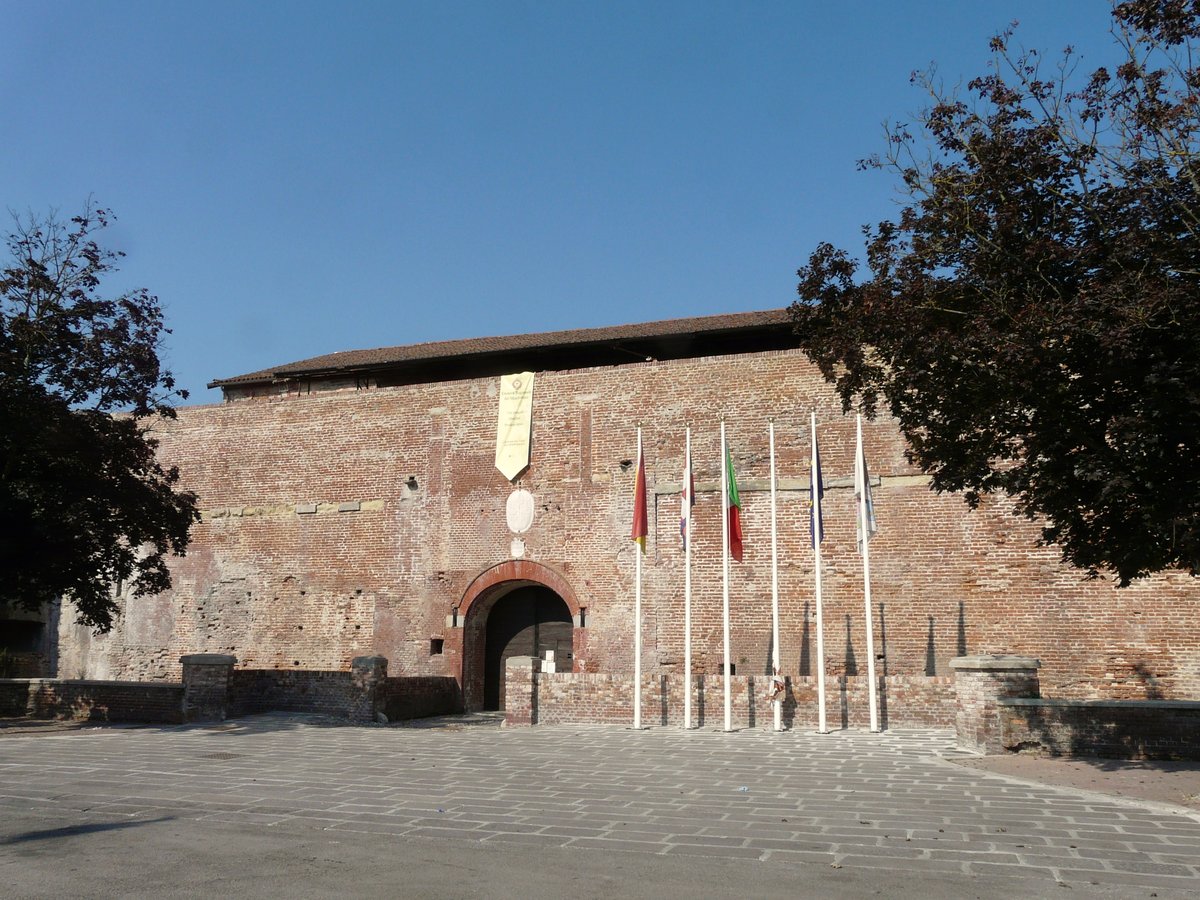
The Paleologi Castle, the medieval heart of Casale Monferrato, welcomes you with its imposing hexagonal plan and deep moats. Built in the mid-14th century by order of John II Paleologus, today it is a lively cultural center that preserves walkways and underground passages open to visitors. The Monferrato Regional Wine Cellar housed within offers a perfect blend of history and taste.
4 things not to miss:
– Walkways and underground passages of the western wing
– Marble bas-relief with the insignia of Aleramo, Paleologi, and Gonzaga
– Monferrato Regional Wine Cellar for tasting local wines
– Exhibitions and events in the courtyards and restored halls
Welcome to the Castello dei Paleologi
I found myself before this massive hexagonal castle, surrounded by a dry moat, and I immediately knew it was no ordinary monument. The Castello dei Paleologi dominates Piazza Castello in Casale Monferrato with its irregular layout and four corner towers. Past the entrance, a marble bas-relief bearing the emblems of Aleramo, Paleologi, and Gonzaga welcomes you. Today it is not a dusty museum: it is a vibrant cultural hub, hosting events, exhibitions, and the Regional Wine Cellar of Monferrato. A place blending medieval history and modernity, perfect for those who love discovering authentic corners of Piedmont.
Welcome to the Castello dei Paleologi
I found myself before this massive hexagonal castle, surrounded by a dry moat, and I immediately knew it was no ordinary monument. The Castello dei Paleologi dominates Piazza Castello in Casale Monferrato with its irregular layout and four corner towers. Past the entrance, a marble bas-relief bearing the emblems of Aleramo, Paleologi, and Gonzaga welcomes you. Today it is not a dusty museum: it is a vibrant cultural hub, hosting events, exhibitions, and the Regional Wine Cellar of Monferrato. A place blending medieval history and modernity, perfect for those who love discovering authentic corners of Piedmont.
A Touch of History: From the Palaiologoi to the Gonzaga
Construction began in 1351 under
John II Palaiologos, Marquis of Montferrat, and was completed in 1357. In the 15th century, when Casale became the capital, the castle turned into a court residence:
William VIII and
Boniface V embellished it with apartments and a frescoed chapel. After the Peace of Cateau-Cambrésis (1559), it passed to the
Gonzaga of Mantua, who transformed it into a fortress with thickened walls and an hexagonal layout. In the 18th century it ended up with the Savoy, used as barracks until the 1960s. Since 1999 it has belonged to the municipality and has been under restoration since 2001. Here are the key moments:
- 1351-1357: Palaiologoi construction
- 1474: Casale becomes a city, castle serves as court seat
- 1559: Transfer to the Gonzaga, defensive reinforcements
- 1708: To the Savoy, decline and use as barracks
- 1999: Acquired by the municipality, restoration from 2001
A Touch of History: From the Palaiologoi to the Gonzaga
Construction began in 1351 under
John II Palaiologos, Marquis of Montferrat, and was completed in 1357. In the 15th century, when Casale became the capital, the castle turned into a court residence:
William VIII and
Boniface V embellished it with apartments and a frescoed chapel. After the Peace of Cateau-Cambrésis (1559), it passed to the
Gonzaga of Mantua, who transformed it into a fortress with thickened walls and an hexagonal layout. In the 18th century it ended up with the Savoy, used as barracks until the 1960s. Since 1999 it has belonged to the municipality and has been under restoration since 2001. Here are the key moments:
- 1351-1357: Palaiologoi construction
- 1474: Casale becomes a city, castle serves as court seat
- 1559: Transfer to the Gonzaga, defensive reinforcements
- 1708: To the Savoy, decline and use as barracks
- 1999: Acquired by the municipality, restoration from 2001
Ramparts and Undergrounds: A Journey into Defense
Climbing up the ramparts is like stepping back in time. From there, you overlook the moat and the city: you feel a bit like a sentinel. The underground chambers of the west wing (rebuilt in the 18th century) are instead a labyrinth of vaulted rooms, perfect for understanding defensive techniques. In some spots, original weapons are displayed. The tour is fascinating and not too long, suitable even for those who don’t like traditional museums. Don’t miss the bas-relief on the main door: it combines the symbols of three dynasties that marked the history of Monferrato.
Ramparts and Undergrounds: A Journey into Defense
Climbing up the ramparts is like stepping back in time. From there, you overlook the moat and the city: you feel a bit like a sentinel. The underground chambers of the west wing (rebuilt in the 18th century) are instead a labyrinth of vaulted rooms, perfect for understanding defensive techniques. In some spots, original weapons are displayed. The tour is fascinating and not too long, suitable even for those who don’t like traditional museums. Don’t miss the bas-relief on the main door: it combines the symbols of three dynasties that marked the history of Monferrato.
Culture and Wine: The Wine Shop and Events
Today the castle thrives on culture. Inside, you’ll find the ‘Emanuele Luzzati’ Girls’ and Boys’ Library and the Doc Center dedicated to wine civilization. But the real gem is the Regional Wine Shop of Monferrato: a unique opportunity to taste local wines (Barbera, Grignolino, etc.) surrounded by history. In spring and summer, the courtyards host events like Golosaria, concerts, and literary festivals. The indoor halls are often used for temporary art exhibitions. A mix that keeps the castle lively all year round.
Culture and Wine: The Wine Shop and Events
Today the castle thrives on culture. Inside, you’ll find the ‘Emanuele Luzzati’ Girls’ and Boys’ Library and the Doc Center dedicated to wine civilization. But the real gem is the Regional Wine Shop of Monferrato: a unique opportunity to taste local wines (Barbera, Grignolino, etc.) surrounded by history. In spring and summer, the courtyards host events like Golosaria, concerts, and literary festivals. The indoor halls are often used for temporary art exhibitions. A mix that keeps the castle lively all year round.
Three great reasons not to miss it
1. Unique architecture: it’s one of the few castles with an asymmetric hexagonal layout and angular towers, surrounded by a dry moat. 2. Wine cellar and tastings: tasting Monferrato wines directly in a medieval castle is an experience that blends history and flavor. 3. Cultural events: exhibitions, concerts, and food and wine events make it a dynamic place, perfect for a day trip. And then there’s the atmosphere: along the walkways and underground passages, history is tangible.
Three great reasons not to miss it
1. Unique architecture: it’s one of the few castles with an asymmetric hexagonal layout and angular towers, surrounded by a dry moat. 2. Wine cellar and tastings: tasting Monferrato wines directly in a medieval castle is an experience that blends history and flavor. 3. Cultural events: exhibitions, concerts, and food and wine events make it a dynamic place, perfect for a day trip. And then there’s the atmosphere: along the walkways and underground passages, history is tangible.
When to go
The best time? A spring or autumn afternoon, when the weather is mild and events animate the courtyards. In summer, the ramparts and towers are open autonomously until evening, offering a suggestive view at sunset. If you love food and wine, plan your visit to coincide with Golosaria or other wine events. Avoid rainy days: the dry moat is more fascinating in the sun!
When to go
The best time? A spring or autumn afternoon, when the weather is mild and events animate the courtyards. In summer, the ramparts and towers are open autonomously until evening, offering a suggestive view at sunset. If you love food and wine, plan your visit to coincide with Golosaria or other wine events. Avoid rainy days: the dry moat is more fascinating in the sun!
Around the Area
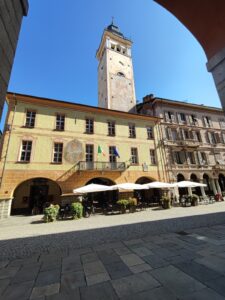
After your visit, take some time to explore the center of Casale Monferrato: the arcades, the Civic Tower on via Saffi, and Mercato Pavia are worth a stroll. If you’re in the mood for wine, the local wineries (like those producing Grignolino) are just a stone’s throw away. Another idea? The Santuario della Madonna di Crea, nearby, is a gem nestled in the woods. Perfect for combining culture and nature.
Around the Area
After your visit, take some time to explore the center of Casale Monferrato: the arcades, the Civic Tower on via Saffi, and Mercato Pavia are worth a stroll. If you’re in the mood for wine, the local wineries (like those producing Grignolino) are just a stone’s throw away. Another idea? The Santuario della Madonna di Crea, nearby, is a gem nestled in the woods. Perfect for combining culture and nature.