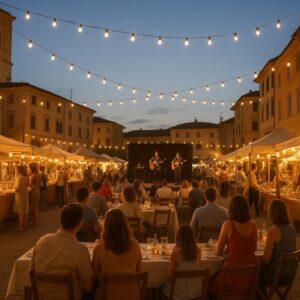
The Accademia Carrara in Bergamo is a unique museum, born from the passion of Count Giacomo Carrara who donated his collection to the city in 1796. Today it houses over 300 works by masters such as Raphael, Botticelli, and Mantegna, in a journey spanning five centuries of art. The museum, managed by the Fondazione Accademia Carrara, has been enriched since 2024 by the PwC Gardens, a green space open to the public.
Must-see works: Raphael’s San Sebastiano, Pisanello’s Portrait of Leonello d’Este, and the Madonnas by Bellini and Mantegna.
A museum of collectors: the collection was formed through donations from patrons such as Guglielmo Lochis and Giovanni Morelli.
PwC Gardens: a romantic park with a bistrot, free admission.
For families: workshops and educational activities for children, with accessible spaces.
A Dive into Italian Painting
Entering the Accademia Carrara is like opening a treasure chest. In Piazza Giacomo Carrara, in the heart of Bergamo, this museum houses over 300 works spanning five centuries. From the radiant Renaissance of Raphael and Botticelli to the Venetian atmospheres of Bellini and Lotto, each room offers an intimate encounter with masterpieces that seem to speak to you. The atmosphere is that of a private collection, intimate, yet with the depth of a great museum. And then, on the way out, the new PwC Gardens await you, a green corner where art and nature merge. The ticket costs €10, but it’s worth every penny.
A Dive into Italian Painting
Entering the Accademia Carrara is like opening a treasure chest. In Piazza Giacomo Carrara, in the heart of Bergamo, this museum houses over 300 works spanning five centuries. From the radiant Renaissance of Raphael and Botticelli to the Venetian atmospheres of Bellini and Lotto, each room offers an intimate encounter with masterpieces that seem to speak to you. The atmosphere is that of a private collection, intimate, yet with the depth of a great museum. And then, on the way out, the new PwC Gardens await you, a green corner where art and nature merge. The ticket costs €10, but it’s worth every penny.
The Story of a Unique Institution
The Accademia was founded in 1796 at the behest of Count Giacomo Carrara, who wanted to combine an art gallery with an art school. The neoclassical building was expanded over time, and the collection grew thanks to important donations: those of Guglielmo Lochis, Senator Giovanni Morelli, and historian Federico Zeri. After seven years of restoration, in 2015 the museum reopened with a modern layout. In 2024, the PwC Gardens were inaugurated, a free space spanning over 3,000 square meters. A timeline to help you get your bearings:
The Story of a Unique Institution
The Accademia was founded in 1796 at the behest of Count Giacomo Carrara, who wanted to combine an art gallery with an art school. The neoclassical building was expanded over time, and the collection grew thanks to important donations: those of Guglielmo Lochis, Senator Giovanni Morelli, and historian Federico Zeri. After seven years of restoration, in 2015 the museum reopened with a modern layout. In 2024, the PwC Gardens were inaugurated, a free space spanning over 3,000 square meters. A timeline to help you get your bearings:
Must-See Masterpieces
The route unfolds across 16 rooms arranged chronologically. Among the absolute gems are Raphael’s Saint Sebastian, a youthful painting full of grace, and Botticelli’s Madonna and Child, intense and sweet. Also unmissable is Pisanello’s Portrait of Leonello d’Este, a rare example of a fifteenth-century secular portrait. Further on, Lorenzo Lotto’s Mystic Marriage of Saint Catherine enchants with its symbolic details. And for those who love the eighteenth century, the Canalettos and the romantic Hayez bring a beautiful close. Each work is a fragment of history worth stopping for.
Must-See Masterpieces
The route unfolds across 16 rooms arranged chronologically. Among the absolute gems are Raphael’s Saint Sebastian, a youthful painting full of grace, and Botticelli’s Madonna and Child, intense and sweet. Also unmissable is Pisanello’s Portrait of Leonello d’Este, a rare example of a fifteenth-century secular portrait. Further on, Lorenzo Lotto’s Mystic Marriage of Saint Catherine enchants with its symbolic details. And for those who love the eighteenth century, the Canalettos and the romantic Hayez bring a beautiful close. Each work is a fragment of history worth stopping for.
The New PwC Gardens and the Visitor Experience
From 2024, the visit is enriched with the PwC Gardens, a 3,000 m² green area always open and free of charge. Here you’ll find a bistrot (Bù Bistrot in Carrara) and a romantic park to relax after the tour. The museum is open Tuesday to Sunday, with hours 9:30-17:30 (last entry 16:30) according to some sources, or 10:00-19:00 (closed Tuesdays) according to others: best to check the website. Full ticket costs €10, reduced €8, free for under 18. I recommend booking online to skip the queue. For families, there are workshops and activities designed for children.
The New PwC Gardens and the Visitor Experience
From 2024, the visit is enriched with the PwC Gardens, a 3,000 m² green area always open and free of charge. Here you’ll find a bistrot (Bù Bistrot in Carrara) and a romantic park to relax after the tour. The museum is open Tuesday to Sunday, with hours 9:30-17:30 (last entry 16:30) according to some sources, or 10:00-19:00 (closed Tuesdays) according to others: best to check the website. Full ticket costs €10, reduced €8, free for under 18. I recommend booking online to skip the queue. For families, there are workshops and activities designed for children.
Why It’s Worth It
First: it’s the museum of Italian collecting, unique of its kind. Every work comes from a donation, and you can feel the patrons’ love. Second: the quality is extremely high. It’s not an enormous museum, but every piece is a masterpiece. Third: the new PwC Gardens offer a refreshing break with a view of the walls of Città Alta. Plus, the Academy collaborates with the nearby GAMeC (gallery of modern art), creating a cultural hub that spans centuries of art. If you love painting, you can’t miss it.
Why It’s Worth It
First: it’s the museum of Italian collecting, unique of its kind. Every work comes from a donation, and you can feel the patrons’ love. Second: the quality is extremely high. It’s not an enormous museum, but every piece is a masterpiece. Third: the new PwC Gardens offer a refreshing break with a view of the walls of Città Alta. Plus, the Academy collaborates with the nearby GAMeC (gallery of modern art), creating a cultural hub that spans centuries of art. If you love painting, you can’t miss it.
The Perfect Moment
The Academy is open all year, but closed on Tuesdays (except for some periods: check). The most enchanting time? Spring and autumn, when the light gently filters through the windows and the gardens are in bloom or in warm hues. If you prefer tranquility, go at opening time or early afternoon. On the last Friday of every month, there is an evening opening until 11:00 PM: a magical experience, with fewer crowds and the atmosphere of illuminated halls. For art enthusiasts, winter also has its charm, with heated halls and paintings that seem more alive.
The Perfect Moment
The Academy is open all year, but closed on Tuesdays (except for some periods: check). The most enchanting time? Spring and autumn, when the light gently filters through the windows and the gardens are in bloom or in warm hues. If you prefer tranquility, go at opening time or early afternoon. On the last Friday of every month, there is an evening opening until 11:00 PM: a magical experience, with fewer crowds and the atmosphere of illuminated halls. For art enthusiasts, winter also has its charm, with heated halls and paintings that seem more alive.
What to See Nearby
The Accademia is a stone’s throw from Bergamo’s Città Alta, the medieval historic center with its UNESCO-listed Venetian walls. Don’t miss Piazza Vecchia and the Basilica of Santa Maria Maggiore. Just a few minutes’ walk away is GAMeC, the modern and contemporary art gallery, which completes the artistic journey. If you have time, take the funicular up to San Vigilio Hill: the view over the city is breathtaking. An itinerary that blends art, history, and landscape.
What to See Nearby
The Accademia is a stone’s throw from Bergamo’s Città Alta, the medieval historic center with its UNESCO-listed Venetian walls. Don’t miss Piazza Vecchia and the Basilica of Santa Maria Maggiore. Just a few minutes’ walk away is GAMeC, the modern and contemporary art gallery, which completes the artistic journey. If you have time, take the funicular up to San Vigilio Hill: the view over the city is breathtaking. An itinerary that blends art, history, and landscape.