The International Museum of Ceramics in Faenza (MIC) is the largest ceramics museum in the world, with over 60,000 works spanning 6,000 years of history. Housed in the former convent of San Maglorio, the museum offers a journey through ancient civilizations, the Italian Renaissance, and contemporary art, featuring works by Picasso, Matisse, Fontana, and Burri. Don’t miss the International Competition Premio Faenza and the educational workshop for children inspired by Bruno Munari.
– Permanent collection with masterpieces from every era and continent
– Section dedicated to Faenza ceramics and the famous “Bianchi di Faenza”
– “Playing with Art” workshop for families and children
– Specialist library and restoration laboratory, visitable on request
Introduction
Entering the MIC in Faenza is like taking a journey through time and space. We are at Viale Baccarini 19, and here, within the walls of the former convent of San Maglorio, lies the largest collection of ceramics in the world: over 60,000 works ranging from 4000 BC to the present day. Masterpieces by Picasso, Fontana, and ancient Faenza masters coexist in vast spaces, nearly 16,000 square meters. Turn around and you’ll find a Greek vase, a Renaissance plate, a contemporary installation. It’s a place that truly leaves you speechless.
Introduction
Entering the MIC in Faenza is like taking a journey through time and space. We are at Viale Baccarini 19, and here, within the walls of the former convent of San Maglorio, lies the largest collection of ceramics in the world: over 60,000 works ranging from 4000 BC to the present day. Masterpieces by Picasso, Fontana, and ancient Faenza masters coexist in vast spaces, nearly 16,000 square meters. Turn around and you’ll find a Greek vase, a Renaissance plate, a contemporary installation. It’s a place that truly leaves you speechless.
Historical Background
The museum was founded in
1908 thanks to
Gaetano Ballardini, on the occasion of the International Exhibition for the third centenary of Evangelista Torricelli. Donations from exhibitors formed the initial collection. Then, on
May 13, 1944, a bombing destroyed much of the museum, but Ballardini did not give up: with the motto ‘Post fata Resurgo’ and the help of artists like Picasso, Léger, Matisse, and Chagall, the museum reopened as early as 1949. Since then, a series of private donations have enriched it. Here are the key moments:
- 1908: Founding and first works
- 1944: Wartime destruction
- 1949: Reopening with donations
- 1938: Start of the International Competition (Premio Faenza)
Historical Background
The museum was founded in
1908 thanks to
Gaetano Ballardini, on the occasion of the International Exhibition for the third centenary of Evangelista Torricelli. Donations from exhibitors formed the initial collection. Then, on
May 13, 1944, a bombing destroyed much of the museum, but Ballardini did not give up: with the motto ‘Post fata Resurgo’ and the help of artists like Picasso, Léger, Matisse, and Chagall, the museum reopened as early as 1949. Since then, a series of private donations have enriched it. Here are the key moments:
- 1908: Founding and first works
- 1944: Wartime destruction
- 1949: Reopening with donations
- 1938: Start of the International Competition (Premio Faenza)
Must-See Collections
The path winds between two wings: an ancient one and a modern one. On the ground floor, the Great Civilizations: Chinese, Japanese, Pre-Columbian, Greek, Etruscan, Islamic ceramics. On the first floor, the heart of Faenza ceramics from the ‘Whites of Faenza’ to the Ferniani Factory, passing through the Renaissance. Then the 20th century: a whole room with works donated by Picasso, and then Fontana, Burri, Chagall. Don’t miss the Zucchini Nativity Scene, 61 terracotta statues in the basement. Every piece has a story, and the labels are clear. I lost myself for hours among the colors of Renaissance majolica.
Must-See Collections
The path winds between two wings: an ancient one and a modern one. On the ground floor, the Great Civilizations: Chinese, Japanese, Pre-Columbian, Greek, Etruscan, Islamic ceramics. On the first floor, the heart of Faenza ceramics from the ‘Whites of Faenza’ to the Ferniani Factory, passing through the Renaissance. Then the 20th century: a whole room with works donated by Picasso, and then Fontana, Burri, Chagall. Don’t miss the Zucchini Nativity Scene, 61 terracotta statues in the basement. Every piece has a story, and the labels are clear. I lost myself for hours among the colors of Renaissance majolica.
A living museum: workshops and competitions
The MIC is not just a container of ancient objects; it is a laboratory of ideas. Since 1938, it has organized the International Competition of Artistic Ceramics – Premio Faenza, biennial since 1989, which brings contemporary works from all over the world. Then there is the ‘Playing with Ceramics’ Educational Workshop inspired by Bruno Munari: children and adults can get their hands in clay and understand the material. The museum also has a specialized library with over 60,000 volumes and a restoration laboratory. In short, it is a place where ceramics are studied, created, and preserved.
A living museum: workshops and competitions
The MIC is not just a container of ancient objects; it is a laboratory of ideas. Since 1938, it has organized the International Competition of Artistic Ceramics – Premio Faenza, biennial since 1989, which brings contemporary works from all over the world. Then there is the ‘Playing with Ceramics’ Educational Workshop inspired by Bruno Munari: children and adults can get their hands in clay and understand the material. The museum also has a specialized library with over 60,000 volumes and a restoration laboratory. In short, it is a place where ceramics are studied, created, and preserved.
Why Visit It
Reasons? Three concrete ones. First: it’s the world’s largest collection of ceramics, period. Nowhere else will you see such variety, from Etruscan vases to Picasso plates. Second: it’s a museum suitable for everyone. Kids enjoy the Munari workshop, art lovers appreciate the masterpieces, and the curious discover ancient techniques. Third: the ticket is affordable: full price €8, reduced €5, free for under 14. And if you come during the Faenza Prize, you’ll see artists at work.
Why Visit It
Reasons? Three concrete ones. First: it’s the world’s largest collection of ceramics, period. Nowhere else will you see such variety, from Etruscan vases to Picasso plates. Second: it’s a museum suitable for everyone. Kids enjoy the Munari workshop, art lovers appreciate the masterpieces, and the curious discover ancient techniques. Third: the ticket is affordable: full price €8, reduced €5, free for under 14. And if you come during the Faenza Prize, you’ll see artists at work.
When to Go
The museum is open year-round, but the best time? I’d say spring or autumn, when Faenza isn’t too hot. In summer, hours are longer (10-19), in winter it closes earlier (10-14 on weekdays, 10-18 on holidays). Avoid Mondays (closed) and holidays like New Year’s Day, May Day, August 15th, and Christmas. If you can, choose a weekday afternoon: fewer people and soft light filtering through the cloister. For photographers, morning light is perfect for Renaissance ceramics.
When to Go
The museum is open year-round, but the best time? I’d say spring or autumn, when Faenza isn’t too hot. In summer, hours are longer (10-19), in winter it closes earlier (10-14 on weekdays, 10-18 on holidays). Avoid Mondays (closed) and holidays like New Year’s Day, May Day, August 15th, and Christmas. If you can, choose a weekday afternoon: fewer people and soft light filtering through the cloister. For photographers, morning light is perfect for Renaissance ceramics.
Nearby
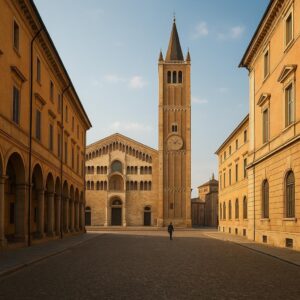
A ten-minute walk from the museum, Faenza’s historic center boasts Piazza del Popolo and the Cathedral. Don’t miss the artisan workshops still working with ceramics—a dive into local tradition.
Nearby
A ten-minute walk from the museum, Faenza’s historic center boasts Piazza del Popolo and the Cathedral. Don’t miss the artisan workshops still working with ceramics—a dive into local tradition.