Introduction
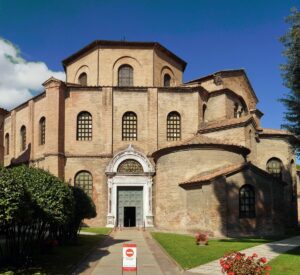
Entering the Basilica of San Vitale feels like diving into a sea of gold and color. The Byzantine mosaics envelop you from every side, with an intensity that takes your breath away. It’s not just a church: it’s a timeless masterpiece, a place where art and spirituality merge. The octagonal floor plan and the light filtering through the windows create an almost mystical atmosphere. Prepare to be awestruck: here every detail, from the marble columns to the hieratic faces of the rulers, tells a thousand-year-old story.
Introduction
Entering the Basilica of San Vitale feels like diving into a sea of gold and color. The Byzantine mosaics envelop you from every side, with an intensity that takes your breath away. It’s not just a church: it’s a timeless masterpiece, a place where art and spirituality merge. The octagonal floor plan and the light filtering through the windows create an almost mystical atmosphere. Prepare to be awestruck: here every detail, from the marble columns to the hieratic faces of the rulers, tells a thousand-year-old story.
Historical Background
Construction began in 532 under Bishop Ecclesius, financed by banker Julianus Argentarius with 26,000 gold solidi. Consecrated in 547 by Archbishop Maximian, the basilica stands on a former shrine dedicated to Saint Vitalis. It was completed during Byzantine rule, after the reconquest of Ravenna by Justinian I. In 1688, an earthquake damaged the bell tower, which was later rebuilt in 18th-century style. It has been a UNESCO World Heritage site since 1996.
Historical Background
Construction began in 532 under Bishop Ecclesius, financed by banker Julianus Argentarius with 26,000 gold solidi. Consecrated in 547 by Archbishop Maximian, the basilica stands on a former shrine dedicated to Saint Vitalis. It was completed during Byzantine rule, after the reconquest of Ravenna by Justinian I. In 1688, an earthquake damaged the bell tower, which was later rebuilt in 18th-century style. It has been a UNESCO World Heritage site since 1996.
The Mosaics of Justinian and Theodora
The panels depicting the processions of Emperor Justinian and Empress Theodora are among the most famous mosaics in the world. Justinian, with a halo and purple robe, holds a golden paten, flanked by Bishop Maximian and dignitaries. Theodora, carrying a golden chalice and wearing a mantle embroidered with the Magi, advances among court ladies. The figures are still, hieratic, on a gold background: not realistic portraits but symbols of divine and imperial power. Created between 546 and 548, they tell of the imperial offering to the altar.
The Mosaics of Justinian and Theodora
The panels depicting the processions of Emperor Justinian and Empress Theodora are among the most famous mosaics in the world. Justinian, with a halo and purple robe, holds a golden paten, flanked by Bishop Maximian and dignitaries. Theodora, carrying a golden chalice and wearing a mantle embroidered with the Magi, advances among court ladies. The figures are still, hieratic, on a gold background: not realistic portraits but symbols of divine and imperial power. Created between 546 and 548, they tell of the imperial offering to the altar.
The Labyrinth of the Soul
On the floor of the presbytery, in front of the altar, lies a circular marble labyrinth created between 1538 and 1545. Measuring about 3.5 meters in diameter, it uses precious marbles such as red porphyry, serpentine, and giallo antico. This unicursal labyrinth—a single path with no dead ends—symbolizes the soul’s pilgrimage toward salvation. Gustav Klimt, who visited Ravenna in 1903, described it as a path of purification. Walking it (even in thought) is an invitation to meditation.
The Labyrinth of the Soul
On the floor of the presbytery, in front of the altar, lies a circular marble labyrinth created between 1538 and 1545. Measuring about 3.5 meters in diameter, it uses precious marbles such as red porphyry, serpentine, and giallo antico. This unicursal labyrinth—a single path with no dead ends—symbolizes the soul’s pilgrimage toward salvation. Gustav Klimt, who visited Ravenna in 1903, described it as a path of purification. Walking it (even in thought) is an invitation to meditation.
Why Visit It
San Vitale is not just a monument: it is a unique experience. Its mosaics are among the best preserved in the world, with vivid colors after 1,500 years. The cumulative ticket allows you to visit other nearby masterpieces such as the Mausoleum of Galla Placidia and the Neonian Baptistery, saving time and money. Moreover, since 1961 the basilica has hosted the International Organ Music Festival, an opportunity to listen to sacred music in an extraordinary setting.
Why Visit It
San Vitale is not just a monument: it is a unique experience. Its mosaics are among the best preserved in the world, with vivid colors after 1,500 years. The cumulative ticket allows you to visit other nearby masterpieces such as the Mausoleum of Galla Placidia and the Neonian Baptistery, saving time and money. Moreover, since 1961 the basilica has hosted the International Organ Music Festival, an opportunity to listen to sacred music in an extraordinary setting.
When to Go
To fully enjoy the mosaics, choose the early morning or late afternoon. The raking light makes the golden tiles shine and creates shadow patterns that enhance the details. In summer, avoid the midday hours: the crowds are larger and the light is too harsh, flattening the colors. If possible, visit on a weekday when there are fewer people. The shoulder seasons (spring and fall) offer the best climate for strolling through the city center.
When to Go
To fully enjoy the mosaics, choose the early morning or late afternoon. The raking light makes the golden tiles shine and creates shadow patterns that enhance the details. In summer, avoid the midday hours: the crowds are larger and the light is too harsh, flattening the colors. If possible, visit on a weekday when there are fewer people. The shoulder seasons (spring and fall) offer the best climate for strolling through the city center.
In the Surroundings
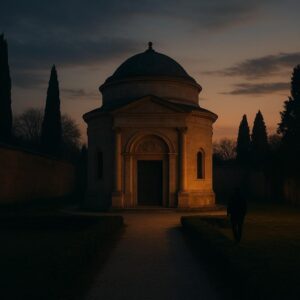
Just a few steps away, visit the Mausoleum of Galla Placidia, famous for its starry mosaic sky. It is included in the cumulative ticket and offers an intimate experience. Another must-see is the Basilica of Sant’Apollinare Nuovo, with its procession of virgins and martyrs. Both complete the journey into Ravenna’s Byzantine art. If you have time, stop at the Archiepiscopal Museum to see the Chapel of Sant’Andrea and the famous ivory throne of Maximian.
In the Surroundings
Just a few steps away, visit the Mausoleum of Galla Placidia, famous for its starry mosaic sky. It is included in the cumulative ticket and offers an intimate experience. Another must-see is the Basilica of Sant’Apollinare Nuovo, with its procession of virgins and martyrs. Both complete the journey into Ravenna’s Byzantine art. If you have time, stop at the Archiepiscopal Museum to see the Chapel of Sant’Andrea and the famous ivory throne of Maximian.