Introduction
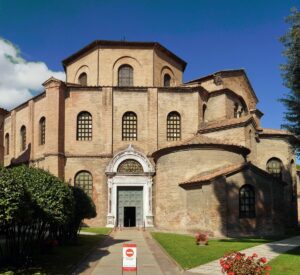
Entering the Basilica of Sant’Apollinare Nuovo is like stepping into the past. The walls of the central nave are an explosion of mosaics: saints, prophets, and scenes from the life of Christ on a gold background. Here you breathe the atmosphere of Byzantine Ravenna, a blend of splendor and spirituality. An almost sacred silence envelops the visitor, while the eyes run along the processions of martyrs and virgins. An experience that leaves you breathless, even for those who are not art experts.
Introduction
Entering the Basilica of Sant’Apollinare Nuovo is like stepping into the past. The walls of the central nave are an explosion of mosaics: saints, prophets, and scenes from the life of Christ on a gold background. Here you breathe the atmosphere of Byzantine Ravenna, a blend of splendor and spirituality. An almost sacred silence envelops the visitor, while the eyes run along the processions of martyrs and virgins. An experience that leaves you breathless, even for those who are not art experts.
Historical Background
The basilica was built between the 5th and 6th centuries at the behest of the Gothic king Theodoric as an Arian palatine chapel. After the Byzantine reconquest (mid-6th century), it was consecrated for Catholic worship and dedicated to St. Martin of Tours. Only in the 9th century, with the arrival of the relics of St. Apollinaris from Classe, did it assume its current name. A story of power shifts and faith changes, as told in the mosaics themselves. Here are the key points:
Historical Background
The basilica was built between the 5th and 6th centuries at the behest of the Gothic king Theodoric as an Arian palatine chapel. After the Byzantine reconquest (mid-6th century), it was consecrated for Catholic worship and dedicated to St. Martin of Tours. Only in the 9th century, with the arrival of the relics of St. Apollinaris from Classe, did it assume its current name. A story of power shifts and faith changes, as told in the mosaics themselves. Here are the key points:
- 493-526 AD – Theodoric builds the basilica for Arian worship.
- 561 AD – Conversion to Catholicism, dedication to St. Martin.
- 9th century – Relics of St. Apollinaris transferred, assumes current name.
- 1996 – Inscribed as UNESCO World Heritage site.
- 493-526 AD – Theodoric builds the basilica for Arian worship.
- 561 AD – Conversion to Catholicism, dedication to St. Martin.
- 9th century – Relics of St. Apollinaris transferred, assumes current name.
- 1996 – Inscribed as UNESCO World Heritage site.
The Mosaics of the New Testament
The upper band of the walls hosts 26 scenes from the life of Christ, the largest mosaic cycle of the New Testament that has come down to us. From the Wedding at Cana to the Last Supper, up to the Resurrection. The style is still linked to the Roman tradition, with plastic and natural figures. A true comic strip in stone, telling the story of Jesus with surprising vivacity. I stopped for a long time in front of the scene of the Samaritan woman at the well: the details, the colors, the composition… you almost see them moving.
The Mosaics of the New Testament
The upper band of the walls hosts 26 scenes from the life of Christ, the largest mosaic cycle of the New Testament that has come down to us. From the Wedding at Cana to the Last Supper, up to the Resurrection. The style is still linked to the Roman tradition, with plastic and natural figures. A true comic strip in stone, telling the story of Jesus with surprising vivacity. I stopped for a long time in front of the scene of the Samaritan woman at the well: the details, the colors, the composition… you almost see them moving.
Byzantine Vistas and Hidden Hands
The lower band is a riot of curious details. On the left wall is the depiction of the port of Classe, with three ships and golden walls. On the right, the Palace of Theodoric: if you look carefully between the columns, you’ll see hands emerging from the curtains, probably court figures removed after the Byzantine reconquest. Then two solemn processions: holy virgins towards the Madonna and martyrs towards Christ. The faces are all identical, without personality – typical of Byzantine art – but the effect is hypnotic.
Byzantine Vistas and Hidden Hands
The lower band is a riot of curious details. On the left wall is the depiction of the port of Classe, with three ships and golden walls. On the right, the Palace of Theodoric: if you look carefully between the columns, you’ll see hands emerging from the curtains, probably court figures removed after the Byzantine reconquest. Then two solemn processions: holy virgins towards the Madonna and martyrs towards Christ. The faces are all identical, without personality – typical of Byzantine art – but the effect is hypnotic.
Why Visit
1. A UNESCO Masterpiece – One of the eight early Christian monuments in Ravenna, a World Heritage site. 2. The largest New Testament mosaic cycle – 26 scenes you won’t find anywhere else in this quantity and antiquity. 3. Accessibility – Ramp, tactile maps, audio guides in LIS and Braille. Even those with mobility challenges can enjoy the visit, thanks to specially designed routes.
Why Visit
1. A UNESCO Masterpiece – One of the eight early Christian monuments in Ravenna, a World Heritage site. 2. The largest New Testament mosaic cycle – 26 scenes you won’t find anywhere else in this quantity and antiquity. 3. Accessibility – Ramp, tactile maps, audio guides in LIS and Braille. Even those with mobility challenges can enjoy the visit, thanks to specially designed routes.
When to Visit
The best time? Early morning or late afternoon, when the raking light makes the gold of the mosaics shine. In spring or autumn, with fewer crowds, you can take all the time to observe every detail. In summer the city is more alive, but also hotter: choose the cooler hours. Avoid peak weekends if you want silence and intimacy.
When to Visit
The best time? Early morning or late afternoon, when the raking light makes the gold of the mosaics shine. In spring or autumn, with fewer crowds, you can take all the time to observe every detail. In summer the city is more alive, but also hotter: choose the cooler hours. Avoid peak weekends if you want silence and intimacy.
Nearby
Just steps from the basilica, don’t miss the Palace of Theodoric, even though little remains of the original (some archaeological ruins). Nearby, the MAR – City Art Museum offers temporary exhibitions and a fine collection of contemporary mosaics. If you have time, also visit the Basilica of San Vitale and the Mausoleum of Galla Placidia, both included in the cumulative ticket.
Nearby
Just steps from the basilica, don’t miss the Palace of Theodoric, even though little remains of the original (some archaeological ruins). Nearby, the MAR – City Art Museum offers temporary exhibitions and a fine collection of contemporary mosaics. If you have time, also visit the Basilica of San Vitale and the Mausoleum of Galla Placidia, both included in the cumulative ticket.