The Mefite, in the Valle d’Ansanto, is a small sulfur lake that constantly boils, emitting the highest concentration of non-volcanic carbon dioxide on the planet. A place of eerie fascination, where nature shows its primordial power, with toxic vapors and a lunar landscape. Visiting it means diving into history, among ancient cults, Virgilian quotes, and medieval legends. Here’s what you shouldn’t miss:
– Observing the boiling waters safely thanks to the giant binoculars provided;
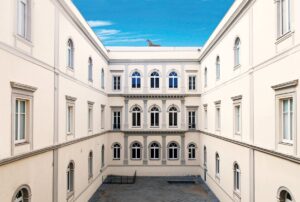
– Discovering the remains of the temple of the goddess Mefite and archaeological finds at the Irpino Museum in Avellino;
– Tasting Pecorino di Carmasciano, a cheese with a unique flavor thanks to the sulfur herbs;
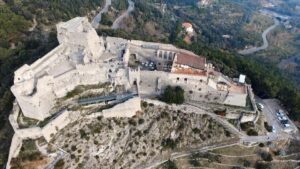
– Hearing the legend of the ghost of Margaret of Austria wandering among the fortress of the village.
Introduction
If you think Irpinia is just hills and wine, get ready to think again. In Rocca San Felice, hidden among the valleys, there is a place that seems straight out of myth: La Mefite. A small lake that constantly bubbles, a pungent smell of sulfur, and a silence broken only by the gurgling of water. The landscape is lunar, almost surreal: sparse vegetation, barren land, and air that smells ancient. It’s not a volcano, but it emits more CO2 than any other non-volcanic phenomenon in the world: almost 900 tons per day. Walking around there gives a strange feeling, like being on another planet. But be careful: the fumes are lethal, you must not get close. A giant binoculars allows you to peek safely.
Introduction
If you think Irpinia is just hills and wine, get ready to think again. In Rocca San Felice, hidden among the valleys, there is a place that seems straight out of myth: La Mefite. A small lake that constantly bubbles, a pungent smell of sulfur, and a silence broken only by the gurgling of water. The landscape is lunar, almost surreal: sparse vegetation, barren land, and air that smells ancient. It’s not a volcano, but it emits more CO2 than any other non-volcanic phenomenon in the world: almost 900 tons per day. Walking around there gives a strange feeling, like being on another planet. But be careful: the fumes are lethal, you must not get close. A giant binoculars allows you to peek safely.
Historical Notes
La Mefite is linked to very ancient cults. The Samnite Hirpini already venerated it, offering animal sacrifices to the goddess Mefite, a deity first benevolent (fertility) then malevolent. The cult lasted from the 6th century BC to the 4th century AD. Virgil, in the seventh book of the Aeneid, called it the ‘entrance to the Underworld.’ In the 6th century AD, Saint Felix of Nola destroyed the pagan temple and built a small church dedicated to Saint Felicity. Archaeological excavations have brought to light thousands of coins and artifacts (now at the Irpino Museum in Avellino).
Timeline:- 6th century BC: beginning of the cult of Mefite
- 1st century BC: Virgil mentions the valley in the Aeneid
- 4th century AD: decline of the pagan cult
- 6th century AD: Saint Felix Christianizes the area
- 18th century: Vincenzo Santoli documents the site
- 1950-1970: systematic archaeological excavations
Historical Notes
La Mefite is linked to very ancient cults. The Samnite Hirpini already venerated it, offering animal sacrifices to the goddess Mefite, a deity first benevolent (fertility) then malevolent. The cult lasted from the 6th century BC to the 4th century AD. Virgil, in the seventh book of the Aeneid, called it the ‘entrance to the Underworld.’ In the 6th century AD, Saint Felix of Nola destroyed the pagan temple and built a small church dedicated to Saint Felicity. Archaeological excavations have brought to light thousands of coins and artifacts (now at the Irpino Museum in Avellino).
Timeline:- 6th century BC: beginning of the cult of Mefite
- 1st century BC: Virgil mentions the valley in the Aeneid
- 4th century AD: decline of the pagan cult
- 6th century AD: Saint Felix Christianizes the area
- 18th century: Vincenzo Santoli documents the site
- 1950-1970: systematic archaeological excavations
A unique natural phenomenon in the world
La Mefite is not a volcano, but an extraordinary geological phenomenon. The continuous bubbling is caused by carbon dioxide rising from the subsurface, mixed with hydrogen sulfide. The smell of rotten eggs is very strong. The water is sulfate-calcium with low pH, and the gas is lethal: in the absence of wind, it can accumulate and kill. That’s why it is forbidden to approach. Vegetation survives only at a distance: dwarf broom and the rare Genista anxantica. Extremophile algae thrive in the acidic waters. A fixed binocular allows you to observe the bubbles and the lake from afar. I was fascinated: it feels like seeing the earth breathe, but with a poisonous breath.
A unique natural phenomenon in the world
La Mefite is not a volcano, but an extraordinary geological phenomenon. The continuous bubbling is caused by carbon dioxide rising from the subsurface, mixed with hydrogen sulfide. The smell of rotten eggs is very strong. The water is sulfate-calcium with low pH, and the gas is lethal: in the absence of wind, it can accumulate and kill. That’s why it is forbidden to approach. Vegetation survives only at a distance: dwarf broom and the rare Genista anxantica. Extremophile algae thrive in the acidic waters. A fixed binocular allows you to observe the bubbles and the lake from afar. I was fascinated: it feels like seeing the earth breathe, but with a poisonous breath.
Cults, Legends, and Reenactments
Chilling stories surround La Mefite. The goddess Mephitis was worshipped with shamanic rites: the Osco Rabel, a craftsman-shaman in sheep and wolf skins, today reenacts those rituals with drums. Then there is the legend of Margaret of Austria, whose ghost wanders the castle of Rocca San Felice. And more: the pact with the devil, tales of farmers deceived by malevolent presences. But perhaps the most evocative is the connection with Dante and Virgil’s Inferno. Today, in the small church of Santa Felicita (built on the pagan temple), a pilgrimage takes place. A mix of sacred and profane that makes the place magnetic.
Cults, Legends, and Reenactments
Chilling stories surround La Mefite. The goddess Mephitis was worshipped with shamanic rites: the Osco Rabel, a craftsman-shaman in sheep and wolf skins, today reenacts those rituals with drums. Then there is the legend of Margaret of Austria, whose ghost wanders the castle of Rocca San Felice. And more: the pact with the devil, tales of farmers deceived by malevolent presences. But perhaps the most evocative is the connection with Dante and Virgil’s Inferno. Today, in the small church of Santa Felicita (built on the pagan temple), a pilgrimage takes place. A mix of sacred and profane that makes the place magnetic.
Why Visit It
Three concrete reasons. First: it’s a unique geosite in the world, with the highest concentration of non-volcanic CO2. Must-see at least once in a lifetime. Second: the millennia-old history of the Mefite cult, with archaeological finds and Virgilian suggestions. Third: local specialty products: Carmasciano pecorino cheese, whose flavor is influenced by the sulfur in the soil. Also, if you like eerie atmospheres, the lunar landscape will stay with you. Bring binoculars: from afar you can see it very well.
Why Visit It
Three concrete reasons. First: it’s a unique geosite in the world, with the highest concentration of non-volcanic CO2. Must-see at least once in a lifetime. Second: the millennia-old history of the Mefite cult, with archaeological finds and Virgilian suggestions. Third: local specialty products: Carmasciano pecorino cheese, whose flavor is influenced by the sulfur in the soil. Also, if you like eerie atmospheres, the lunar landscape will stay with you. Bring binoculars: from afar you can see it very well.
When to Go
The best time? Between April and June, and then September-October. Temperatures are mild, winds less frequent (the gas disperses better) and the light is perfect for photos. Avoid summer: the heat increases the smell and stuffiness. In winter it can snow, but the frozen lake is a rare sight. I recommend a morning in May: the sun lights up the bubbles and the air is crisp. Bring a jacket: the valley is often windy.
When to Go
The best time? Between April and June, and then September-October. Temperatures are mild, winds less frequent (the gas disperses better) and the light is perfect for photos. Avoid summer: the heat increases the smell and stuffiness. In winter it can snow, but the frozen lake is a rare sight. I recommend a morning in May: the sun lights up the bubbles and the air is crisp. Bring a jacket: the valley is often windy.
Nearby
Just a few steps away, the village of Rocca San Felice is worth a stroll through its alleys and the medieval castle. Here you’ll also find the Mefite Museum (if open). Another stop is the small church of Santa Felicita, with archaeological excavations next to it. If you love trekking, there are trails in the Ansanto Valley. And don’t miss a visit to a winery to taste Aglianico wine or Carmasciano cheese: a complete package of nature, history, and flavor.
Nearby
Just a few steps away, the village of Rocca San Felice is worth a stroll through its alleys and the medieval castle. Here you’ll also find the Mefite Museum (if open). Another stop is the small church of Santa Felicita, with archaeological excavations next to it. If you love trekking, there are trails in the Ansanto Valley. And don’t miss a visit to a winery to taste Aglianico wine or Carmasciano cheese: a complete package of nature, history, and flavor.