
🧭 What to Expect
- Ideal for a cultural weekend off the beaten path
- The Tempio dell'Incoronata is one of Lombardy's Renaissance gems
- Excellent food and wine with typical dishes like bread cake
- Walking route through the well-preserved historic center
- Authentic atmosphere away from mass tourism
Events nearby

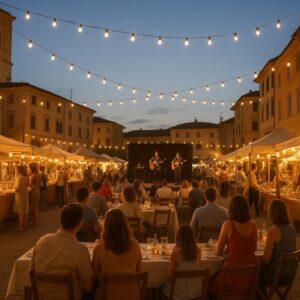

Lodi, the capital of the province of the same name, is a city that surprises with its artistic heritage and genuine atmosphere, often overlooked by the main tourist flows. This article guides you through the must-see stops: from the Renaissance Tempio civico della Beata Vergine Incoronata – Bramante's masterpiece – to the Visconti Castle, a symbol of medieval power. Strolling through Piazza della Vittoria, the city's beating heart, you can admire historic palaces and the Church of San Francesco. Museums abound: the Museo civico and the Paolo Gorini Anatomical Collection offer curious insights. And for food lovers, the Lodi tradition offers dishes such as torta di pane (bread cake) and local cured meats. Perfect for a day trip or a weekend getaway, Lodi gives you an authentic experience just a stone's throw from Milan. Discover what to see in Lodi on this itinerary that combines art, history, and flavors.
Overview
- Civic Temple of the Blessed Virgin Incoronata: A Renaissance Gem
- The Visconti Castle: A Fortress Turned Police Headquarters
- Piazza della Vittoria: Lodi's Living Room
- Church of San Francesco: Skyward Mullioned Windows and Ancient Frescoes
- Church of Saint Philip Neri
- Palazzo Mozzanica: A Plunge into Lodi's Renaissance
- Teatro alle Vigne
- Lodi Civic Museum: Masterpieces Awaiting a New Home
- Church of Sant'Agnese: A Gothic Jewel in the Heart of Lodi
- Diocesan Museum of Sacred Art: A Journey Between Faith and Art
- Paolo Gorini Anatomical Collection: Science and Mystery
- Natural Science Museum: A Treasure Chest of Biodiversity
- Museum of the Treasure of the Incoronata
- Porta Cremona: Lodi's Monumental Gateway
- Bishop's Palace: An Unfinished Gem
Itineraries nearby
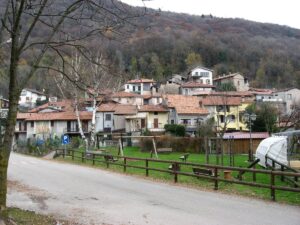


Civic Temple of the Blessed Virgin Incoronata: A Renaissance Gem
- Via Incoronata, Lodi (LO)
- Open in Google Maps
- View on Google Images
 A stone's throw from Piazza della Vittoria, hidden in a narrow street, the Civic Temple of the Blessed Virgin Incoronata is one of those surprises that leave you speechless. You don't expect it, yet there it is, with its octagonal plan peeking out among the buildings. You may not know it, but this temple was born from an incredible event: in 1487, a fresco of the Madonna, painted on a brothel, began to weep. People saw it as a sign, and so, thanks to the City Council (which still owns it today), construction began. The architect was Giovanni Battagio, a student of Bramante, who started work in 1488. Then Dolcebuono arrived, and in 1493 the jewel was ready. It is the first example of a central-plan building of the Renaissance in northern Italy, and you can tell. Inside is a triumph of decorations: frescoes, gilding, stuccoes. The lighting is wonderfully designed, with light pouring from above and making everything shine. The artworks are a concentration of Lombard art: Bergognone, with his panels in the Chapel of St. Paul, and the Piazza family, who worked here for years. Callisto Piazza is the most famous, but Martino and Albertino also left their mark. The organ from 1775, with its painted doors, is another highlight. And if you come on Sunday afternoon, don't miss the Treasure Museum in the basement: small but with precious pieces, like a 16th-century enameled peace. Entrance is free, and the visit is enriched with a QR code for the guide. Real advice: take your time, because every corner hides a detail. The temple is still active, with Mass at 11:30, so if you arrive during a service, leave early. But it's worth it: it's the most prestigious monument in Lodi, and you can feel it.
The Visconti Castle: A Fortress Turned Police Headquarters
- Go to the page: Visconti Castle of Lodi: Medieval fortress with corner towers and porticoed courtyard
- Piazza Castello, Lodi (LO)
- Open in Google Maps
- View on Google Images
 While strolling through Lodi, don't miss the Visconti Castle – though spoiler alert: you can't enter. Today it houses the police headquarters, but its imposing presence in Piazza Castello tells centuries of history. It was Frederick Barbarossa who wanted a fortress here, at the most vulnerable point of the walls, but its current appearance is thanks to Bernabò Visconti, who between 1355 and 1370 expanded it with four towers and deep underground prisons. Then came Francesco Sforza, who in 1456 added the famous Round Tower, designed by engineer Serafino Gavazzi: today it's one of the city's symbols, and in 1906 it was even raised to become a water tower.
Beneath your feet, about six meters deep, lies a network of tunnels up to 2.70 meters high, enough to ride a horse through. Only discovered in the 2000s, these passages were part of the outer barbican and likely used for escapes or surprise attacks. It's said a secret gallery connected the castle to Piazza della Vittoria, but the tunnels were mostly walled up in the 1950s, making it hard to prove. Historian Guicciardini already mentioned them in 1526, describing troops entering through a "covered way."
Unfortunately, the castle isn't open to the public, but it's worth admiring from the outside: the round tower with swallowtail battlements, the arcades, and the double loggias added by the Austrians when they turned it into barracks. If you're into underground spaces, keep an eye on the future – it seems the renovated tower might become visitable. For now, imagine what lies beneath Lodi's cobblestones.
Piazza della Vittoria: Lodi's Living Room
- Piazza della Vittoria, Lodi (LO)
- Open in Google Maps
- View on Google Images
 Piazza della Vittoria is the beating heart of Lodi, a rare example worldwide of a square with porticos on all four sides. Until 1924 it was called Piazza Maggiore, a name the people of Lodi still use affectionately. The square is quadrangular, with sides of about 74 meters, and the porticos are supported by 66 columns, some of which come from ancient Laus Pompeia. The overlooking buildings have narrow, pastel-colored facades, typical of the medieval "Gothic lot": shop on the ground floor, residence upstairs, and a small courtyard at the back. Underfoot, the paving in "Ricciato Lombardo" (river pebbles) dates back to 1471 and is still perfectly preserved. Dominating the square are the Lodi Cathedral (Cathedral of Santa Maria Assunta), the Municipal Palace (Broletto), and the splendid Palazzo Vistarini, a 14th-century castle-like residence. Today the square is entirely pedestrianized and bustling with life: bars and restaurants set up tables under the porticos, and the open-air market enlivens Tuesdays and Thursdays. Events such as the Santa Lucia Village in December, concerts, and shows take place here. A curiosity: in the 19th century, an equestrian statue of Napoleon stood at the center, erected to celebrate the victory in the Battle of Lodi. Since 2004, the Touring Club Italiano has listed it among the most beautiful squares in Italy. Strolling here is like taking a dive into time, between history and genuine atmosphere.
Church of San Francesco: Skyward Mullioned Windows and Ancient Frescoes
- Piazza Ospitale, Lodi (LO)
- Open in Google Maps
- View on Google Images
 If you pass through Lodi, don't miss the Church of San Francesco, a medieval gem that will surprise you. Dating back to the late 13th century, it is one of the most original sacred buildings in the city. Its unfinished pink brick facade has a unique detail: two 'open-sky' mullioned windows, considered the first example of this model, which later spread throughout northern Italy. Stop and look: it seems as if the church wants to breathe through those windows. The interior is a riot of frescoes from the 14th to the 18th century. The most evocative? In the right transept, a Madonna and Child with saints and Antonio Fissiraga offering a model of the church – the work of an anonymous Lombard master influenced by Giotto. The third chapel on the right, dedicated to Saint Bernardino, is entirely frescoed by Gian Giacomo da Lodi with scenes from the saint's life. And don't forget the illustrious burials: here lie the poet Ada Negri, librettist Francesco De Lemene, and naturalist Agostino Bassi. The atmosphere is intimate; the exposed brick and marble create a warm contrast. Free admission, open daily (from 6:30 AM to 12 PM and from 5 PM to about 6:30 PM). A traveler's tip: sit in one of the side aisles and look up at the cross vaults – it feels like being in a forest of arches and colors.
Church of Saint Philip Neri
- Corso Umberto Primo, Lodi (LO)
- Open in Google Maps
- View on Google Images
 In the center of Lodi, overlooking Corso Umberto I, the Church of Saint Philip Neri is a small 18th-century wonder. Built between 1740 and 1758 in the Rococo style, its facade—designed by Antonio Veneroni—greets you with busts of the patron saint and the Immaculate Virgin, framed by angels and putti. The theatrical effect is intentional: the church was positioned directly opposite the mouth of Via Volturno to be admired in all its elegance.
Stepping inside, the Greek cross interior will leave you breathless. The frescoes are a riot of color: Felice Biella painted the quadrature, while Carlo Innocenzo Carloni created the figures, including the Assumption of the Virgin on the vault and the Glory of Saint Philip Neri in the presbytery. Don't miss the Crucifixion in the apse and the Apostles in the pendentives. The three Rococo marble altars, with wrought iron and bronze accents, are precious; the left one houses a canvas by Johann Georg Fockhezer. In the sacristy, a painting by Sebastiano Galeotti and an 18th-century statue of the Addolorata complete the treasure.
Another gem is the pipe organ by Andrea Serassi (1779), still played during concerts today. The church has been recently restored: work on the facade was done in 2008, and between 2016 and 2021 the presbytery frescoes were recovered. If you want to visit, Mass is held on weekdays at 9:00 AM, Saturdays at 5:30 PM, and Sundays at 10:30 AM (times are indicative; please check). It is also among the FAI Places of the Heart, and sometimes organizes free guided tours. A tip: arrive from Via Volturno to enjoy the facade in its urban setting.
Palazzo Mozzanica: A Plunge into Lodi's Renaissance
- Via Volturno, Lodi (LO)
- Open in Google Maps
- View on Google Images
 Walking along via XX Settembre, you come across a palace that seems to tell a story. It's Palazzo Mozzanica, one of the finest examples of Renaissance civil architecture in Lodi. Built at the behest of Count Lorenzo Mozzanica in the second half of the 15th century, it rises on the foundations of an ancient castle of the Vignati, lords of the city. The exposed-brick façade is a masterpiece: a terracotta stringcourse by Agostino de Fondulis depicts sea nymphs and tritons locked in combat—a detail that makes you look up and stand enchanted. The portal, in Angera stone, is adorned with four medallions bearing the profiles of Francesco Sforza, Bianca Maria Visconti, Gian Galeazzo Visconti, and Isabella d'Aragona. Legend has it that in 1509, King Francis I of France himself slept here. Stepping into the porticoed courtyard, you notice the attention to detail: columns with Ionic capitals and, at the far end, the 18th-century staircase. The 2021–2022 restoration brought the façade back to its former glory. Today the palace houses offices, but its beauty is accessible to all. Don't miss the chance to admire this gem during your visit to Lodi.
Teatro alle Vigne
- Via Camillo Benso Conte di Cavour, Lodi (LO)
- Open in Google Maps
- View on Google Images
 In the heart of Lodi, at Via Cavour 66, lies a theater with a centuries-long history. The Teatro alle Vigne hasn't always been a stage: it was a church, dedicated to San Giovanni and Ognissanti alle Vigne, built by the Umiliati friars in the 13th century. Later it passed to the Barnabites, who transformed it into a grand Baroque sacred space (the architect Carlo Ambrogio Mazenta designed it in 1618). The facade remained unfinished, but the interiors were embellished up to the 18th century. After the Napoleonic suppression, the building became a granary, then a gym. In 1976 the municipality recovered it and in 1985 it reopened as a theater, inaugurated by Gianandrea Gavazzeni with the Cameristi della Scala. Today it is the only large theater in the city, with 400 seats. The program ranges from prose to music, dance to opera, with a section dedicated to children (Le Piccole Vigne). Practical details? The box office is open Monday to Friday (5–7 PM) and one hour before performances. There's also the apericena a teatro (€9) to start the evening in style. And if you want to give a charitable gift, there's the suspended ticket initiative. The atmosphere is intimate, with excellent acoustics: thanks to the 17th-century vaults. In short, a place steeped in history yet breathing contemporaneity.
Lodi Civic Museum: Masterpieces Awaiting a New Home
- Corso Umberto Primo 63, Lodi (LO)
- Open in Google Maps
- View on Google Images
 The Lodi Civic Museum is a jewel currently closed, but its beating heart has not stopped. Founded in 1868 to preserve archaeological finds from Lodi Vecchio and paintings by the Lodi school, it has been housed since 1876 in the former convent of San Filippo. Today, after its closure in 2011, it is preparing for a grand rebirth in the former Linificio (the so-called "Opificio della cultura"), with over 1,500 square meters of exhibition space – more than double the old location – and an opening scheduled by March 2026. Its heritage is extraordinary: the art gallery features masterpieces by Callisto Piazza (such as the "Portrait of Ludovico Vistarini" and the "Madonna and Child with Angel Musicians") and two famous canvases by Francesco Hayez, including his "Self-Portrait at 48." Equally fascinating is the collection of Lodi ceramics, with refined 18th-century productions from the Coppellotti, Rossetti, and Ferretti factories, renowned for their high-fire firing and floral decorations. The archaeological section tells millennia of history: Roman inscriptions, Celtic and Lombard funerary goods, and Etruscan bronzes. Fortunately, while awaiting the big day, a temporary exhibition offers a preview of these wonders. Don't miss "Essere Fiume" at Spazio 21, via San Fereolo 24, through June 21, 2025: a journey among artifacts, works, and contemporary installations exploring the bond between Lodi and the Adda River, with videos of paintings from the art gallery awaiting restoration. A taste of what the new museum will be: dynamic, participatory, at the service of the city.
Church of Sant'Agnese: A Gothic Jewel in the Heart of Lodi
- Via Marsala, Lodi (LO)
- Open in Google Maps
- View on Google Images
 If you're strolling through the center of Lodi, don't miss the Church of Sant'Agnese, a small Gothic gem that knows how to stir emotions. Built starting in 1351 within the Augustinian monastery, its facade stands out for its marked verticality and two pointed lancet windows. The lunette above the portal, with the fresco of Sant'Agnese, is a 19th-century restoration, but doesn't detract from its charm. The interior has three naves of equal height, with cross vaults supported by sturdy cylindrical brick pillars: a structure known as a 'hall church' that makes you feel instantly enveloped. The true masterpiece, however, is the Galliani Polyptych by Albertino Piazza (1520), a huge oil on panel (420x280 cm) now located in the first chapel on the right. It was commissioned by Abbot Nicola Galliani and is a celebration of saints, angels, and sacred scenes: worth the visit alone. In the apse, a 15th-century wooden crucifix of great value also stands out. Little known? Yes, and perhaps that's better: the atmosphere is intimate, almost private. Open only in the morning (8:00 to 11:30), the church is now a subsidiary of San Lorenzo, but retains its monastic character. Also not to be missed is the adjoining cloister, visible from outside. All in all, a jewel to discover.
Diocesan Museum of Sacred Art: A Journey Between Faith and Art
- Piazza Mercato, Lodi (LO)
- Open in Google Maps
- View on Google Images
 If you are in Lodi, a must-see stop is the Diocesan Museum of Sacred Art, recently relocated to the former church of San Cristoforo (via Cavour 31). Upon entering, you ascend a scenic monumental staircase that already offers a taste of the wonders within. I was particularly struck by the Treasure of San Bassiano, displayed in Room IV: the Pallavicino Monstrance, made of cast and chiseled silver, finely decorated with enamels and corals, is a Renaissance jewel that seems to glow with its own light. Nearby, the Pallavicino Processional Baldachin, embroidered in silk and gold filigree, tells centuries of devotion. But the museum is not just about goldsmithing: in Room II, a 13th-century wooden Christ with a time-worn face stands out, along with the Polyptych of Saint Christopher in carved and painted wood by Bongiovanni and Giovanni Lupi. Archaeology enthusiasts will find Roman artifacts – a fragment of a 1st-century AD tombstone and a 4th-century milestone – while in the last rooms, contemporary sacred art dialogues with 20th-century works. The museum is open Saturday from 2:15 PM to 6:00 PM and Sunday from 2:30 PM to 6:00 PM; admission is free with a suggested donation. An insider tip: ask to see the Bishops' Main Chapel, with its rococo decorations and 18th-century mitre in hard stones. The museum is rarely crowded, perfect for an intimate and quiet discovery.
Paolo Gorini Anatomical Collection: Science and Mystery
- Via Agostino Bassi 1, Lodi (LO)
- Open in Google Maps
- View on Google Images
 If you think an anatomy museum might be macabre, the Paolo Gorini Anatomical Collection will change your mind. Hidden within the fifteenth-century Cloister of the Pharmacy of the Old Hospital in Lodi, this collection is a dive into nineteenth-century science, between genius and secrets. On display are 169 human and animal specimens created by Paolo Gorini, nicknamed "the wizard of Lodi," between 1842 and 1881. Gorini was not a madman but a professor of physics and natural sciences who developed revolutionary preservation techniques, injecting chemical substances (based on mercuric chloride) to replace bodily fluids. The result? Entire bodies, like that of the young Pasquale Barbieri (1843), preserved with lifelike features, and dissected organs showing diseases now eradicated, such as syphilis or Pott's disease. The exhibition hall is the ancient Capitular Hall, frescoed by Giulio Cesare Ferrari in 1593 with mythological scenes: a perfect contrast between art and science. Free admission, but prohibited to children under 12 due to the delicate nature of the specimens. Opening hours? Only Wednesday (10-12 AM), Saturday (9:30 AM-12:30 PM), and Sunday (2:30-4:30 PM). Limited time? Yes, but well worth it. And if you are fascinated by history, Gorini was also a pioneer of cremation: his "Lodi crematory oven" is still visible in the Riolo cemetery. A unique place, blending medicine, history, and a touch of mystery.
Natural Science Museum: A Treasure Chest of Biodiversity
- Via San Francesco d’Assisi 23, Lodi (LO)
- Open in Google Maps
- View on Google Images
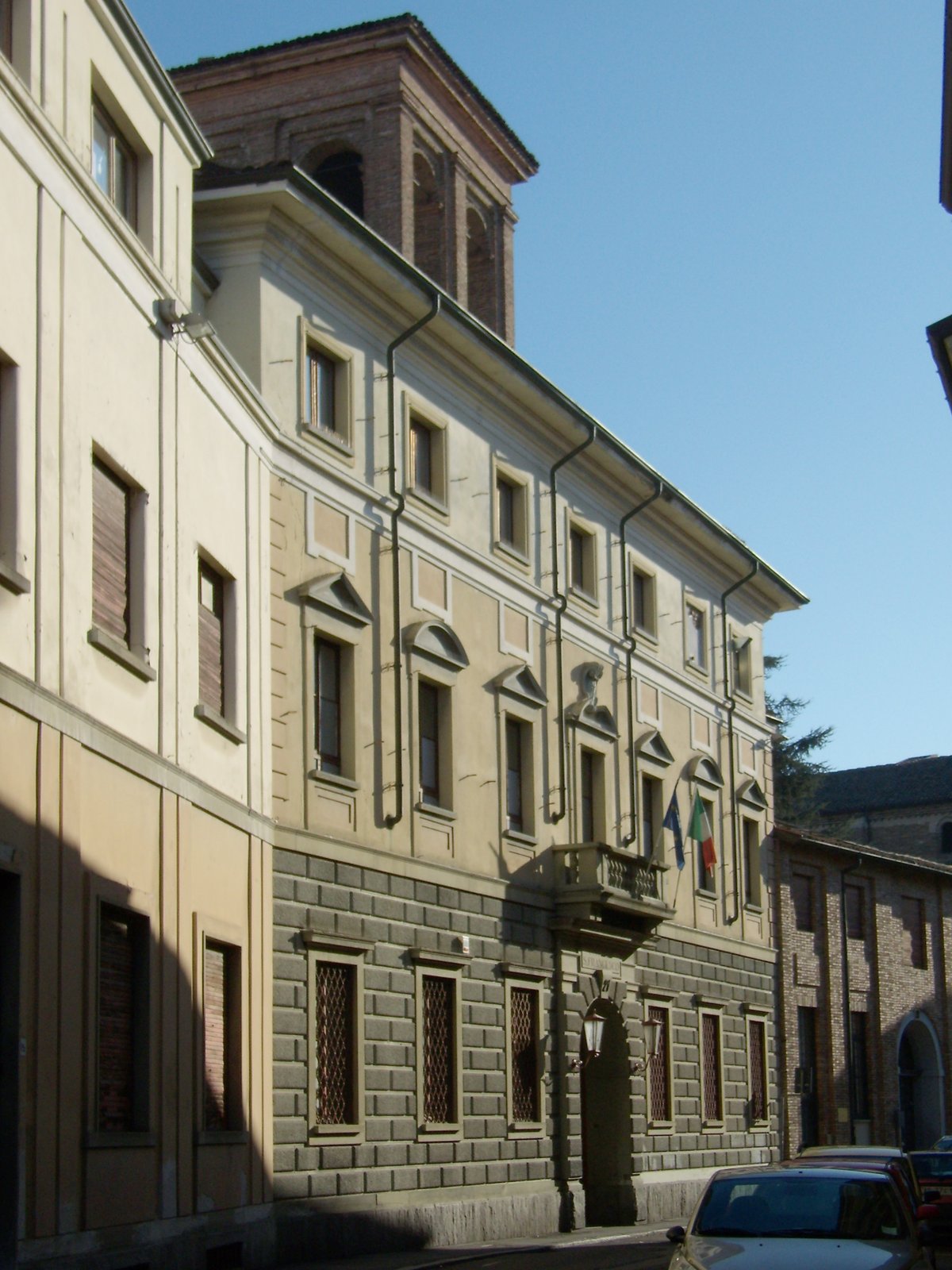 If you think Lodi is only about art and architecture, think again. Inside the Collegio San Francesco, a 16th-century cloister houses the Natural Science Museum, a hidden gem worth discovering. Founded in 1833 by Father Bernardo Galli, the museum gathers about 6,000 specimens across five sections: zoology, paleontology, ornithology, malacology, and mineralogy. The 19th-century display cases transport you to an era when museums were wunderkammern: everything here is authentic and a bit vintage. Highlights include an albatross with a 2.80-meter wingspan, a 5-meter anaconda, two dinosaur eggs from Mongolia, and a twinned quartz druse from the Simplon Tunnel. Every specimen has a story: fluorescent minerals glow under UV light, fossils whisper tales of bygone eras. For botany enthusiasts, there are two historic herbaria with thousands of plants. Admission is 3 euros (free for school groups), and the museum is open only by appointment on weekdays, closed in July and August. Tip: call 0371 420019 to schedule your visit, so you can enjoy the collection without rushing. Truly, a corner of science that will surprise you.
Museum of the Treasure of the Incoronata
- Via Incoronata, Lodi (LO)
- Open in Google Maps
- View on Google Images
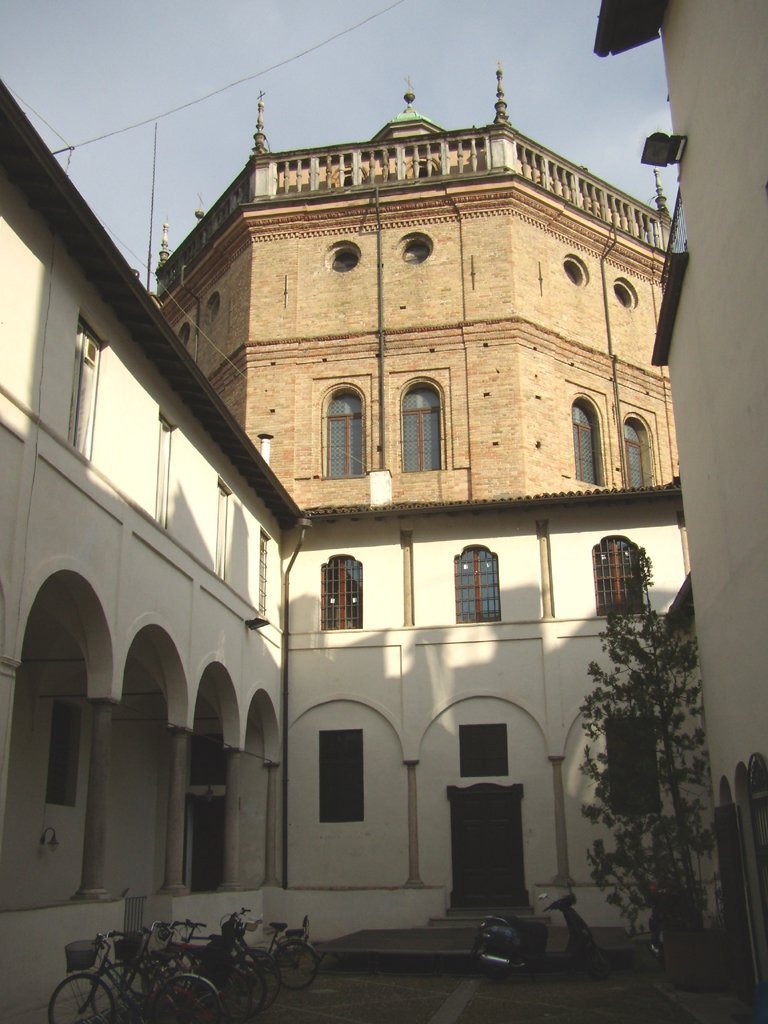 If you are in Lodi, you cannot miss the Museum of the Treasure of the Incoronata. It is located in the underground of the Temple of the Incoronata, a gem of Lombard Renaissance designed by Giovanni Battagio in 1488. The museum opened in 1988, on the 500th anniversary of the temple, and houses liturgical objects of rare beauty. The underground rooms are fascinating: they were once houses, and you can still see a working well and wood chutes. Among the most valuable pieces, a late 16th-century Pax in enamel on silver, a 16th-century cross, and a monstrance by Luigi Caber from the 19th century stand out. There are also chalices, censers, reliquaries, and sacred vestments from the 17th and 18th centuries. Admission is free, and the museum is open on Sundays from 3 to 6 PM. For visits during the week, reservation is required (tel. 0371 409410 or 0371 51083). Enter from the Temple at via Incoronata 23 and be amazed by this hidden treasure.
Porta Cremona: Lodi's Monumental Gateway
- Piazza Piero Zaninelli, Lodi (LO)
- Open in Google Maps
- View on Google Images
 Porta Cremona is the only surviving historic gate in Lodi, located in Piazza Pietro Zaninelli. It's not just an entrance: it's a piece of history blending the Middle Ages and Neoclassicism. Its origins date back to the 13th century, when a drawbridge existed over the Roggia Molina canal. The current structure was rebuilt between 1790 and 1792 based on a design by engineer Antonio Dossena, in Neoclassical style. Three arches (the central arch was for carriages and nobility, the side ones for pedestrians), four Doric columns in granite, capitals, and an architrave with a decorated frieze: every detail is carefully thought out. On the sides, the two city emblems stand out. After Italy's unification, for a few decades it was called 'Porta Roma'. In the mid-20th century, there were plans to demolish it for traffic reasons, but the Superintendence saved it. Today, after an important restoration between 2009 and 2012 that solved issues of humidity and decay, it has returned to its former glory. The only downside is the scaffolding still in place: a temporary safety intervention from 2017 hasn't become permanent yet. But don't worry, the gate is clearly visible and worth a stop. Look at the 1911 plaque commemorating the abolition of the toll: a little dive into local history.
Bishop's Palace: An Unfinished Gem
- Piazza Mercato, Lodi (LO)
- Open in Google Maps
- View on Google Images
 If you're passing through Lodi, the Bishop's Palace is worth a stop. It's right next to the Duomo, on via Cavour 31, and its history is fascinating: the foundations date back to 1163, but it truly came to life under Bishop Alberto Quadrelli (1168-1173). In 1177, the bishop's seat was moved from Lodi Vecchio, and from then on, centuries of stop-and-go work began. Its current appearance is the result of an 18th-century project by Giovanni Antonio Veneroni, commissioned by Bishop Carlo Ambrogio Mezzabarba in 1725. Too bad the work remained unfinished: the southwest wing is still rustic, with exposed bricks and holes from scaffolding. Step into the courtyard and observe the five-arched portico with paired columns: it's in exposed brick, unfinished but incredibly charming. On the first floor, the former bishop's chapel houses frescoes by Carlo Innocenzo Carloni, while the gallery of portraits of Lodi's bishops is a dive into local history. Don't miss the 17th-century garden, accessible only with a guided tour: it's a peaceful corner, expanded in 1482 by Bishop Pallavicino on land that was once a market. One wing of the palace houses the Diocesan Museum of Sacred Art, with the treasure of San Bassiano. In short, a place that blends sacred and profane, finished and unfinished, just the way I like it.