
🧭 What to Expect
- Ideal for: families, couples, and art and nature enthusiasts
- Highlights: historic villas with gardens, prestigious museums, trekking on Monte Chiusarella
- For those who love: the refined atmosphere of stately homes and lake views
- Not to be missed: Villa Panza and the Baroffio Museum, two cultural gems
- Wellness and relaxation: city parks and views of Lake Maggiore
Events nearby

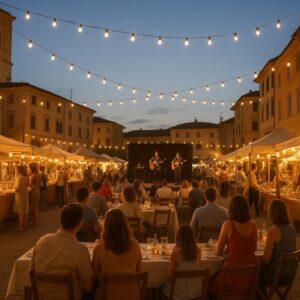

If you're looking for what to see in Varese, get ready for a surprising mix of art, history, and nature. The Lombard city, overlooking Lake Maggiore, offers a compact but rich center full of surprises. Start from Villa Panza, a neoclassical masterpiece with an extraordinary contemporary art collection. A few steps away, the Baroffio Museum houses treasures of the Sacred Mount, a UNESCO site. Don't miss Villa Toeplitz, with its English gardens and views over the city, and the Civic Museums of Villa Mirabello, which tell the local history. For architecture lovers, Masnago Castle and Villa Recalcati are unmissable stops. If you love nature, the Ponti Villas Park is an oasis of peace, while Monte Chiusarella offers treks with breathtaking views. For a touch of vintage charm, visit the Grand Hotel Campo dei Fiori and the Civic Tower in Piazza Monte Grappa. Every corner of Varese tells a story: an itinerary that combines culture and relaxation, ideal for a trip off the beaten path.
Overview
- Villa Panza: Contemporary Art Amid History and Nature
- Baroffio Museum: A Treasure of Art and Devotion
- Villa Toeplitz: A Dream Park Between East and History
- Civic Museums of Villa Mirabello
- Lodovico Pogliaghi House Museum
- Masnago Castle: Gothic Frescoes and Modern Art
- Villa Recalcati: The Estate That Hosted Verdi and D'Annunzio
- Monte Chiusarella: A Balcony Over the Varese Prealps
- Villa Andrea Ponti: A 19th-Century Escape into Art and Nature
- Grand Hotel Campo dei Fiori, a Liberty Jewel
- Torre Civica: Climb the Symbolic Tower of Varese
- Piazza Monte Grappa, the Rationalist Heart of Varese
- Villa Selene: A Gentleman's Residence Amid History and Nature
- Ville Ponti Park
- Velate Tower
Itineraries nearby
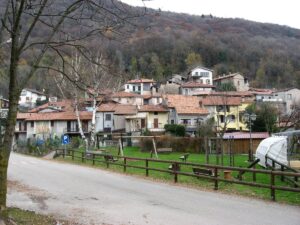


Villa Panza: Contemporary Art Amid History and Nature
- Piazza Litta 1, Varese (VA)
- https://fondoambiente.it/luoghi/villa-e-collezione-panza
- Open in Google Maps
- View on Google Images
- faibiumo@fondoambiente.it
- +39 0332 283960
 Climbing the Biumo hill, you come across an 18th-century residence that hides a treasure of contemporary art: Villa Panza. Originally a pleasure villa for the Marquis Menafoglio, it was expanded by Luigi Canonica and Piero Portaluppi, but its true character was shaped by Count Giuseppe Panza, who from the 1950s transformed it into a living museum. Now donated to FAI, it houses over 150 works by American and European artists, with a focus on light and color. Dan Flavin, James Turrell, and Robert Irwin are the stars: here you'll find the largest permanent collection of Flavin's works. The site-specific installations interact with Renaissance furnishings and collections of African and pre-Columbian art, creating a fascinating contrast. The 33,000 square meter park is an open-air artwork, with Land Art installations and romantic English-style corners. Don't miss the Luce restaurant, which uses products from the villa's vegetable garden. Open Tuesday to Sunday, 10:00-18:00 (last entry 17:15). Full ticket €15, reduced €10. I recommend booking online to avoid queues. An unmissable stop for lovers of art, history, and nature.
Baroffio Museum: A Treasure of Art and Devotion
- Piazzetta del Monastero, Varese (VA)
- http://www.museobaroffio.it/
- Open in Google Maps
- View on Google Images
- info@museobaroffio.it
- +39 0332 212042
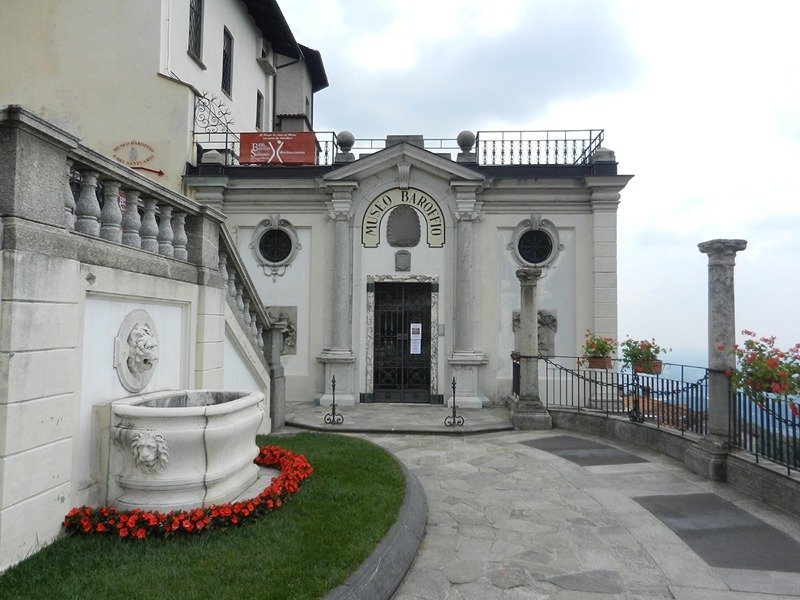 Overlooking the small square in front of the Sanctuary of the Sacred Mountain, the Baroffio Museum is a must-see for anyone visiting Varese. Founded in 1929 thanks to a donation from Baron Giuseppe Baroffio Dall’Aglio, it is the oldest museum in the city still open to the public. The building that houses it was designed by Ludovico Pogliaghi, a versatile artist who also curated its first layout. The itinerary unfolds over three floors, alternating bright halls with small hidden rooms beneath the Sanctuary, where remnants of 15th-century frescoes emerge. Here, the historical-artistic collection of Santa Maria del Monte is preserved, with pieces ranging from the Middle Ages to the 20th century. Among the absolute gems are the gold brocade altar frontal donated in 1494 by Ludovico il Moro and Beatrice d’Este, and the so-called “Leonardesque altar frontal” featuring the Virgin of the Rocks. Not to be missed are the Romanesque statue of the Madonna and Child by Domenico and Lanfranco da Ligurno (late 12th century) and the illuminated Ambrosian antiphonaries. The museum also houses a section of contemporary sacred art commissioned by Monsignor Pasquale Macchi, with works by Guttuso, Matisse, Rouault, and Bodini. The visit includes access to the Crypt of the Sanctuary, dating from the 9th-10th centuries and reopened in 2015 after a restoration that brought to light 14th-15th century frescoes. Then climb to the museum’s terrace: from there, the view stretches over the Campo dei Fiori Park and the pre-Alpine lakes, offering one of the most beautiful panoramas in Lombardy. The ticket costs €7 on weekdays, €10 on holidays (with guided tour), and there are discounts for families and under-18s. Open Wednesday to Sunday, with different hours: weekdays 2–6 PM, holidays 10 AM–6 PM. A place that combines art, faith, and nature in a single, fascinating story.
Villa Toeplitz: A Dream Park Between East and History
 When people talk about Villa Toeplitz, their first thought goes to its park. It's not just any garden: it spans 8 hectares and looks like something out of an Eastern dream. Credit goes to Edvige Mrozowska, wife of banker Giuseppe Toeplitz, who after travels to Kashmir wanted to recreate the atmosphere of Mughal gardens here. So among pathways and lawns, you'll find fountains with sky-blue mosaics and Carrara marble and a monumental porphyry staircase. Water flows everywhere thanks to an ingenious internal recycling system: it stops, descends, collects in turquoise channels.
The park is not just water: there's a conifer forest with a belvedere, a chestnut grove, and monumental trees like an Atlas cedar and a sequoia. While strolling, you'll encounter a tennis court, a chapel, and even a roccolo for bird hunting. But the real gem is the Castiglioni Museum, housed in the former guesthouse. Here brothers Angelo and Alfredo collected ethnographic and archaeological artifacts from Africa and Egypt: mummies, ceramics, musical instruments. A dive into another continent.
The villa itself is now home to the University of Insubria, but it's worth a visit for its eclectic style. The park is open daily from 8 a.m. (closing times vary: in winter until 6 p.m., in summer until 11 p.m.). The Castiglioni Museum is open Thursday to Sunday, 10 a.m.–1 p.m. and 2–6 p.m. (ticketed). And park entry is free: what more could you want?
Civic Museums of Villa Mirabello
- Piazza della Motta 4, Varese (VA)
- https://cultura.gov.it/luogo/civico-museo-archeologico-di-villa-mirabello
- Open in Google Maps
- View on Google Images
- museoarcheologico.mirabello@comune.varese.it
- +39 0332 255485
 As you climb towards Villa Mirabello, overlooking the Estensi Gardens, you immediately understand where its name comes from: the view of Lake Varese and the Alps is truly magnificent. This 18th-century villa, remodeled in English style in the 19th century, now houses the Civic Museums—a treasure for history lovers. Inside, the archaeological itinerary begins with the UNESCO pile-dwelling sites of Isolino Virginia and Bodio Lomnago, featuring artifacts that span over 4,000 years of human habitation. The highlight? The Warrior's Tomb of Sesto Calende (6th century BC), complete with a war chariot, weapons, and a figurative bronze vase. But there's also the mysterious Mummy of Villa Mirabello, a 16th-century boy still under study. The Roman section boasts a rich collection of stone inscriptions and the splendid Cagnola glass cup. Upstairs, the Risorgimento Section catapults you into 1859: the monumental painting by Eleuterio Pagliano, 'The Landing of the Hunters of the Alps at Sesto Calende,' is accompanied by a multimedia show recounting the Battle of Varese. Among uniforms, flags, and cannonballs, you can almost smell the gunpowder. And it doesn't stop there: the museum also holds butterfly and taxidermy collections, as well as archives of writers like Piero Chiara. The English-style park surrounding the villa is a botanical gem, with a century-old cedar of Lebanon and a fir grove that connects to the Estensi Gardens. Perfect for a stroll after your visit. Practical info: full ticket €5, reduced €3, free for under 18. Note the hours: closed on Mondays, open in the afternoon only on Fridays, Saturdays, and Sundays.
Lodovico Pogliaghi House Museum
- Via Beata Giuliana 5, Varese (VA)
- http://www.casamuseopogliaghi.it
- Open in Google Maps
- View on Google Images
- info@casamuseopogliaghi.it
- +39 328 8377206
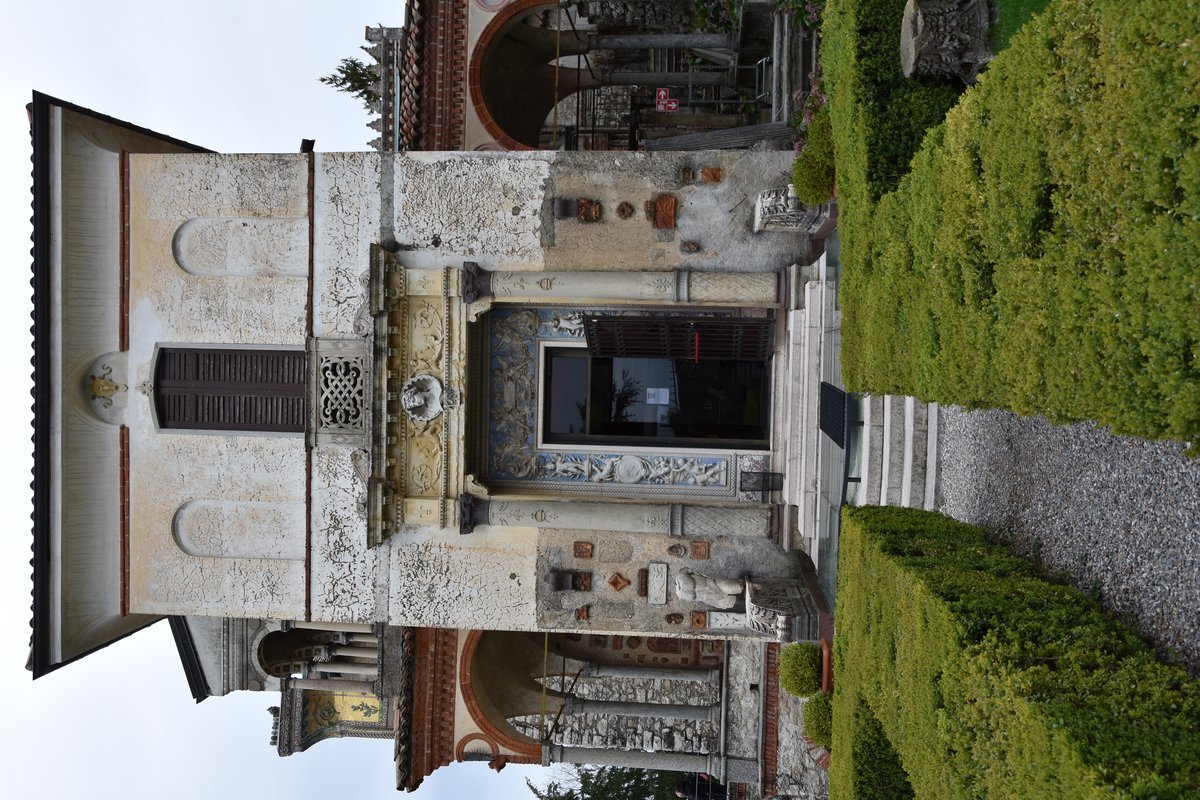 Stepping into the Lodovico Pogliaghi House Museum is like entering the world of a brilliant, slightly eccentric artist. Perched at the top of the Sacro Monte di Varese, this villa was designed and built from 1885 by Pogliaghi himself as his studio and workshop. And while you're there, soak in the view: on clear days you can even see Milan's Duomo. Inside, a vast collection awaits: over 1,500 paintings and sculptures and more than 500 archaeological finds. You'll find everything: Egyptian sarcophagi, Chinese porcelain, a sketch by Bernini, and even a Christ by Morazzone. But the real star is the enormous plaster model of the central door of Milan's Duomo, Pogliaghi's most famous work. Each room has a different theme: the Red Room with crimson damasks, the Exedra of Marbles reminiscent of the Pantheon, and the surprising Golden Gallery, inspired by a Persian bath. Guided tours are available on weekends (included in the ticket), and the curators have added no labels: so it feels like you're a guest in the artist's home, not a museum. The holiday ticket costs €10, while on weekdays (Wednesday to Friday mornings) it's only €7, but without a guide. If you love gardens, for €2 you can visit the Italian garden, full of statues and hedges. The house is open from mid-March to mid-November, Saturdays and Sundays from 10 am to 6 pm, and on weekdays only in the morning. Pro tip: if you're a fan of eclectic art, don't miss the combo ticket for €15 that also includes the Baroffio Museum and the Crypt of the Sanctuary. And check the website for possible summer evening openings with an aperitivo: a magical experience.
Masnago Castle: Gothic Frescoes and Modern Art
- Via Cola di Rienzo 42, Varese (VA)
- Open in Google Maps
- View on Google Images
 Masnago Castle is one of those places that takes you by surprise. Perched on a hilltop, surrounded by the greenery of Parco Mantegazza, it feels more like a stately home than a fortress. The massive 12th-century square tower is the oldest feature, but what makes it truly special are the 15th-century frescoes in the International Gothic style. The Sala degli Svaghi is incredible: there's a falconry scene, a boat trip, and even a tarot game – you can almost see the nobility of the era having fun. Then there's the Sala dei Vizi e delle Virtù, with seven scenes where a crowned virtue is flanked by two vices: a curious way to teach moderation. If you love art, don't miss Francesco Hayez's Tamara di Giuda (1847), the highlight of the collection, alongside works by Morazzone, Pellizza da Volpedo, and Enrico Baj. The museum creates an amazing dialogue between ancient and contemporary. Outside, the park is perfect for a stroll: centuries-old trees, manicured flowerbeds, and if you have kids, a playground. Admission is only 5 euros (reduced 3), and the ticket includes the Archaeological Museum at Villa Mirabello. Open Tuesday to Sunday, closed Monday. Park on Via Monguelfo and walk up. Tip: go for a guided tour to uncover the details of the frescoes – it's worth it.
Villa Recalcati: The Estate That Hosted Verdi and D'Annunzio
- Via Evaristo Trentini, Varese (VA)
- Open in Google Maps
- View on Google Images
 Villa Recalcati is an 18th-century gem that welcomes you to Varese with its fascinating history. Built for the Recalcati family, it became the Grand Hotel Excelsior in 1874, hosting illustrious guests like Giuseppe Verdi and Gabriele D'Annunzio. Today it houses the provincial government and the prefecture, but you can visit it (Monday to Thursday, 10:30 AM–5:30 PM; Friday until 12:30 PM) and admire the stunning frescoes by Magatti and Ronchelli. The English-style park, with monumental trees and a grotto, is free and open to all. Don't miss the memorial stone that holds the heart of Tadeusz Kościuszko, a piece of Polish history in Varese. Tip: take a stroll in the courtyard of honor with its twin colonnade—it's a place that exudes nobility and peace.
Monte Chiusarella: A Balcony Over the Varese Prealps
- Varese (VA)
- Open in Google Maps
- View on Google Images
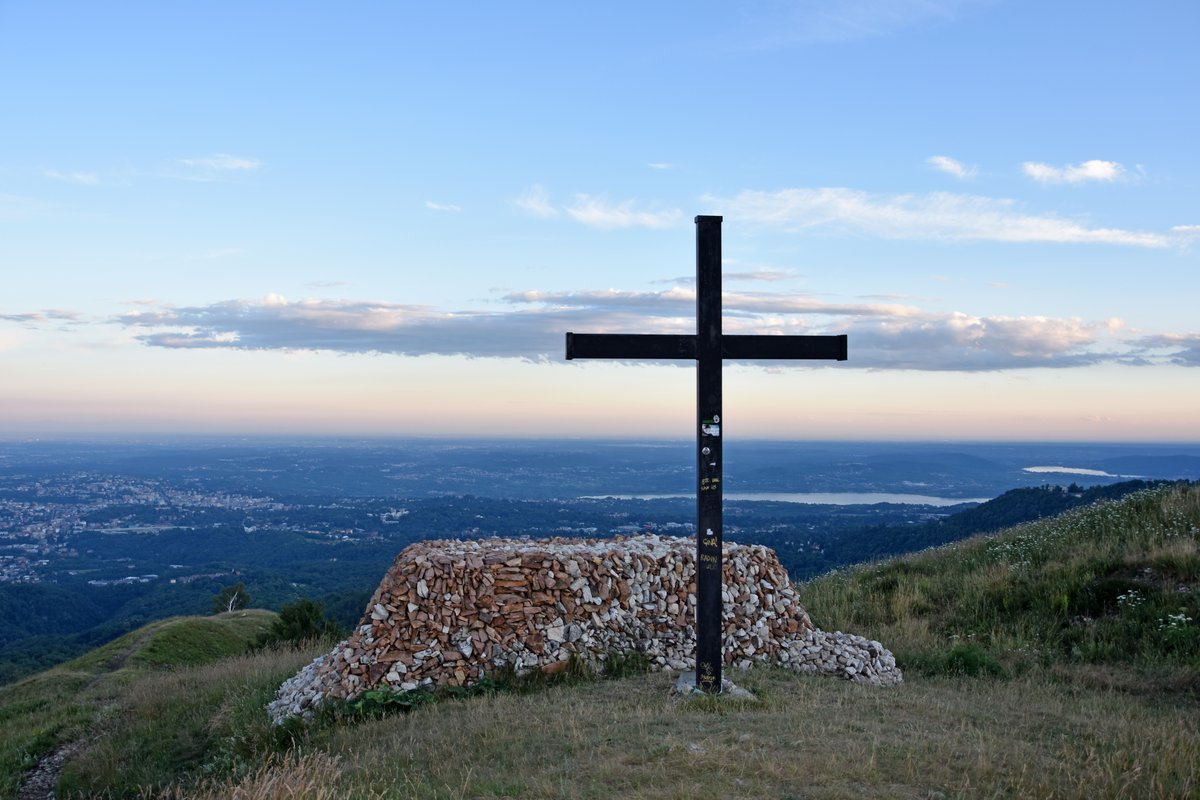 If there’s one hike that captures the best of the Campo dei Fiori Park, it’s the one to Monte Chiusarella. At 915 meters in altitude, it offers a panorama that rivals much higher peaks. Start from Rasa di Varese (free parking at the cemetery) and follow the CAI trail 314. After a walk through the woods, you’ll reach Pian Valdés, a natural terrace that already gives a taste of the views over Lake Varese and the Sacro Monte. Then it’s uphill—the final stretch is steep but short—and you’ll arrive at the summit cross. Here you’ll find a curious tradition: visitors place a stone on the dry-stone wall next to the cross, making a wish. The panorama is 360 degrees: to the south, the Po Valley stretches to Milan (on clear days you can spot the UniCredit Tower), to the west, Lake Maggiore and the Swiss mountains, to the north, Monte Rosa, and to the east, the Grigne range. But it’s not just nature: Monte Chiusarella is also steeped in history. During World War I it was part of the Cadorna Line, and along the trail you can still see trenches and machine-gun positions. For botany enthusiasts, the best time is May–June, when over 150 species of orchids and rare flowers like the Montpellier bladderwort bloom. But watch out for the burning bush (Dictamnus albus): it’s irritating on contact. The loop hike (also passing Monte Martica) is about 12 km with 600 m of elevation gain, taking around 5 hours. Moderate difficulty, suitable for those with a basic level of fitness. Don’t forget water and hiking boots: the terrain can be slippery after rain. And if you bring a dog, he’s welcome.
Villa Andrea Ponti: A 19th-Century Escape into Art and Nature
- Via Masolino da Panicale, Varese (VA)
- Open in Google Maps
- View on Google Images
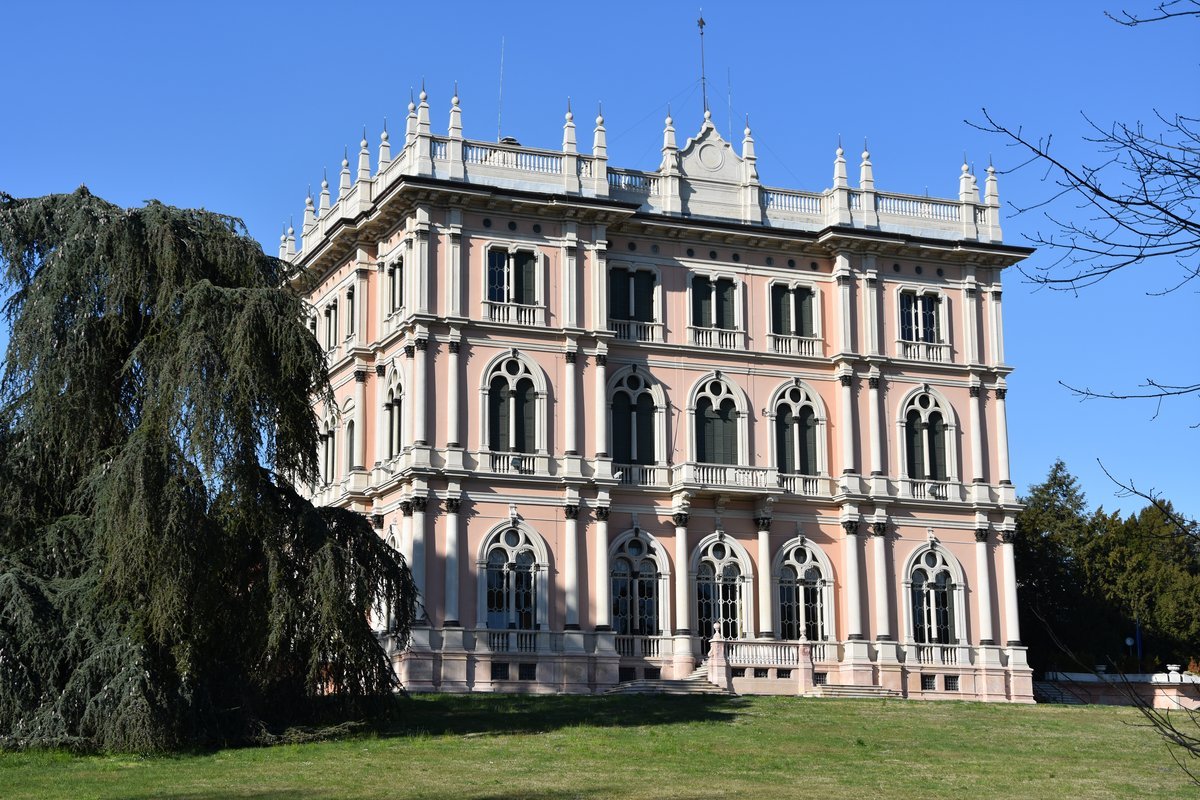 If you’re looking for a place that combines history, art, and nature, Villa Andrea Ponti is a must-see in Varese. Built between 1858 and 1870 for industrialist Andrea Ponti, this neoclassical villa is the jewel of the Ville Ponti complex. As soon as you step inside, you’ll be speechless: the octagonal atrium, 33 meters high, is decorated with the fresco 'Science Embracing Truth' by Giuseppe Bertini. A Sapphic kiss? Yes, you read that right. A surprising detail for the era. The interiors are a triumph of stucco, crystal chandeliers, and period furnishings. Don’t miss the bronze statues of Dante and Michelangelo at the entrance of the hall. And if you’re a science enthusiast, look at the allegorical roundels celebrating Chemistry, Physics, Mechanics, and Music. Outside, the English-style park extends over 56,000 square meters: paths, lawns, a pond, and ancient trees await you for a romantic walk. Entry to the park and permanent exhibitions is free, a small luxury that doesn’t come every day. The villa is now a conference center for the Chamber of Commerce, but it’s open to the public from Tuesday to Sunday, 9 am to 6 pm. Guided tours (paid) will reveal more details, like the story of the Carmelite convent that once stood here. Bring your camera: without flash and tripods, you can capture every corner. In short, Villa Andrea Ponti is much more than a simple villa: it’s a journey into the 19th century, between entrepreneurship, art, and landscape. Not to be missed!
Grand Hotel Campo dei Fiori, a Liberty Jewel
- 8, Varese (VA)
- Open in Google Maps
- View on Google Images
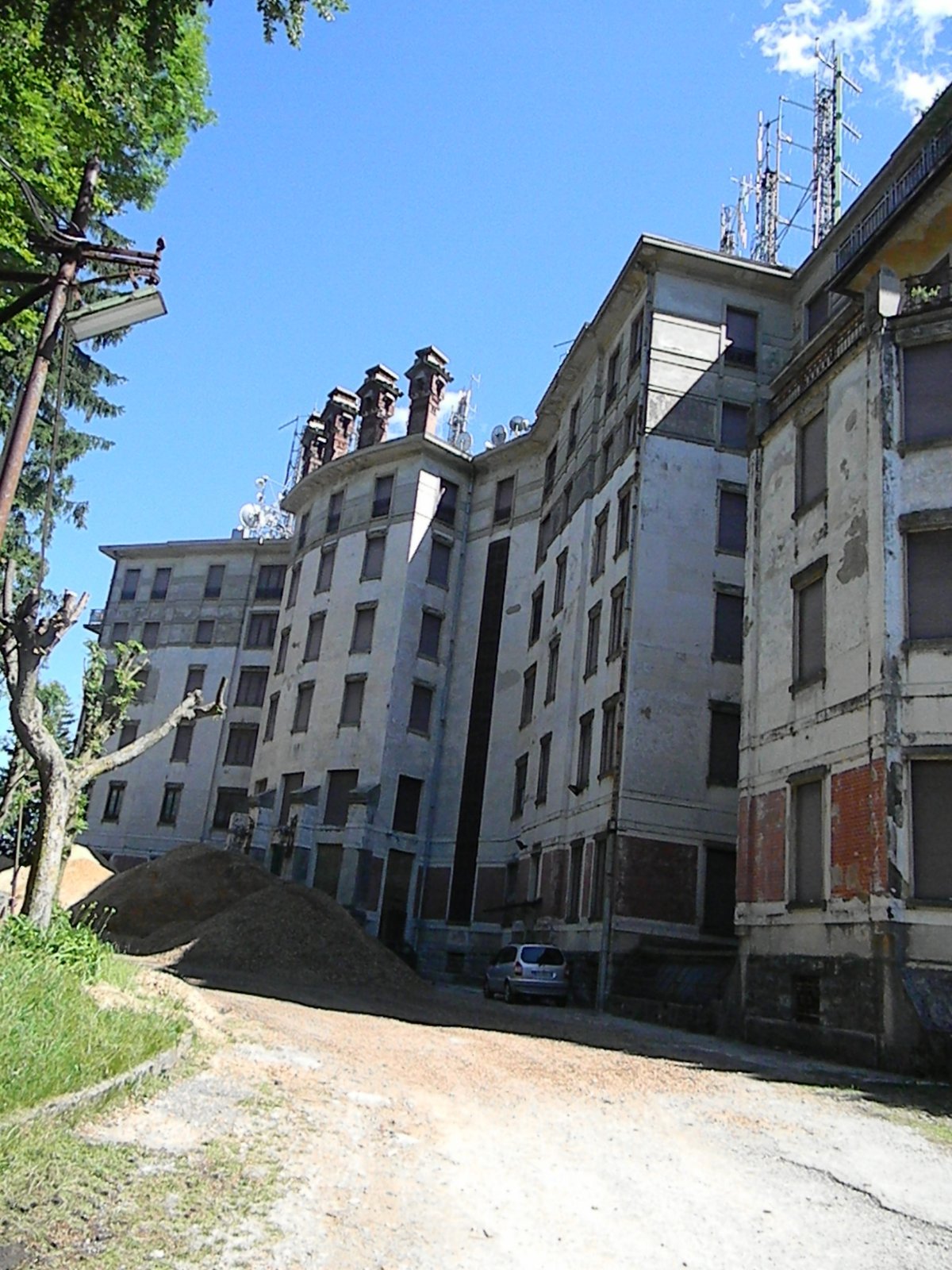 Perched at 1100 meters on Monte Tre Croci, the Grand Hotel Campo dei Fiori—a masterpiece by architect Giuseppe Sommaruga—opened its doors in 1912. An icon of Italian Liberty style with 200 luxury rooms, it attracted Milanese nobility and was accessible via a scenic funicular. Wars and a 1947 fire marked its decline: the funicular closed in 1953, and the hotel finally shut down in 1968. Abandoned for decades, the building is now privately owned but periodically opens to the public thanks to FAI Giovani Varese. Guided tours (reservation required, €5–10, one hour) lead you to discover the kitchen with its 1912 cast-iron oven and the ballroom with its panoramic terrace, once advertised as “the most beautiful balcony in Lombardy.” On a clear day, you can see as far as Milan! Also unmissable: the set of the Suspiria remake (2016), still visible next to the suite. Note: for safety reasons, upper floors are off-limits. Limited parking; it’s best to take bus CF, which stops right at the gate. A unique experience, steeped in history and a decadent atmosphere.
Torre Civica: Climb the Symbolic Tower of Varese
- Via Giuseppe Bernascone, Varese (VA)
- Open in Google Maps
- View on Google Images
 In the heart of Varese, in Piazza Monte Grappa, stands the Torre Civica, a monument that has traversed nearly a century of history. Designed by architect Mario Loreti in rationalist style, it was built between 1937 and 1938, originally called Torre Littoria and renamed after World War II. At 54 meters tall (deliberately shorter than the nearby bell tower of San Vittore, out of respect), it is clad in serizzo from the Antigorio Valley, a stone that gives it a bare, square appearance. During the fascist period, the second floor featured a red porphyry balcony for speeches, surmounted by the city coat of arms.
 After years of closure, the Tower reopened to the public thanks to an agreement between the Municipality and FAI, with safety works funded by the Lombardy Region (€100,000) completed in December 2024. Today, you can climb over 250 steps to the panoramic terrace, which offers a 360-degree view of Varese and the Prealps. Inside, the reinforced concrete staircase is accompanied by temporary exhibitions – such as the sustainable fashion display by ISIS Newton students – and occasional concerts.
Tip: Wear comfortable shoes and bring your camera. The climb is challenging but rewarding with the view. Guided tours are organized by FAI volunteers: check their website for hours as they vary. An experience that combines history, architecture, and nature all in one.
Piazza Monte Grappa, the Rationalist Heart of Varese
- Varese (VA)
- Open in Google Maps
- View on Google Images
 You can't say you've seen Varese without visiting Piazza Monte Grappa, the city's true living room. Whether you arrive from Corso Aldo Moro, Via Volta, or Corso Matteotti – all lined with arcades – you end up here, in a space with a surprising past. Until the 1930s, an entire neighborhood stood where the square is now; it was demolished when Varese became a provincial capital in 1927. Architect Mario Loreti designed a rationalist-style square (project 'Ardisco!'), resulting in a collection of institutional buildings like the Palazzo delle Corporazioni (now the Chamber of Commerce) and the towering Torre Civica, which rises like a lighthouse. At the center, a fountain evokes classicism; on certain occasions, the water turns pink for breast cancer awareness – a thoughtful detail. Locals used to call it 'Piazza Padella' (Frying Pan Square) for its triangular shape, a nickname that has stuck affectionately. Today, it's the ultimate meeting point: events, demonstrations, and every year a giant Christmas tree appears. Under the arcades, you'll find a Mediaworld and an OVS, but the true soul lies in the surrounding bars, perfect for an aperitivo. If you want to explore further, nearby is the Church of San Giuseppe (1504), with 17th-century frescoes and a wooden statue of the Madonna from 1617. Admission is free, always. In short, it's a square that lives, transforms, and tells the story of Varese.
Villa Selene: A Gentleman's Residence Amid History and Nature
- Via Giuseppe Vincenzo Walder, Varese (VA)
- Open in Google Maps
- View on Google Images
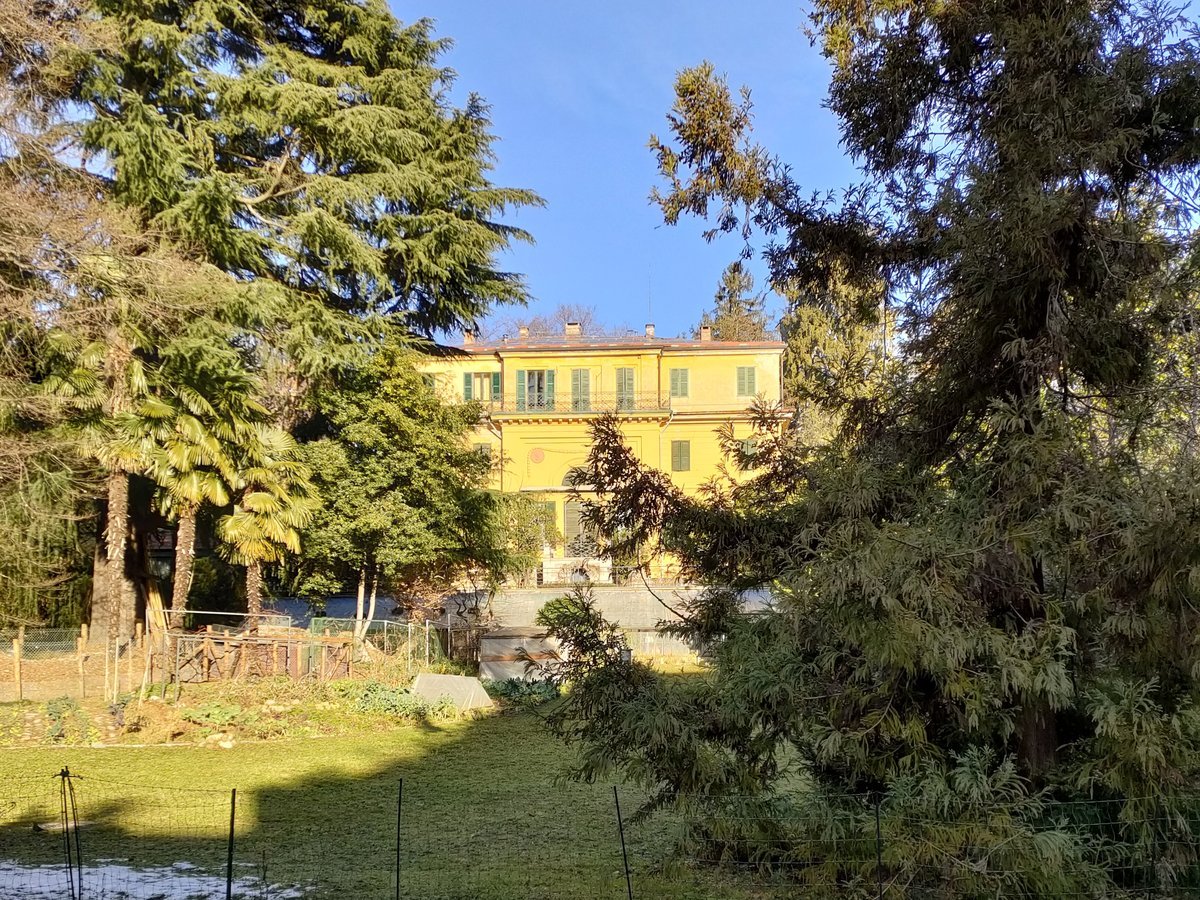 Among the villas dotting the hills of Varese, Villa Selene is a stately home that enchants with its understated elegance. Built in the 19th century, it sits within a centuries-old park offering picturesque views and a relaxing atmosphere. Strolling along tree-lined paths and flowerbeds, you'll feel as if you've stepped back in time. The villa is often used for receptions and private events, but you can admire it from the outside during a walk. Personally, I appreciated the contrast between the refined architectural style and the surrounding nature: a place that exudes peace and beauty. If you're in the area, don't miss the chance to see this hidden gem, perhaps combining the visit with a tour of the surroundings. Not to be missed: the Italian garden and the view of the Pre-Alps.
Ville Ponti Park
- Varese (VA)
- Open in Google Maps
- View on Google Images
 If you're looking for a peaceful corner in the heart of Varese, Ville Ponti Park is a must-see. This historic garden, created in the early 1900s around two stately homes, offers a glimpse into the elegant atmosphere of the Belle Époque. The villas – Villa Faccanoni, designed by Giuseppe Sommaruga, and Villa Ponti – are surrounded by English lawns, ancient trees, and a small pond that reflects the Liberty-style architecture. What struck me was the contrast between the meticulously maintained greenery and the decorative details of the facades, like the majolica tiles and wrought-iron railings. Today the park is public, free of charge, and often serves as a backdrop for cultural events and weddings. Strolling along the paths, you'll feel like you're in a vintage postcard. I recommend visiting in spring, when the flowerbeds are in bloom and the scent of linden trees fills the air. Don't forget to look up at the villas: every window and cornice tells a story of taste and refinement. Whether you're an architecture enthusiast or simply seeking relaxation, this park is a true hidden gem.
Velate Tower
- Via alla Torre, Varese (VA)
- Open in Google Maps
- View on Google Images
 If you're passing through Varese, don't miss the Velate Tower: one of those medieval ruins that tell stories of battles and daily life. Perched on the heights of the Velate village, just a few kilometers from the center, this tower, reaching up to 33 meters, was built in the 11th century for defensive purposes, to control the route from Milan to Switzerland. Today, after being partially destroyed in the 12th century during conflicts between the Visconti and Torriani families, it retains two sides of the original quadrilateral, one of which is fully preserved thanks to the internal staircase. Walking along the path leading to the tower, you can feel an ancient atmosphere. The double-splayed single-lancet windows on the five surviving floors are a perfect example of Romanesque architecture, while archaeological excavations have unearthed silver coins and traces of a 12th-century fire. The tower has been owned by the FAI since 1989, which manages it with care. Unfortunately, it is not always open to the public, but you can admire it freely from the outside. If you want to enter, you can book a guided tour by calling 02 467615317. To reach it, from Varese take the road to Laveno: after Masnago you will see signs. There is a small public parking area nearby. I recommend combining the visit with a walk among the terraced vineyards that once surrounded the site. It is a place that feels ancient, almost magical.