
🧭 What to Expect
Ideal for city breaks and day trips Highlights: Royal Villa, Monza Park, Cathedral, museums Activities: nature trails, cycling, cultural visits Tip: at least two days to see everything at a leisurely pace
Events nearby

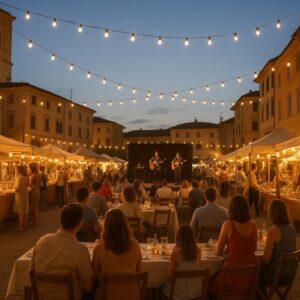

If you think the province of Monza and Brianza is just Milan's outskirts, you're wrong. Here you'll find the majestic Royal Villa of Monza with its vast gardens, the Cathedral with the Iron Crown, and parks like Monza Park, one of the largest in Europe. But that's not all: towns like Vimercate and Desio boast historic villas and museums. This article guides you through unmissable stops, with practical tips to best organize your visit. From the Chapel of Atonement to the MUST in Vimercate, you'll discover a Brianza of art, nature, and traditions. Monza Park offers bike and walking paths, while the Bosco delle Querce in Seveso is a natural area of great interest. Don't miss Palazzo Arese Borromeo in Cesano Maderno and Villa Bagatti Valsecchi in Varedo. For contemporary art lovers, the MAC in Lissone and the MUST in Vimercate are must-see stops. All accompanied by a gastronomic tradition worth tasting. Perfect for a weekend getaway or a family trip.
Overview
- Royal Villa of Monza: A Dive into History and Art
- Royal Villa of Monza: A Dive into History and Art
- Monza Cathedral: Between History and Legend
- Monza Cathedral: Between History and Legend
- Monza Park, a Green Jewel
- Arengario of Monza: The Medieval Heart of the City
- Cappella Espiatoria: A Memorial That Touches the Heart
- Royal Gardens of Monza: A Slice of Paradise Blending History and Nature
- Monza Cathedral Museum: An Underground Treasure
- Monza Cathedral Museum: An Underground Treasure
- Monza Civic Museums: Art and History in the House of the Humiliati
- Bosco delle Querce Natural Park: a Treasure of Memory and Nature
- Villa San Martino: History and Secrets of a Brianza Residence
- Palazzo Arese Borromeo: Baroque Treasure in Cesano Maderno
- MUST: The Museum of the Vimercatese Territory
- Villa Bagatti Valsecchi: an eclectic gem in the heart of Brianza
- Villa Tittoni-Traversi: A Neoclassical Gem in Desio
- Villa Borromeo D'Adda Park: A Green Gem in Arcore
Itineraries nearby
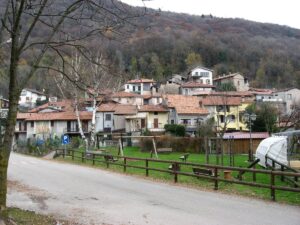


Royal Villa of Monza: A Dive into History and Art
- Go to the page: Royal Villa of Monza: History, Art, and Gardens to Explore
- Viale Brianza 2, Monza (MB)
- http://www.villarealedimonza.it/
- Open in Google Maps
- View on Google Images
- info@villarealedimonza.it
- +39 199 151140
 The Royal Villa of Monza is much more than a historic residence: it is a journey through centuries of power, art, and court life. Commissioned by Empress Maria Theresa of Austria and built by Giuseppe Piermarini between 1777 and 1780, this neoclassical marvel boasts over 700 rooms spanning 22,000 m². Strolling through the Royal Apartments of Umberto I and Margherita of Savoy, you will be amazed by the original furnishings, frescoes, and the splendor of the Ballroom. But the biggest surprise comes with the "Contemporary Royal Palace" project: on the second floor, works by artists such as Gio Ponti, Enrico Castellani, and Carol Rama engage in dialogue with the 18th-century architecture, creating a fascinating contrast. Don't miss the English-style Gardens, among the first in Italy, with centuries-old trees, grottoes, and a Doric temple by the lake. And in May, the Niso Fumagalli Rose Garden offers a spectacle of colors and scents. The villa is open Wed–Fri afternoon, Sat–Sun all day (entry €10). I recommend buying the ticket online to avoid queues. A traveler's tip: combine the visit with a stroll in Monza Park, the largest walled park in Europe, perfect for a relaxing break.
Royal Villa of Monza: A Dive into History and Art
- Go to the page: Royal Villa of Monza: Royal Apartments and 700-Hectare Neoclassical Park
- Viale Brianza 2, Monza (MB)
- http://www.villarealedimonza.it/
- Open in Google Maps
- View on Google Images
- info@villarealedimonza.it
- +39 199 151140
The Royal Villa of Monza is much more than a historic residence: it is a journey through centuries of power, art, and court life. Commissioned by Empress Maria Theresa of Austria and built by Giuseppe Piermarini between 1777 and 1780, this neoclassical marvel boasts over 700 rooms spanning 22,000 m². Strolling through the Royal Apartments of Umberto I and Margherita of Savoy, you will be amazed by the original furnishings, frescoes, and the splendor of the Ballroom. But the biggest surprise comes with the "Contemporary Royal Palace" project: on the second floor, works by artists such as Gio Ponti, Enrico Castellani, and Carol Rama engage in dialogue with the 18th-century architecture, creating a fascinating contrast. Don't miss the English-style Gardens, among the first in Italy, with centuries-old trees, grottoes, and a Doric temple by the lake. And in May, the Niso Fumagalli Rose Garden offers a spectacle of colors and scents. The villa is open Wed–Fri afternoon, Sat–Sun all day (entry €10). I recommend buying the ticket online to avoid queues. A traveler's tip: combine the visit with a stroll in Monza Park, the largest walled park in Europe, perfect for a relaxing break.Monza Cathedral: Between History and Legend
- Go to the page: Monza Cathedral: The Iron Crown with Nail from the Cross and Lombard Frescoes
- Via Canonica, Monza (MB)
- http://www.duomomonza.it
- Open in Google Maps
- View on Google Images
 Stepping into Monza Cathedral is like traveling back fourteen centuries. Founded by the Lombard queen Theodelinda at the end of the 6th century, this treasure chest of art and faith is one of the most fascinating places in Brianza. The Gothic facade in white and green marble, work of Matteo da Campione, welcomes you with a majestic rose window and statues of saints. Inside, the atmosphere is solemn: the three naves, the octagonal pillars with carved capitals, and the Baroque frescoes tell centuries of devotion.
The true jewel, however, is the Theodelinda Chapel, a masterpiece of International Gothic frescoed by the Zavattari brothers. Here, in a climate-controlled case, rests the Iron Crown: according to tradition, a nail from Christ's cross is hidden inside. Kings and emperors, from Charlemagne to Napoleon, were crowned with it. Thrilling, isn't it?
Book a guided tour in advance to access the chapel and the Cathedral Museum, where you can admire the famous sculpture group of the Hen with Chicks and other Lombard treasures. The cathedral is open every day, but on Sundays it closes for lunch. It is located in the city center, a stone's throw from the Royal Villa and the Arengario. A traveler's tip: arrive early in the morning to enjoy the silence and the light filtering through the rose window.
Monza Cathedral: Between History and Legend
- Go to the page: Monza Cathedral: The Iron Crown and Lombard Treasures
- Via Canonica, Monza (MB)
- http://www.duomomonza.it
- Open in Google Maps
- View on Google Images
Stepping into Monza Cathedral is like traveling back fourteen centuries. Founded by the Lombard queen Theodelinda at the end of the 6th century, this treasure chest of art and faith is one of the most fascinating places in Brianza. The Gothic facade in white and green marble, work of Matteo da Campione, welcomes you with a majestic rose window and statues of saints. Inside, the atmosphere is solemn: the three naves, the octagonal pillars with carved capitals, and the Baroque frescoes tell centuries of devotion.The true jewel, however, is the Theodelinda Chapel, a masterpiece of International Gothic frescoed by the Zavattari brothers. Here, in a climate-controlled case, rests the Iron Crown: according to tradition, a nail from Christ's cross is hidden inside. Kings and emperors, from Charlemagne to Napoleon, were crowned with it. Thrilling, isn't it?
Book a guided tour in advance to access the chapel and the Cathedral Museum, where you can admire the famous sculpture group of the Hen with Chicks and other Lombard treasures. The cathedral is open every day, but on Sundays it closes for lunch. It is located in the city center, a stone's throw from the Royal Villa and the Arengario. A traveler's tip: arrive early in the morning to enjoy the silence and the light filtering through the rose window.
Monza Park, a Green Jewel
 If you think Monza is just the Autodrome and the Royal Villa, prepare to change your mind. Monza Park is a vast green space of almost 700 hectares, enclosed by 14 kilometers of walls, making it the largest walled park in Europe. Created in 1805 by order of Napoleon, it was designed as a model agricultural estate and hunting reserve. Today it is the ideal place for those seeking an escape from the city. Here you will find the Bosco Bello, one of the last lowland forests in Lombardy, with centuries-old trees such as horse chestnuts, lindens, and hornbeams. Along the straight avenues, like the 2.2 km long Viale Cavriga, you can walk, run, or cycle. Don't miss the historic farmsteads, the Royal Pheasantry (now a restaurant), and art installations, such as the giant table and chair 'Lo Scrittore'. For the more sporty, besides the Autodrome, there are marked running routes (yellow 3 km, blue 5 km, red 10 km, and green 21 km) and an orienteering course. And if you come with children, the tourist train (active in spring and autumn) is perfect, with stops at historic residences. Practical info: admission is free, open every day from 7 am. In winter it closes at 7 pm, in summer at 9:30 pm. You can enter from Porta Monza, Porta Vedano, or Porta Villasanta, all with parking. To explore it best, rent a bike at Cascina Bastia. I love to walk in Bosco Bello at dawn, when the mist rises and you can only hear the birds. It's an experience I recommend to everyone.
Arengario of Monza: The Medieval Heart of the City
- Piazza Roma, Monza (MB)
- Open in Google Maps
- View on Google Images
 The Arengario is Monza’s medieval town hall, built in 1293 as a symbol of secular power. Located in Piazza Roma next to the Duomo, it impresses with its wide portico featuring pointed arches on 18 pillars. On the ground floor, once a covered market, the medieval atmosphere still lingers. Upstairs, the large hall with wooden trusses now hosts temporary art exhibitions. On the southern facade stands the 'Parléra', a small stone balcony from 1380 where decrees were read. The bell tower, 44 meters high, was added in the 14th century and houses one of Italy's earliest wheel clocks (1347), crafted by Giovanni Dondi. Currently, the Arengario is closed for restoration and accessibility work, but it is usually open for exhibitions (closed Mondays, hours 10 AM–1 PM and 2–7 PM). A curious detail: under the portico, a pillar has deep grooves left by soldiers sharpening their blades. The building nearly faced demolition in the 19th century, but the citizens of Monza saved it through a public subscription. Today, it is the vibrant heart of the city, blending history and culture.
Cappella Espiatoria: A Memorial That Touches the Heart
- Via Matteo da Campione, Monza (MB)
- Open in Google Maps
- View on Google Images
 If you're strolling near the Royal Villa of Monza, don't miss the Cappella Espiatoria, a monument that tells a dark chapter of Italian history. Here, on July 29, 1900, the anarchist Gaetano Bresci killed King Umberto I. By order of Vittorio Emanuele III, architect Giuseppe Sacconi – the same who designed the Vittoriano – planned this memorial, completed in 1910 by his pupil Guido Cirilli.
The first impression is striking: a 35-meter-high stele of Oggiono stone, topped by an alabaster cross that lights up every July 29. At its base, the bronze Pietà by Ludovico Pogliaghi, commissioned by Queen Margherita, greets you with its intensity. Passing through the wrought-iron gate by Alessandro Mazzucotelli, you enter a secluded garden that invites silence.
Inside, the circular chapel is a riot of Byzantine mosaics: angels, saints, and blessed members of the House of Savoy envelop you in a solemn atmosphere. The true heart, however, is the Greek-cross crypt, where a black marble cippus marks the exact spot of the attack. The vaults are a starry mosaic sky, and along the walls, about 180 bronze crowns – donated from around the world – tell the story of collective mourning.
Admission is free, but hours vary: Tuesday to Thursday and Sunday 9:00–14:30, Friday and Saturday until 19:00 (closed Monday). I recommend booking by email (drm-lom.cappellaespiatoria@cultura.gov.it) to be safe. It's a place that stays with you, between art and history, perfect for a reflective pause after a walk in the park.
Royal Gardens of Monza: A Slice of Paradise Blending History and Nature
- Monza (MB)
- Open in Google Maps
- View on Google Images
 If there's one place in Monza that makes you feel like you've stepped into an 1800s painting, it's the Royal Gardens. Stretching 40 hectares behind the Royal Villa, they are among the first English-style gardens created in Italy. Architect Giuseppe Piermarini designed them between 1778 and 1783 for Archduke Ferdinand of Habsburg, a passionate botanist. The result? A perfect balance between artifice and nature, with paths that meander among majestic trees and romantic vistas.
Upon entering, you immediately step into another era. To the left, the Italian garden with geometric flowerbeds; to the north, the most scenic part: a winding stream, a small waterfall, the Swan Lake with a neoclassical temple and a statue of Neptune. Continuing, you'll encounter the Cave of Polyphemus, an artificial grotto, and the Neo-Gothic Tower designed by Luigi Canonica, complete with medieval-style walls. Everything is designed to amaze, but without ostentation.
The green giants deserve a special mention: two monumental oaks planted by Eugène de Beauharnais, 26 meters high, a ginkgo biloba, an American sequoia, and a cedar of Lebanon. In spring, the carpet of daffodils at the foot of the palace is a spectacle, while in May the Niso Fumagalli Rose Garden bursts into over 4,000 varieties of roses. Admission is free, and opening hours vary: in winter 7–18:30, in summer until 20:30. In short, a place where you can happily get lost.
Personally, I love sitting on the lake's edge and watching the swans: you can almost hear the whispers of Queen Margherita, who loved to stroll here. It's not just a garden; it's a plunge into history.
Monza Cathedral Museum: An Underground Treasure
- Go to the page: Monza Cathedral Museum: The Iron Crown and Theodolinda's Lombard Jewels
- Via Lambro 2, Monza (MB)
- http://www.museoduomomonza.it/Pages/
- Open in Google Maps
- View on Google Images
- info@museoduomomonza.it
- +39 039 326383
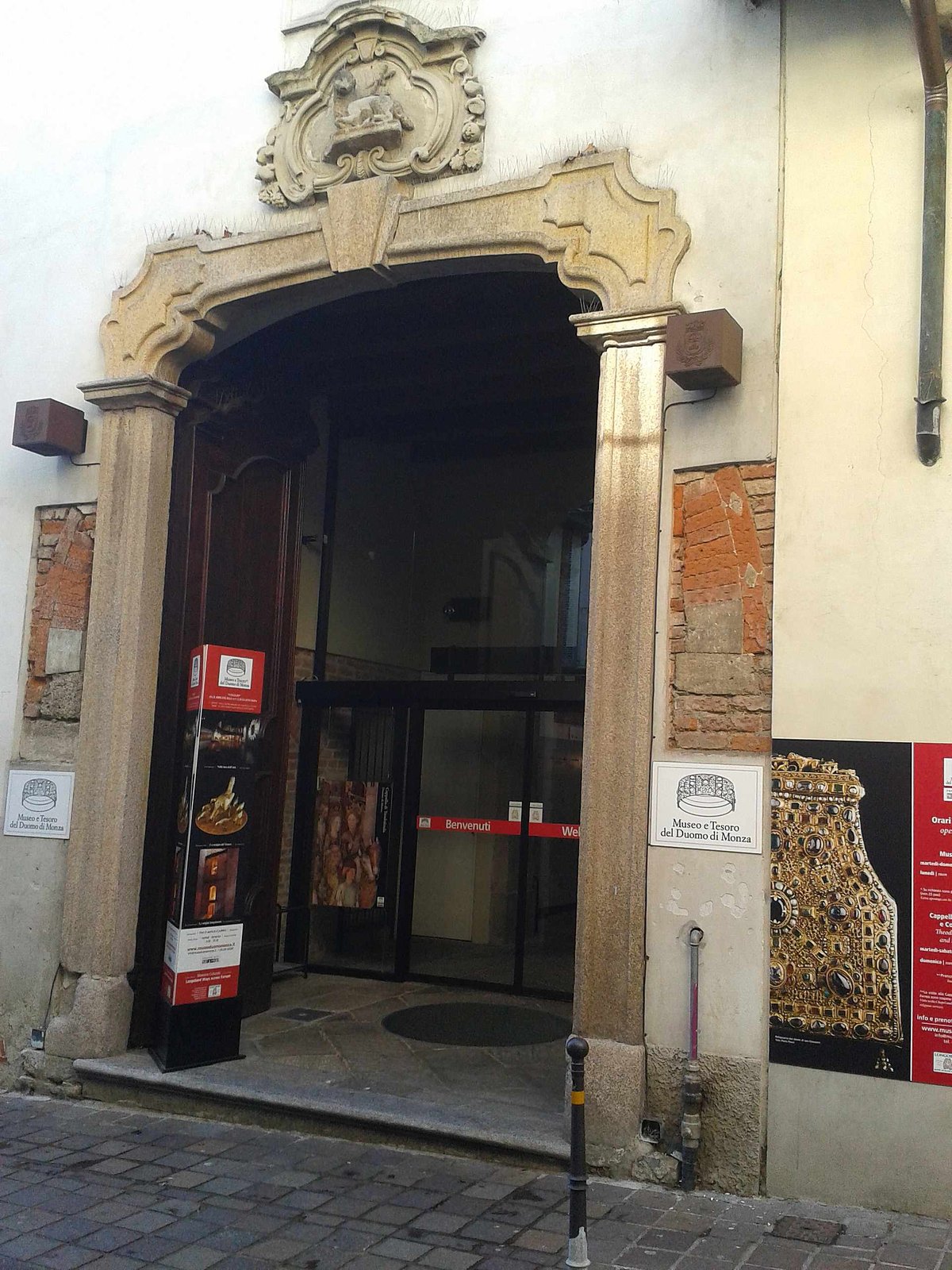 Stepping into the Monza Cathedral Museum is like traveling back in time fourteen centuries. I discovered it almost by chance, and it completely blew me away. Located at Via Lambro 2, just to the left of the cathedral façade, the entrance is almost hidden. Once inside, you find yourself in a hyper-modern underground path – inaugurated in 2007 to a design by Cini Boeri – that contrasts with the ancient artifacts. The museum is divided into two sections: the Filippo Serpero, which holds the treasure of the early medieval basilica, and the Carlo Gaiani, with works from the 14th century to the present. Among the highlights, you can't miss the Hen with Chicks, a masterpiece of Lombard goldsmithing, and the Stilicho Diptych. Then there are the pilgrims' ampullae, the Cross of Agilulf, and even two silver loaves donated by Napoleon. The itinerary is well thought out: screens, soft lighting, and lots of interesting facts. If you want to see the Iron Crown, you need to add the guided tour of the Theodolinda Chapel (advance booking required, combined ticket €14). The museum alone costs €8, and in my opinion it's a bargain. Open Tuesday through Sunday (9 AM–1 PM and 2 PM–6 PM), closed Mondays. I recommend booking, especially on weekends. It's not huge, but you'll spend a good couple of hours there. And if you get the chance, check out the temporary exhibition on the rediscovered polyptych – open until April.
Monza Cathedral Museum: An Underground Treasure
- Go to the page: Monza Cathedral Museum: Lombard Treasures and the Iron Crown
- Via Lambro 2, Monza (MB)
- http://www.museoduomomonza.it/Pages/
- Open in Google Maps
- View on Google Images
- info@museoduomomonza.it
- +39 039 326383
Stepping into the Monza Cathedral Museum is like traveling back in time fourteen centuries. I discovered it almost by chance, and it completely blew me away. Located at Via Lambro 2, just to the left of the cathedral façade, the entrance is almost hidden. Once inside, you find yourself in a hyper-modern underground path – inaugurated in 2007 to a design by Cini Boeri – that contrasts with the ancient artifacts. The museum is divided into two sections: the Filippo Serpero, which holds the treasure of the early medieval basilica, and the Carlo Gaiani, with works from the 14th century to the present. Among the highlights, you can't miss the Hen with Chicks, a masterpiece of Lombard goldsmithing, and the Stilicho Diptych. Then there are the pilgrims' ampullae, the Cross of Agilulf, and even two silver loaves donated by Napoleon. The itinerary is well thought out: screens, soft lighting, and lots of interesting facts. If you want to see the Iron Crown, you need to add the guided tour of the Theodolinda Chapel (advance booking required, combined ticket €14). The museum alone costs €8, and in my opinion it's a bargain. Open Tuesday through Sunday (9 AM–1 PM and 2 PM–6 PM), closed Mondays. I recommend booking, especially on weekends. It's not huge, but you'll spend a good couple of hours there. And if you get the chance, check out the temporary exhibition on the rediscovered polyptych – open until April.Monza Civic Museums: Art and History in the House of the Humiliati
- Go to the page: Monza Civic Museums: Lombard Art from the Middle Ages to the Twentieth Century in the Arengario
- Via Regina Teodolinda 4, Monza (MB)
- https://www.museicivicimonza.it/
- Open in Google Maps
- View on Google Images
- info@museicivicimonza.it
- +39 039 2307126
 The Monza Civic Museums await you in the heart of the city, in the evocative House of the Humiliati, a medieval building that once served as a place of prayer for the religious order of the same name. After a thirty-year closure, the museum reopened in 2014 and now offers around 900 square meters of exhibition space on two floors. On the ground floor, the cloister and rooms house archaeological finds from the Bronze Age to the Middle Ages, including the Ara dei Modiciates, an inscription recalling the ancient name of Monza's inhabitants. Upstairs on the first floor, you'll immerse yourself in art from the 16th to the 20th century: the core of the collection comes from the Galbesi Segrè donation of 1923, later enriched by works that won the Premio Città di Monza. Here you can admire masterpieces by Mosè Bianchi, Pompeo Mariani, Eugenio Spreafico, and Emilio Borsa, alongside sculptures by Arturo Martini and Marino Marini. Don't miss the ceramics section and two precious commodes by Giuseppe Maggiolini. The museum is fully accessible, with an elevator, tactile paths, and guides in Easy to Read format. Full ticket is €6, reduced €4, and free every first Sunday of the month. Open Wednesday through Sunday, with hours varying by season. A perfect place to discover the history of Monza through art.
Bosco delle Querce Natural Park: a Treasure of Memory and Nature
 In Seveso and Meda, in the heart of Brianza, there is a park that tells a story of rebirth. The Bosco delle Querce Natural Park, 43 hectares of green, was born in the area most contaminated by the ICMESA disaster of July 10, 1976. After remediation, the polluted soil was sealed in two underground basins and covered with clean earth, and today above those basins grows a lush forest. The path is simple: a 2.5 km trail with no elevation gain, perfect for families and strollers. Among English oaks, field maples, and white hornbeams, you can hear the songs of great spotted woodpeckers and grey herons. There are also ponds with water lilies and a playground for children. I appreciated the silence – only footsteps on gravel and leaves rustled by the wind. At the visitor center on Via Ada Negri, you can watch a short video about the park's history. And it's worth knowing: since 2023, the Bosco delle Querce has been a 'Guardian of orchids' thanks to the LIFE Orchids project. In short, a place where memory and nature merge, away from the chaos of urbanized Brianza. Hours vary by season (December-February: Saturday and Sunday only, 9-17). Admission is free.
Villa San Martino: History and Secrets of a Brianza Residence
- Go to the page: Villa San Martino in Arcore: Eighteenth-Century Frescoes and an Italian-Style Garden
- Viale San Martino, Arcore (MB)
- Open in Google Maps
- View on Google Images
 If you pass through Arcore, you can't miss the imposing gate of Villa San Martino. Yes, it's Silvio Berlusconi's historic residence, but its roots go much further back in time. Originally a Benedictine monastery, it was purchased in 1713 by the Counts Giulini, who transformed it into a lavish neoclassical villa. The U-shaped structure opens onto a perspective avenue that, in theory, reached the Lambro River – today it's a bit hidden by vegetation, but the charm remains. In the 19th century it passed to the Casati family, one of the most influential families of the Risorgimento (think: Gabrio Casati was the promoter of the Casati Law on education). Benedetto Croce often stayed here as a guest of Count Alessandro Casati. Then, in 1974, entrepreneur Berlusconi bought it for 500 million lire, half in shares. He carried out a conservative restoration and added a personal touch: the "Volta Celeste" mausoleum, a 100-ton monument in marble and travertine designed by Pietro Cascella, with an underground chamber and 36 niches. Too bad it was never authorized for burials, so it remains empty. Inside, the villa houses an art gallery with over 25,000 works – paintings, sculptures, ceramics – collected by Berlusconi without much criteria, so much so that experts describe it as a kitsch example. The library holds 10,000 volumes and the reception room has a table for 36. Today the villa is still private and cannot be visited, but if you look closely beyond the gate, you'll see the 17-hectare park with roses, tulips, and a small lake. A place that has made Italian history, amid intrigues, politics, and a touch of mystery.
Palazzo Arese Borromeo: Baroque Treasure in Cesano Maderno
- Piazza Esedra, Cesano Maderno (MB)
- Open in Google Maps
- View on Google Images
 If you think Brianza is all about villas and shopping malls, think again. In Cesano Maderno, just a few miles from Monza, stands one of Lombardy's most beautiful Baroque palaces. Built starting in 1626 at the behest of Bartolomeo III Arese, the palace is a true gem. Step into the courtyard and you'll immediately know you're somewhere special. The ground-floor rooms host contemporary art exhibitions, but the real spectacle is on the Piano Nobile: 25 rooms entirely frescoed by the greatest painters of 17th-century Lombardy, such as Ercole Procaccini the Younger, the Montalto brothers, Antonio Busca, and Giovanni Ghisolfi. The Sala dei Fasti Romani will leave you speechless with its faux architecture and scenes from Roman history. Then there's the Nymphaeum, a wonder grotto decorated with black and white river pebbles, where nature blends with art. Outside, the Historic Garden stretches over 10 hectares with more than 1,000 trees, 60 statues, and Baroque fountains like the Fountain of the Dromedaries. Stroll between the Italian garden and the English park. Practical info: the palace can be visited independently (€5) or with a guided tour (€9) on Saturdays and Sundays, from 10am to 1pm and 3pm to 7pm. It is wheelchair accessible. In short, a dive into the 17th century you can't miss.
MUST: The Museum of the Vimercatese Territory
- Via Vittorio Emanuele Secondo 53, Vimercate (MB)
- https://www.museomust.it/
- Open in Google Maps
- View on Google Images
- +39 039 6659488
 If you think a small-town museum is boring, you don't know MUST. Inaugurated in 2010 inside the 18th-century Villa Sottocasa in Vimercate, this civic museum tells the story of eastern Brianza (between the Lambro and Adda rivers) in a modern and interactive way. The itinerary unfolds across 14 rooms on two floors: on the ground floor, history flows chronologically, from the first Roman settlements to the 19th century, with archaeological finds, medieval marbles, and portraits of feudal lords. Upstairs, the layout becomes thematic: here you'll explore industrial production, landscape transformations, and local identity through videos, 3D models, and touch-screen installations. Don't miss the chapel with Legnanino's Immaculate Virgin and portraits by Mosè Bianchi. MUST won the ICOM Italy Award 2012 for best exhibition and was nominated for the European Museum of the Year Award. Open Wednesday to Sunday (closed Monday and Tuesday), full ticket €5, reduced €3. On Sundays at 4:30 PM there's a guided tour (€2 extra, advance booking required). Family-friendly: free entry for under 14s and a family ticket at €8. In short, a museum that surprises and makes you want to explore the area.
Villa Bagatti Valsecchi: an eclectic gem in the heart of Brianza
- Via Vittorio Emanuele Secondo 48, Varedo (MB)
- Open in Google Maps
- View on Google Images
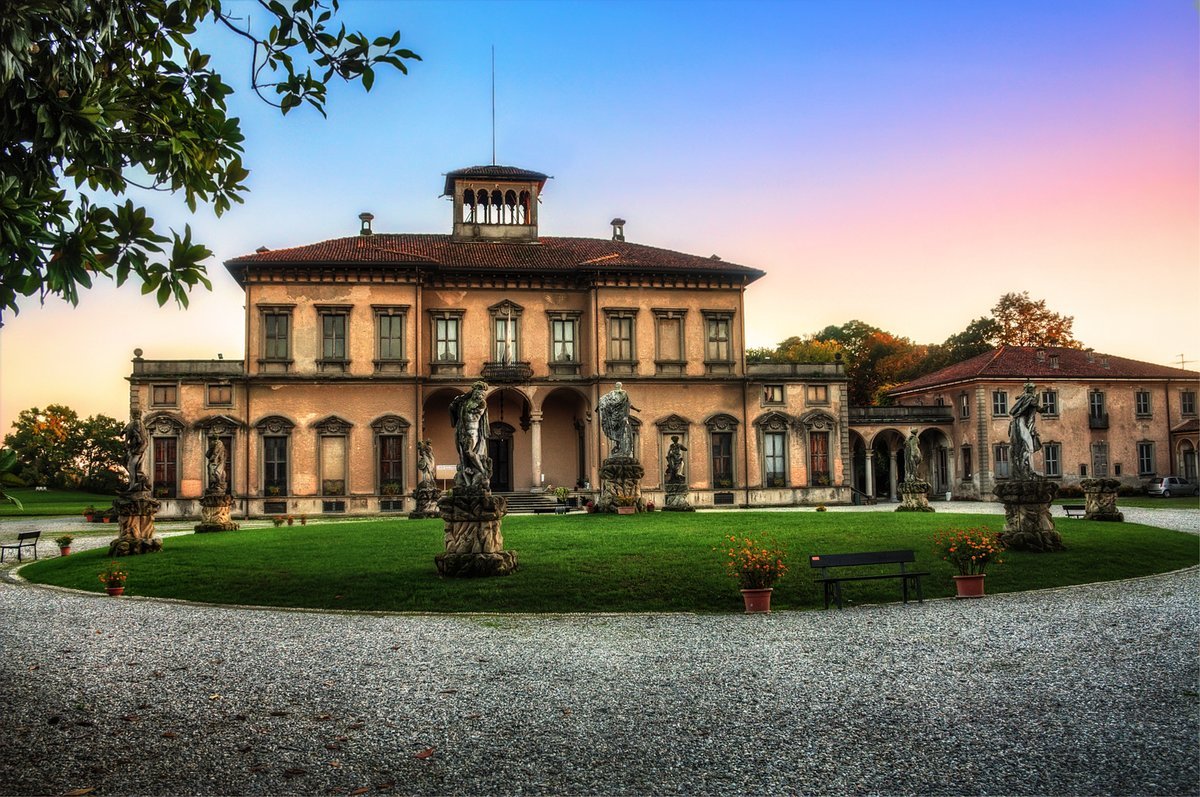 Located in Varedo, just a stone's throw from Monza, Villa Bagatti Valsecchi is a residence that blends styles and centuries. Built from 1881 by the brothers Giuseppe and Fausto Bagatti Valsecchi on a pre-existing 18th-century farmhouse, the villa is an example of Lombard eclecticism: Neo-Baroque and Neo-Renaissance merge with elements recovered from historic Milanese buildings. The loggia at the top, for instance, uses columns from the convent of Sant'Erasmo, while the portico incorporates materials from the Lazzaretto of Milan. Strolling through the park, which extends over 64,500 square meters, you'll encounter the famous Porta di San Gregorio, the only surviving testimony of the lazzaretto together with short stretches in Milan and Bellagio. The garden is a fascinating mix of Italian style (geometric and orderly) and English style (informal and romantic), with a circular icehouse, a fountain with a two-tone mosaic of white Carrara marble and black limestone, and a statue of Julius Caesar. Here nature and history coexist, even though the villa is currently in a state of semi-abandonment, managed by the Foundation La Versiera 1718 of the Municipality of Varedo. Fortunately, you can visit it during the openings of Ville Aperte in Brianza or by joining guided tours organized by Milanoguida (full ticket €15). Don't miss the walk to the Church of Saints Peter and Paul, designed by Giuseppe Bagatti Valsecchi, which houses the relic of Saint Aquilinus's rib. A corner of Brianza worth rediscovering.
Villa Tittoni-Traversi: A Neoclassical Gem in Desio
- Via Giovanni Maria Lampugnani, Desio (MB)
- Open in Google Maps
- View on Google Images
 If you think Brianza only offers the Royal Villa of Monza, think again. Just a few kilometers away, in Desio, stands Villa Cusani Tittoni Traversi, a lesser-known but equally fascinating gem. Designed by Giuseppe Piermarini (yes, the same architect of La Scala) for the Cusani marquises in the 18th century, the villa has hosted kings and diplomats: in 1785 it welcomed Ferdinand IV of Naples, and later served as a backdrop for international meetings under Tommaso Tittoni, Prime Minister of Italy. The architecture is a surprising mix: outside, an elegant neoclassical style with an iron gate and marble statues; inside, Pelagio Palagi created eclectic rooms, from the Neogothic Hall with Bertini's stained glass (now at the Poldi Pezzoli Museum) to the evocative Moorish Room with an arabesque ceiling. But the real highlight is the English garden, designed by Antonio Villoresi: once vast, now downsized but still delightful, with a pond and Neptune fountain. And it's all public! Since 2012, in summer, Parco Tittoni comes alive with concerts and shows. The villa is open for guided tours and houses the municipal library and Giuseppe Scalvini's sculpture collection. A place combining art, nature, and history, perfect for a day trip. Tip: don't miss the private Cusani chapel, an 18th-century gem.
Villa Borromeo D'Adda Park: A Green Gem in Arcore
- Arcore (MB)
- Open in Google Maps
- View on Google Images
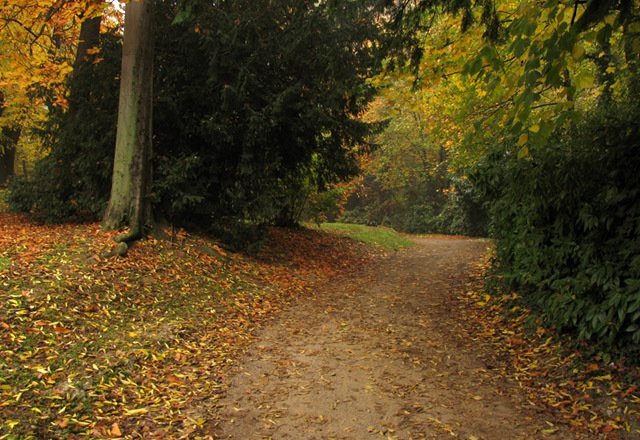 If you think Brianza is just houses and factories, think again. In Arcore, a stone's throw from the station, lies a slice of paradise: Villa Borromeo D'Adda Park. It spans over 30 hectares of greenery, an English garden designed by the great Giuseppe Balzaretto in the mid-1800s. He moved 160,000 cubic meters of earth to create gentle hills and ponds, planting exotic trees that still shade the paths today. I've explored every bit of it, and I can assure you each corner holds a surprise: from the Montagnola, the 18th-century villa overlooking the park, to the two ponds teeming with ducks and turtles. If you're bringing kids, they'll love the playground; if you have a dog, there's a dedicated area. And for the sporty types, there's a fitness trail. The park is open daily for free, from 7 a.m. until sunset (hours vary by season). The historic villa, reopened in 2018 after restoration, can be visited on Sundays or during events like "Ville Aperte in Brianza." Inside, you'll find frescoed halls and a monumental staircase. Don't miss the Cappella Vela, a neo-Renaissance masterpiece with sculptures by Vincenzo Vela, dedicated to Giovanni D'Adda's wife. And the 19th-century stables now house the Brera Academy. In short, this is a place that blends history, nature, and relaxation: perfect for a day trip.