
🧭 What to Expect
- Ideal for history, archaeology, and culture enthusiasts
- Highlights: Arch of Trajan, Santa Sofia (UNESCO), Roman Theatre, Witch Museum
- Recommended: spring and autumn for mild climate
- Not to be missed: the Hortus Conclusus and the Church of Sant'Ilario
Benevento is a city that enchants with its layered history, from Roman splendor to Lombard Middle Ages. The symbol par excellence is the Arch of Trajan, one of the best-preserved triumphal arches in Italy, dominating the entrance to the historic center. A few steps away, the Church of Santa Sofia, a UNESCO World Heritage site, with its star-shaped plan and medieval frescoes. The Roman Theatre and the Amphitheatre testify to the city's importance in imperial times, while the Museo del Sannio houses precious artifacts. Strolling around, you'll encounter the Ponte Leproso, the Arch of Sacramento, and the Obelisk of the Temple of Isis, which recall the Egyptian cult. For a touch of mystery, the Janua - Witch Museum reveals traditions related to witchcraft. Don't miss the Hortus Conclusus, an artistic garden, and the evocative Church of Sant'Ilario a Port'Aurea. Every corner of Benevento tells centuries of history, making it an ideal destination for archaeology and culture enthusiasts.
Overview
- Arch of Trajan: A Roman Masterpiece
- Arch of Trajan: A Roman Masterpiece
- Church of Santa Sofia: A Lombard Masterpiece Between History and Architecture
- The Roman Theatre of Benevento: A Hadrianic-era Gem
- Rocca dei Rettori: A Dive into Benevento's History
- Museo del Sannio
- Roman Amphitheater of Benevento: A Giant Still to Be Discovered
- Ponte Leproso: The Ancient Roman Gateway to Benevento
- Church of Sant'Ilario a Port'Aurea: a Lombard gem in the shadow of the Arch
- Arch of the Sacrament: The Ancient Entrance to Benevento's Forum
- Hortus Conclusus: Mimmo Paladino's Secret Garden
- Obelisk of the Temple of Isis: A Piece of Egypt in Benevento
- Apis Bull: The Mysterious Egyptian Bull of Benevento
- Janua – Museum of Witches
- Fountain of the Chains: history and baroque charm in Benevento
- Santi Quaranta: The Forgotten Roman Cryptoportico
Itineraries nearby

Arch of Trajan: A Roman Masterpiece
- Go to the page: Trajan's Arch in Benevento: Roman Sculptural Masterpiece
- Via Port'Aurea, Benevento (BN)
- Open in Google Maps
- View on Google Images
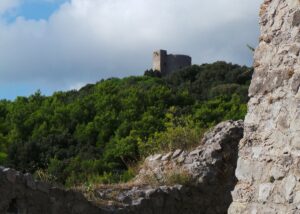
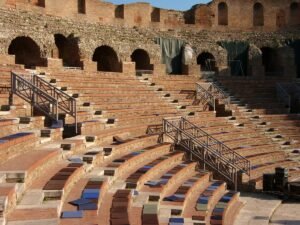
 If there’s one monument that sums up Benevento at a glance, it’s the Arch of Trajan. Built between 114 and 117 AD, this celebratory arch is not just a piece of history—it’s the city’s symbol, and for good reason: it’s considered the best-preserved Roman triumphal arch in terms of its reliefs. Standing 15.60 meters tall and 8.60 meters wide, it’s made of limestone blocks clad in Parian marble. But the real magic lies in the bas-reliefs: on one side, scenes of war and conquest; on the other, peace and administration. It’s like reading a comic strip about Trajan’s life. During the Middle Ages, the Lombards used it as the Porta Aurea of the city walls, saving it from oblivion. Today you’ll find it at the end of Via Traiano, a stone’s throw from the center. Since 2024, it’s even a UNESCO World Heritage site (part of the Via Appia). Admission is free, 24 hours a day, but I recommend going early in the morning or at sunset—the light really brings out the marble. And don’t forget to look at the inscription on the attic: it’s identical on both sides, a detail that says a lot about Roman symmetry. In short, a place that makes you feel small in the face of an empire’s greatness.
Arch of Trajan: A Roman Masterpiece
- Go to the page: Trajan's Arch in Benevento: Intact Marble Reliefs and Free Admission
- Via Port'Aurea, Benevento (BN)
- Open in Google Maps
- View on Google Images
If there’s one monument that sums up Benevento at a glance, it’s the Arch of Trajan. Built between 114 and 117 AD, this celebratory arch is not just a piece of history—it’s the city’s symbol, and for good reason: it’s considered the best-preserved Roman triumphal arch in terms of its reliefs. Standing 15.60 meters tall and 8.60 meters wide, it’s made of limestone blocks clad in Parian marble. But the real magic lies in the bas-reliefs: on one side, scenes of war and conquest; on the other, peace and administration. It’s like reading a comic strip about Trajan’s life. During the Middle Ages, the Lombards used it as the Porta Aurea of the city walls, saving it from oblivion. Today you’ll find it at the end of Via Traiano, a stone’s throw from the center. Since 2024, it’s even a UNESCO World Heritage site (part of the Via Appia). Admission is free, 24 hours a day, but I recommend going early in the morning or at sunset—the light really brings out the marble. And don’t forget to look at the inscription on the attic: it’s identical on both sides, a detail that says a lot about Roman symmetry. In short, a place that makes you feel small in the face of an empire’s greatness.Church of Santa Sofia: A Lombard Masterpiece Between History and Architecture
- Go to the page: Church of Santa Sofia in Benevento: Lombard Star-Shaped Plan and Medieval UNESCO Frescoes
- Piazza Giacomo Matteotti, Benevento (BN)
- Open in Google Maps
- View on Google Images
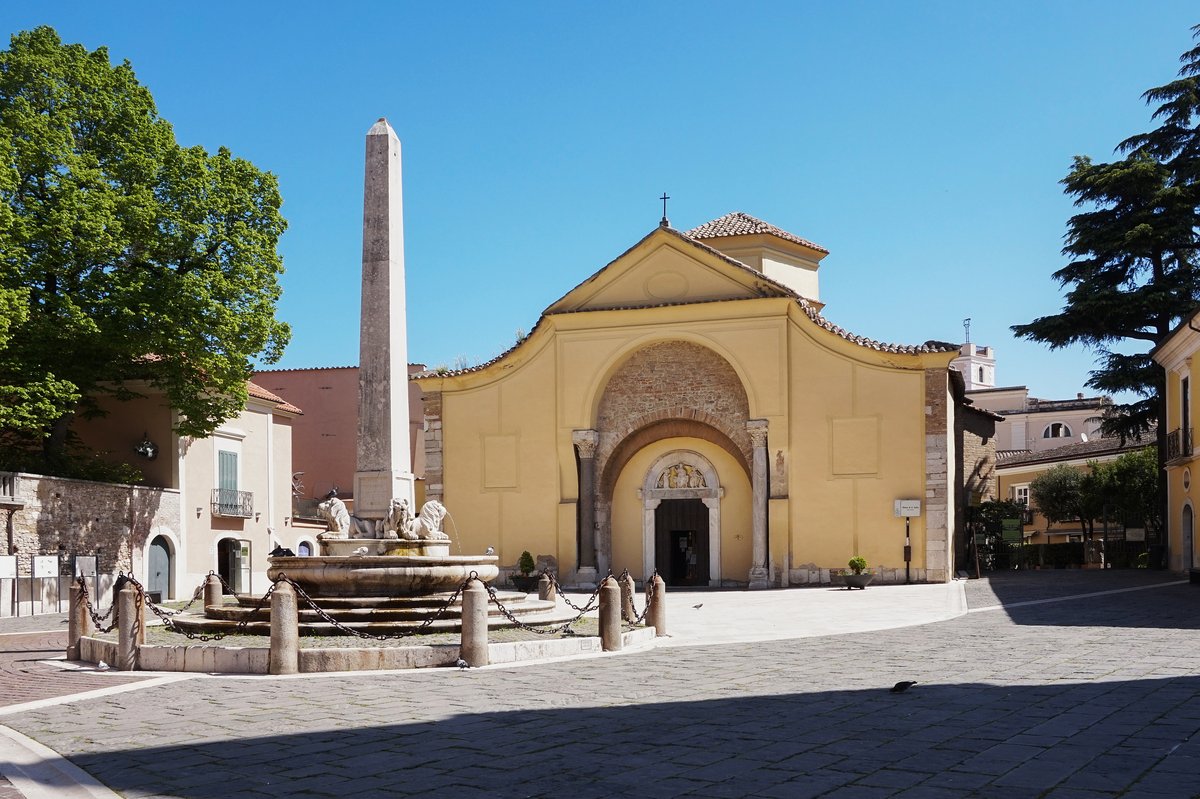 Entering the Church of Santa Sofia in Benevento is like stepping back over twelve centuries. Founded around 760 by the Lombard duke Arechi II, this church is one of the jewels of early medieval architecture in Italy and has been part of the UNESCO site 'Longobards in Italy: Places of Power' since 2011. Its shape is unique: a star-shaped layout consisting of a central hexagon of columns (perhaps taken from the ancient Temple of Isis) that support the dome, surrounded by a decagonal ring. The play of light and shadow is evocative, with irregular vaults that change with every step. After the earthquakes of 1688 and 1702, the church was restored in Baroque style, but a restoration in 1957 brought back part of its Lombard appearance. The Baroque façade, with its Romanesque portal and 13th-century lunette depicting Christ between the Virgin and saints, hides inside fragments of 8th-9th century frescoes: the Announcement to Zechariah, Zechariah Mute, the Annunciation, and the Visitation, works linked to the Beneventan school of illumination. Next to it, the Romanesque cloister (part of the Museo del Sannio) is worth a visit. The church is open daily with free admission: in the morning from 8:00 AM to 12:00 PM and in the afternoon from 4:30 PM to 8:00 PM (summer hours). A place that, despite its modest size (about 24 meters in diameter), offers intense emotions to those who love history and art.
The Roman Theatre of Benevento: A Hadrianic-era Gem
- Via Manfredi di Svevia, Benevento (BN)
- http://www.polomusealecampania.beniculturali.it/index.php/il-teatro
- Open in Google Maps
- View on Google Images
- pm-cam.teatrobenevento@beniculturali.it
- +39 0824 47213
 If you are in Benevento, the Roman Theatre is a must-see. Wandering through the alleys of the Rione Triggio, you come across this ancient building inaugurated between 125 and 128 AD by Emperor Hadrian, although work had begun under Trajan. With a diameter of 98 meters and a capacity of about 15,000 spectators, it was among the largest theaters in Italy. Today it welcomes you with its semicircular structure in concrete, clad in limestone and brick. Of the original three-tiered façade (Tuscan, Ionic, Corinthian), only the lower order with 25 arches remains, framed by Tuscan half-columns. The keystones were decorated with busts and theatrical masks, some still visible in the historic center. Entering, you will notice the well-preserved cavea and the scaenae frons with three monumental doors. On the sides, two halls: one still retains part of the polychrome marble cladding, a detail that lets you imagine the original splendor. The theater was restored in the Severan period (as a dedication to Caracalla recalls), but fell into disuse in the 4th century. In the Middle Ages, houses were built on top of it, and in 1782 even the church of Santa Maria della Verità. The rediscovery began in 1890 thanks to the architect Almerico Meomartini, who funded the first excavations. After long works, the theater reopened to the public on June 26, 1957 with Aristophanes’ play *The Parliament of Women*. Since then it has returned to being the cultural heart of the city, hosting opera seasons, concerts, and events such as Miss Italia 1990 and the Festivalbar 2001. The acoustics are so excellent that theatrical and musical performances are still held there. If you want to visit, the address is Piazza Ponzio Telesino. Open every day: from 9:00 AM to 5:40 PM (winter) or 7:20 PM (summer). Full ticket €5, reduced €2, and there are often evening openings during the “Benevento Città Teatro” festival. Bring your curiosity: under the steps, two parallel ambulacra act as a soundbox, and the stairs behind the stage were the artists’ entrance. A place steeped in history and spectacle, waiting to be discovered.
Rocca dei Rettori: A Dive into Benevento's History
- Piazza Castello, Benevento (BN)
- Open in Google Maps
- View on Google Images
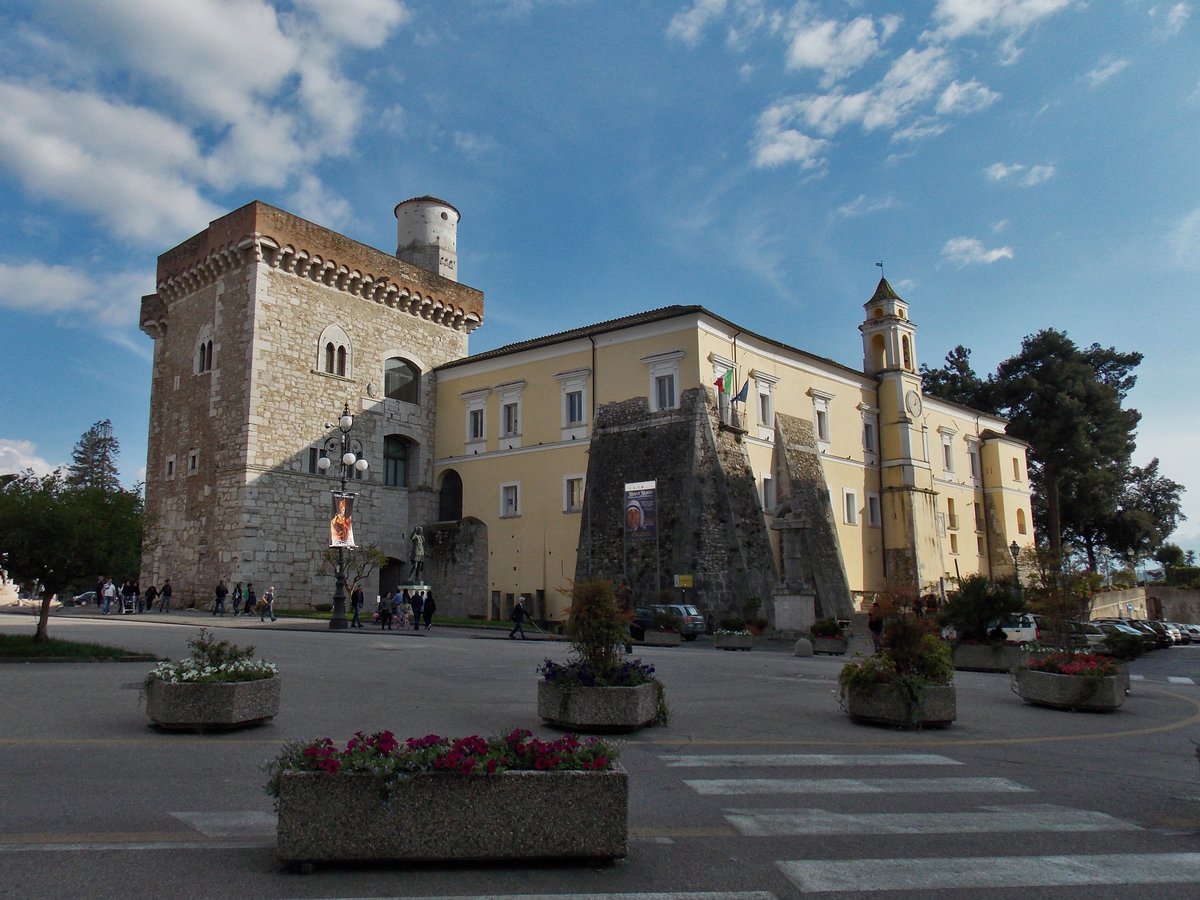 Perched on the highest point of Benevento's historic center, the Rocca dei Rettori is much more than a fortress: it is a journey through time starting from the 8th century BC. Yes, because here there was an Etruscan necropolis, then a Samnite earthwork, and under the Romans, a castellum aquae – whose remains are still visible in the garden. But the real eye-catcher is the Lombard Tower, 28 meters high with a polygonal plan, dominating the basin below. Next to it, the Palace of the Papal Governors (commissioned by Pope John XXII in 1321) develops over three floors, with large halls featuring wooden ceilings and 18th-century decorations. For centuries, until 1865, the fortress was a prison: a stark contrast considering it is now the seat of the Province and houses the historical section of the Museum of Samnium, with artifacts that tell the story of this land.
Walking in the garden, among pines and palms, you will find a Roman lapidary with milestones from the Via Traiana and architectural fragments. In front of the entrance, the Lion of 1640 stands guard: it was erected in honor of Pope Urban VIII and symbolizes the strength of the Samnites. Climb to the terrace: the view of Mount Taburno is postcard-perfect. Admission is free (Mon-Fri 7:00-13:00) and, if you are a fan of ghost stories, keep an eye on full moon nights: they say the ghost of Rector Andreone degli Artusini, beheaded in 1511, still roams the fortress.
Museo del Sannio
- Piazza Arechi II, Benevento (BN)
- Open in Google Maps
- View on Google Images
 If you want to understand Benevento, you have to visit the Museo del Sannio. Housed in the Santa Sofia complex (a UNESCO World Heritage site since 2011), this museum tells the story of the city from its origins to the 20th century. It’s a place that will surprise you: you start in the 12th-century Romanesque cloister, with capitals that seem to whisper medieval secrets, and then you find yourself facing ancient artifacts. The archaeological section is incredible: Roman statues, Samnite pottery, and above all, the finds from the Temple of Isis, with Egyptian sculptures unique outside Egypt. Then you go upstairs and immerse yourself in the Lombard section: weapons, jewelry, and coins that tell the story of when Benevento was the capital of Langobardia Minor. And it doesn’t end there: the picture gallery has works by Giordano, Guttuso, and even a bas-relief by Pericle Fazzini with the dance of the witches. The single ticket (€6) is valid for two days and also includes the Museo Arcos and Sant’Ilario. Open Tue-Sun 9am-7pm, closed Monday. Tip: start here, then go see Santa Sofia and the Arch of Trajan—you’ll feel like you’re reading the city with new eyes.
Roman Amphitheater of Benevento: A Giant Still to Be Discovered
- Via Appia Antica, Benevento (BN)
- Open in Google Maps
- View on Google Images
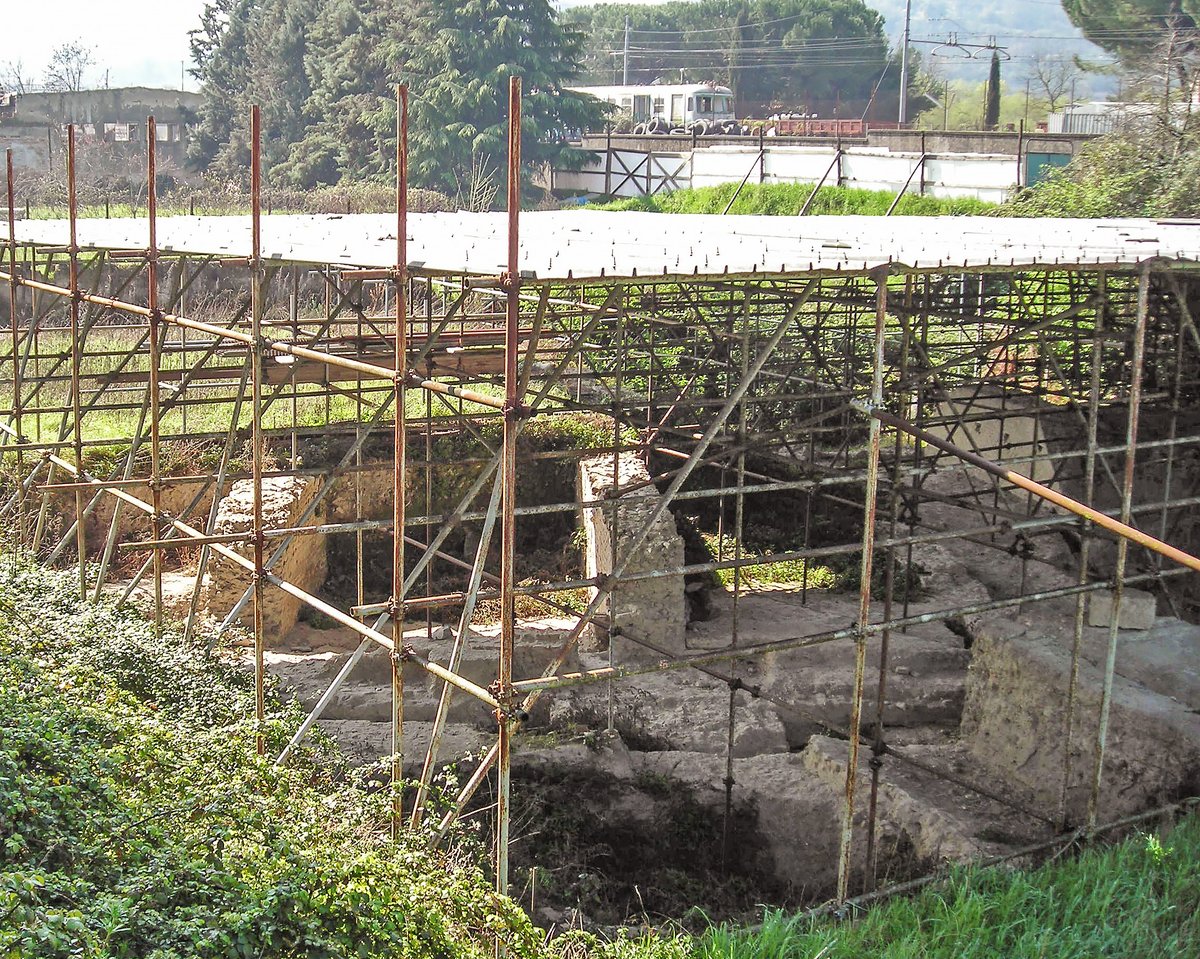 The Roman Amphitheater of Benevento is one of the city's most fascinating and least-known monuments. Discovered only in 1985 during the demolition of a Fascist-era building, it lies largely still buried between Via Munanzio Planco and the Leproso Bridge. Yet its dimensions are record-breaking: 160 by 130 meters, with a height of about 25 meters and an estimated capacity of 30,000 spectators, almost like the Colosseum. Built between the 1st century BC and the 1st century AD, it was already mentioned by Tacitus for the visit of Emperor Nero in 63 AD, who came specifically to watch a gladiatorial munus. Here trained the gladiators of the Ludus Magnus, the most important school of the time, and the city was a crossroads of the Appian Way. Then came earthquakes and neglect: the eruption of Vesuvius in 472 found the amphitheater already without its roof, and in subsequent centuries it became a quarry for materials – so much so that 56 columns of the Benevento Cathedral come from here. Today, after years of abandonment among railway tracks and vegetation, a €900,000 project (funded by the Pnrr “Regina Viarum”) promises to transform it into an urban park with walkways, LED lighting, and archaeological paths. The opening date is uncertain, but the wait is full of hope. Meanwhile, at the Museo del Sannio you can admire the relief of the Gladiator of Benevento, an hoplomachus in full action, while other fragments are still embedded in the bell towers of Santa Sofia and the Cathedral. A piece of history waiting to be rediscovered.
Ponte Leproso: The Ancient Roman Gateway to Benevento
- Via Ponte Leproso, Benevento (BN)
- Open in Google Maps
- View on Google Images
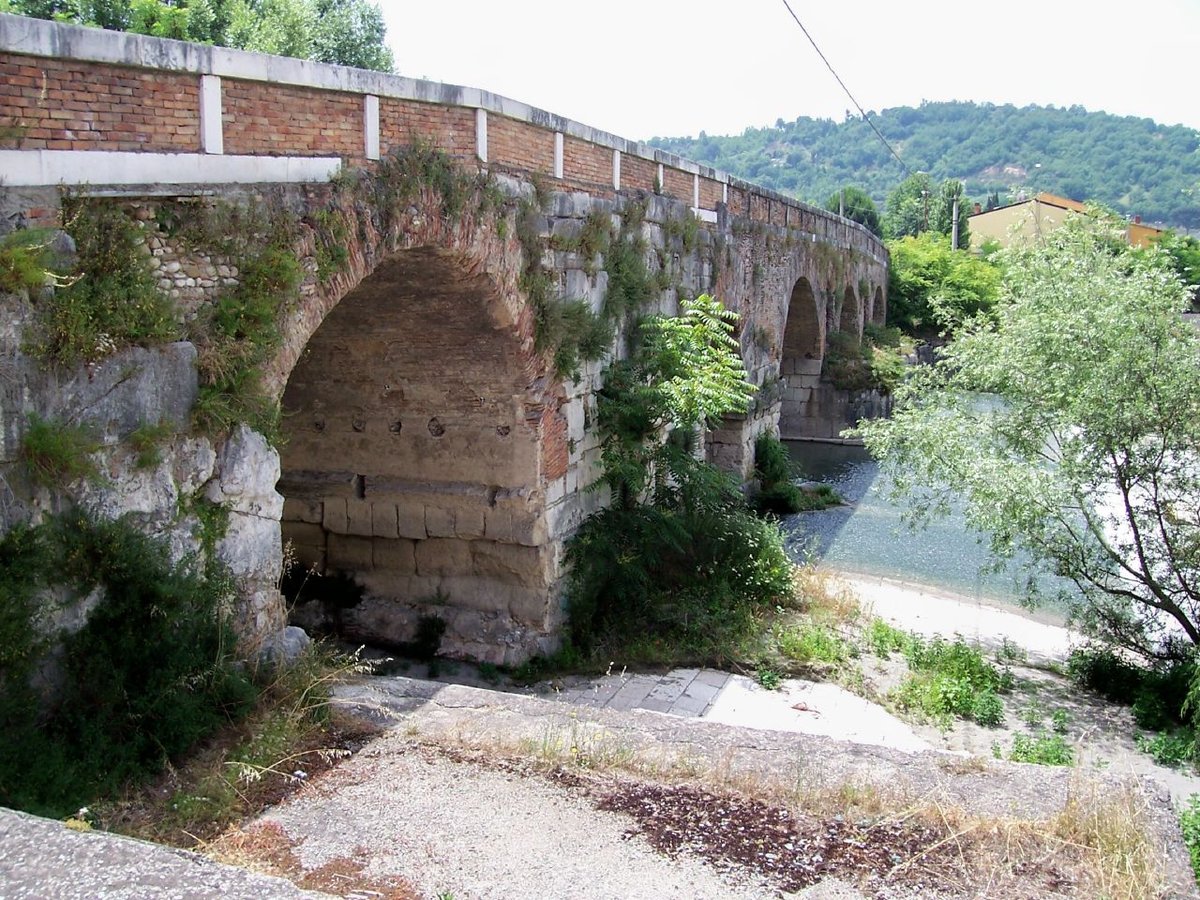 If you think all Roman bridges look the same, Ponte Leproso will change your mind. Built in the 3rd century BC by Appius Claudius Caecus to carry the Via Appia over the Sabato River, it is one of the oldest masonry bridges still standing, along with Ponte Milvio. But here the atmosphere is different: its five original arches (now reduced to four after 18th-century restorations) and distinctive humpback shape give it an almost fairy-tale quality. The curious name – “Leproso” – comes from a medieval leper colony, but until the 11th century it was called Ponte Marmoreo (or Lapideo) due to its travertine cladding. Walking across, you can see the marks of time: the original pier in opus quadratum with rustic bossages, reused elements (perhaps from the Arch of Trajan), and flood relief openings. Since 2004 it has been closed to traffic, so you can cross it at leisure, imagining the armies and travelers who have trodden it – from Cicero to Manfred of Hohenstaufen, who according to some historians died right here in 1266. It is one of those places that makes you feel the weight of history, but without rhetoric: simple, authentic, and incredibly well-preserved.
Church of Sant'Ilario a Port'Aurea: a Lombard gem in the shadow of the Arch
- Via San Pasquale, Benevento (BN)
- Open in Google Maps
- View on Google Images
 Right next to the Trajan's Arch, in a fenced meadow, lies a small treasure chest of history: the former Church of Sant'Ilario a Port'Aurea. Built by the Lombards between the 7th and 8th centuries, it stands on Roman remains – under the floor you can still see the structures from the imperial era. From the outside, the two offset towers with tiled roofs stand out: inside they hide two aligned domes, an architectural rarity. The interior is bare and unpaved, but a wooden walkway allows you to cross it and admire the excavations.
For centuries it was first a Benedictine monastery, then deconsecrated and turned into a barn and stable after the 1688 earthquake. Only in 2003, after a radical restoration, did it come back to life. Today it houses the Video Museum of the Arch: a half-hour film projected on the walls tells the story of the Trajan's Arch and explains the scenes carved in marble. An immersive way to understand one of Benevento's most important monuments.
Around you can see the remains of the monastery and medieval tombs. The place is quiet, little frequented, and offers an atmosphere suspended between different eras. If you're passing by, stop: Sant'Ilario is one of those gems that makes a trip special.
Arch of the Sacrament: The Ancient Entrance to Benevento's Forum
- Piazza Manfredi di Svevia, Benevento (BN)
- Open in Google Maps
- View on Google Images
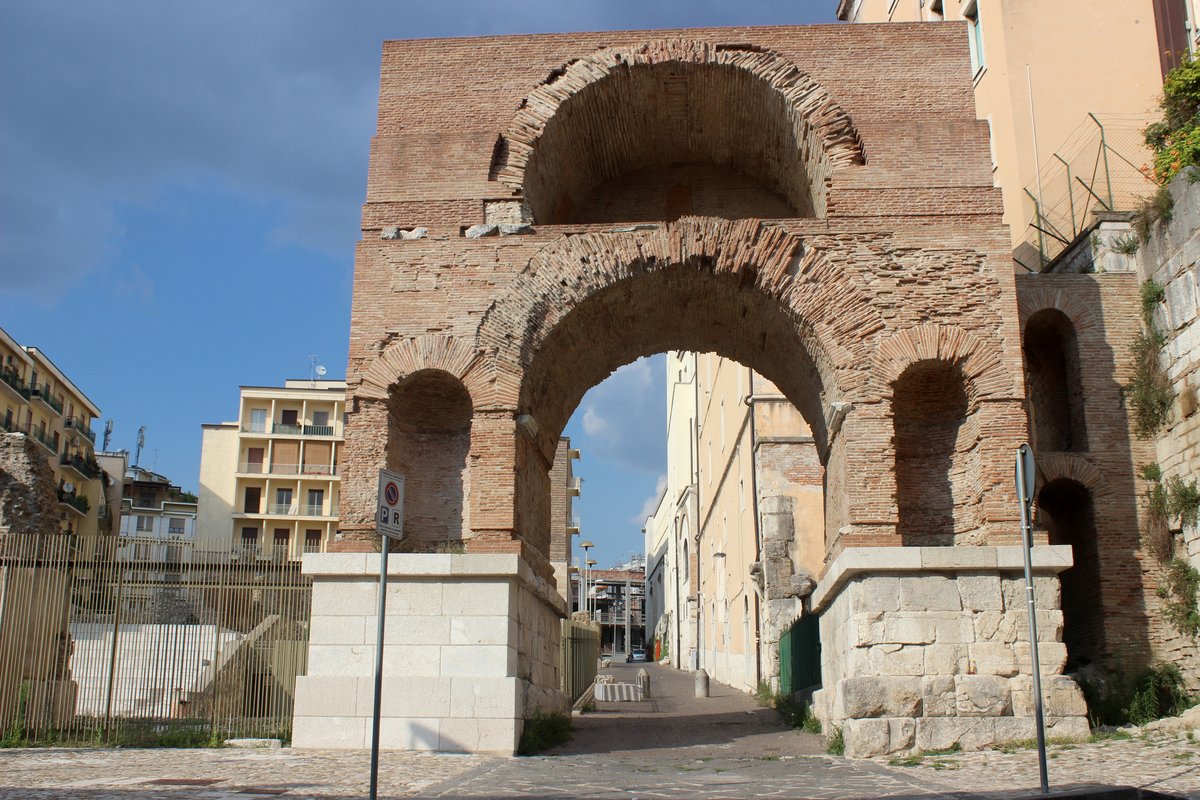 The Arch of the Sacrament is one of those monuments that, at first glance, seems almost hidden among the streets of Benevento’s historic center. Yet, just stop for a moment to realize how imposing it is. Dating between the end of the 1st and the beginning of the 2nd century AD, this Roman arch was the main entrance to the Forum area from the south side, right next to the Roman Theater. Today it overlooks Via Carlo Torre, at the corner with the Archbishop's Palace. Its structure is simple yet powerful: two pillars in opus latericium on opus quadratum bases, a diameter of about 5 meters, and a brick relieving arch. Unfortunately, the original marble cladding has almost completely disappeared, as have the statues that once adorned the side niches. But that's not all: during restoration excavations, culminating in 2009 with the opening of an urban archaeological route (cost: almost 5 million euros), a late Roman thermal complex emerged. Today you can walk on metal walkways among ancient walls in opus mixtum and reticulatum. The area also hosts summer cultural events, such as the festival named after Alessandro Verdicchio, with music, theater, and workshops. The name "del Sacramento" probably derives from its reuse in Christian times, when it served as the entrance to the bishop's castle. During a restoration in 1633-1635, commissioned by Archbishop Agostino Oregio, an upper crowning was added. The visit is free, but if you want to deeply understand the history, a guide can make a difference. Not to be missed, combine it with the Arch of Trajan and the Roman Theater for a complete dive into ancient Benevento.
Hortus Conclusus: Mimmo Paladino's Secret Garden
- Vico Noce, Benevento (BN)
- Open in Google Maps
- View on Google Images
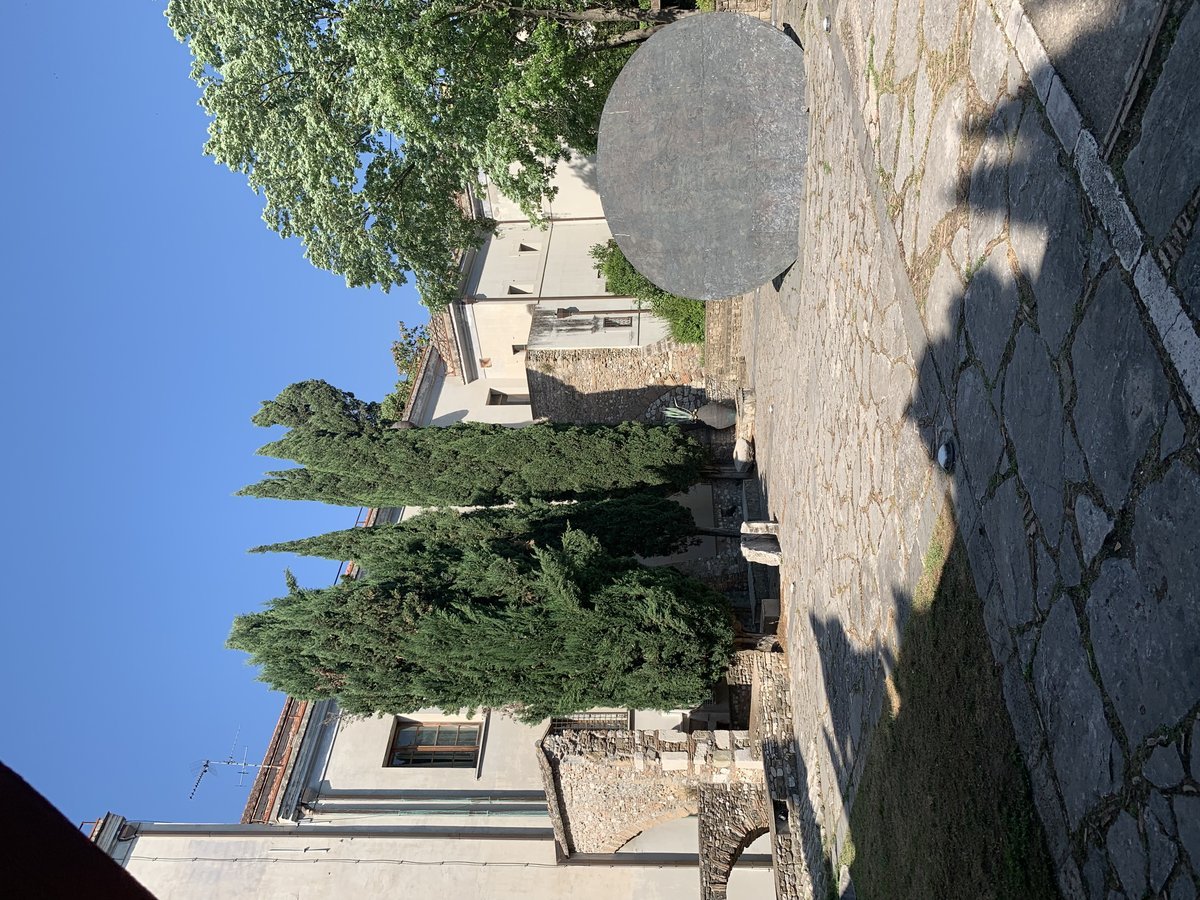 In the heart of Benevento's historic center, hidden behind the Convent of San Domenico, lies a place that seems suspended in time: the Hortus Conclusus. Created in 1992 by artist Mimmo Paladino, this walled garden is a permanent installation blending contemporary sculptures, ancient symbols, and lush vegetation. As you enter, the sound of water from a huge bronze disc set into the ground greets you—it looks like a shield but is a fountain. On one wall stands a horse with a golden mask, evoking the myth of Agamemnon and the Trojan Horse. Scattered around are other works: a humanoid with very long arms, bull skulls, helmets, and shells. The effect is disorienting yet relaxing. Entry is free, and the garden is open from Tuesday to Sunday, 9:30 AM to 8:00 PM (closed on Mondays). The uneven stone floor recalls ancient alleys, and the plants—roses, lilies, palms—carry symbolic meanings (purity, rebirth). It's a perfect spot for a reflective break, away from the chaos. If you're in Benevento for the Arch of Trajan or Santa Sofia, don't miss this contemporary gem—it will show you the city through different eyes.
Obelisk of the Temple of Isis: A Piece of Egypt in Benevento
- Via G. de Vita, Benevento (BN)
- Open in Google Maps
- View on Google Images
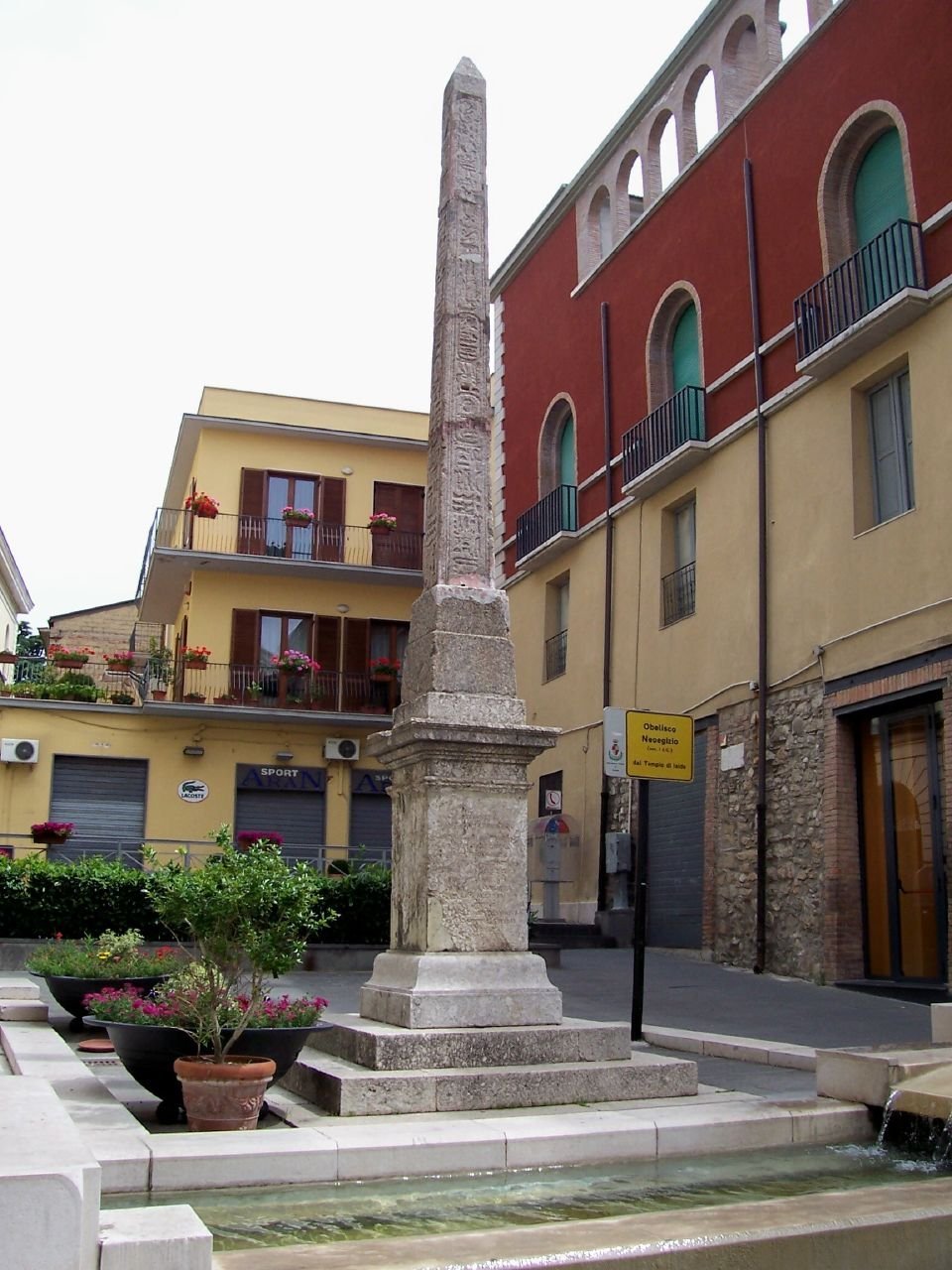 If you stroll through Piazza Papiniano, a red granite monolith about three meters high will catch your eye. It is the obelisk of the Temple of Isis, one of two that once flanked the entrance of the Iseum commissioned by Emperor Domitian between 88 and 89 AD. Carved in Egypt (Aswan granite), it weighs 2.5 tons and on all four sides shows hieroglyphs celebrating the goddess Isis as 'Lady of Benevento' and mentioning the founder Lucilius Lupus, an imperial official.
The story is almost like a novel: the obelisk remained in Piazza Duomo from 1597 but was moved here only in 1872. In the 2010s, the Paul Getty Museum in Los Angeles restored it (it returned to Benevento in October 2018) and displayed it in an exhibition on classical Egypt. Today it is the most visible symbol of the link between Benevento and ancient Egypt, a unique piece outside the land of the pharaohs.
Don't miss the chance to touch history: the obelisk is easy to reach, right in the center. Its smooth surface and clearly legible inscriptions will make you feel like an explorer. And if you are passionate, at the Museo del Sannio you will find the other obelisk (mutilated) and statues of pharaohs and deities. In short, a corner of Egypt just a step away from home.
Apis Bull: The Mysterious Egyptian Bull of Benevento
- Viale San Lorenzo, Benevento (BN)
- Open in Google Maps
- View on Google Images
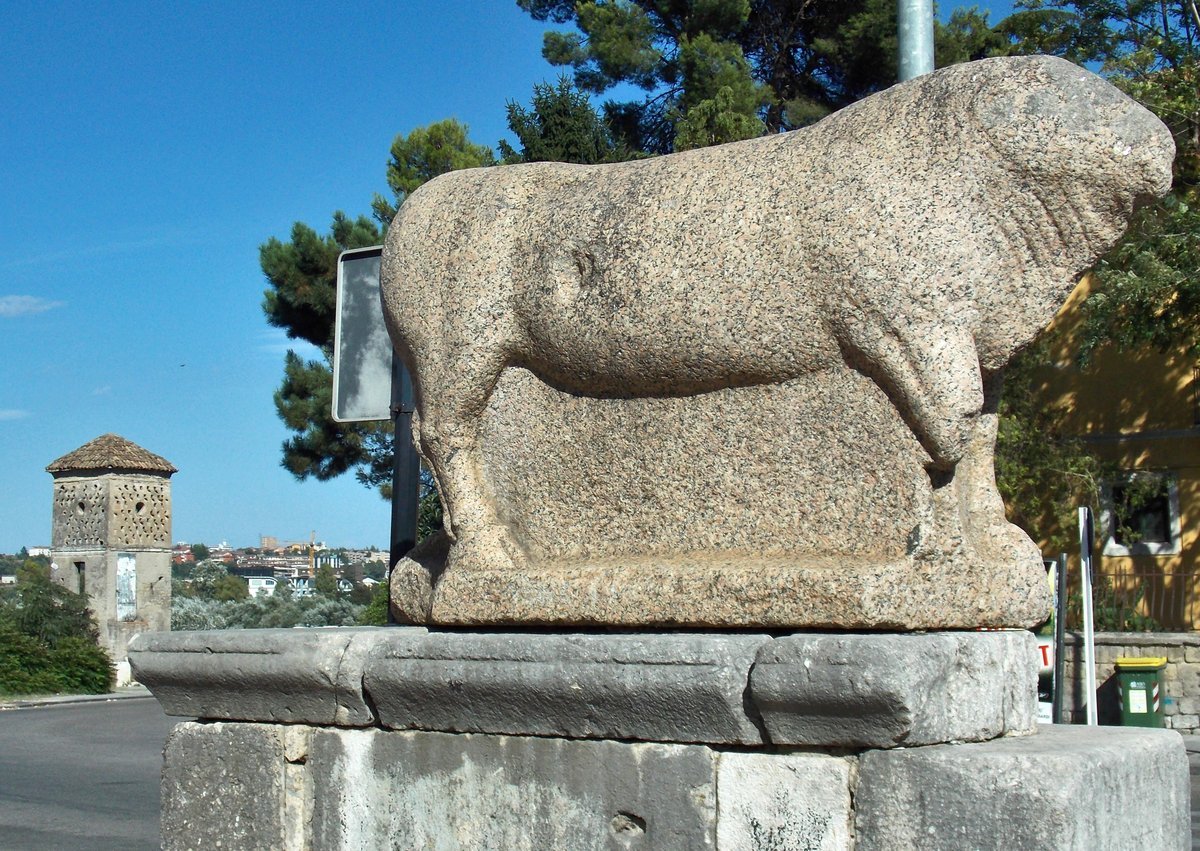 Walking along Viale San Lorenzo toward the Basilica of Madonna delle Grazie, you'll come across a strange red granite statue: the Apis Bull, an Egyptian relic that the people of Benevento affectionately call 'a vùfera (the buffalo). Discovered by chance in 1629 near the Sabato River in the Casale dei Maccabei area, the sculpture was immediately placed in front of the ancient Porta San Lorenzo. The papal governor Arcasio Ricci had a Latin inscription carved on it, calling it "a buffalo preserved as a monument to the Samnites' military fortune"—but the story is more tangled.
The French Egyptologist Émile Étienne Guimet interpreted it as the Egyptian god Apis, linking it to the Temple of Isis built by Emperor Domitian between the 1st and 2nd centuries. Other scholars, such as Hans Wolfgang Müller, have raised doubts: the solar disk between the horns is missing, the genitals are not carved, and the forelegs are aligned rather than in motion as in classic Egyptian depictions. Perhaps it is a late imperial work, crudely made, which lost its distinctive features.
Today, the Apis Bull is in a state of neglect: overgrown weeds, cracks in the base, no lighting. In 2009, a proposal to move it near Santa Sofia was met with opposition from local residents. It remains there, proud and battered, a silent witness to the Isiac cult that was very strong in Benevento. If you pass by, stop: it's a unique piece of history, even if a bit overlooked.
Janua – Museum of Witches
- Corso Giuseppe Garibaldi, Benevento (BN)
- Open in Google Maps
- View on Google Images
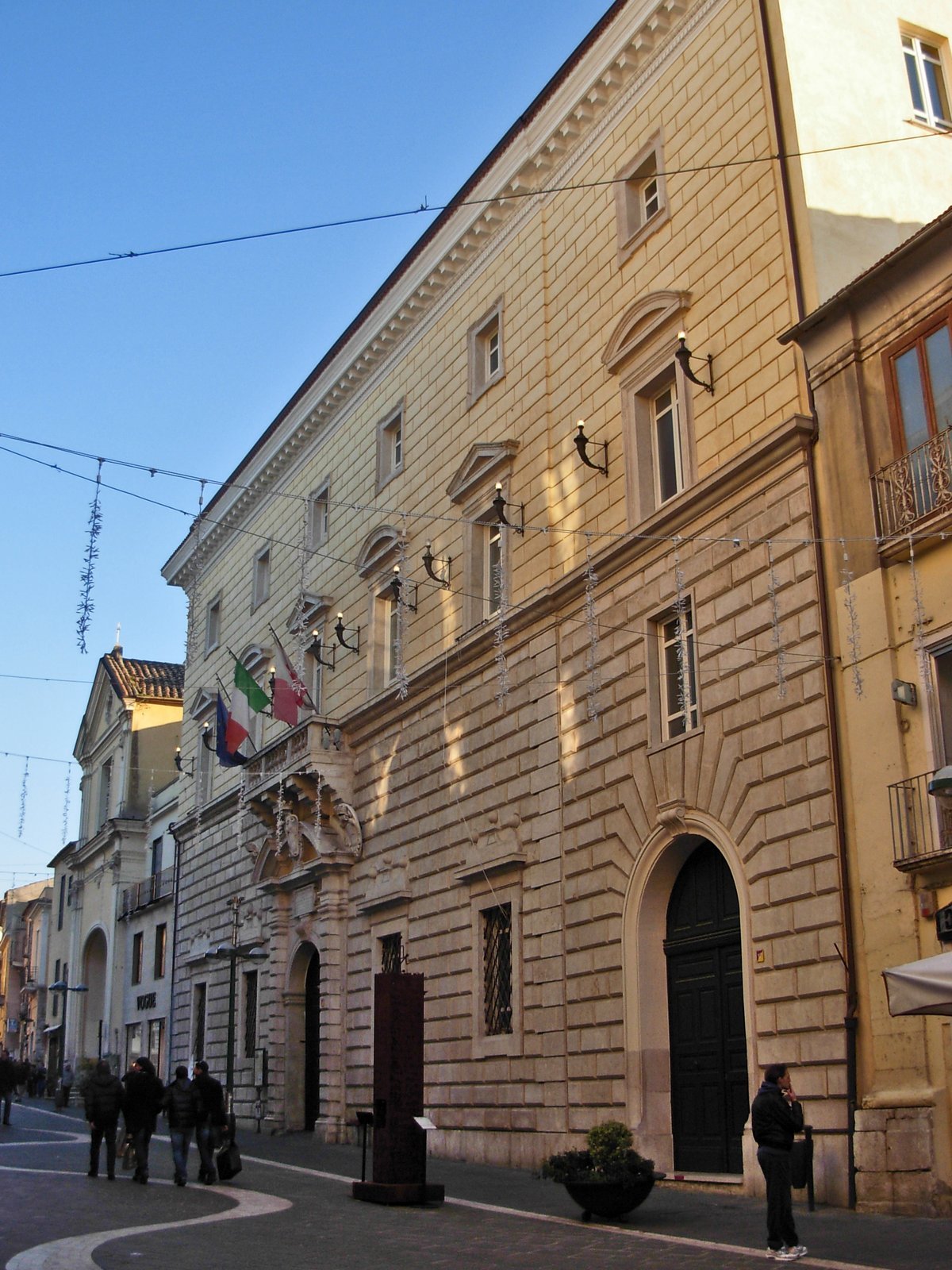 Located in the heart of Benevento, inside Palazzo Paolo V on Corso Garibaldi, the Janua – Museum of Witches is a dive into local folklore. Inaugurated in 2017 by the I.D.E.A.S. Cooperative, the museum explores the world of the janare, the witches of Benevento who, according to legend, gathered under an ancient walnut tree on the banks of the Sabato River. The exhibition is divided into sections: 'Scongiurare' displays amulets and protective objects; 'Occhio malocchio' shows rituals against the evil eye; 'Sanare' is dedicated to healing herbs and folk medicine. There is also an immersive video installation with an artificial walnut tree that recreates the atmosphere of the sabbaths. The collection includes holy cards, ex-votos, anthropomorphic bread, scissors, apotropaic dolls, and 'brevi' (protective sachets). The museum's symbol is a two-tailed mermaid, recalling the cult of the Mother Goddess. Admission costs €5 (€3 for students and groups of at least 25 people). Open Wednesday, Friday, Saturday, and Sunday from 10:00 AM to 1:00 PM and from 4:00 PM to 7:00 PM. An experience that intertwines history, magic, and tradition, perfect for those wanting to discover an unusual side of Benevento.
Fountain of the Chains: history and baroque charm in Benevento
- Piazza Orsini, Benevento (BN)
- Open in Google Maps
- View on Google Images
 In the heart of Benevento, in Piazza Orsini, you will find the Fountain of the Chains, a Baroque gem that tells centuries of history. The name? It comes from the iron chains that surround it, once used to regulate the water. The fountain was commissioned by Archbishop Vincenzo Maria Orsini in 1705 and built by the architect Nicola Colle De Vita, probably based on a design by Carlo Buratti. In 1778, the citizens wanted to add the statue of Pope Benedict XIII on top, still visible today. Then came the war: the bombings of 1943 severely damaged both the fountain and the statue. It took years of restoration (by Giovanni Sparla) before it was seen intact again, and the statue returned to its place only in 1992. Today, the fountain is a genuine meeting point. It is still functional: you will see locals filling water bottles from the central spout. The basin is made of stone, with low wrought iron railings, and around it the square is paved with cobblestones, with Baroque buildings framing it. It is a perfect place for a break, away from the hustle and bustle. In summer, the cool water is a blessing; in winter, the atmosphere is cozy. If you find yourself here, do not miss the chance to sit for a moment and observe: the Fountain of the Chains is one of those things that makes Benevento special.
Santi Quaranta: The Forgotten Roman Cryptoportico
- Via Ursus, Benevento (BN)
- Open in Google Maps
- View on Google Images
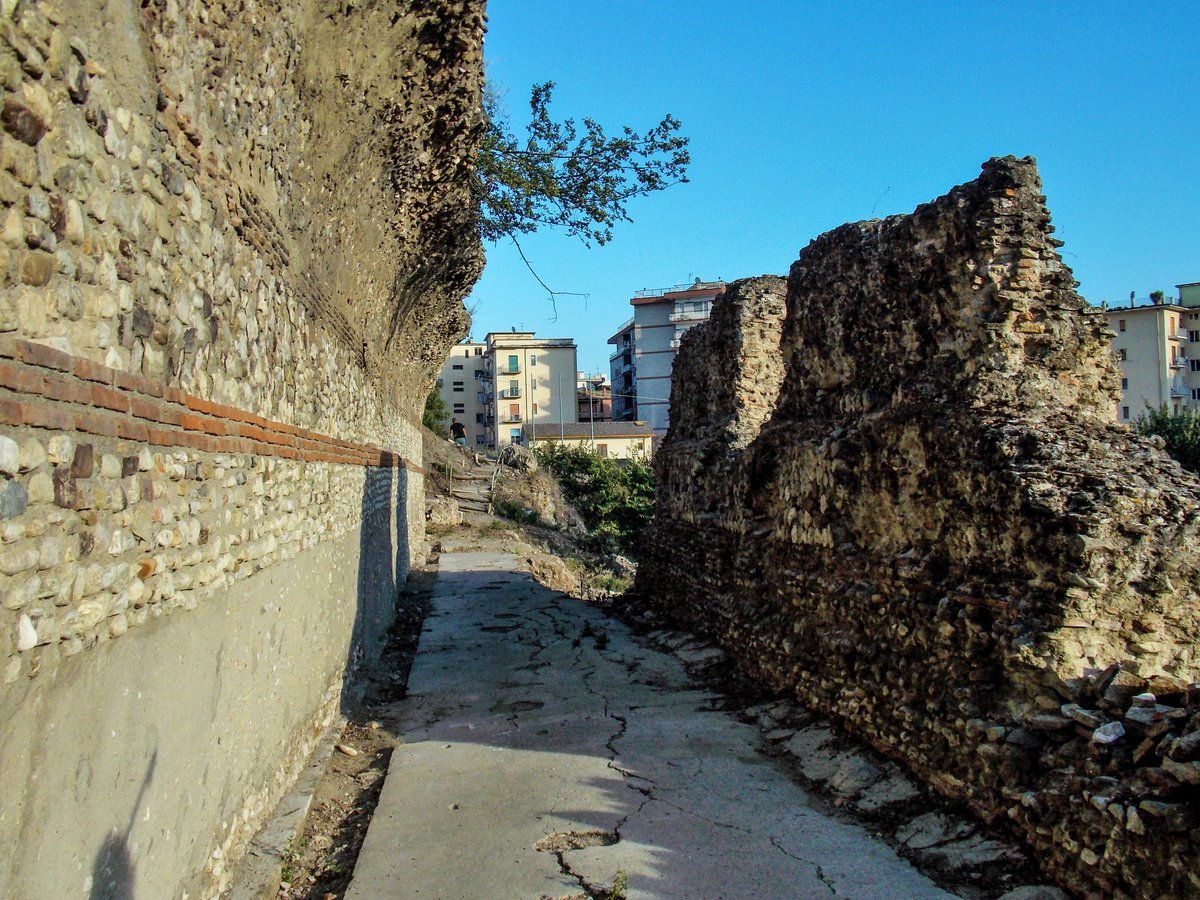 Walking near the Ponte Leproso, I stumbled upon a place that seems frozen in time: the Santi Quaranta. It’s not easy to find – you descend a steep alley called via Ursus – but the effort pays off. We are facing the remains of a 1st-century AD Roman cryptoportico, a covered corridor 60 meters long with walls in almost reticulate work and arched windows. The structure, which in Roman times probably served as a market or forum, was reused in the Middle Ages: above one of the side corridors, a church dedicated to the Forty Martyrs of Sebaste was built, and the hypogeum rooms became a cemetery (the charnel house mentioned by the chronicler Falcone in 1128).
The bombings of 1943 and decades of neglect left their mark, but since 2015 a group of volunteers has cleaned the area and restored dignity to the site. Today, you can visit the three surviving corridors, admire the Lombard arches in tuff, and, with a bit of luck, take part in historical reenactments. During restoration work in the 1980s, Lombard burials and a coin from 1287 came to light – evidence that the place was frequented for centuries. The atmosphere is evocative: silence broken only by the wind, light filtering through the slits, the sense of historical stratification. A place I recommend to those seeking something authentic, far from the usual tourist routes.