
If you have just one day to visit Benevento, this historical walking itinerary is the perfect solution to immerse yourself in its millennial soul. With 8 carefully selected stops—from the majestic Arch of Trajan to the evocative Church of Santa Sofia (a UNESCO World Heritage site)—you’ll cross the historic center among Roman remains, noble palaces, and unexpected vistas. The included map will guide you seamlessly, while the stops allow you to savor the city’s authentic character. Designed for archaeology and architecture lovers, but also for those wanting to uncover Benevento’s secrets—like the witch tradition and Lombard mysteries. Ideal for a day trip rich in culture and charm.
🗺️ Your trip at a glance
An 8-stop walking tour to discover the heart of Benevento in one day, among archaeology and medieval masterpieces. Perfect for curious travelers.
- Ideal for: city breakers and history lovers.
- What you’ll do: 8 stops with map, from the Arch of Trajan to Santa Sofia.
- Highlights: UNESCO heritage, Roman ruins, and local traditions.
Itinerary stops
Stop no. 1
Roman Theatre
 We begin our itinerary right here, at the Roman Theatre of Benevento, a monument that catapults you straight into the imperial era. Built under Trajan and inaugurated by Hadrian between 125 and 128 AD, this imposing structure could seat up to 15,000 spectators. Today, after centuries of neglect and spoliation, it has returned to being the cultural heart of the city. The semicircular cavea has a diameter of 98 meters and originally featured three orders of arcades: Tuscan, Ionic, and Corinthian. Today only the lower order with 25 arcades remains, but walking along its steps you can almost hear the applause of an audience from two thousand years ago. Don’t miss the polychrome marble slab cladding in the left hall and the masks on the keystones. The theatre is still active: it hosts opera and theatre seasons, and its acoustics are exceptional. Entry is ticketed, but worth every cent.
- Via Manfredi di Svevia, Benevento (BN)
- http://www.polomusealecampania.beniculturali.it/index.php/il-teatro
- Open in Google Maps
- View on Google Images

You should go if…
Stop no. 2
Roman Amphitheatre of Benevento
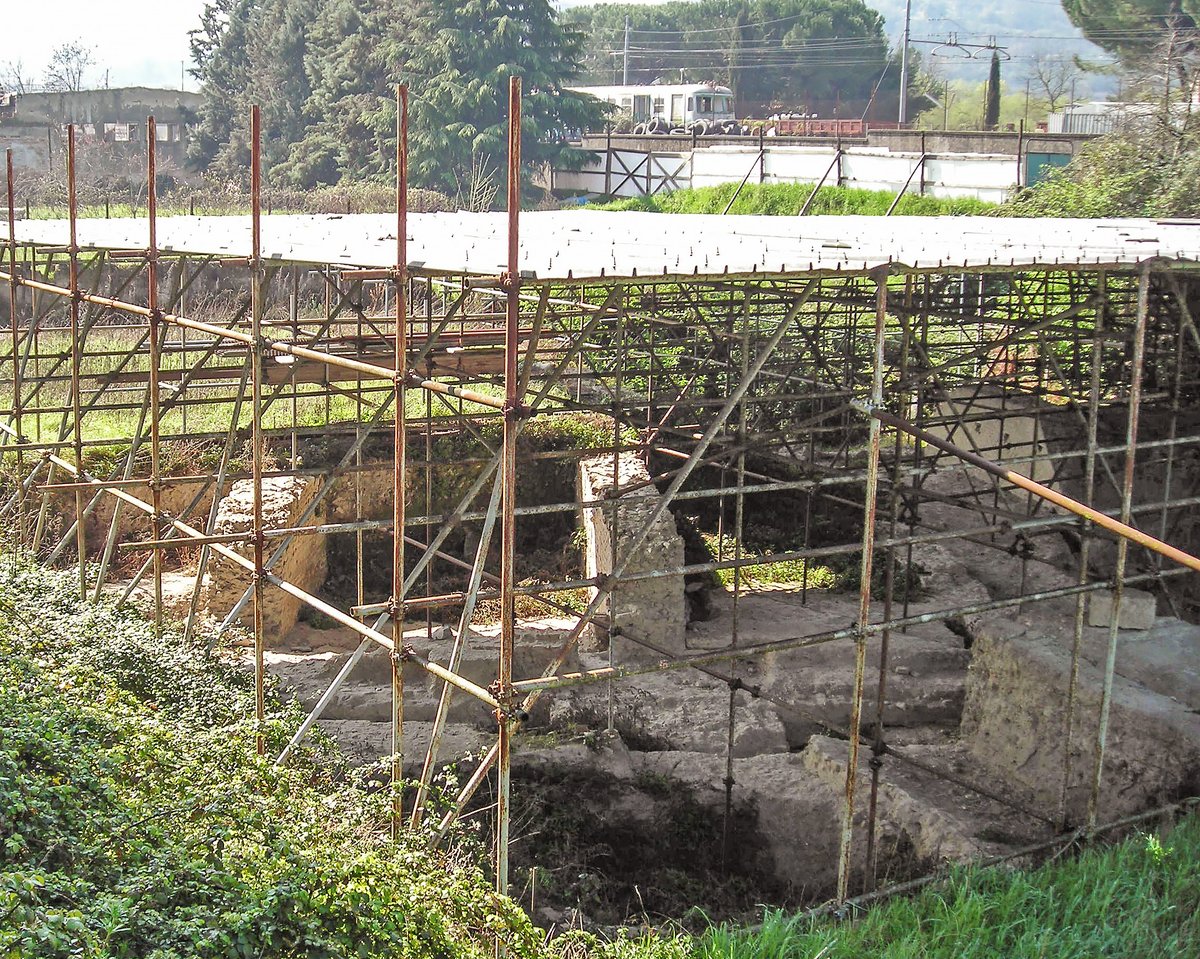 Few know that Benevento once housed an amphitheatre almost as large as the Colosseum. Discovered by chance in 1985 during the demolition of a Fascist-era building, its remains now lie partly under a sheet of metal, amid railway tracks and constructions. Yet the dimensions are imposing: 160 meters by 130, three tiers for a height of about 25 meters, with an estimated capacity of 30,000 spectators. Here, in 63 AD, Emperor Nero watched gladiatorial games. The building was abandoned after the earthquake of 346 AD and stripped of its stone materials, reused in the city walls and cathedral. Today the area is closed to the public, but a project funded with 900,000 euros from the Pnrr plans to create an urban park with a panoramic walkway. The gladiatorial reliefs, such as the famous ‘Gladiator of Benevento’, are preserved at the Museo del Sannio. A fascinating place that deserves to be rediscovered.
- Via Appia Antica, Benevento (BN)
- Open in Google Maps
- View on Google Images
You should go if…
Stop no. 3
Torre della Catena
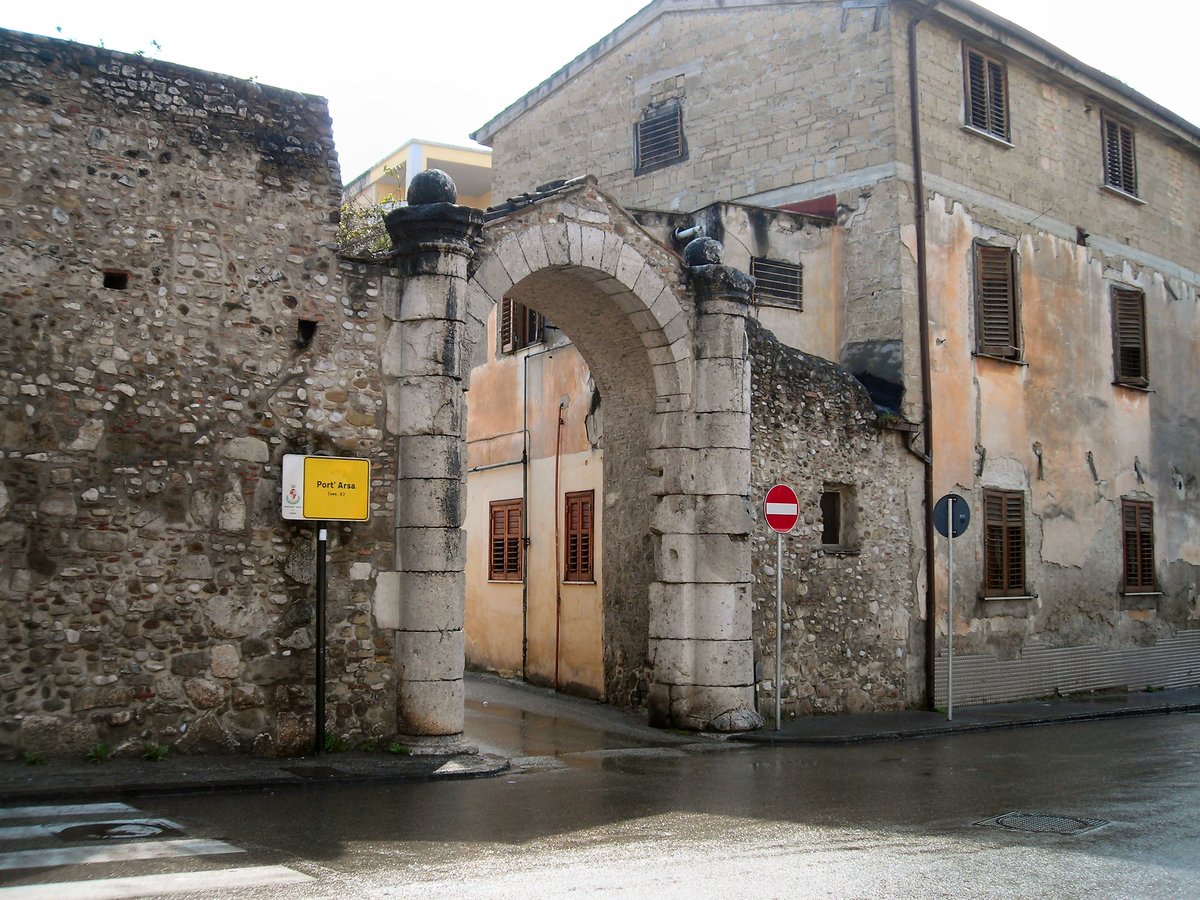 Continuing along Via Torre della Catena, you arrive at one of the most authentic corners of Benevento. The street takes its name from the Torre della Catena, a medieval tower that was once part of the city’s defensive walls. As you walk, on the left you’ll notice the area where the “Colonnette” school building once stood, the first school in the city, tragically destroyed in the 1980 earthquake. On the right, you can catch a glimpse of the back of the old Commestibili market, now transformed into the Mailes shopping center. Further ahead, your eye is drawn to the distinctive raised roof of Palazzo Bozzi. This stop is a perfect mix of eras: the medieval tower, the 20th-century school and neighborhood life, and the present-day commercial spaces. A corner of the city that tells stories of resilience and transformation, off the beaten tourist path.
- Via Torre della Catena, Benevento (BN)
- Open in Google Maps
- View on Google Images
You should go if…
Stop no. 4
Arch of the Sacrament
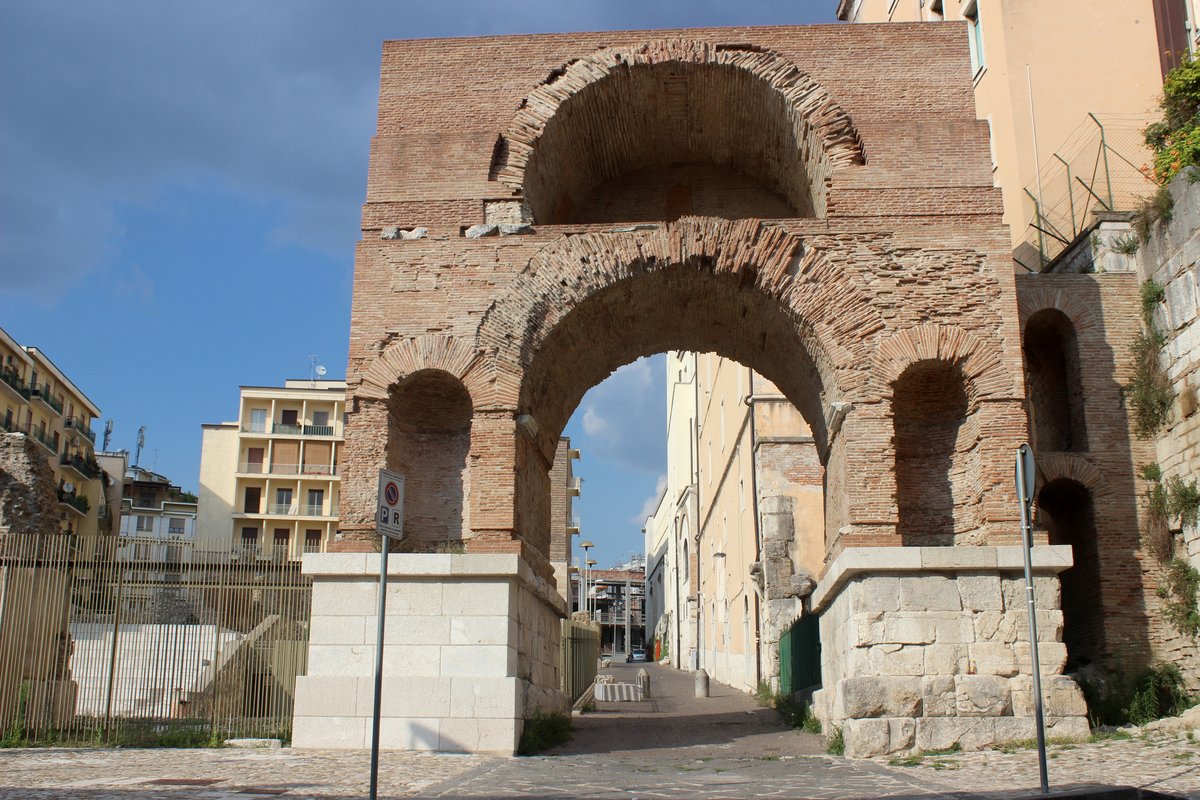 Leaving Via Torre della Catena, you emerge into Piazza Manfredi di Svevia, where the imposing Arch of the Sacrament stands between the Archbishop’s Palace and the cathedral. This Roman arch, dating from the late 1st to early 2nd century AD, was the southern entrance to the city’s ancient Forum. Today it is recognizable by the two pillars in opus latericium and the brick relieving arch, but only a few fragments of the marble cladding remain. In 2009, after a restoration costing almost 5 million euros, the area was reopened as an urban archaeological path, also revealing the remains of a Roman bath complex. Walking along the metal gratings, you immerse yourself in an atmosphere suspended between eras: on one side the ancient bricks, on the other the signs of modern restoration. A place that speaks of the stratification of history, ideal for those who love to discover the less flashy details of the past.
- Piazza Manfredi di Svevia, Benevento (BN)
- Open in Google Maps
- View on Google Images
You should go if…
Stop no. 5
Obelisk of the Temple of Isis
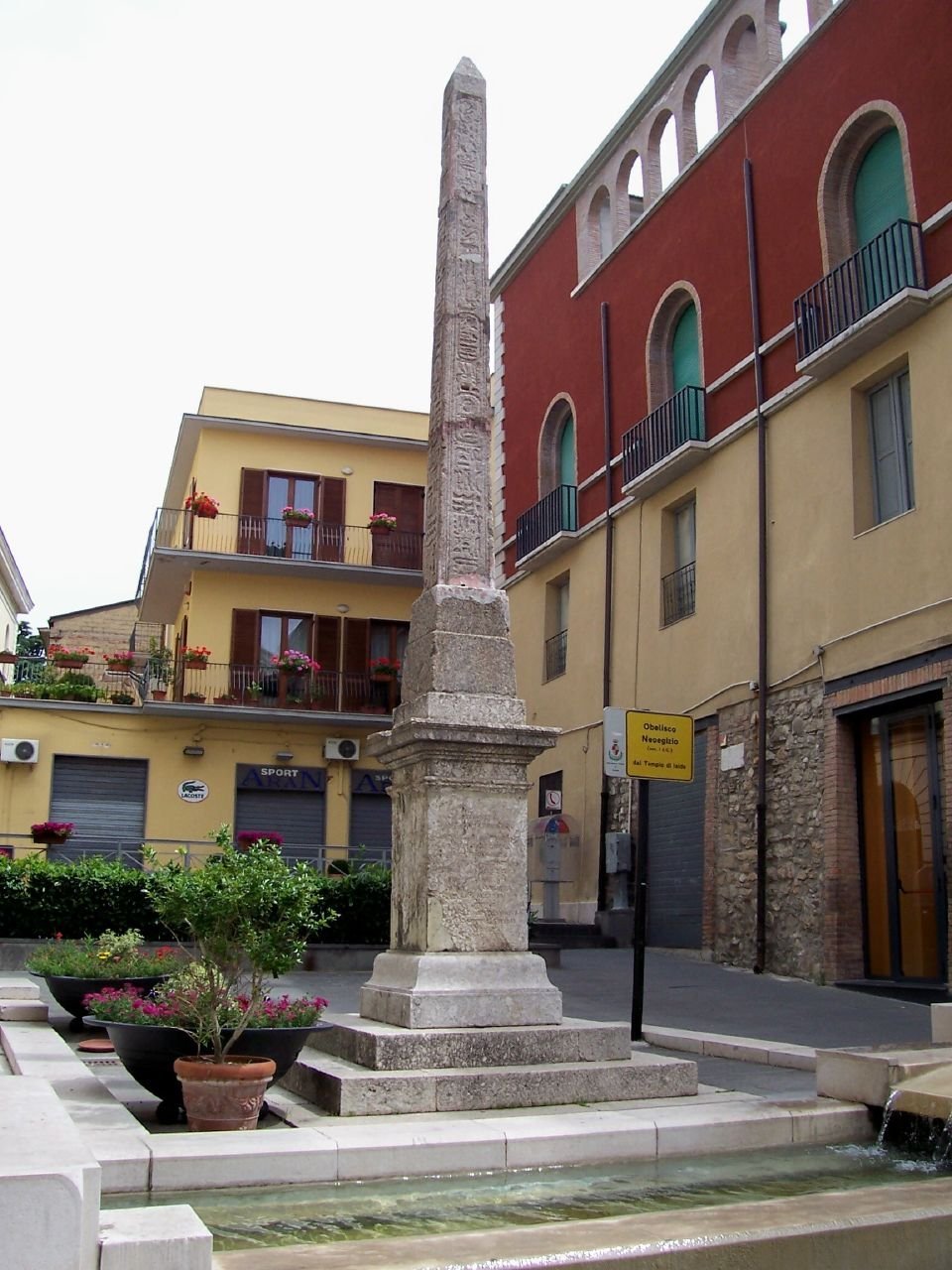 Leaving the Arch of Sacrament, you step into another era. In Piazza Papiniano stands the obelisk of the Temple of Isis, three meters tall in red granite from Aswan. Carved by order of Emperor Domitian between 88 and 89 AD, this monument tells a story of devotion to the goddess Isis and imperial power. Its four faces are covered with hieroglyphs celebrating Domitian and the dedicator Lucilius Lupus, with translations in Latin and Greek on the base. Originally flanked by a twin obelisk (now at the Museo del Sannio), it marked the entrance to the city’s Iseum. After centuries of oblivion, it was placed here in 1872; in 2018 it was restored by the Getty Museum in Los Angeles. A piece of Egypt that seems out of place, yet tells the story of cosmopolitan Benevento under the Flavians. Touching it with your eyes is striking: it’s a bridge between worlds.
- Via G. de Vita, Benevento (BN)
- Open in Google Maps
- View on Google Images
You should go if…
Stop no. 6
Janua – Museum of Witches
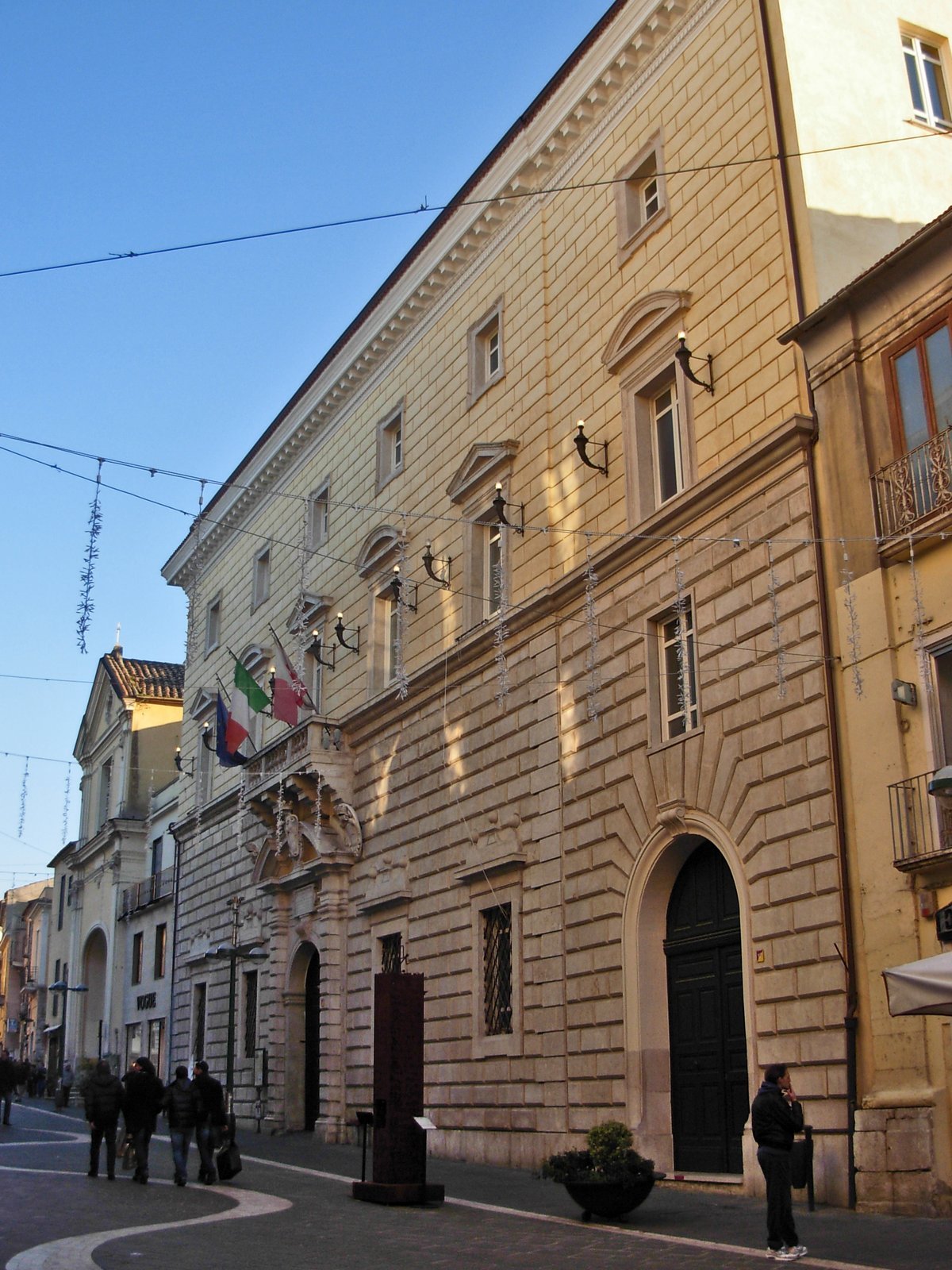 From the Egyptian obelisk we move into another world, that of popular traditions. The Janua – Museum of Witches occupies several rooms of Palazzo Paolo V, in the heart of Benevento. Inaugurated in 2017 after over twenty years of research by the I.D.E.A.S. Cooperative, it is dedicated to the janare, the local witches. The Latin name Janua means ‘door’, and here one crosses a threshold between sacred and profane. The visit begins with an immersive video under an artificial walnut tree, symbol of the tree where the janare gathered. Then you pass among amulets, ex-votos, anthropomorphic breads, medicinal herbs, and torture instruments. In the ‘Healing and warding off’ section, you discover folk medicine remedies. Each object tells a story of healing and superstition intertwined. Admission is €5 (€3 for students), and it can be visited from Tuesday to Sunday (10-13 and 16-19). A dive into a past that still lives in the beliefs of the people of Benevento.
- Corso Giuseppe Garibaldi, Benevento (BN)
- Open in Google Maps
- View on Google Images
You should go if…
Stop no. 7
Palazzo Paolo V
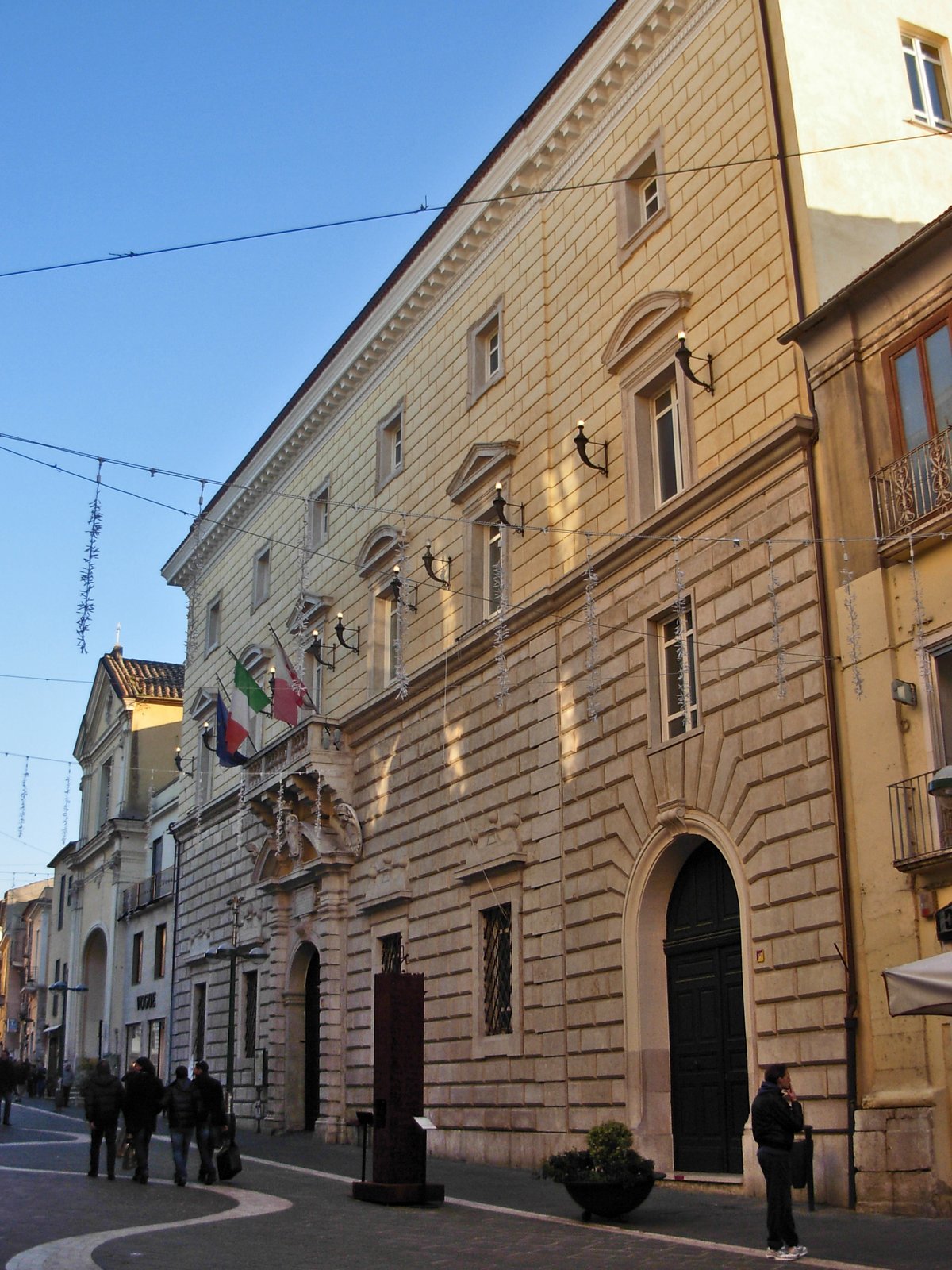 Leaving the witch museum behind, you immerse yourself in the atmosphere of Palazzo Paolo V, which occupies the same building but deserves a visit of its own. Its Mannerist facade, with severe lines, dominates Corso Garibaldi. Built from 1598 based on a design by Giovanni Fontana and completed in 1607, it took its name from Pope Paul V. It served as the town hall until the 1980 earthquake. After a restoration completed in the early 2000s, today it houses a literary café, coworking spaces, exhibition areas, and an auditorium. In the courtyard, plaques and a bas-relief of the Rape of the Sabine Women tell centuries of history. Since 2006, RGB LED lighting colors the facade for events. On the square in front stand two Egyptian obelisks from 88 AD. Entrance is free, but watch out for architectural barriers: there is an elevator, but not everything is accessible. A stop that blends past and present, ideal for a cultural break.
- Corso Giuseppe Garibaldi, Benevento (BN)
- Open in Google Maps
- View on Google Images
You should go if…
Stop no. 8
Government Palace
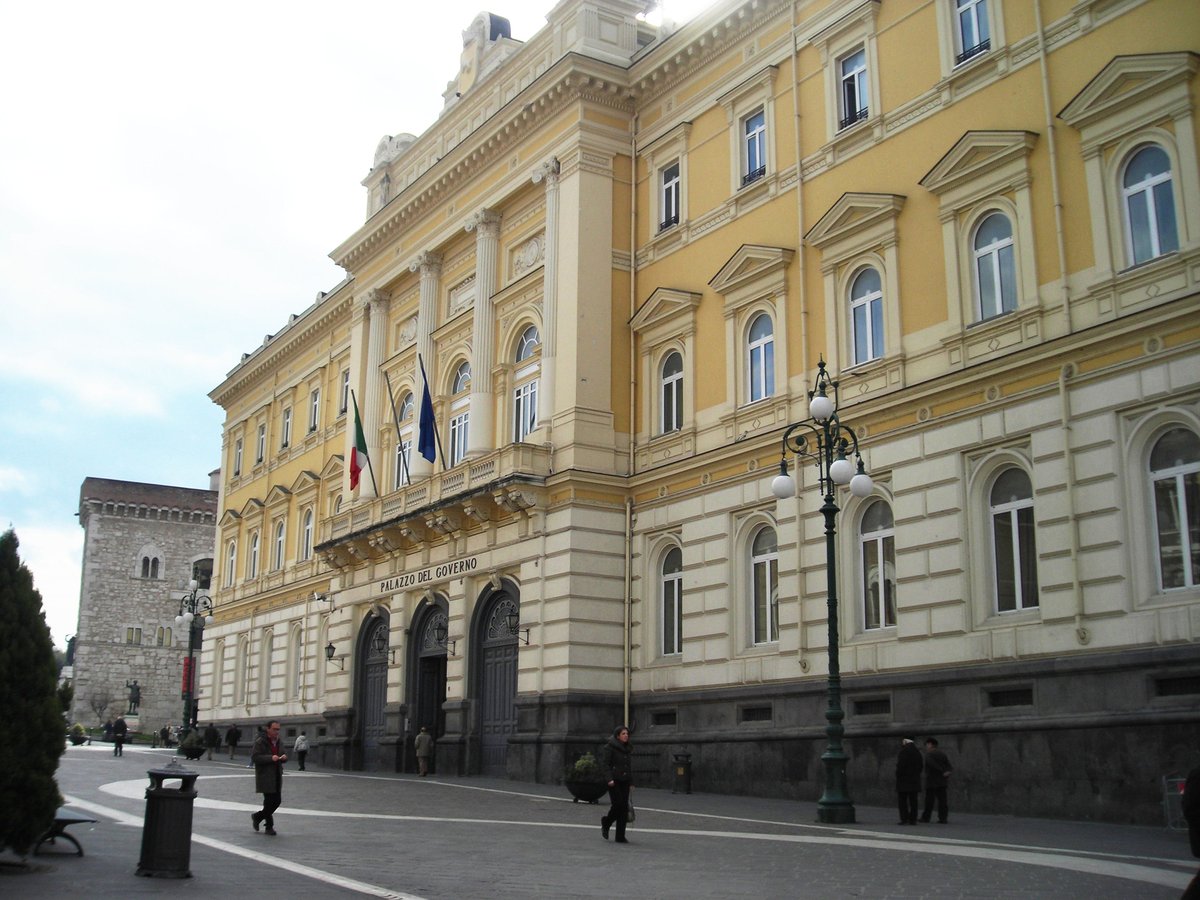 End your itinerary with a stunning sight: the Government Palace dominates the eastern end of Corso Garibaldi. Built between 1895 and 1909 to a design by Pietro Paolo Quaglia and completed by Nicola Breglia, this imposing neo-Renaissance building was inaugurated in 1910 to celebrate the 50th anniversary of Italian unification. The facade strikes you with its colonnaded avant-corps, and once inside, the double staircase leads you to the piano nobile. Today it houses the Prefecture, but in the basement – once a storeroom – lies the Museo Arcos, a contemporary art space well worth a visit. On August 31, 2017, the square in front hosted a concert, a sign that the palace lives on as a backdrop for events. Stroll around: next door stands the Rocca dei Rettori, and a little further on, the church of SS. Salvatore with its Lombard tombs. A finale that intertwines power, art, and history.
- Via Annunziata, Benevento (BN)
- Open in Google Maps
- View on Google Images
You should go if…

