
Vercelli: a one-day walking itinerary among basilicas and medieval towers. Start at the Basilica of Sant’Andrea, a 13th-century Romanesque-Gothic masterpiece, then walk towards the Torre dell’Angolo and Torre di Città, symbols of the medieval past. Don’t miss the Museo Francesco Borgogna, which houses works from the Renaissance to the 20th century. Continue through squares and churches like the Basilica of San Vittore and the Church of San Cristoforo. The route is flat and compact, perfect for a leisurely day. Each stop is just a few minutes’ walk apart, with a typical lunch near Piazza Cavour (try the panissa!). The towers offer panoramic views of the plain. Ideal for a cultural weekend, this one-day itinerary lets you savor the essence of Vercelli among basilicas and medieval towers.
🗺️ Your trip at a glance
This one-day itinerary takes you to discover the medieval and Renaissance wonders of Vercelli. Among basilicas, towers, and an art museum, you’ll experience a day full of culture and charm.
- Ideal for city breakers and history enthusiasts looking for an intense day among
architectural masterpieces and works of art.- Highlights: concentration of monuments in a pedestrian area,
Museo Borgogna with valuable artworks,
accessible medieval towers with views.- For those who love stress-free cultural walks and seek an authentic experience
away from mass tourism.
Itinerary stops
Stop no. 1
Visconti Castle
 We begin our day in Vercelli at the Visconti Castle, a building that holds centuries of history within its walls. Built around 1290 at the behest of Matteo Visconti, it features a quadrangular layout with corner towers. After housing the Visconti podestàs, it passed to the House of Savoy in 1427 and became a Savoyard residence: here, Blessed Amadeus died in 1472. The following centuries were turbulent: damaged during the Spanish siege of 1638, it became a barracks under Napoleon and a prison in the 19th century. Since 1926, it has been the seat of the Court of Vercelli. A curiosity: in the marquetry of the wooden choir of Sant’Andrea, you can see what the castle looked like in the 16th century, with a double curtain wall and three entrances with drawbridges. Today, overlooking Via Conte Rosso, the castle is only accessible during court hours, but simply observing it from the outside is enough to breathe in its history.
- Via Conte Rosso, Vercelli (VC)
- Open in Google Maps
- View on Google Images

You should go if…
Stop no. 2
Public Municipal Gardens ‘Pietro Camana’
 After the Duomo, a short walk takes you to the Public Municipal Gardens named after Pietro Camana, a figure of the Vercelli Resistance. It is the ideal place for a rejuvenating break in the shade of centuries-old trees. Here time seems to slow down: benches, tidy paths, and flowerbeds create a peaceful atmosphere. But it is not just a park: its very name evokes the partisan history of the city. Pietro Camana, who died in 1945, is remembered by his son Giovanni, who during the celebrations of April 25, 2024, recounted having seen him rarely, almost two years of hiding. A corner of peace that invites reflection, perfect for catching your breath before heading to the Torre dell’Angelo.
- Vercelli (VC)
- Open in Google Maps
- View on Google Images
You should go if…
Stop no. 3
Museo Francesco Borgogna: A Treasure Trove of Masterpieces
 Leaving the gardens behind, you’ll find the Museo Francesco Borgogna, Piedmont’s second-largest art collection after Turin’s Galleria Sabauda. You step into an elegant neoclassical building that was once the home-museum of Antonio Borgogna, a lawyer and collector who donated everything to the city. The exhibition unfolds over three floors with over 800 works: from the Piedmontese Renaissance with Gaudenzio Ferrari and Bernardino Lanino, to the Flemish masters like Jan Brueghel the Younger, and up to the famous Divisionist masterpiece by Angelo Morbelli “Per ottanta centesimi!”, depicting women working in the rice fields. I love the Arab Room, an exotic corner with inlaid furniture and ceramics from Borgogna’s travels. Admission costs €10, and hours are limited (open Thursday through Sunday). A museum that feels like genuine 19th-century collecting, perfect for an immersive art experience.
- Via Antonio Borgogna 4, Vercelli (VC)
- https://www.museoborgogna.it/
- Open in Google Maps
- View on Google Images
You should go if…
Stop no. 4
San Lorenzo Church: A Baroque Gem Between History and Faith
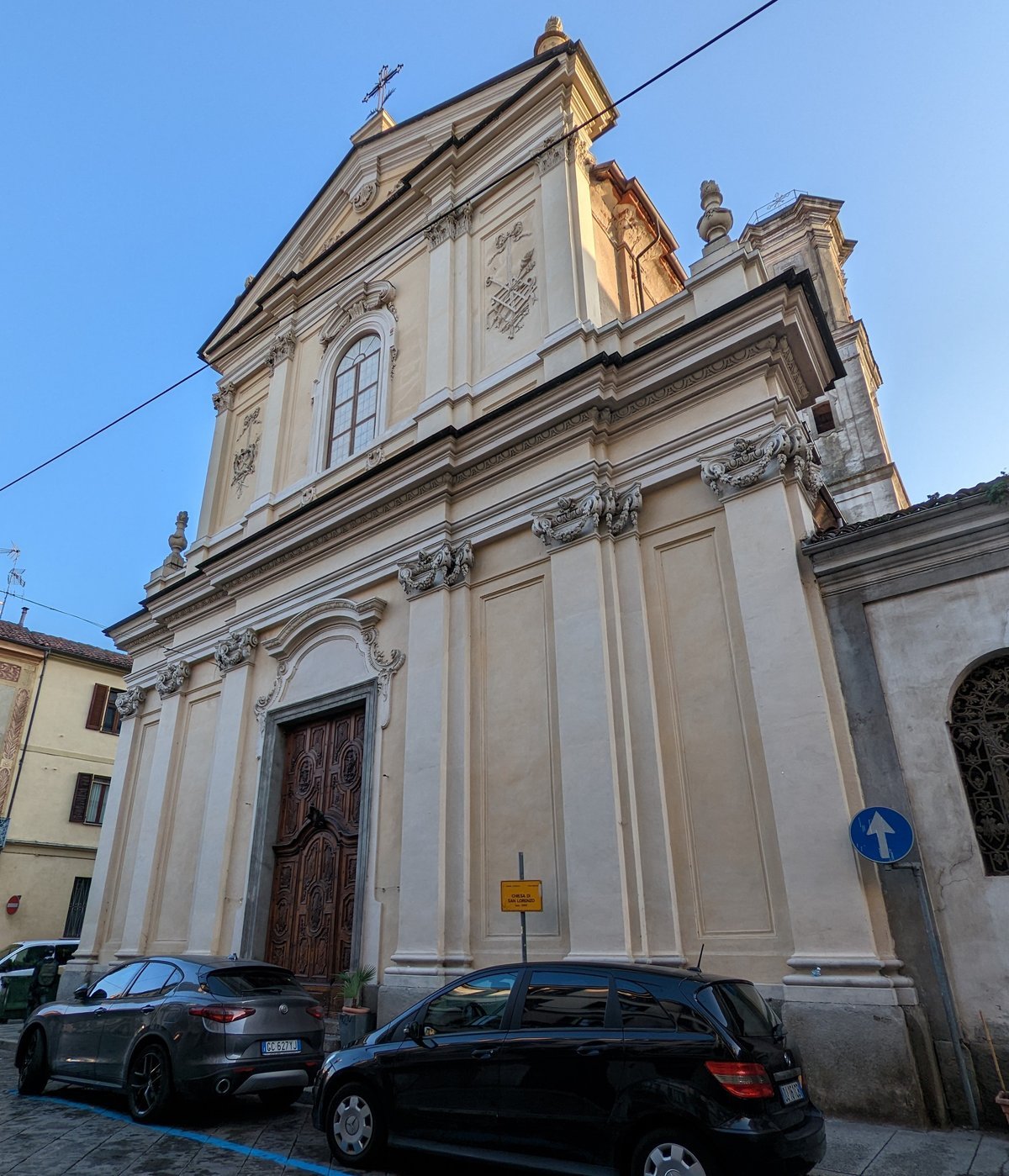 After the Museo Borgogna, you’ll find the San Lorenzo Church, a place that seems to have stepped out of time. Overlooking Via Achille Cagna, this church is one of the oldest in Vercelli: the first records date back to 999 AD, when it was a chapel outside the walls. Today the façade is an elegant neoclassical with neor renaissance touches, the result of restorations after damage suffered in 1848. Inside, you’re struck by the single nave, with a barrel vault decorated with stuccoes and a mosaic floor from 1852. The polychrome marble high altar is Baroque, and the side chapels house precious works: an altarpiece of the Visitation tied to a 1630 vow against the plague, and a painting of the Martyrdom of Saint Lawrence. If you love art, look for the wooden statues of Saint Paul and Saint Peter. The church is often closed, but if you find the door open (info at the cathedral), it’s a pause of silence and beauty.
- Via Achille Cagna, Vercelli (VC)
- Open in Google Maps
- View on Google Images
You should go if…
Stop no. 5
Vialardi Tower: A Medieval Octagon
 Continuing from San Lorenzo, you’ll find yourself on Via Vallotti, where the Vialardi Tower stands tall, one of the city’s most fascinating medieval remnants. Unlike other towers, this one has kept almost all of its original appearance: a slender octagonal shaft, slightly projecting machicolations, and higher up, eight double-lancet windows adorned with terracotta (some blind on the north side). It was built at the beginning of the 15th century by the powerful Vialardi family, who had lived here since the 13th century. Today it is owned by the municipality, but unfortunately it is in a state of decay – the roof was redone in the 19th century, but the interior is abandoned. However, looking into the courtyard on Via Cagna, you can still see the arches of a Renaissance portico and traces of 15th-century frescoes. It’s a piece of history that deserves attention: between legends and never-completed restorations, the tower tells the story of the power of one of Vercelli’s oldest families. A tip? Look up at the double-lancet windows from below; with the right light, they seem almost to dance.
- Via Francesco Antonio Vallotti, Vercelli (VC)
- Open in Google Maps
- View on Google Images
You should go if…
Stop no. 6
Piazza Solferino and Roman Secrets
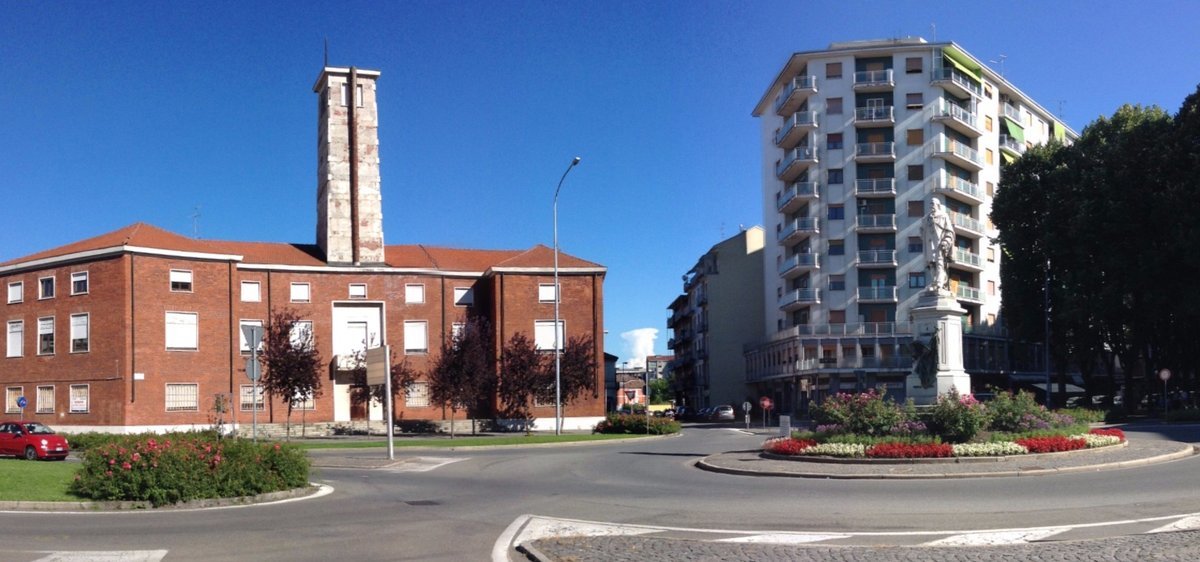 Leaving the Torre dei Vialardi, in a few minutes you reach Piazza Solferino, a roundabout that serves as a traffic divider between Viale della Rimembranza and the city center. Here, in the middle, stands the statue of Giuseppe Garibaldi in white marble, with a bronze sword and an eagle at its base, on a large octagonal pedestal. It looks like a modern square, but beneath the asphalt lies much history. During excavations for plumbing, Roman masonry from the Augustan era emerged, built in opus mixtum: pebbles and mortar interspersed with bricks. This is likely a tower and a gate of the Roman city walls, near the ancient amphitheater. Known since the 1970s and 1980s, the remains were damaged by recent work, but today the city has established a scientific committee to study them. For now, they are not visible, but knowing that right there, where cars pass, once stood the bastions of Roman Vercelli sends a shiver down your spine. If you love layers of history, this is a key spot: the past lies just two meters beneath the wheels. And a few dozen meters away, on Via Pastrengo, a miniature gladiator helmet was discovered, now housed at the MAC.
- Vercelli (VC)
- Open in Google Maps
- View on Google Images
You should go if…
Stop no. 7
Ancient Hospice for the Poor
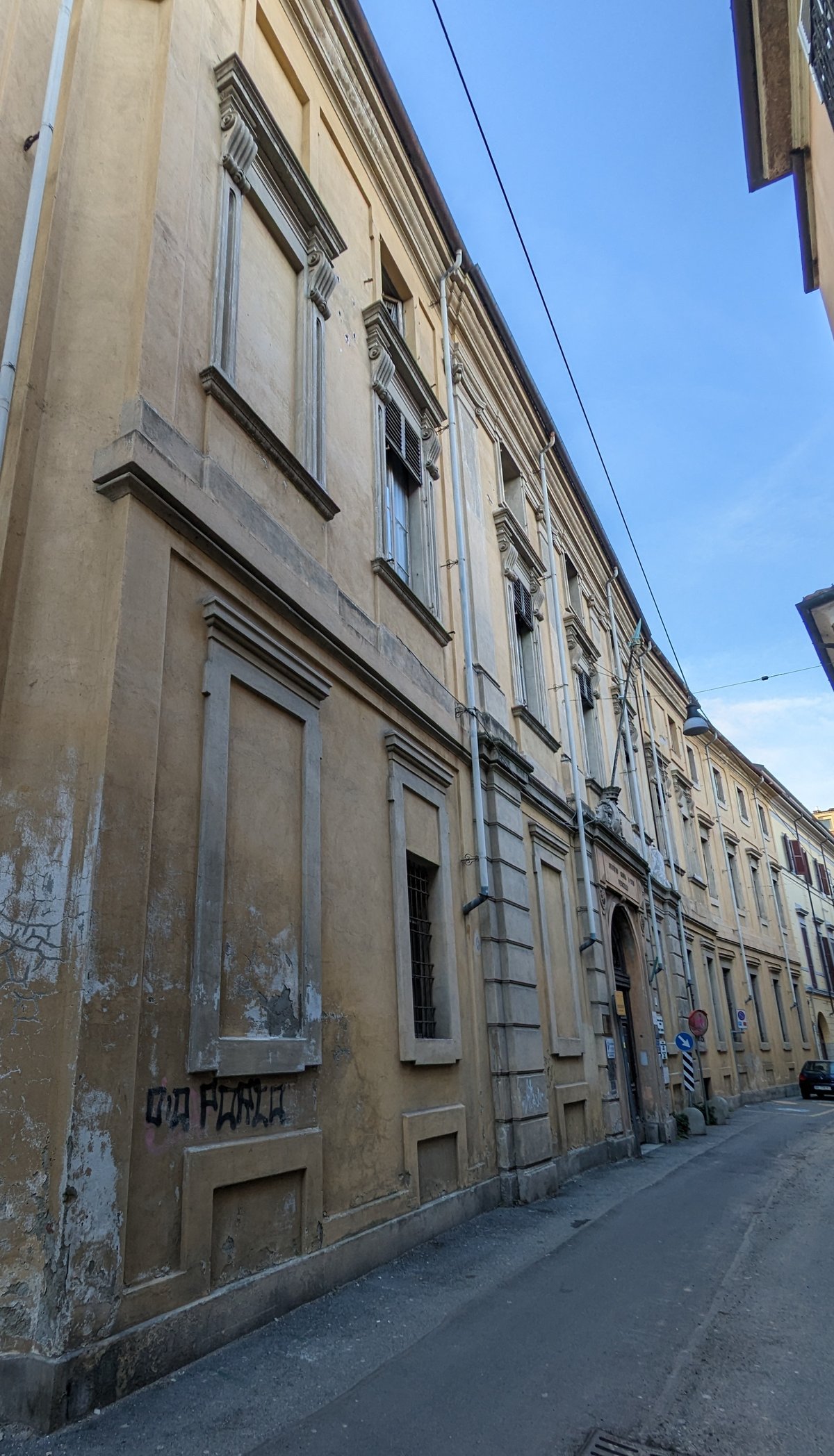 From Piazza Solferino, in a few minutes you arrive at the Antico Ospizio dei Poveri, on Via Fratelli Garrone. An eighteenth-century building born in 1717 to accommodate the needy, expanded over time by architect Luigi Barberis and with a facade renovated in 1855. Today it houses cultural associations and the library of the Vercelli Historical Society, with a precious book collection. But the real charm is in the details: in the inner courtyard, busts and a bas-relief of Bishop Solaro; nearby, the Church of the Immaculate Conception, used by the young guests. Here the boys, called ciudin for the hobnails in their heels, exchanged love notes with the girls, hidden behind a statue of Christ. An atmosphere that evokes nostalgia and living history. Note: in 2024 the Fire Department secured some dangerous windows, a sign that the building needs care.
- Via Fratelli Garrone, Vercelli (VC)
- Open in Google Maps
- View on Google Images
You should go if…
Stop no. 8
Town Hall Tower
 Continuing towards Via Gioberti, you’ll find the Town Hall Tower, the tallest of Vercelli’s noble towers at 38 meters. Square and austere in shape, it dates back to the 12th century and was purchased by the municipality in the 13th century, becoming the City Tower. In 1377, one of Piedmont’s first public clocks was installed here, along with three bells that called the people to assembly. Unfortunately, the clock was removed in 1931 and the bells have disappeared. Originally, the tower was topped by a spire over 20 meters high, struck by lightning in 1821 and never rebuilt. Today its bare appearance, with beige plaster and exposed brick, evokes the medieval past. At its base, patriotic plaques commemorate the Gold Medals of the Province. The tower is part of the ancient Broletto, overlooking Piazza dei Pesci, once the political heart of the city. A place that speaks of freedom and municipal autonomy.
- Via Vincenzo Gioberti, Vercelli (VC)
- Open in Google Maps
- View on Google Images
You should go if…


