Welcome to the basilica that leaves you speechless
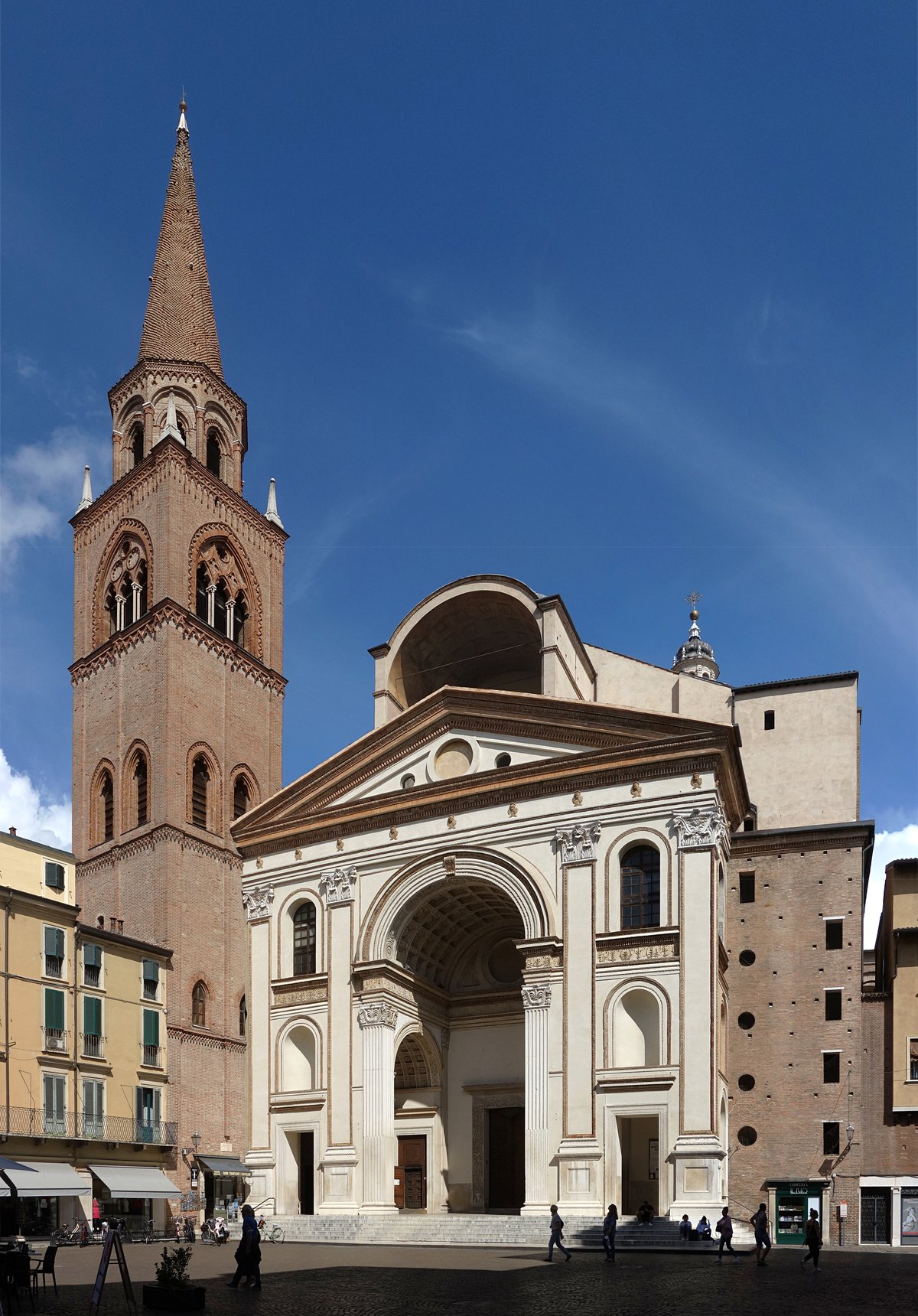
Entering the Basilica of Sant’Andrea is like crossing the threshold of an art history book. Designed by Leon Battista Alberti, it is the largest church in Mantua and an absolute Renaissance masterpiece. The triumphal arch facade strikes you immediately, but inside the spectacle continues: an immense single nave, a dome by Juvarra that seems suspended, and an atmosphere of sacredness that you breathe in every corner. Here is preserved one of the most mysterious relics of Christianity: the Blood of Christ. And then there is the tomb of Andrea Mantegna, the great painter, as if to seal the union between art and faith. It is not just a church: it is a journey through time, between genius and devotion. Get ready to be left speechless.
Welcome to the basilica that leaves you speechless
Entering the Basilica of Sant’Andrea is like crossing the threshold of an art history book. Designed by Leon Battista Alberti, it is the largest church in Mantua and an absolute Renaissance masterpiece. The triumphal arch facade strikes you immediately, but inside the spectacle continues: an immense single nave, a dome by Juvarra that seems suspended, and an atmosphere of sacredness that you breathe in every corner. Here is preserved one of the most mysterious relics of Christianity: the Blood of Christ. And then there is the tomb of Andrea Mantegna, the great painter, as if to seal the union between art and faith. It is not just a church: it is a journey through time, between genius and devotion. Get ready to be left speechless.
A Thousand-Year Story
The basilica’s roots stretch back to 804, when according to tradition the relic of the Blood of Christ was discovered. The first church rose in 1046 at the behest of Beatrice of Lorraine. In 1472, Marquis Ludovico II Gonzaga commissioned Leon Battista Alberti to rebuild it, a process that continued on and off for centuries. The façade was completed in 1488, while the dome came only in 1732 with Filippo Juvarra. Since 1938 it has been a co-cathedral, and from 2024 it will become a Sanctuary of the Most Precious Blood. Here are the key moments:
- 804: first discovery of the relic
- 1046: construction of the pre-Romanesque church
- 1472: start of Alberti’s reconstruction
- 1488: completion of the façade
- 1732: Juvarra’s dome
- 1938: elevation to co-cathedral
- 2024: becomes diocesan sanctuary
A Thousand-Year Story
The basilica’s roots stretch back to 804, when according to tradition the relic of the Blood of Christ was discovered. The first church rose in 1046 at the behest of Beatrice of Lorraine. In 1472, Marquis Ludovico II Gonzaga commissioned Leon Battista Alberti to rebuild it, a process that continued on and off for centuries. The façade was completed in 1488, while the dome came only in 1732 with Filippo Juvarra. Since 1938 it has been a co-cathedral, and from 2024 it will become a Sanctuary of the Most Precious Blood. Here are the key moments:
- 804: first discovery of the relic
- 1046: construction of the pre-Romanesque church
- 1472: start of Alberti’s reconstruction
- 1488: completion of the façade
- 1732: Juvarra’s dome
- 1938: elevation to co-cathedral
- 2024: becomes diocesan sanctuary
Facade and Dome: A Masterpiece in Two Voices
The facade is a true triumphal arch: Alberti was inspired by the Arch of Trajan in Ancona to create a monument that is both classical and Christian. The giant order of Corinthian pilasters extends the full height, and the central arch is framed by a second upper arch, the ‘umbrella,’ which floods the nave with light. The dome, added by Juvarra in the 18th century, is 80 meters high and 25 meters wide: an engineering feat. If you have a bit of courage, climb to the drum balcony: from there you will have a spectacular view of the interior and, through the windows, of the city.
Facade and Dome: A Masterpiece in Two Voices
The facade is a true triumphal arch: Alberti was inspired by the Arch of Trajan in Ancona to create a monument that is both classical and Christian. The giant order of Corinthian pilasters extends the full height, and the central arch is framed by a second upper arch, the ‘umbrella,’ which floods the nave with light. The dome, added by Juvarra in the 18th century, is 80 meters high and 25 meters wide: an engineering feat. If you have a bit of courage, climb to the drum balcony: from there you will have a spectacular view of the interior and, through the windows, of the city.
Art Treasures and the Relic of the Blood
In the first chapel on the left rests Andrea Mantegna, the genius of perspective. His tomb is decorated with frescoes by Correggio, including the Baptism of Christ. But the true heart of the basilica is the crypt, where the Sacred Vessels are kept: two vials that according to tradition contain the blood of Jesus, brought to Mantua by the centurion Longinus. The relic is only exposed on Good Friday, in a procession that crosses the city. Among the other chapels, that of Saint Longinus stands out, with a fresco by Rinaldo Mantovano showing Longinus kneeling while collecting the blood. Every corner tells a story of faith and art.
Art Treasures and the Relic of the Blood
In the first chapel on the left rests Andrea Mantegna, the genius of perspective. His tomb is decorated with frescoes by Correggio, including the Baptism of Christ. But the true heart of the basilica is the crypt, where the Sacred Vessels are kept: two vials that according to tradition contain the blood of Jesus, brought to Mantua by the centurion Longinus. The relic is only exposed on Good Friday, in a procession that crosses the city. Among the other chapels, that of Saint Longinus stands out, with a fresco by Rinaldo Mantovano showing Longinus kneeling while collecting the blood. Every corner tells a story of faith and art.
Three good reasons to enter
First: admire a Renaissance masterpiece by Alberti, with a facade that is a hymn to classicism. Second: have a unique spiritual experience in front of the relic of the Blood of Christ, which attracts pilgrims from all over the world. Third: climb the dome to enjoy a breathtaking panoramic view of Mantua, with its squares and roofs fading into the horizon. And then, there is Mantegna’s tomb, an essential piece for art lovers. In short, you have no excuse: the basilica awaits you.
Three good reasons to enter
First: admire a Renaissance masterpiece by Alberti, with a facade that is a hymn to classicism. Second: have a unique spiritual experience in front of the relic of the Blood of Christ, which attracts pilgrims from all over the world. Third: climb the dome to enjoy a breathtaking panoramic view of Mantua, with its squares and roofs fading into the horizon. And then, there is Mantegna’s tomb, an essential piece for art lovers. In short, you have no excuse: the basilica awaits you.
The Best Time to Visit
If you want to avoid the crowds, come early in the morning, right when it opens. The light filtering from above creates an almost mystical atmosphere, with plays of shadow on the vaults. If you are passionate about traditions, plan your visit for Good Friday: the procession of the relic is an unforgettable emotion. For the climb to the dome, choose a clear afternoon: the view of Mantua lit by the setting sun is spectacular. In any case, check the hours on the official website to avoid surprises.
The Best Time to Visit
If you want to avoid the crowds, come early in the morning, right when it opens. The light filtering from above creates an almost mystical atmosphere, with plays of shadow on the vaults. If you are passionate about traditions, plan your visit for Good Friday: the procession of the relic is an unforgettable emotion. For the climb to the dome, choose a clear afternoon: the view of Mantua lit by the setting sun is spectacular. In any case, check the hours on the official website to avoid surprises.
After the Basilica: What to See
Just a few steps away, in Piazza Sordello, you’ll find the Ducal Palace, residence of the Gonzaga family: don’t miss Mantegna’s Camera degli Sposi (Bridal Chamber). Nearby, in Piazza delle Erbe, there’s the Rotonda di San Lorenzo, an 11th-century Romanesque church, and the Palazzo della Ragione. If you have time, take a walk along the lakes of Mantua, just a two-minute walk away: the atmosphere is relaxing and the scenery is charming. Another gem: the Church of San Sebastiano, also by Alberti, just a few blocks away.
After the Basilica: What to See
Just a few steps away, in Piazza Sordello, you’ll find the Ducal Palace, residence of the Gonzaga family: don’t miss Mantegna’s Camera degli Sposi (Bridal Chamber). Nearby, in Piazza delle Erbe, there’s the Rotonda di San Lorenzo, an 11th-century Romanesque church, and the Palazzo della Ragione. If you have time, take a walk along the lakes of Mantua, just a two-minute walk away: the atmosphere is relaxing and the scenery is charming. Another gem: the Church of San Sebastiano, also by Alberti, just a few blocks away.