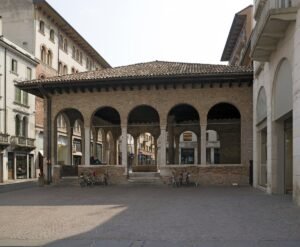
If you love medieval history, this one-day walking itinerary will take you to discover medieval Padua, among towers, walls, and ancient castles. In just 8 stops, you will visit the Cathedral, the city towers, and the ancient walls, immersing yourself in the atmosphere of a city that was among the most important in the Middle Ages. Perfect for a weekend or a day trip, this route will let you experience the city authentically, away from the usual tourist circuits. Get ready to walk through history and legend, discovering hidden corners and iconic monuments such as the Basilica of Saint Anthony and the Palazzo della Ragione. An experience that combines culture and a stroll, ideal for those who want to deeply know the medieval heart of Padua.
🗺️ Your trip at a glance
In just one day, this itinerary gives you a dive into Paduan medieval times, with guided tours and suggestive views. Ideal for those seeking a cultural excursion rich in history and charm.
- Ideal for: enthusiasts of medieval history and curious travelers.
- Highlights: 8 well-planned stops, included admissions to landmark monuments, and a walking route through the historic center.
- For whom: for those who want to discover authentic Padua in a few hours, with stops for photos and insights.
Itinerary stops
Stop no. 1
Castello Carrarese: The Ancient Fortress of Padua’s Lords
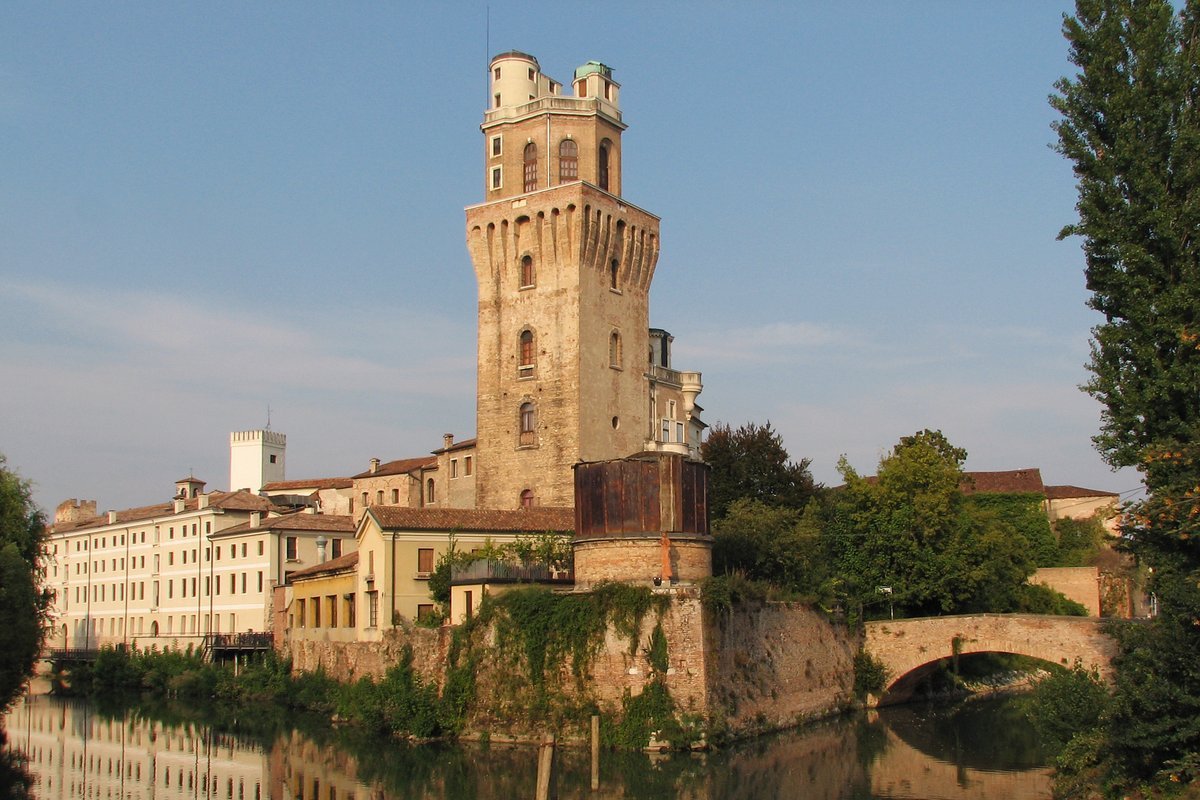 Our day exploring medieval Padua had to start at the Castello Carrarese, the ancient stronghold of the city’s lords. Built from 1374 at the behest of Francesco il Vecchio da Carrara, this imposing complex rises on pre-existing fortifications of Ezzelino III da Romano. Of its two towers, the oldest is the Torlonga, later transformed into an astronomical observatory (the Specola). Walking through the large courtyard, you notice the quadrangular layout, once surrounded by a moat and drawbridges. Recent restorations have brought to light 14th-century frescoes and the white-and-red checkered decorations that once colored the towers, a symbol of Carrarese power. From here, an elevated passage called the “traghetto” connected the castle to the Reggia. After the fall of the Carraresi, the fortress lost its military value and became a prison until the 1990s. Today, though partially closed for restorations, Castello Carrarese is the perfect starting point to understand how power, defense, and noble life intertwined in 14th-century Padua.
- Riviera Tiso da Camposampiero, Padova (PD)
- Open in Google Maps
- View on Google Images

You should go if…
Stop no. 2
Ponte Molino Gate
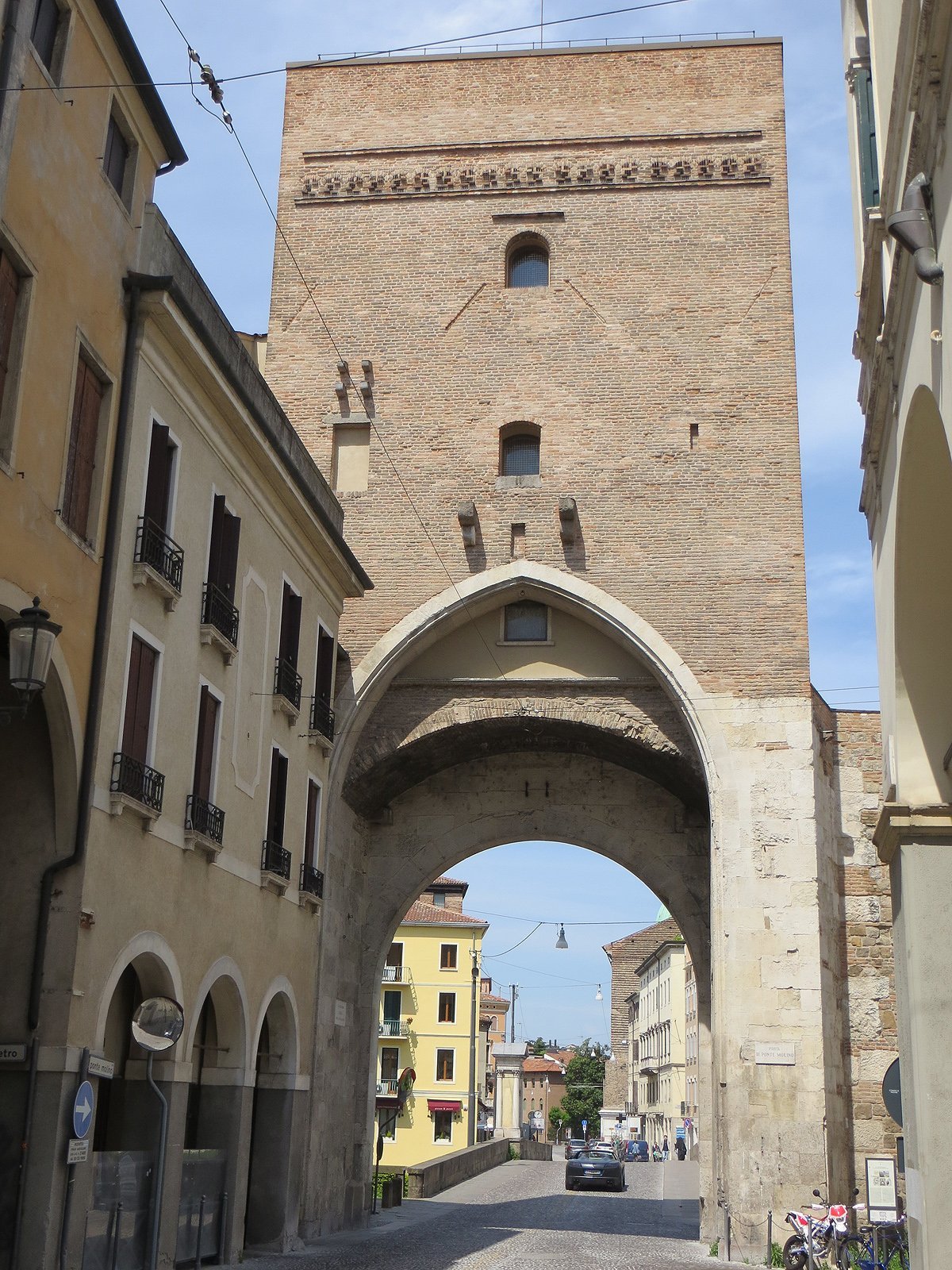 It’s essential to continue the tour after the Duomo: just cross Ponte Molino, a Roman five-arched bridge (40-30 BC) – yes, still in use – and you’ll find yourself in front of Porta Molino. Almost 26 meters high, it’s the only gate of the communal walls (1195-1210) preserved to its full height. The north façade is a Romanesque triumphal arch with two stone lion cubs; the south side instead has two arches, the larger one with an ogival shape. Pay attention to details: the hinges for the doors are still visible! The name? From the 33 floating mills on the Bacchiglione River, dismantled in 1884. Curiosity: in the 19th century, the upper part became a reservoir for the city’s aqueduct. And the legend of Galileo? A plaque commemorates it as an astronomical observatory, but experts say it’s invented. Too bad it’s closed to the public, but from outside you can feel all the medieval power of Padua.
- Via Dante, Padova (PD)
- Open in Google Maps
- View on Google Images
You should go if…
Stop no. 3
Anziani Tower
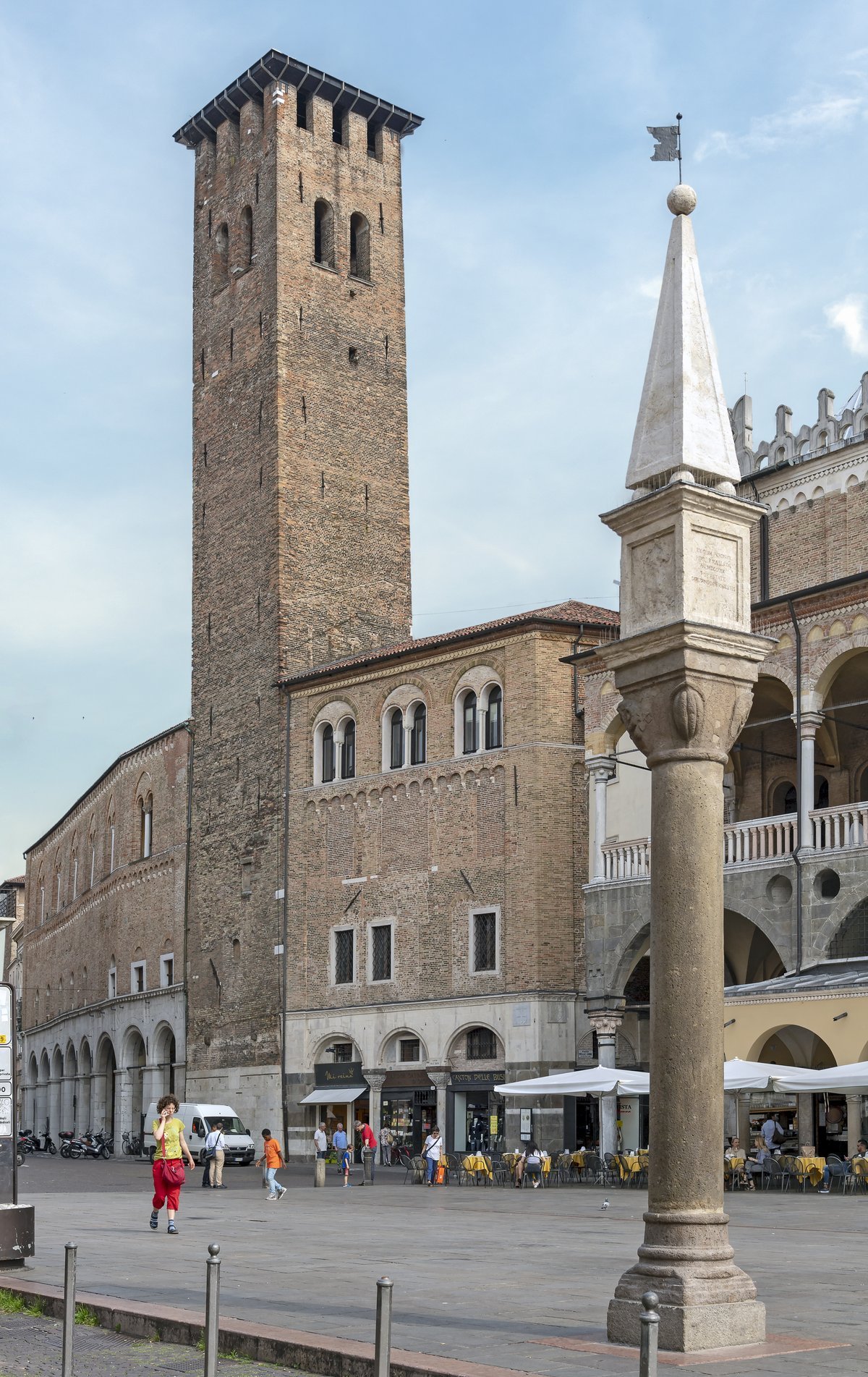 From Porta di Ponte Molino, in just a few minutes you find yourself in front of the Anziani Tower, the oldest civic tower in Padua. Closed for over 75 years, after a restoration lasting more than a year it reopened in December 2025. At 47 meters tall, with 190 steps (non-slip steel, replacing the old wooden staircase), it offers a 360° view stretching to the Prealps and the Euganean Hills. Note: booking is mandatory and spaces are limited (20 every half hour). The visit begins with an introductory video in the multimedia room; then you climb up – not recommended for those who suffer from vertigo or claustrophobia. At the top, besides the panorama, you can admire the great bell from 1895, one of the largest in the Triveneto region. If you can’t climb up, no problem: live cameras stream the view into the room. Historical curiosity: the tower was also called the White Tower for its ancient lime plaster, and since 1295 it housed the large bell brought as spoils from Este.
- Via Guglielmo Oberdan, Padova (PD)
- Open in Google Maps
- View on Google Images
You should go if…
Stop no. 4
Eremitani Church: A Treasure of Frescoes and History
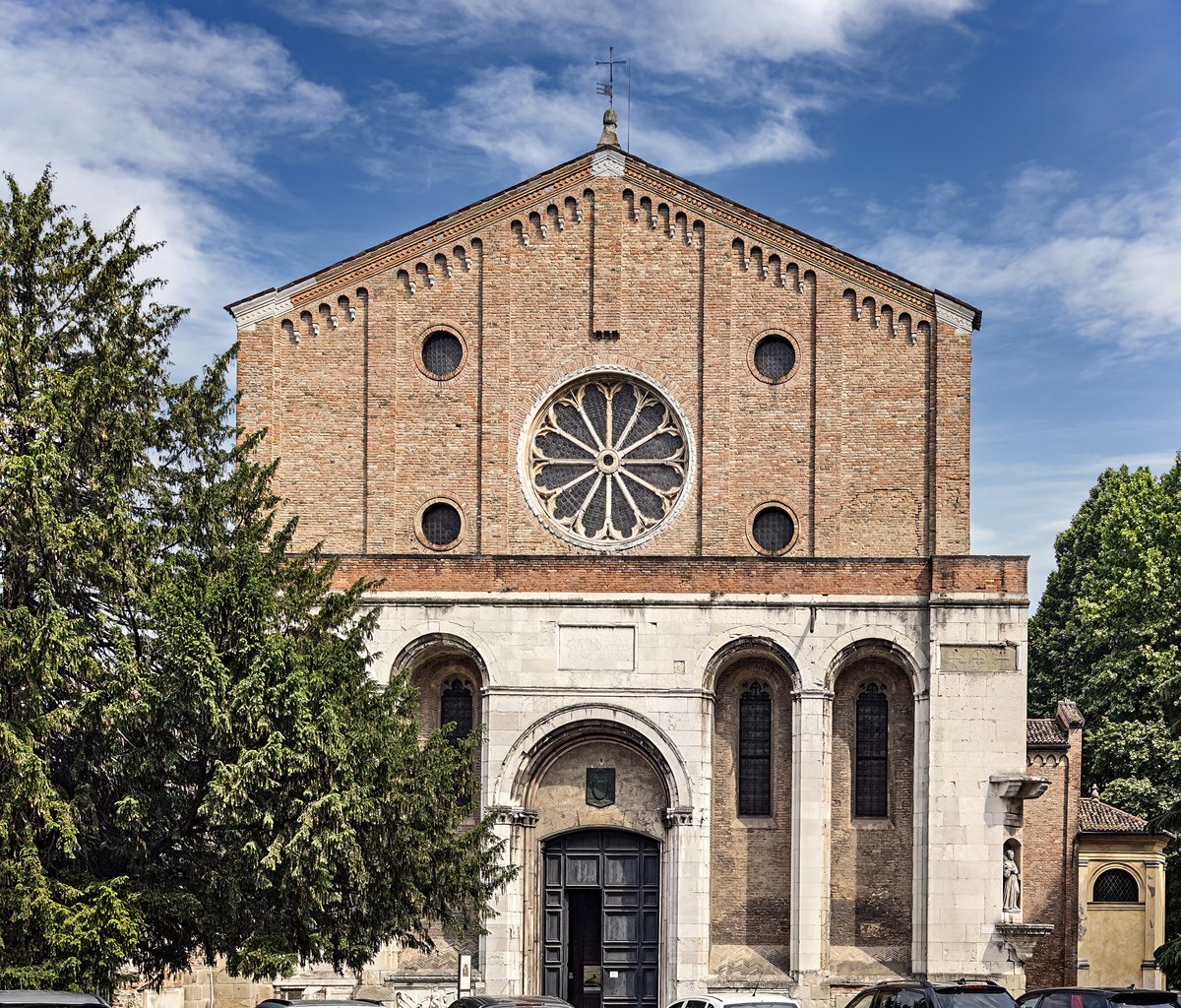 Continuing from the Tower of the Anziani, in a few minutes you’ll reach Piazza Eremitani, where a church awaits that holds centuries of art and tragedy. The Church of the Eremitani, built between 1276 and 1306 for the Augustinian friars, is a masterpiece of medieval architecture. Its brick and stone façade is simple yet imposing, with a central rose window. Inside, the large single nave is topped by a wooden ship’s keel ceiling, reconstructed after the bombings of March 11, 1944, which destroyed most of the frescoes. The greatest loss was the Ovetari Chapel with Andrea Mantegna’s masterpieces: today you can admire the surviving fragments, relocated in 2006. Equally precious are the works by Guariento in the Major Chapel and the funerary monuments of the da Carrara family. Since 2021, the church has been part of the UNESCO site ’14th-century Fresco Cycles of Padua’. Admission is free. A stop that will make you reflect on the fragility of art and the strength of reconstruction.
- Piazza Eremitani, Padova (PD)
- Open in Google Maps
- View on Google Images
You should go if…
Stop no. 5
Porta Savonarola: Renaissance Triumph Within the Walls
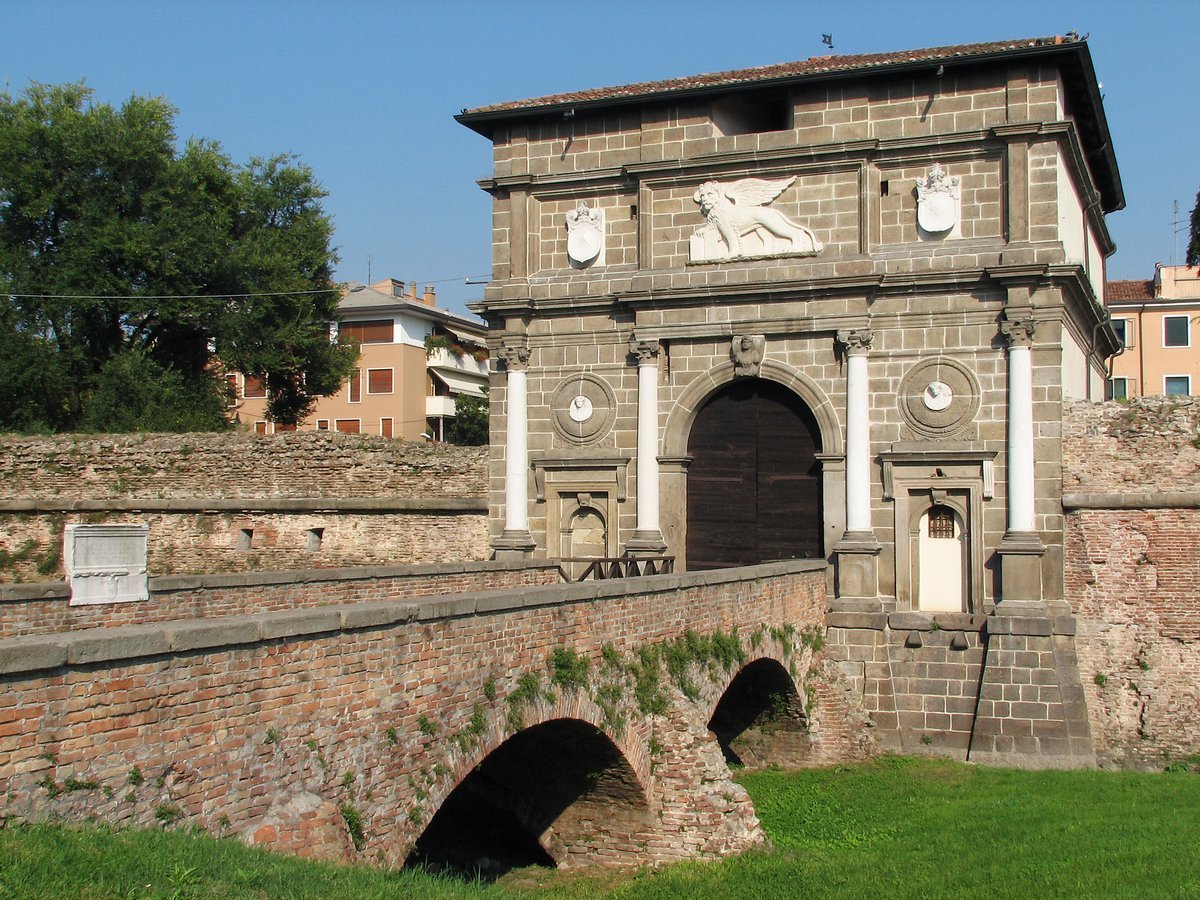 After leaving the Church of the Eremitani, in a few minutes you reach Porta Savonarola, the last of the eight sixteenth-century gates of Padua’s walls, completed in 1530. Designed by Giovanni Maria Falconetto, it is a miniature triumphal arch: Istrian stone columns on a dark trachyte base, with clipei depicting Bacchus, Pomona, Minerva, and Medoacus. The interior, octagonal in plan with niches and a ribbed vault, is surprisingly elegant for a defensive structure. Here time seems suspended: the drawbridge has been replaced by a wooden walkway, and the Lion of Saint Mark at the top is a 1930s copy, after the French destroyed the original in 1797. Today the gate houses the ‘Mura Vive’ station, with an audiovisual installation recounting the history of the fortifications. Enter and let yourself be surprised by the contrast between the massive external facade and the refined interior architecture, almost a Renaissance study.
- Piazzale di Porta Savonarola, Padova (PD)
- Open in Google Maps
- View on Google Images
You should go if…
Stop no. 6
Carmine Basilica: A Dive into Medieval Devotion
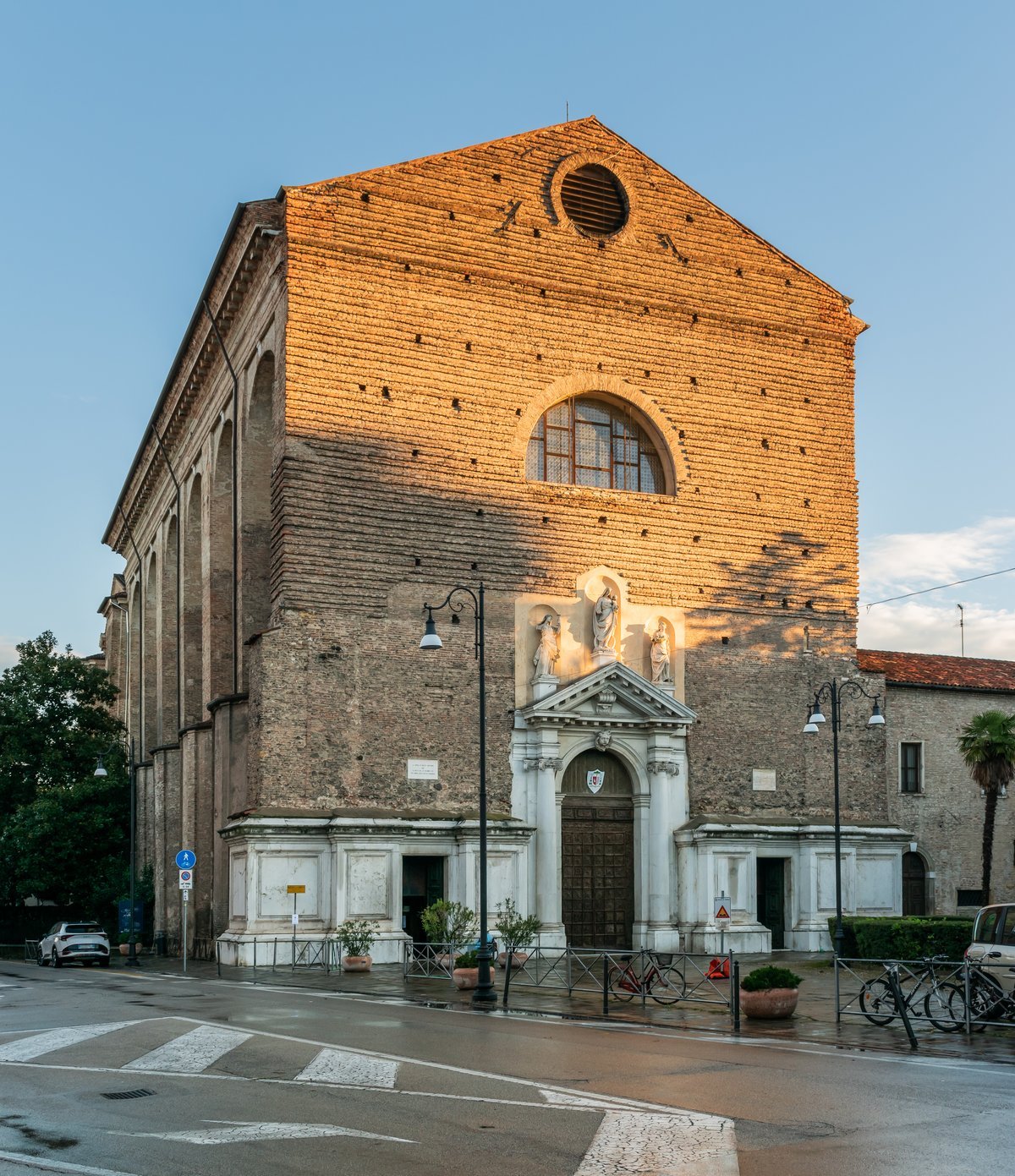 Continuing along the medieval route, you come across the imposing bulk of the Basilica del Carmine, popularly called ‘i Carmini’. Founded in 1212, it was entrusted to the Carmelites in 1300 and rebuilt after the roof collapsed in 1491. The 18th-century façade should not deceive: here the Middle Ages is still in the air. On the main door, dated 1412, the wooden panels carved with acanthus leaves are the oldest in Padua. Inside, with a single nave, attention immediately goes to the high altar, where the Madonna dei Lumini dominates, a fresco by Stefano dall’Arzere transported here in 1576 as a vow for the end of the plague. Tradition holds that the Virgin appeared in a dream to the friars promising salvation. Every year on July 16, the statue of Our Lady of Mount Carmel parades in procession. Not to be missed is the altar frontal of the Molinari, which depicts the old three-arched Ponte Molino: a unique testimony of Padua in the past. Next to it, the Scoletta del Carmine preserves Renaissance frescoes by Campagnola and Tessari. Entrance is free, and the peace you breathe is an excellent antidote to the city chaos.
- Piazza Francesco Petrarca, Padova (PD)
- Open in Google Maps
- View on Google Images
You should go if…
Stop no. 7
Piazza dei Frutti: The Heart of the Medieval Market
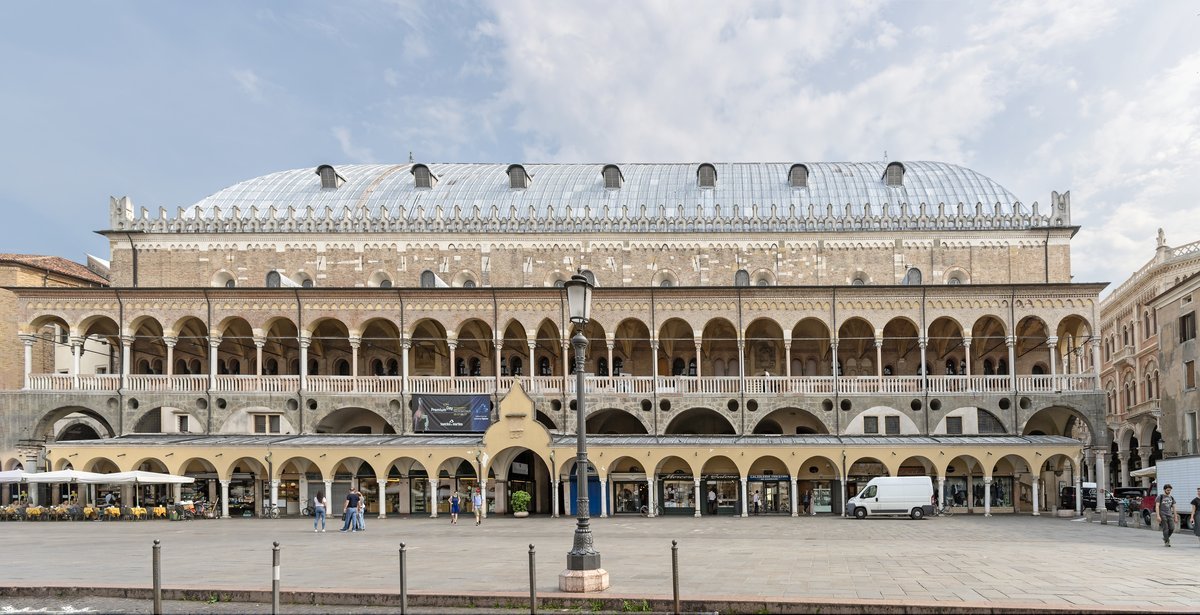 Leaving the peaceful Basilica del Carmine behind, our itinerary takes us to the beating heart of medieval Padua: Piazza dei Frutti. Here, since the 12th century, a fruit and vegetable market has been held, with wooden wheeled stalls that still animate it from morning until late afternoon. At the center stands the Colonna del Peronio, a Romanesque column topped by a capital bearing a pumpkin, palm, quince, and pears—a tribute to the square’s commercial vocation. The name ‘Peronio’ comes from the Latin ‘perones’, the boots once sold here. Worth a stop is the ancient spice shop Ai due catini d’oro, in the loggia of the Palazzo del Consiglio, where Paduan measures are still engraved to prevent fraud. Don’t miss the Volto della Corda, a 14th-century suspended passage linking the power palaces: here, swindlers were publicly flogged. A marble bag on Via Marsilio da Padova recalls the ancient ‘Festa della Borsa’ on the first Thursday of May. With its bars, bakeries, and historic pastry shops, Piazza dei Frutti is an experience that engages all the senses.
- Piazza dei Frutti, Padova (PD)
- Open in Google Maps
- View on Google Images
You should go if…
Stop no. 8
Loggia of the Carraresi Palace
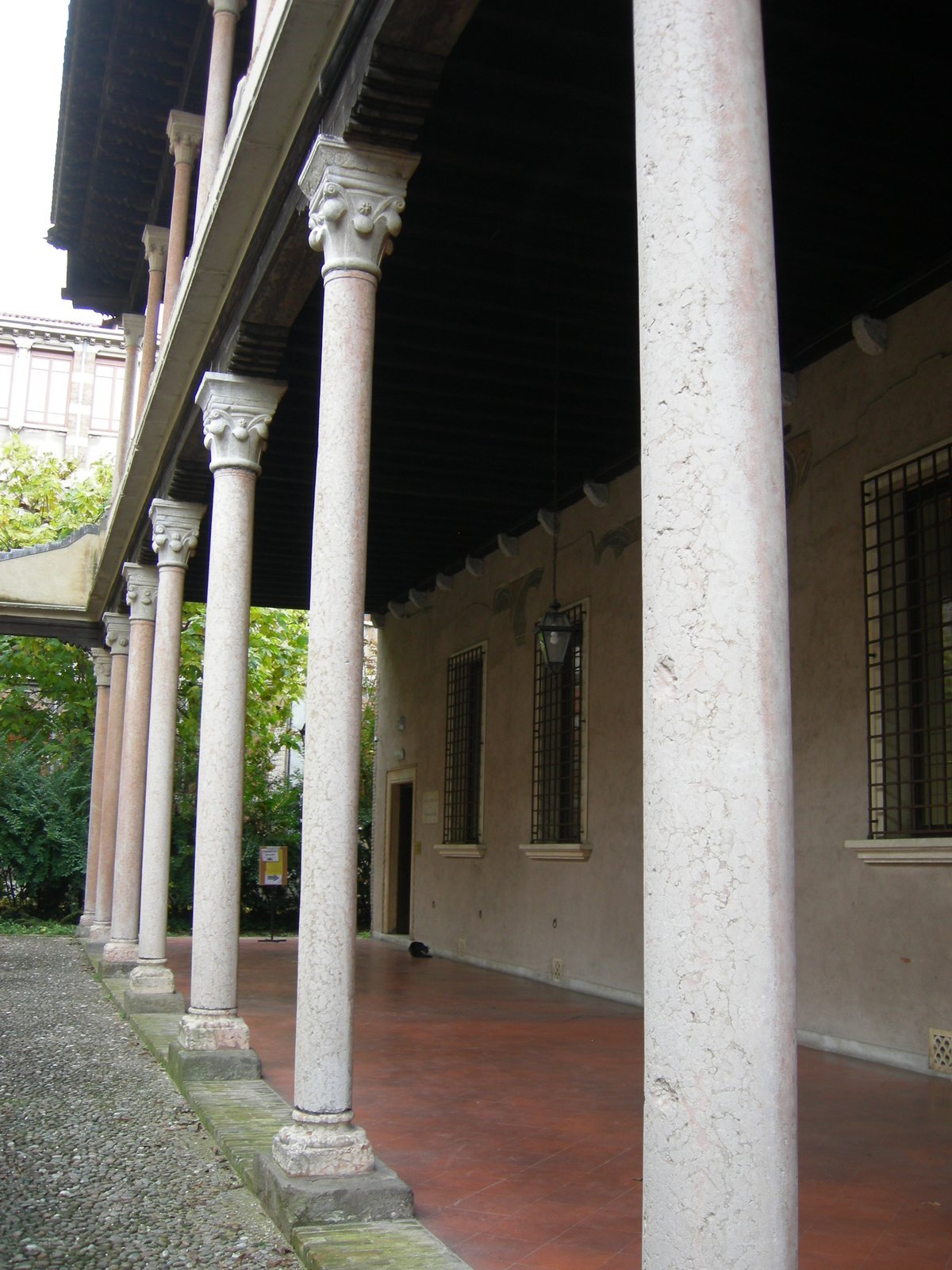 From lively Piazza dei Frutti, just a few steps lead to a more intimate corner: the Loggia of the Carraresi Palace. It is the last surviving part of the lavish residence of the Da Carrara lords, who ruled Padua in the 14th century. Built from 1338 at the behest of Ubertino da Carrara, it impresses with its slender columns of pink Verona marble, arranged on two levels to create an elegant and soaring portico. Behind the loggia opens the Sala delle Adunanze, once a private chapel, where painter Guariento frescoed episodes from the Old Testament between 1349 and 1354. The cycle, now part of the UNESCO site ‘Urbs Picta’, is one of the masterpieces of 14th-century Padua. Don’t miss the map by Giovanni Valle from 1784, the first plan of Padua created using trigonometric calculations. Today home to the Accademia Galileiana, the loggia can be visited free of charge from Tuesday to Sunday, 10 a.m. to 12:30 p.m. An unmissable stop for those wishing to soak up the atmosphere of medieval Padua.
- Via Arco Valaresso, Padova (PD)
- Open in Google Maps
- View on Google Images
You should go if…