
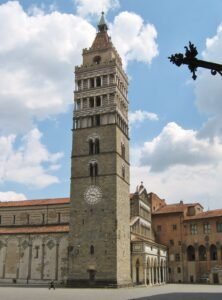
The Pieve di Sant’Andrea is one of the oldest churches in Pistoia, second only to the Cathedral. Inside, it houses the renowned pulpit by Giovanni Pisano, a masterpiece of Gothic sculpture signed and dated 1301. The church stands along the Via Francigena, and its facade of white and green marble tells centuries of history.
– Pulpit by Giovanni Pisano: hexagonal structure with high reliefs narrating the life of Christ, a unique work for its intensity and movement.
– Architrave of the Magi: carved in 1166 by Gruamonte and Adeodato, depicts the journey of the Magi, a rare iconography linked to pilgrimage.
– Romanesque facade: two-tone white and green marbles, typical of the Pistoiese Romanesque style with Pisan influences.
– Via Francigena: the pieve was a stop for pilgrims heading to Santiago, and today it is part of the Cammino di San Jacopo.
Open to the public with an entrance fee of €2.50 (reduced €2).
Events nearby
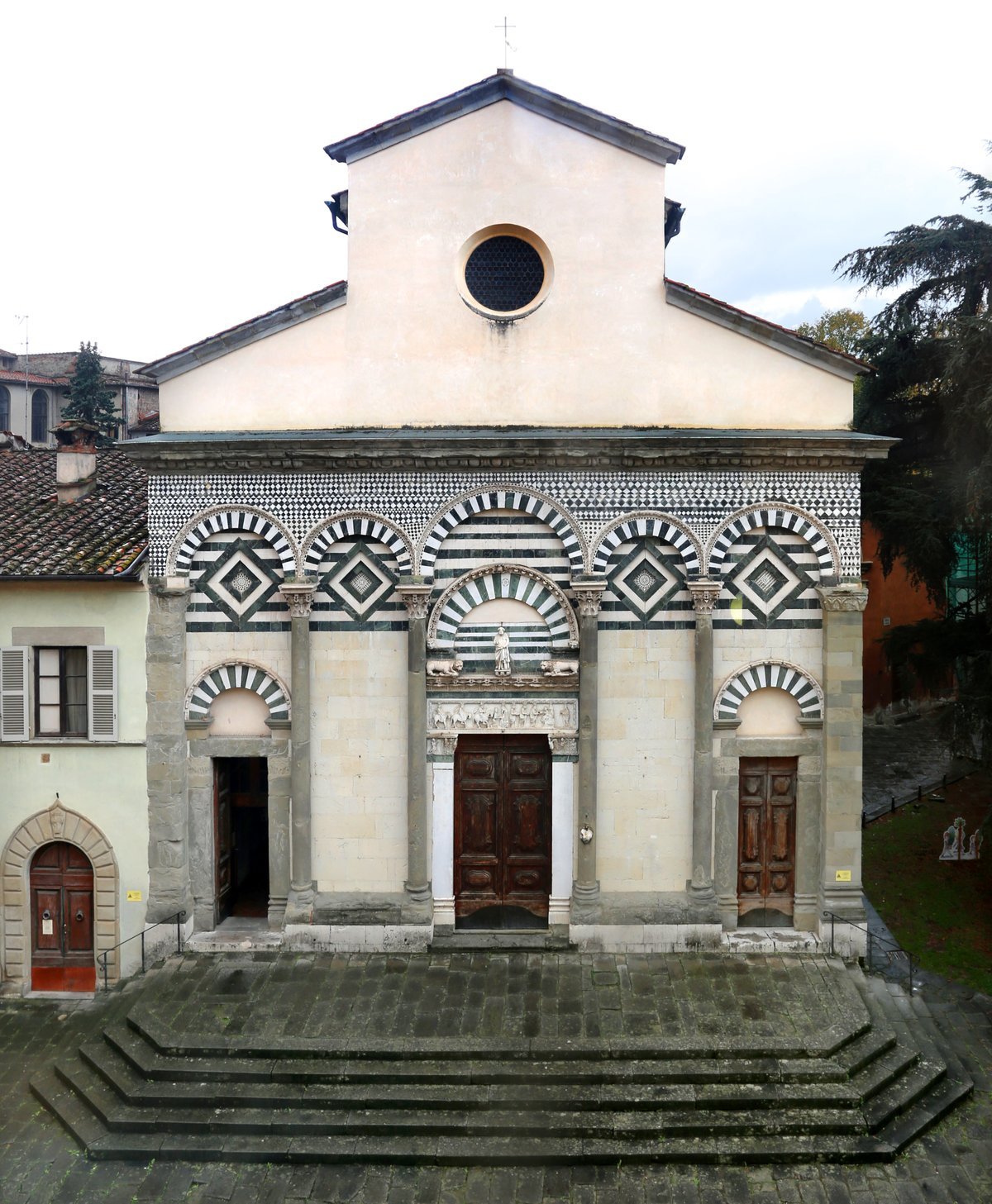
Pieve di Sant’Andrea, an ancient church in the heart of Pistoia, houses Giovanni Pisano’s Gothic pulpit. A two-tone Romanesque facade and the Architrave of the Magi along the Via Francigena. Information on hours and tickets.
- Vicolo di Sant’Andrea, Pistoia (PT)
- Open in Google Maps
- View on Google Images Pieve di Sant’Andrea a Pistoia
Good to know
A Romanesque gem along the Via Francigena
From the 8th Century to Pisano’s Masterpiece
- 8th century: Foundation of the pieve
- 1166: Architrave of the Magi by Gruamonte
- 1298-1301: Pulpit by Giovanni Pisano
- 1506: Fresco by Bernardino del Signoraccio
- 17th century: Addition of side altars
The Speaking Pulpit: Emotions in High Relief
The Bichrome Facade and the Journey of the Magi
Three Great Reasons to Step Inside
The Best Time to Enjoy It
A Walk in the Center of Pistoia
Itineraries nearby

💡 Did You Know…?
A curious anecdote: during the plague of the 14th century, the Crucifix of Ripalta, attributed to Giovanni Pisano, was carried in procession to implore an end to the disease. The people of Pistoia considered it miraculous, and it is still preserved in the pieve, testimony to popular devotion. Another curiosity: the Architrave of the Magi is one of the few in Italy to depict the Magi on horseback, a detail that recalls the passage of pilgrims along the Via Francigena.