San Bartolomeo in Pantano: Romanesque, History, and Tradition in Pistoia

The Church of San Bartolomeo in Pantano is a treasure of Pistoian Romanesque, founded in the 8th century by the Lombard physician Gaidoaldo. Inside, you can admire the famous pulpit by Guido da Como and the apse fresco of Christ Pantocrator by Manfredino d’Alberto. Every August 24, the feast of the patron saint enlivens the square with the anointing of children and a market of typical sweets.
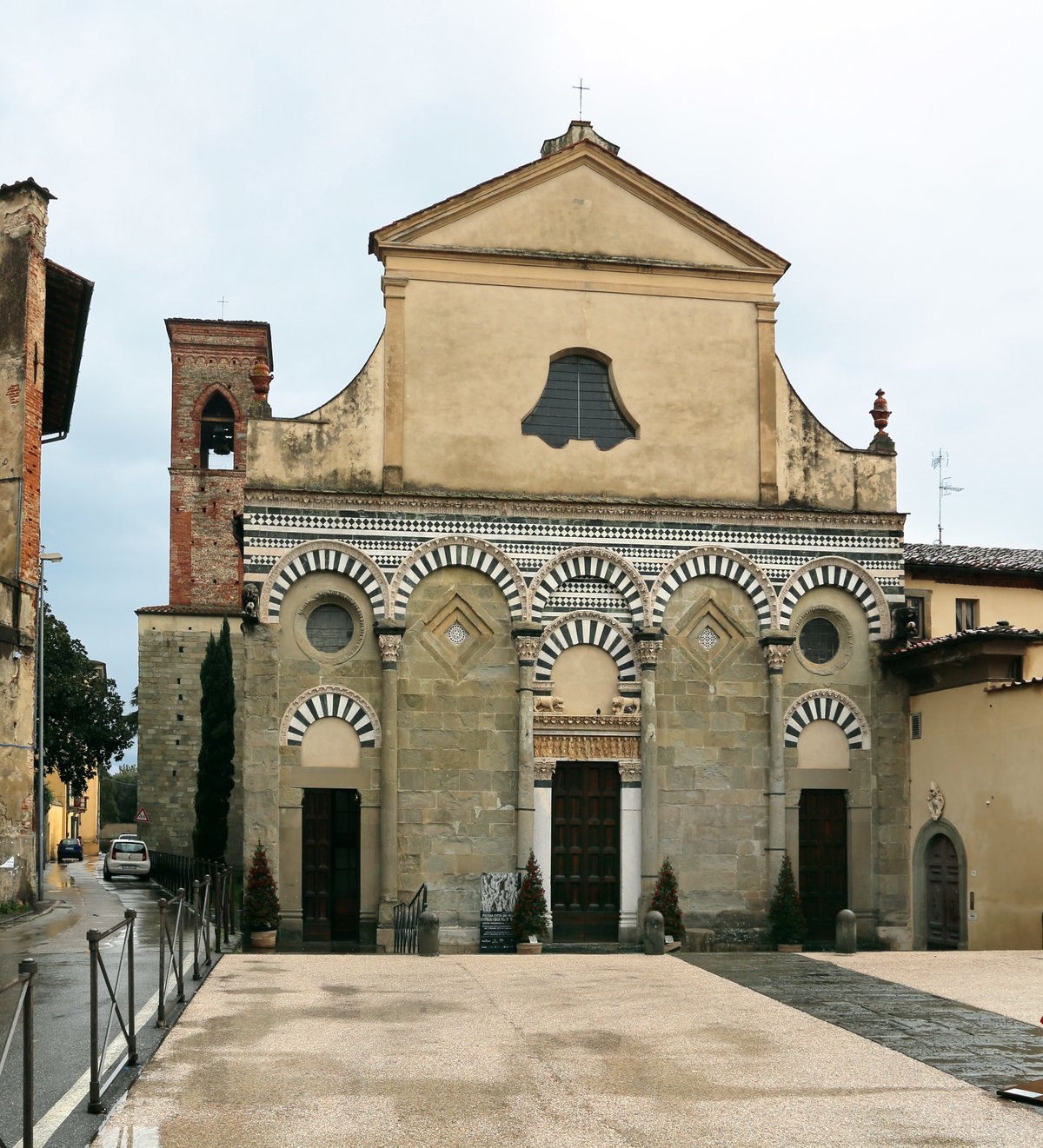
Romanesque façade with five arches, lions, and a lintel by Gruamonte
Three-nave interior with carved columns and capitals
13th-century fresco and wooden crucifix
Tradition of anointing and shortcrust pastry crowns


Events nearby

Copertina itinerario San Bartolomeo in Pantano: Romanesque, History, and Tradition in Pistoia
One of Pistoia’s oldest Lombard foundations, the Church of San Bartolomeo in Pantano houses a pulpit by Guido da Como, 13th-century frescoes, and a lively popular tradition with the feast of August 24.

Good to know


Evocative Introduction

Entering San Bartolomeo in Pantano feels like stepping back in time. The Romanesque façade with its five arches and stone lions greets you in silence, while inside, the light filtering through the small windows illuminates ancient frescoes and a finely carved pulpit. It is not just a church: it is a piece of Lombard and medieval history that still breathes, amidst the scent of incense and the murmur of prayers. A place that speaks to you, if you know how to listen.

Historical Background

Founded between 726 and 764 by the Lombard physician Gaidoaldo, this is the oldest Lombard foundation in Pistoia. Initially Benedictine, it later passed to the Lateran Canons and the Vallombrosians, becoming a parish in 1810. The current building dates back to 1159, commissioned by Prior Buono in Pistoian Romanesque style. Here are the key moments:

  • 726-764: foundation by Gaidoaldo.
  • 1159: reconstruction in Romanesque forms.
  • 1167: architrave sculpted by Gruamonte.
  • 13th century: pulpit by Guido da Como and frescoes by Manfredino d’Alberto.
  • 1951-1961: restoration restoring the Romanesque appearance.

Façade and Sculptures: A Book of Stone

The façade is a masterpiece of Pistoian Romanesque: five arched bays on columns, two-tone bands of white and green marble, and an architrave attributed to Gruamonte depicting Jesus giving the commandments to the apostles, or perhaps the Doubting of Thomas. On either side, two lions guard the entrance, a symbol of Christ victorious. Beneath the lunette, more lion protomes. Every detail is laden with meaning, and observing the carved faces up close is like reading an ancient story.

Interior and Artistic Treasures

Upon crossing the threshold, the atmosphere is intimate. The three naves, divided by columns with zoomorphic capitals, lead to the apse where the late 13th-century fresco by Manfredino d’Alberto stands out: a Christ in a Mandorla between Saints Bartholomew and John the Evangelist. The pulpit by Guido da Como (13th century) is a jewel of carved marble. Don’t miss the wooden crucifix near Giovanni Pisano and the traces of 14th-century frescoes on the walls. A restoration in the 1960s brought back all the Romanesque charm.

Why Visit It

Three good reasons: first, the authentic atmosphere: no crowds, only silence broken by the tolling of the hours. Second, living tradition: on August 24th, the feast of Saint Bartholomew with the anointing of children and the sweet market (don’t miss the ‘corone’). Third, art without barriers: the pulpit by Guido da Como and the frescoes by Manfredino d’Alberto are accessible to everyone, free of charge. A little-known gem, and that’s what makes it special.

When to Visit

If you love peace, visit early in the morning, when the raking light illuminates the apse. If you want to experience tradition, August 24th is the right day: the church fills with worshippers and children, and outside there’s a playful market. In autumn, with the low sun, the two-tone facade shines. In every season, however, it’s worth a stop: just 20 minutes to savor centuries of history.

In the Vicinity

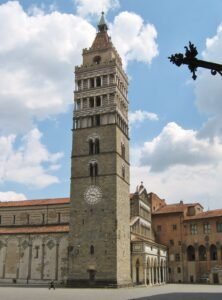
Just a few steps away, the Duomo of Pistoia with its cathedral and bell tower, and the Ospedale del Ceppo with its glazed terracotta frieze by Giovanni della Robbia. For a break, the nearby Museo di San Salvatore offers sacred art. If you have time, wander through the alleys of the center: Pistoia is all to discover, among artisan workshops and historic cafés.

Itineraries nearby


💡 Did You Know…?

Legend has it that the blessed oil used during the Feast of San Bartolomeo has had healing powers since the Middle Ages. The neighborhood children eagerly await the anointing each year, while the lintel by Gruamonte, with its apostles, seems to conceal an ancient zodiac calendar. A place where history and faith intertwine in surprising ways.