Introduction
If you think of an Italian garden, you might imagine symmetry and order. But Villa Garzoni in Collodi is a whole different story. It’s a baroque explosion that will leave you speechless: monumental staircases, water features that suddenly spurt, mythological statues that seem to come to life, and a boxwood labyrinth that promises luck to lovers. Here every corner is a surprise, a dive into history between nature and architecture. Ideal for a day trip, it will make you feel like an explorer in an enchanted world.
Historical Notes
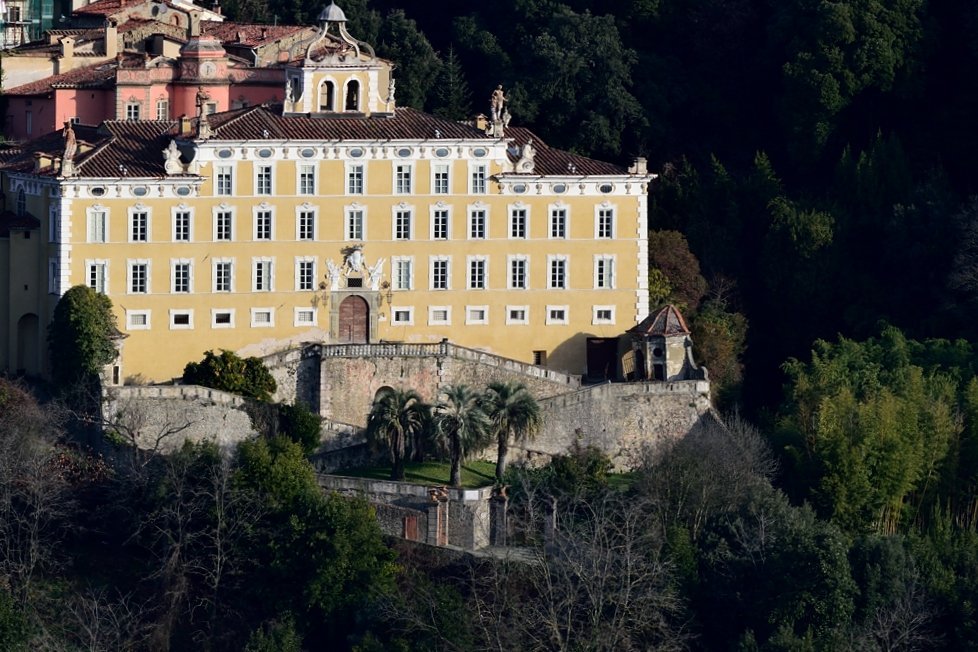
The first mention of the villa dates back to 1633, when Marquis Romano Garzoni began the work. The garden took shape in 1652 with Italian-style terraces, but it took over 170 years to reach its current appearance. Lucca-born architect Ottaviano Diodati designed the water system and the Summer Palace (based on a design by Filippo Juvarra). The garden’s fame spread beyond borders: illustrious guests such as Ferdinand of Austria and Anna de’ Medici visited. Trivia: Carlo Lorenzini, the author of Pinocchio, spent his childhood here – his father was the gardener – and took his pseudonym from Collodi. Today, the garden is being restored thanks to PNRR funds.
The Terraced Garden: Water Games and Statues
The garden unfolds over several levels, making the most of the hillside slope. It begins with a parterre of geometric box hedges and circular pools where jets of water spring up. Then a spectacular tripartite staircase, decorated with pebble mosaics, leads to a nymphaeum with statues of Neptune and Tritons: once upon a time, visitors were surprised by a curtain of water! Climbing further, you encounter statues of deities, peasants, and Roman emperors. At the top, the statue of Fame emits a very high jet. Don’t miss the Grotto of Neptune, covered in stalactites, and the Theater of Greenery with shaped hedges and statues of the Muses.
The Labyrinth and the Bamboo Forest
A boxwood hedge labyrinth is one of the garden’s most beloved spots. According to tradition, walking through it together brings luck to lovers – who knows if it works! It once had water features that would wet unwary visitors. Nearby lies a hidden bamboo forest reminiscent of an East Asian film, perfect for a shady break. For children, there are greenhouses with peacocks and the Collodi Butterfly House, a tropical greenhouse with free-flying butterflies. Every side path reveals new discoveries: satyr statues, hidden benches, and peaceful corners.
Why Visit It
Three practical reasons: 1. It is one of the most beautiful baroque gardens in Italy, with a unique atmosphere among fountains and statues. 2. The link with Pinocchio: here Lorenzini found inspiration – worth a visit even for fans of the puppet. 3. The Collodi Butterfly House is an extra that enchants both young and old, with exotic butterflies flying freely. What’s more, recent restorations have brought statues and water features back to their former glory: now is the ideal time to see it come alive again.
When to go
To enjoy the garden at its best, we recommend spring (April-June) when the box hedges are green and the parterre flowers burst with color. Autumn also has its charm, with warm light and fewer crowds. Choose late afternoon: the low sun illuminates the statues and the water features create magical reflections. Avoid the full midday sun in summer, as the path is largely outdoors. Bring a camera – every corner is worth a shot!
Nearby
Just a few steps from the garden lies Pinocchio Park, an artistic trail dedicated to the famous puppet, featuring contemporary art installations and a butterfly house. Perfect for families. Also in Collodi, the Church of Saints Giusto and Clemente (12th century) with 14th-century frescoes is worth a visit. If you have time, don’t miss the town of Pescia, with its medieval center and flower market. A trip that combines nature, art, and literature in an unmissable mix.