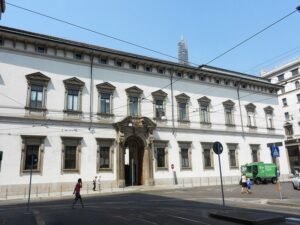
Teatro Sociale di Como, at Via Bellini 3, is the city’s main opera house: inaugurated in 1813, it retains an Italian-style horseshoe-shaped auditorium with three tiers of boxes and two galleries. Today it hosts opera, drama, dance, concerts, and the Fairplay 2025/2026 season, with box office at 031 270170. • Italian-style auditorium with gilded decorations and top-quality acoustics. • History since 1813: designed by Giuseppe Cusi with a curtain by Alessandro Sanquirico. • Notable guests: Niccolò Paganini, Franz Liszt, and Giuditta Pasta. • Events for everyone: opera, drama, dance, musicals, and family shows.
Introduction: Teatro Sociale Como, opera and shows since 1813
Via Bellini 3, right in the historic centre, a stone’s throw from Como Cathedral. This is where the curtain rises at Teatro Sociale, and the moment you step inside it feels like a leap back in time. The horseshoe-shaped auditorium, with its gilded boxes and painted decorations, has an unexpected charm: it is a genuine example of an Italian-style theatre, the kind you usually see only in books. Outside, the city is all lakefront and promenades; inside, time slows down. Just look up at the vault and the chandelier and you forget everything else. Capacity reaches up to 999 seats across the stalls, three tiers of boxes and two galleries, with a mechanised retractable orchestra pit. I’ll be honest: it isn’t Italy’s most famous theatre, and that is exactly why it has a cosy, intimate, authentic atmosphere.
Historical background: over two centuries of performances
The Teatro Sociale was founded by the will of the Società dei Palchettisti (Boxholders’ Society), established in 1764, and of the podestà Gian Pietro Porro. At first performances were held in the Broletto; then, in 1811, the municipality granted the boxholders the nearby Castello della Torre Rotonda, dating back to 1250 and by then in ruins, which was demolished to make way for the new building designed by architect Giuseppe Cusi. The inauguration came on
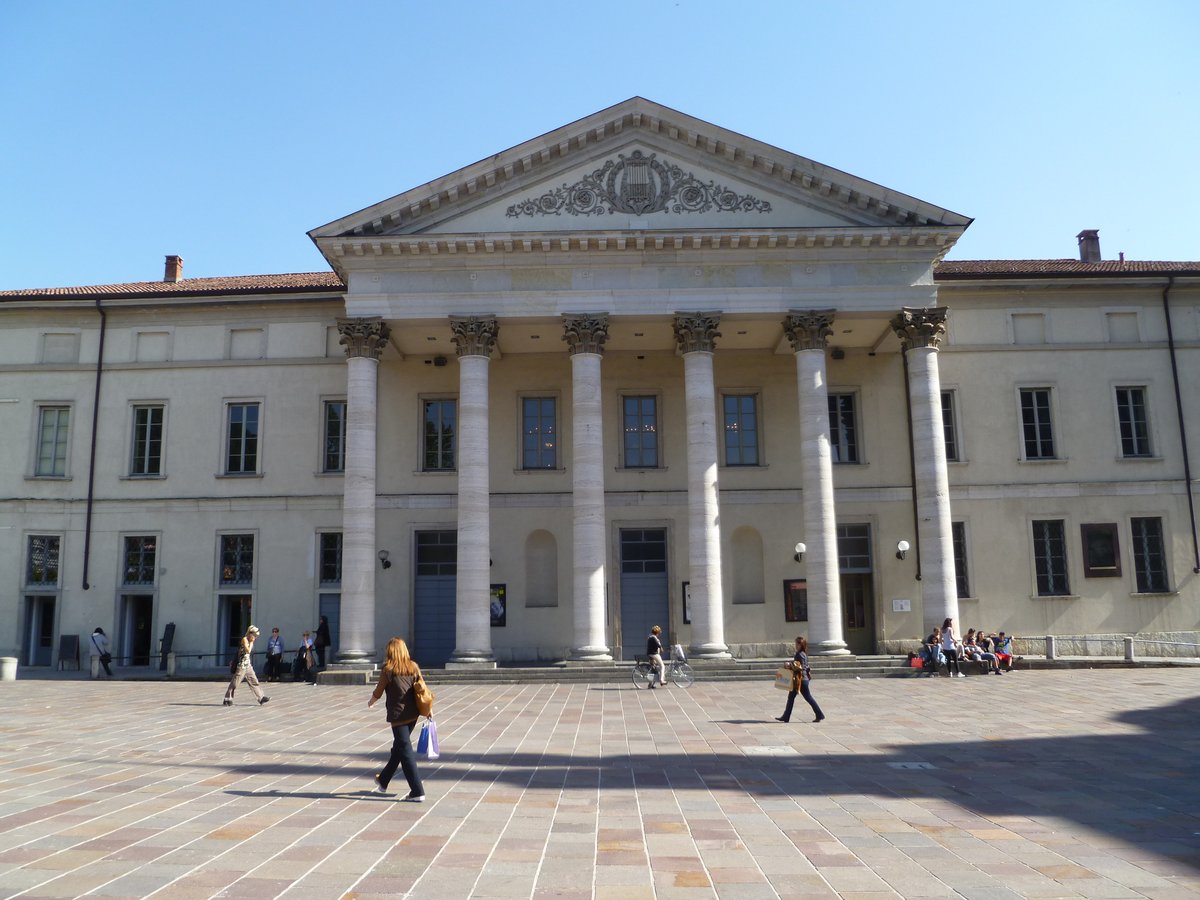
28 August 1813 with ‘Adriano in Siria’: for the occasion Alessandro Sanquirico painted a curtain depicting the death of Pliny the Elder. The neoclassical façades, with tall Corinthian columns, were completed between 1819 and 1821; in 1855 the auditorium was enlarged with a fifth gallery. Nicolò Paganini performed on its stage in 1823 and Franz Liszt in 1837.
- 1764: the Società dei Palchettisti is founded
- 1811: the Castello della Torre Rotonda is demolished
- 1813: inauguration with ‘Adriano in Siria’
- 1819-1821: completion of the façades
- 1855: enlargement of the auditorium
- 1899: electric light arrives
- 1943-44: La Scala moves here
- 2013: bicentenary and reopening of the arena
Inside the theatre: the auditorium, the White Hall and the arena
The main auditorium is a masterpiece of detail: painted decorations and gold leaf gleaming beneath the grand chandelier, and excellent acoustics. The stage measures 21.50 metres wide by 13.50 metres deep, with a 12.80-metre proscenium and a 13.50-metre-high grid. But the Sociale is a world of spaces: the Foyer, the Canonica Hall, the Painters’ Hall, the Pasta Hall and even a restaurant. Don’t miss the White Hall, repainted white between 1904 and 1905, with large mirrors and chandeliers. Then there is the Zodiac Hall, decorated in 1911 with paintings inspired by the frescoes of Palazzo Vertemate-Franchi in Piuro. And in summer the open-air arena opens, once again available for performances.
Opera, drama and family shows: the programme
Since 2002, management has been entrusted to AsLiCo, which has turned the theatre into a centre for performance and training. Its programme ranges from opera to drama, from music to dance, with more than 300 days of opening per year. The 2025/2026 season is called ‘Fairplay’ and is dedicated to sport, in the run-up to the Milano Cortina 2026 Winter Olympics and Paralympics: on the bill are ‘The Elixir of Love’, ‘Carmen’, ‘Nabucco’, ‘Don Quichotte’, concerts such as Riccardo Muti’s, drama with Claudio Bisio and Massimo Popolizio, dance, musicals and operetta. Great attention is paid to new generations with the Junior Season, Opera Education, and the Under30 and The Youth Club projects. In summer, the arena hosts the ‘Como City of Music’ festival.
Curiosities: From Paganini to the Grand Nineteenth-Century Ball
Legendary artists have graced this stage: Niccolò Paganini, Franz Liszt and soprano Giuditta Pasta. In 1899 the theatre was electrified for the centenary of Alessandro Volta’s invention of the battery; in 1811 Volta was a member of the city council and supported its construction. When bombing damaged La Scala in 1943, the 1943–44 opera season moved here. In 2011 the Sociale became the set for Caparezza’s music video ‘Chi se ne frega della musica’. And on 19 May 2018, the auditorium was transformed into a ballroom for the Grand Nineteenth-Century Ball, with more than 150 dancers from the National Historical Dance Company and an imperial buffet in the Sala Canonica.
Why visit it: three good reasons
First: it is an authentic Italian-style theatre that is still alive, not a museum, and seeing it light up for a performance is something else entirely. Second: its location, at Via Bellini 3, just a few steps from the Duomo and Como’s historic centre, makes it very easy to fit into a day in the city, perhaps with a guided tour to discover the Sala Bianca and the backstage areas. Third: the programme is truly for everyone, from opera to musicals, with youth offers such as the Under30 Card and prices designed also for those on a limited budget. A practical tip: the box office can be reached on 031 270170 and is open Tuesday to Friday, and tickets can also be bought online.
When to go: in the evening, when the lights come on
The most evocative moment? An evening performance, when the golden lights of the auditorium come on and the theatre fills up. That’s when you understand why it’s worth booking ahead, especially for the most anticipated operas and concerts. If you prefer an open-air atmosphere, keep an eye on the summer arena, once again available for performances: under the stars, the charm is something else entirely. The heart of the opera season beats when the days grow shorter, while in the warmer months dance, musicals and family events are often on offer. Let’s just say you’ll rarely find the theatre empty, and that’s a good thing: it means it’s still a reference point for the city, not just a postcard monument.
Around the area: what to see after the show
Leaving the theatre, you’re already in the heart of Como. The Duomo, with its late-Gothic façade, is just a short walk away: it’s worth stepping inside, if only for the light filtering through the stained-glass windows. A little further on is the Broletto, the medieval palace where the Sociale’s performances were held before 1813: a lovely historical coincidence. If you still have time, a stroll along the lakefront to Villa Olmo rounds off the day in style, perhaps at sunset. And for a view from above, the funicular to Brunate is a classic that never disappoints. All in all, the theatre becomes the perfect excuse to explore Como at a leisurely pace, amid art, water, and views.