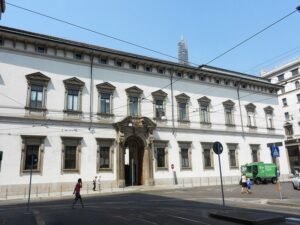
Teatro Ponchielli Cremona: A Neoclassical Jewel of Opera

Teatro Amilcare Ponchielli is the cultural heart of Cremona, a neoclassical jewel inaugurated in 1747. It hosts a rich season of operas, concerts, dance, and drama, with the renowned Monteverdi Festival. The horseshoe-shaped auditorium and one of Italy’s largest stages offer a unique experience.
– Centuries-old history: from the Teatro Nazari to the Teatro della Concordia, to its naming after Ponchielli in 1907.
– Fascinating architecture: four tiers of boxes, a gallery, and a curtain painted by Antonio Rizzi.
– Top-tier programming: opera, contemporary dance, drama, and symphonic concerts.
– Accessibility and services: box office, guided tours by reservation, and projects for disabilities.


Events nearby


Copertina itinerario Teatro Ponchielli Cremona: A Neoclassical Jewel of Opera
Cremona’s Teatro Ponchielli, a neoclassical jewel dating to 1747, hosts opera, drama, and dance. Tours by reservation, box office available, and the Monteverdi Festival.

Good to know


Teatro Ponchielli Cremona: a Neoclassical Gem of Opera

The Teatro Ponchielli is the cultural heart of Cremona, at Corso Vittorio Emanuele II, 52. You notice it right away: a sober facade, entrance columns, and inside an Italian-style auditorium that shows you why opera has felt at home here since the 18th century. Founded in 1747 as the Teatro Nazari, today it is a neoclassical jewel hosting opera, stage plays, dance, concerts, and the Monteverdi Festival. Its programming is multidisciplinary and also reaches out to families and schools. To visit, booking is required; the box office is open, and the official website has the calendar and information. Capacity is around 1,100 seats. It is not a dusty museum: it is a living theatre, where in the evening the auditorium lights up and Antonio Rizzi’s curtain still tells the story of music. If you are in Cremona, treat yourself to an evening there.

Historical Background

The story begins in 1747, when a group of Cremonese noblemen entrusted Giovanni Battista Zaist, an architect from the Bibiena circle, with the design of a permanent theatre. The Teatro Nazari was born. In 1770, the young Mozart attended a performance of La clemenza di Tito here. In 1785, the boxholders purchased it and it became the Teatro della Società, or Teatro della Nobile Associazione. A fire in 1806 destroyed the wooden structure: Luigi Canonica, a pupil of Piermarini, rebuilt it with a horseshoe-shaped auditorium, four tiers of boxes and a gallery. It was called the Teatro della Concordia. In 1824, a second fire damaged the building, which was restored by Faustino Rodi and Luigi Voghera. From 1907 it has borne the name Amilcare Ponchielli. In 1986 it passed to the City Council, and restoration began in 1989; since 2003 it has been a Foundation.

  • 1747: inaugurated as Teatro Nazari
  • 1770: Mozart in the audience
  • 1806: fire and rebuilding by Canonica
  • 1824: second fire and restoration
  • 1907: named after Ponchielli
  • 1986-1989: City Council ownership and restoration

The Italianate auditorium and Rizzi’s curtain

What matters here is the effect of walking in: the auditorium is horseshoe-shaped, with four tiers of boxes, a gallery, a top gallery, and an orchestra pit. Capacity is about 1,100 seats, but it feels like an intimate theatre, where your gaze travels from the stage to the chandelier. The stage is among the largest in Italy, extended during the nineteenth century. One detail I love: the historic curtain painted by Antonio Rizzi, featuring the Allegory of the History of Music, created in 1891. In the foyer, marked by two large columns, is the bust of Amilcare Ponchielli; in the Red Room are displayed two musical instruments that belonged to him and a painting depicting that curtain. The theatre was among the first in Italy to install electric light, and the great chandelier is still hoisted into the dome with a working fixed pulley. Details that make you understand how layered this theatrical machine is.

Seasons, Monteverdi Festival, and Audiences

Ponchielli is not only about opera: its programming blends opera, drama, dance, concerts, and popular music, with two diverse seasons that cover much of the year. Its devotion to opera remains strong, but alongside it, the Monteverdi Festival—dedicated to Claudio Monteverdi and the Baroque repertoire—and a contemporary dance series also find space. There is attention to schools with Oltreibanchi, to families with Sunday afternoon performances, and to older audiences with lighter shows. The theatre also hosts events promoted by other organizations, conferences, and concerts. Accessibility has been improved: renovated stalls seating, refurbished dressing rooms, services for people with reduced mobility, and projects for sensory, visual, and hearing disabilities, including dedicated guided tours and the OPEN project. In short, a theatre that tries to speak to everyone, not just opera lovers.

Why visit it

Three concrete reasons. First: it is one of Italy’s most prestigious historic theatres and Cremona’s main one, with over 250 years of history and an Italian-style auditorium that still keeps the atmosphere of the past. Second: its programming is varied and high-quality, from opera to dance, from spoken drama to the Monteverdi Festival; you’ll rarely find a dull evening. Third: you can experience it even without a performance, through visits by reservation that take you into the foyer, the ridotto, and the details of Rizzi’s curtain. Add its central location, an active box office, and improved accessibility services: it is a smart stop for anyone who wants to understand Cremona beyond the Torrazzo. And if you happen to be there on a Sunday afternoon with a family show, you’ll discover a less formal, more playful theatre.

When to Go

There’s no single right moment: the theatre thrives on evening and matinee performances, but my advice is to choose an evening with a performance. Arrive a little early, take in the foyer and the ridotto, watch the chandelier light up, and then enjoy the auditorium. If you can, avoid slipping in at the last minute: here, the ritual of going to the theatre is part of the experience. For atmosphere, opening nights and repeat performances in a season are often more electric; even a Sunday afternoon has its own charm, especially if there are families and lighter shows. In spring or autumn, the city is pleasant to explore before or after the performance, and the Monteverdi Festival adds one more reason. But don’t get fixated: check the calendar on the official website and choose what appeals to you. The auditorium, with its low lights, is at its best when it’s full.

In the Area

The theatre is right in the city centre, so a visit pairs perfectly with a stroll through Cremona. Just a short walk away is Piazza del Comune, with its Duomo and Torrazzo: the heart of the city, ideal for a stop before the performance. If you have more time, the Museo del Violino is another landmark of Cremona and completes the musical story that the Ponchielli presents on stage. For those who love violin making, it’s an almost natural pairing. And then there’s everyday Cremona: porticoes, cafés, a few historic shops. You don’t need a complicated itinerary: step out of the theatre, walk, and let the city centre guide you. On a performance day, this combination of stone, music and city life is what makes the visit most memorable.

Itineraries nearby


💡 Did You Know…?

In 1770, the young Mozart attended a performance of ‘La clemenza di Tito’ here. The theatre was among the first in Italy to install electric lighting, and its imposing chandelier is still hoisted into the dome with a working pulley. A detail that enchants visitors.