
🧭 What to Expect
- Ideal for those seeking authentic art, history and rural landscapes away from main tourist routes.
- UNESCO World Heritage with the Sacred Mount of Varallo, a miniature Jerusalem with 45 chapels.
- Gothic and Romanesque architecture in the Basilica of Sant'Andrea and the Cathedral of Sant'Agata in Santhià.
- Medieval castles like those of Moncrivello, Rovasenda and the consortial complex of Buronzo.
- Specialized museums such as the Francesco Borgogna Museum and the Walser Ethnographic Museum in Rimella.
- Cuisine centered on rice and enogastronomic traditions in a territory of vast rice fields.
Events nearby
The Province of Vercelli is a surprising territory where vast expanses of rice fields alternate with historic centers rich in art and tradition. In Vercelli, the capital, the Basilica of Sant'Andrea and the Francesco Borgogna Museum stand out, while outside the city, the Sacro Monte of Varallo and the Lucedio Abbey are worth a visit. Villages like Trino and Moncrivello preserve ancient castles and churches, and the Jewish presence is evidenced by the Vercelli Synagogue. A journey here means discovering an authentic Piedmont, far from the beaten paths, amidst nature, history, and a cuisine centered around rice.
Overview
- Sacred Mount of Varallo
- Basilica of Sant'Andrea
- Lucedio Abbey
- Francesco Borgogna Museum
- Cathedral of Saint Eusebius
- Visconti Castle
- Vercelli Synagogue
- Moncrivello Castle
- Church of San Michele in Insula
- Consortile Castle of Buronzo
- Carlo Conti Museum of Archaeology and Paleontology
- Rovasenda Castle
- Sant'Agata Cathedral
- Walser Ethnographic Museum of Rimella
- Parish Church of Saint Germanus Bishop
Itineraries nearby


Sacred Mount of Varallo
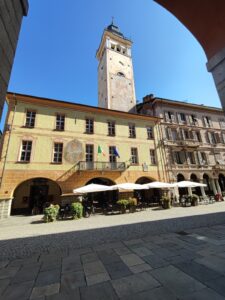
 The Sacred Mount of Varallo is a unique site, declared a UNESCO World Heritage Site in 2003. Founded in 1491 by Franciscan friar Bernardino Caimi, it represents a miniature Jerusalem with 45 chapels that narrate the life of Christ through over 800 wooden and terracotta statues and frescoes by artists such as Gaudenzio Ferrari. Located at an altitude of 600 meters, the complex unfolds on two levels: the lower part with the Sanctuary of the Madonna delle Grazie and the upper part with the chapel route, connected by stairways and paths immersed in greenery. The statues, crafted using centuries-old artisanal techniques, are so realistic that they convey intense emotions, as seen in the Chapel of the Crucifixion or the Chapel of the Deposition. The visit is an experience that combines faith, art, and nature, with breathtaking views over Valsesia. Accessible year-round, it is ideal for a cultural outing or a moment of reflection. Don't miss the view from the Sanctuary's terrace, which embraces the village of Varallo and the surrounding mountains.
Basilica of Sant'Andrea
- Go to the page: Basilica of Sant'Andrea Vercelli: Medieval Cloister and 13th-Century Relics
- Piazza Guala Bicheri, Vercelli (VC)
- Open in Google Maps
- View on Google Images
 The Basilica of Sant'Andrea in Vercelli is a masterpiece of early Italian Gothic architecture that will leave you breathless the moment you cross its threshold. Founded in 1219 by the will of Cardinal Guala Bicchieri, this basilica represents an architectural bridge between Lombard Romanesque style and the new Gothic influences from beyond the Alps. The facade in brick and stone, with its central rose window and two twin bell towers, already hints at the grandeur within. Upon entering, your gaze is captured by the imposing cloister that still preserves its medieval atmosphere, with pointed arches and stone columns that seem to whisper centuries of history. But it's inside that the basilica reveals its most precious treasures: the tomb of Tommaso Gallo, abbot of the Abbey of Saint-Victor in Paris, is a sculptural work of rare beauty, while the 13th-century wooden crucifix dominates the central nave with its dramatic expressiveness. Don't miss the Chapel of Sant'Eusebio, where relics and artworks testify to Vercelli's role as an important religious center. The light filtering through the stained-glass windows creates chiaroscuro effects that enhance the cross vaults and capitals decorated with vegetal motifs and symbolic figures. This basilica is not just a place of worship, but a true art history book that you can leaf through while walking through its naves.
Lucedio Abbey
- Go to the page: Lucedio Abbey: Octagonal Tower and Vercelli Rice Fields Since 1123
- Strada Comunale della Darola, Trino (VC)
- Open in Google Maps
- View on Google Images
 Lucedio Abbey is one of those places that strikes you with its thousand-year history and unique atmosphere. Founded in 1123 by Cistercian monks, this monastic complex was for centuries a spiritual and agricultural center of primary importance. Today, visiting it, you can still breathe in that mix of sacred and productive that characterized it. The abbey church, with its Romanesque facade and octagonal bell tower, is a masterpiece of sobriety and elegance. Inside, the fourteenth-century frescoes and the cloister, partially preserved, where the monks walked in prayer, stand out. But Lucedio is not just spirituality: it is also the heart of the Vercelli rice fields. The monks were among the first to introduce rice cultivation in Piedmont, and even today the abbey is surrounded by fields that produce some of the finest varieties. During the visit, don't miss the crypt, a suggestive environment with cross vaults, and the chapter house, where the community gathered. The abbey has experienced turbulent times, such as the transition to the Knights of Malta and the Napoleonic suppressions, but it has kept its charm intact. Today it is managed by private individuals who organize guided tours, events, and tastings. The advice? Participate in one of the themed visits that combine history and food and wine, perhaps pairing the discovery of the abbey with a stop at a local rice mill. It's an experience that makes you understand why this place is a symbol of the territory.
Francesco Borgogna Museum
- Via Antonio Borgogna 4, Vercelli (VC)
- https://www.museoborgogna.it/
- Open in Google Maps
- View on Google Images
- info@museoborgogna.it;stampa@museoborgogna.it
- +39 0161 252776
 If you're looking for a substantial cultural experience in Vercelli, the Francesco Borgogna Museum is an unmissable stop. Located in the heart of the historic center, this civic museum occupies an elegant 19th-century palace that's worth visiting in its own right. The collection, donated by patron Francesco Borgogna in 1907, ranges from medieval art to the Renaissance, with particular attention to Piedmontese and Lombard painting. Among the highlights are works by Gaudenzio Ferrari, a locally renowned artist of international fame, and a rich section of applied arts including ceramics, ivories, and ancient textiles. The rooms, furnished with period furniture, recreate the atmosphere of a noble residence, making the visit engaging and evocative. Don't miss the section dedicated to Flemish paintings and the collection of sacred art, which testify to Vercelli's cultural ties with Northern Europe. The museum often organizes temporary exhibitions and educational activities, ideal for families and enthusiasts. Admission is affordable and the audio guide included with the ticket helps you discover the most intriguing details. A true gem for those who love art without frills.
Cathedral of Saint Eusebius
- Go to the page: Cathedral of Saint Eusebius: Piedmont's Tallest Bell Tower and 10th-Century Wooden Crucifix
- Piazza Papa Giovanni Ventitreesimo, Vercelli (VC)
- Open in Google Maps
- View on Google Images
 The Cathedral of Saint Eusebius is the religious and historical heart of Vercelli, a place that tells centuries of faith and art. Founded in the 4th century by the city's first bishop, Saint Eusebius, the current building dates mainly to the 16th century, with subsequent interventions that have enriched its appearance. The neoclassical facade, designed by Luigi Canina in the 19th century, conceals a majestic interior, where the spacious naves and imposing dome stand out. Inside, don't miss the 10th-century wooden crucifix, a masterpiece of Ottonian art preserved in the dedicated chapel, and the cathedral treasury, with priceless reliquaries and sacred vestments. The crypt, accessible to the faithful, houses the remains of Saint Eusebius and other bishops, creating an atmosphere of contemplation. The cathedral overlooks Piazza Sant'Eusebio, the heart of city life, and often hosts organ concerts thanks to its historic instrument. For a complete visit, take advantage of the morning and afternoon opening hours, avoiding liturgical celebrations if you wish to admire the details in peace. It's a must for those seeking a dive into the spirituality and art of eastern Piedmont.
Visconti Castle
- Via Conte Rosso, Vercelli (VC)
- Open in Google Maps
- View on Google Images
 The Visconti Castle is one of Vercelli's most fascinating landmarks, an imposing medieval fortress that rises in the heart of the historic center. Built in the 14th century by order of Galeazzo II Visconti, the castle served as both a defensive stronghold and noble residence, bearing witness to the Milanese family's power over the Vercelli territory. Its massive architecture, with corner towers and crenellated walls, immediately evokes an atmosphere of bygone eras, while its strategic location underscores its historical importance in controlling communication routes between Piedmont and Lombardy. Today, the castle hosts cultural events and temporary exhibitions, making it a vibrant hub for the community. Inside, the underground areas stand out—a labyrinth of spaces once used as prisons and storage rooms, which still preserve traces of original graffiti and structures. The inner courtyard, accessible on special occasions, offers a glimpse into the organization of medieval spaces, with wells and passageways that tell centuries of history. Unfortunately, not all areas are always visitable due to ongoing restoration work, but the sections open to the public are enough to immerse yourself in the past. For photography enthusiasts, the panoramic views from the base of the walls provide unique glimpses of the city center, with the Basilica of Sant'Andrea in the background. The castle is easily reachable on foot from the railway station and is just steps away from other iconic sites like the Borgogna Museum. A tip: check the opening hours on the Municipality's website, as they vary depending on scheduled events. If you visit Vercelli, don't miss this stone jewel that speaks of battles, lords, and hidden secrets.
Vercelli Synagogue
- Via Elia Emanuele Foa, Vercelli (VC)
- Open in Google Maps
- View on Google Images
 The Vercelli Synagogue is one of those places that strikes you with its discreet elegance and the history it holds. Built in 1878 based on a design by Marco Treves, it's located on Via Emanuele Filiberto in the historic center of the city. The building is a significant example of eclectic architecture, with Moorish and Byzantine influences blending harmoniously. The external facade, sober and made of brick, doesn't hint at the richness of the interiors. As soon as you cross the threshold, you're enveloped in a solemn atmosphere: the prayer hall is enhanced by polychrome decorations, golden stuccoes, and stained-glass windows that filter the light, creating evocative plays of color. The Aron HaKodesh, the sacred cabinet housing the Torah scrolls, is a carved wooden work of art, while the first-floor balcony recalls the traditional separation between men and women during services. The Jewish community of Vercelli, one of the oldest in Piedmont, has its focal point here. Today, the synagogue is not only a place of worship but also a cultural center open to the public, where guided tours, concerts, and exhibitions are organized to share Jewish tradition. Its location, just steps from the Basilica of Sant'Andrea and the Duomo, makes it an unmissable stop for those wanting to discover the city's multicultural heritage. Remember to check opening hours, often tied to community activities, so you don't miss this hidden gem.
Moncrivello Castle
- Via Duchessa Jolanda, Moncrivello (VC)
- Open in Google Maps
- View on Google Images
 Moncrivello Castle stands on a hill overlooking the landscape of the Vercelli rice fields, offering a breathtaking panoramic view of the surrounding plain. Built between the 10th and 11th centuries, this manor has witnessed centuries of history, evolving from its origins as a defensive fortress to a noble residence under the House of Savoy. Today, visitors can admire the frescoed halls of the main floor, where Renaissance decorations and heraldic coats of arms stand out, telling the stories of the families who lived here, such as the Tizzoni and Ferrero Fieschi. The inner courtyard, with its central well and brick arches, preserves the medieval atmosphere, while the private chapel, dedicated to Saint Gratus, houses a Baroque altar. Particularly evocative is the square tower, from whose summit you can glimpse a mosaic of fields and typical farmhouses of the area. The castle often hosts cultural events, such as art exhibitions and historical reenactments, which enliven its spaces with vibrancy. For visitors, it's an opportunity to immerse themselves in local history without overlooking the unique rural context of the Vercelli area, where rice cultivation has shaped the environment. Practical info: access is available on specific days or by reservation, with guided tours that delve into the architectural aspects and the stories related to its ancient owners.
Church of San Michele in Insula
- Strada Borghetto San Michele, Trino (VC)
- Open in Google Maps
- View on Google Images
 The Church of San Michele in Insula in Trino is one of those places that strikes you with its essential beauty. Built in the 11th century, this Romanesque church stands isolated in the countryside, surrounded by the rice fields that characterize the Vercelli landscape. The name 'in Insula' derives from its original location on an island in the Po River, although the river has since changed course. The exposed brick exterior impresses with its simplicity: the gabled facade, the small bell tower, and the splayed windows tell centuries of history. Upon entering, you breathe an atmosphere of contemplation. The interior features a single nave with 14th-century frescoes that, despite the passage of time, retain traces of vivid colors. Particularly interesting is the crypt, which houses remains of earlier structures and bears witness to the various construction phases. The church was part of a Benedictine monastic complex, of which only some ruins remain today. Visiting it means immersing yourself in a perfectly preserved piece of the Middle Ages, far from the urban chaos. The silence that envelops it is broken only by the wind through the rice fields, creating an almost meditative experience. Despite damage from the 1117 earthquake and subsequent modifications, it retains its austere charm intact. It's worth taking a closer look at the decorated capitals and the remains of the frescoes, which tell stories of saints and popular devotion. A tip: the sunset light turns the bricks golden, offering unforgettable photographs.
Consortile Castle of Buronzo
- Via Chiesa, Buronzo (VC)
- http://www.castellodiburonzo.it/
- Open in Google Maps
- View on Google Images
- +39 339 1811017
 The Consortile Castle of Buronzo is a unique architectural complex, consisting of seven distinct buildings arranged around three internal courtyards. This particular structure originated from the division of the original castle among several local noble families between the 14th and 15th centuries. Walking through the courtyards, one immediately notices the Round Tower from the 12th century, the oldest part of the complex, which dominates the landscape with its imposing cylindrical structure. The different wings of the castle display architectural styles ranging from Romanesque to Gothic, with features such as mullioned windows and terracotta portals that tell centuries of history. Inside, some rooms preserve 15th-century frescoes of remarkable quality, including scenes of courtly life and decorative motifs typical of late medieval Piedmont. The castle is surrounded by a park where traces of the ancient moat and perimeter walls can still be found. Today, the complex occasionally hosts exhibitions and cultural events, maintaining a living connection with the local community. The visit allows you to discover not only medieval military architecture but also the social organization of the noble families who coexisted here for centuries.
Carlo Conti Museum of Archaeology and Paleontology
- Via Combattenti d'Italia 5, Borgosesia (VC)
- https://www.facebook.com/MuseoCarloConti/
- Open in Google Maps
- View on Google Images
- museocarloconti@gmail.com
- +39 0163 290250
 If you're passionate about history and nature, the Carlo Conti Museum of Archaeology and Paleontology in Borgosesia is an unmissable stop. Located in the heart of Valsesia, this museum houses artifacts that tell millennia of local history, with a collection spanning from prehistoric times to the Roman era. Among the most fascinating pieces are the fossils from Monte Fenera, a paleontological site of international significance where remains of cave bears and other prehistoric animals have been discovered. The museum, named after naturalist Carlo Conti, offers a well-organized exhibition path: starting from Paleolithic finds, such as flint tools and worked bones, to evidence from the Iron Age and Celtic populations. Don't miss the section dedicated to the artifacts from the San Bernardo necropolis, with funeral goods that reveal the customs and traditions of the ancient inhabitants of the area. The display cases are enhanced by clear explanatory panels, ideal for visitors of all ages, and the staff is always available for further insights. Perfect for a family visit or for those seeking a cultural experience off the beaten tourist path, the museum is a little-known gem of great value. I recommend combining the visit with a walk through the historic center of Borgosesia, where you can still breathe the authentic atmosphere of the Piedmont province.
Rovasenda Castle
- Viale Bayardo, Rovasenda (VC)
- Open in Google Maps
- View on Google Images
 The Rovasenda Castle stands imposingly in the landscape of the Vercelli plain, with its towers soaring above the expanses of rice fields. This medieval manor, built between the 12th and 14th centuries, represents one of the best-preserved examples of fortified architecture in eastern Piedmont. The structure develops around a square keep over 30 meters high, flanked by a lower cylindrical tower, creating an unmistakable profile visible from kilometers away.
Walking through its halls, one still breathes the atmosphere of centuries past. The perimeter walls, up to two meters thick, tell of sieges and battles, while the biforate windows and monumental fireplaces testify to the evolution from fortress to noble residence. Particularly evocative is the inner courtyard, where Romanesque architecture blends with Gothic elements, creating a play of volumes and perspectives that fascinates visitors.
The castle dominates the small village of Rovasenda, offering breathtaking panoramic views of the surrounding countryside. During the fine season, the flooded rice fields create mirrors of water that reflect the towers, offering unique photographic glimpses. The strategic position, along the ancient road connecting Vercelli to Biella, explains the military importance this manor held for centuries.
Sant'Agata Cathedral
- Via Madonnetta, Santhià (VC)
- Open in Google Maps
- View on Google Images
 The Sant'Agata Cathedral rises in the historic center of Santhià with its imposing brick facade, a masterpiece of Piedmontese Romanesque architecture that captures the eye from the square. Upon entering, visitors are enveloped in an atmosphere of sacredness: the three naves, defined by massive pillars, guide the gaze toward the apse, where 15th-century frescoes from the Lombard school stand out. The crypt, accessible via a side staircase, preserves relics associated with the cult of Saint Agatha and fragments of early medieval decorations. The bell tower, over 40 meters high, serves as a visual landmark for the entire town and offers, by climbing its steps, a panoramic view of the Vercelli rice fields. Inside, don't miss the 15th-century wooden polyptych behind the main altar, depicting scenes from the saint's life, and the soapstone baptismal font, a testament to ancient local craftsmanship. During patronal festivities, the cathedral becomes the heart of processions, with its historiated portals welcoming the faithful and the curious. The light filtering through the single-light windows creates chiaroscuro effects on the decorated capitals, making each visit a unique experience, suspended between history and spirituality.
Walser Ethnographic Museum of Rimella
- GTA Variante Walser, Rimella (VC)
- Open in Google Maps
- View on Google Images
- +39 0163 55203
 The Walser Ethnographic Museum of Rimella is a hidden gem in the Piedmont Alps, dedicated to preserving Walser culture - an Alemannic-origin community that settled here during the Middle Ages. Located in the heart of Rimella village, at over 1,100 meters above sea level, the museum is housed in a perfectly restored traditional Walser house that's worth visiting in its own right. Inside, you'll find a rich and varied collection of everyday life objects, such as carved wooden furniture, agricultural and dairy processing tools, and spinning and weaving instruments that tell centuries of history and traditions. Don't miss the section dedicated to traditional costumes, with hand-embroidered garments and accessories showcasing Walser tailoring artistry. The museum also offers insights into the Titsch language, a Walser dialect still spoken by some elderly villagers, and rural architecture, with models of typical houses and stables. It's an immersive experience that makes you feel part of a resilient community deeply connected to the mountains and their resources. Perfect for history and local culture enthusiasts, the museum is open by reservation or on fixed days, especially during summer when Rimella comes alive with cultural events. I recommend combining your visit with a stroll through the village streets, where you can admire other Walser houses and the breathtaking Valsesia landscape.
Parish Church of Saint Germanus Bishop
- Via Iacopo Suigo, San Germano Vercellese (VC)
- Open in Google Maps
- View on Google Images
 The Parish Church of Saint Germanus Bishop is located in the heart of San Germano Vercellese, a village that seems suspended in time among the expanses of rice fields. Built between the 17th and 18th centuries, this church is a significant example of Piedmontese baroque architecture, with an exposed brick facade that stands out for its essential elegance. Upon entering, you are enveloped in an intimate atmosphere: the single-nave interior is enriched by 18th-century stuccoes and a precious gilded wooden high altar, where the statue of Saint Germanus, the patron saint of the village, stands out. The bell tower deserves particular attention, rising above the surrounding landscape and still preserving a historic bell cast in 1752. During festivities, such as the Feast of Saint Germanus at the end of July, the church becomes the focal point of celebrations, with processions starting right from its churchyard. To visit, simply reach Piazza della Chiesa: access is free and often open during daylight hours, but it is advisable to check the schedule based on Mass times. A detail that few notice: on the outside, on the left side, there is a small votive shrine with a devotional fresco, a testament to popular devotion. For photography enthusiasts, the sunset light enhances the warm tones of the bricks, offering suggestive shots. If you pass through San Germano Vercellese, don't just take a quick glance: stop to admire this place of faith and art, which tells centuries of local history.