Prato Cathedral of Santo Stefano: Donatello’s Pulpit and the Holy Girdle in Tuscan Romanesque

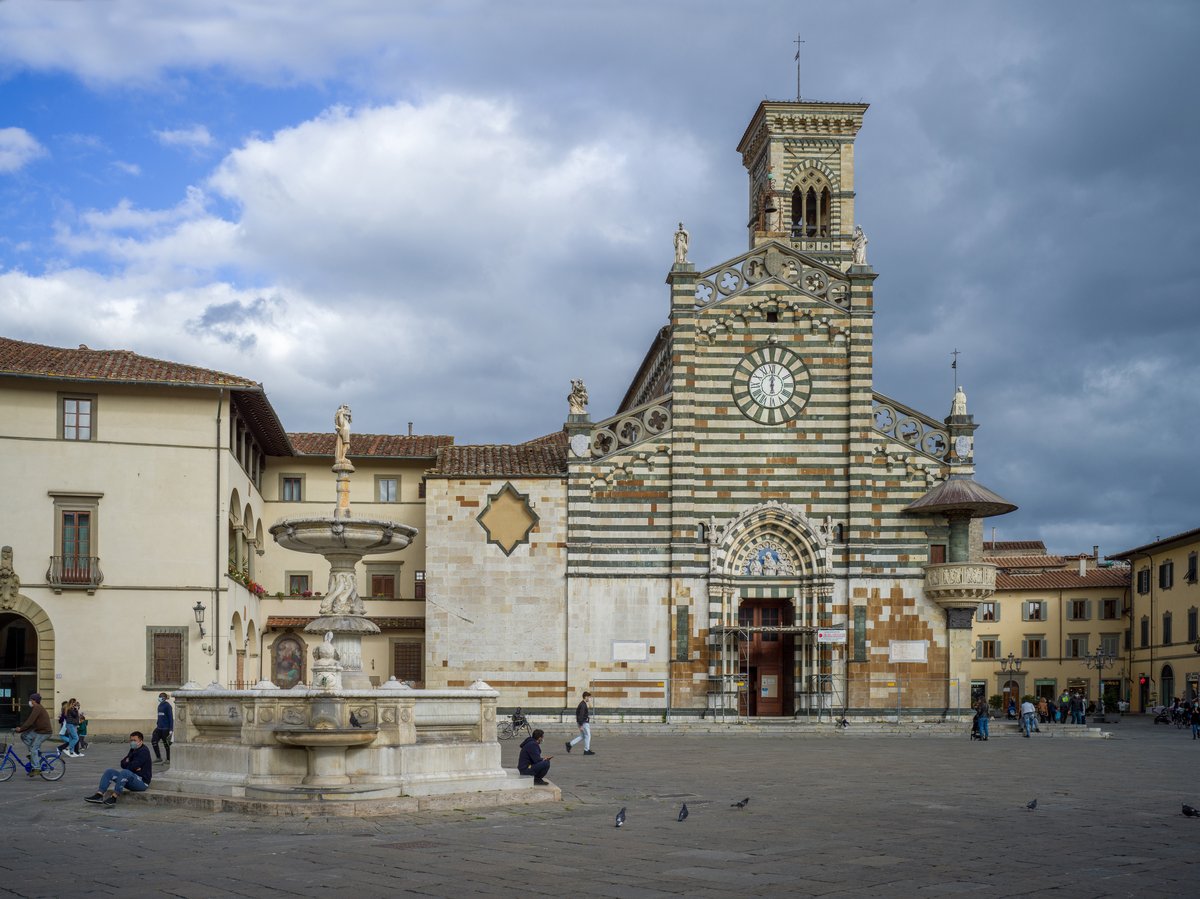
The Cathedral of Santo Stefano is the religious and artistic heart of Prato, with a white and green marble facade that dominates the historic center. Inside, it houses Renaissance artworks and a unique relic, offering an authentic experience away from the crowds.

  • External pulpit by Donatello and Michelozzo with sculpted dancing putti
  • Chapel of the Holy Girdle with fourteenth-century frescoes by Agnolo Gaddi
  • Frescoes by Filippo Lippi in the Main Chapel
  • Cathedral Museum with artistic collections

Copertina itinerario Prato Cathedral of Santo Stefano: Donatello's Pulpit and the Holy Girdle in Tuscan Romanesque
Prato Cathedral with its white and green marble facade, the external pulpit by Donatello and Michelozzo, the frescoed Chapel of the Holy Girdle, and frescoes by Filippo Lippi.

Good to know


Introduction

As you step into Piazza Duomo, the Cathedral of Santo Stefano immediately captures your attention with its white and green marble facade, a masterpiece of Tuscan Romanesque architecture that dominates Prato’s historic center. It’s not just a church, but a symbol of the city, where art and devotion merge seamlessly. Its bell tower rises like a beacon, inviting you to discover unique treasures such as Donatello’s pulpit and the Sacred Girdle, a relic venerated for centuries. Walking here feels like immersing yourself in a tale of stone and faith, making you feel part of Tuscan history.

Historical Overview

Construction of the cathedral began in the 12th century, but it was in 1312 that the relic of the Sacred Girdle, traditionally donated by Mary to Saint Thomas, arrived in Prato, transforming the cathedral into a pilgrimage destination. In the 15th century, Donatello created the external pulpit for the display of the girdle, a revolutionary work for its time. Over the centuries, the church underwent expansions, such as the addition of the Chapel of the Sacred Girdle in the 14th century.

  • 12th century: Construction begins
  • 1312: Arrival of the Sacred Girdle
  • 1434-1438: Creation of Donatello’s pulpit
  • 14th century: Addition of the Chapel of the Sacred Girdle

Donatello’s Pulpit

Donatello’s Pulpit is a unique Renaissance jewel, designed for the public display of the Sacred Girdle. Positioned at the corner of the facade, it stands out for its dancing putti carved in marble, which appear to move among the scrolls. Donatello employed innovative techniques here, such as flattened relief, anticipating the Renaissance style. Observe it up close: the details of the children and the decorative motifs reveal a mastery that few artists of the era could match. It’s one of those pieces that, even without being an expert, leaves you breathless with its elegance and energy.

The Chapel of the Holy Girdle

Entering the Chapel of the Holy Girdle is like accessing a sanctum sanctorum. Painted by Agnolo Gaddi in the 14th century, the walls illustrate stories of the Virgin and the relic, with vibrant colors that withstand time. At the center, Lorenzo Ghiberti’s tabernacle protects the girdle, displayed only on special occasions. The atmosphere is intimate and contemplative, perfect for a moment of reflection. Even if you don’t witness the ostension, the chapel offers a powerful emotion, tied to centuries of tradition and faith.

Why Visit It

Visit the cathedral for three concrete reasons: first, Donatello’s pulpit is a rare work that combines art and function, with putti that seem alive; second, the Sacred Girdle is a unique relic in Italy, linked to centuries-old rituals; third, the interior frescoes, such as those by Filippo Lippi in the Main Chapel, offer a journey into Tuscan painting. It’s a place where every corner tells a story, ideal for those seeking culture without frills.

When to Go

The best time is early morning, when the sunlight illuminates the marble facade, creating shadow plays that highlight the Romanesque details. In summer, avoid peak hours to enjoy the interior tranquility. If you visit in September, during the Holy Girdle festivities, the atmosphere is more vibrant but also more crowded.

In the Surroundings

Just steps away, explore the Textile Museum, which celebrates Prato’s wool-making tradition with antique looms and stories of craftsmanship. Then, stop by the Emperor’s Castle, a Swabian fortress in the heart of the city, to admire panoramic views and medieval architecture. Both locations enrich your visit with complementary historical and cultural themes.

💡 Did You Know…?

Legend has it that the Sacred Girdle, kept in its namesake chapel, was brought to Prato by a crusader in the 12th century. Every September 8th, during the Ostension ceremony, it’s displayed from Donatello’s pulpit in a tradition that involves the entire city.