
Piazza Maggiore is the heart of Bologna, one of the largest squares in Italy (115×60 m). Born in the 13th century as a public space, it is surrounded by medieval and Renaissance masterpieces: the Basilica of San Petronio, the Palazzo del Podestà, the Palazzo d’Accursio, and the crescentone. Every summer, the square transforms into an open-air cinema with the ‘Sotto le stelle del cinema’ film festival.
- Basilica of San Petronio: unfinished facade; inside, the 67-meter-long Cassini Meridian.
- Palazzo del Podestà: under the Voltone, an acoustic phenomenon allows secret communication.
- Crescentone: the raised platform in the center, nicknamed for its crescent-like shape.
- Summer events: from June to August, free screenings on a giant screen for film lovers and curious visitors.
Events nearby
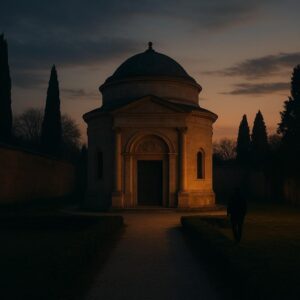
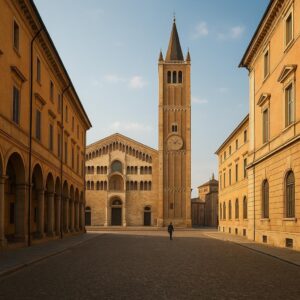

Bologna’s main square, with the Basilica of San Petronio, the Palazzo del Podestà, and the crescentone. Summer events: cinema, markets, and medieval history.
- Piazza Maggiore, Bologna (BO)
- Open in Google Maps
- View on Google Images Piazza Maggiore a Bologna
Good to know
Introduction
You stand before one of Italy’s largest piazzas: 115 meters by 60, a rectangle of history enveloping you. On one side, the unfinished facade of the Basilica of San Petronio; on the other, the Palazzo del Podestà with its magical vaulted hall. The crescentone, a raised platform 15 centimeters high, divides the space and recalls the shape of the Bolognese crescentina. Here time seems frozen, but the square is alive: chatting students, photographing tourists, and on summer evenings the open-air cinema turns it all into a giant theater.
Historical Notes
The square was born in the 13th century, when the city bought and demolished houses and towers to create a common space – the Platea Communis. It immediately became the political and mercantile heart. In the 16th century it took the name Piazza Maggiore; after unification it was named after Victor Emmanuel II, then briefly Piazza della Repubblica in 1944, and from 1945 it returned to its current name. Key events: the construction of the Basilica of San Petronio (1390), the coronation of Charles V inside the basilica (1530), and the liberation of Bologna on April 21, 1945, when the crescentone was damaged by a tank (though some say it was a combine harvester in the 1970s).
The Crescentone and Life in the Square
At the center, that white and pink granite platform is the crescentone – a name that sounds like cuisine, like crescentina. Built in 1934, raised only 15 cm, it is the meeting point par excellence. In winter, people sit in the sun; in summer, it serves as a natural stage for concerts and screenings. The damage on the east side? Legend has it that an American tank made it on Liberation Day, but photos show it dates back to the 1970s, when a combine harvester on display at an agricultural fair drove over it. A small, amusing curiosity.
Architecture and Acoustic Curiosities
Beneath the Voltone del Podestà (the arch connecting Palazzo del Podestà and Palazzo Re Enzo), there’s an incredible acoustic phenomenon: whispering against one pillar, you can be heard clearly on the other side. Medieval folk used it to confess the plague-stricken or to exchange secret messages. Another gem: the Meridian of San Petronio, over 66 meters long, designed by Gian Domenico Cassini in 1656. It’s the longest in the world and still works: a sunbeam falls on a marble line marking time and season. Don’t miss the basilica’s unfinished facade, half marble and half brick.
Why Visit It
1. Italy’s most famous open-air cinema: from mid-June to August, “Sotto le stelle del cinema” screens free movies on a giant screen with thousands of seats. 2. The acoustics under the Voltone del Podestà: a game that always amazes. 3. The Meridiana di San Petronio: an astronomical masterpiece you can only see here. And then there’s the Falò del Vecchione on December 31, a bonfire of a puppet to bid farewell to the year – a beautiful and popular tradition.
When to Go
The best time? A summer sunset. The warm light on the facade of San Petronio is spectacular, and then evening comes with free cinema. But also in September, during the Franciscan Festival (third weekend), the square fills with meetings and music. If you love silence, go at dawn on a weekday: the square is all yours and the sound of the nearby fountains accompanies you.
Nearby
Just a stone’s throw away, Piazza del Nettuno with Giambologna’s fountain (1565): Neptune with his trident, symbol of papal power. The locals affectionately call it ‘il Nettuno’ and it’s a popular meeting point. A few steps further, the entrance to Biblioteca Salaborsa (formerly Palazzo della Borsa): modern and free, with a glass floor revealing Roman ruins below. For a break, duck into the narrow streets of the Quadrilatero, the historic market, among shops selling fresh pasta and cheeses.
Itineraries nearby

💡 Did You Know…?
The crescentone, the granite platform at the center of the square, according to local tradition, was supposedly damaged by a tank in 1945, but photographic evidence shows that the damage dates back to the 1970s, caused by a combine harvester during an agricultural fair. A detail that tells the story of the square’s daily life.