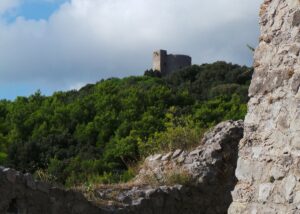
Norman Castle of Ariano Irpino: Cylindrical Towers and Views over the Ufita Valley

Perched at 817 meters above sea level, the Norman Castle of Ariano Irpino is a well-preserved example of medieval military architecture, with its cylindrical towers and sprawling 7,000-square-meter grounds. From its summit, visitors can enjoy breathtaking views stretching from the Ufita Valley to the Sannio mountains. Today, after careful restoration, the castle serves as a vibrant cultural venue, hosting events and exhibitions that honor its rich historical legacy.

  • Norman cylindrical towers and bastions offering 360-degree views over the Ufita Valley
  • Stunning panoramic vistas from 817 meters above the historic town center
  • Cultural events, historical reenactments, and temporary exhibitions in the courtyard
  • A millennium of history, including the Assizes of Ariano promulgated by Roger II in 1140

Copertina itinerario Norman Castle of Ariano Irpino: Cylindrical Towers and Views over the Ufita Valley
An 11th-century Norman fortress featuring cylindrical towers, perimeter walls, and panoramic views of the Ufita Valley. Following restoration, it now hosts cultural events and temporary exhibitions.

Good to know


Introduction

Arriving at the Norman Castle of Ariano Irpino is like stepping back in time, with its imposing structure dominating the hill at 788 meters above sea level. It’s not just a fortress, but a true balcony over Irpinia: from here the gaze sweeps across the Ufita Valley and stretches as far as the Fortore River, offering breathtaking panoramic views. Built by the Normans in the 11th century on pre-existing Lombard fortifications, the castle has witnessed centuries of history, surviving earthquakes and restorations. Today, with its well-preserved cylindrical towers and bastions, it stands as one of the most recognizable symbols of the Avellino province. Walking through its walls means breathing the air of the knights and feudal lords who wrote important chapters here, such as the promulgation of the Assizes of Ariano in 1140 by Roger II. The place is perfect for those seeking not only history but also strong emotions, with that blend of architectural majesty and pristine nature that characterizes the Campanian Apennines.

Historical Overview

The history of the Norman Castle of Ariano Irpino is a journey through the centuries, beginning with the Lombards who erected the first fortifications here. The Normans, led by Roger II, rebuilt it in the 11th century, transforming it into a strategic stronghold for controlling the Irpinian territory. It was within these very walls that in 1140 the king promulgated the Assizes of Ariano, a legislative code that unified the laws of the Kingdom of Sicily, marking a crucial moment in the history of Southern Italy. In the 13th century, under Frederick II, the castle became an important Swabian outpost, later passing to the Angevins and the Aragonese, who enhanced its defenses. Earthquakes, such as the one in 1456, and subsequent restorations have shaped its current appearance, with cylindrical towers and bastions that withstand the test of time. Today, after careful restoration, the castle is open to visitors and hosts cultural events, keeping alive its connection to a glorious past.

  • 11th century: Norman reconstruction by order of Roger II
  • 1140: Promulgation of the Assizes of Ariano
  • 13th century: Swabian period under Frederick II
  • 15th century: Post-earthquake restorations
  • Today: Restoration and opening to the public

Towers and Bastions

The cylindrical towers of the Norman Castle are its distinctive feature, symbols of strength and resilience. Built from local stone, they rise majestically towards the sky, offering privileged vantage points over the valley below. Climbing the main tower provides a 360-degree view that embraces not only the Ufita Valley, but also the surrounding villages and the hills of Irpinia—a breathtaking panorama that alone makes the visit worthwhile. The bastions, on the other hand, tell tales of centuries of defense: here you walk along paths once guarded by sentries, among arrow slits and firing positions still visible today. Inside, the halls preserve traces of ancient ceilings and fireplaces, while the inner courtyards, now used for events, evoke the daily life of the Middle Ages. Don’t miss the most evocative spot: the point where the walls overlook the sheer drop, with a dizzying effect that makes you feel suspended between history and nature.

Living Events and Culture

The Norman Castle is not a static museum, but a vibrant hub of cultural activities. Throughout the year, its walls host historical reenactments that bring the medieval period to life, with costumed performers and shows that engage both adults and children. Summer after summer, the courtyard transforms into a stage for concerts and theatrical performances, taking advantage of the natural acoustics and the magical atmosphere of Irpinian evenings. Inside, temporary exhibitions are often set up, showcasing local history or works by regional artists, creating a dialogue between past and present. Visitors can participate in themed guided tours, such as those focused on military architecture or the figure of Roger II, enriched with anecdotes that make history accessible and captivating. It is precisely this vitality that makes the castle a community landmark, as well as a highly impactful tourist destination.

Why Visit It

Visiting the Norman Castle of Ariano Irpino is worthwhile for at least three concrete reasons. First, the panoramic view from the top is simply unique: you can take in the entire Ufita Valley with your gaze, with its cultivated fields and perched villages, in a scene that changes with the seasons. Second, it’s an opportunity to touch history firsthand: here you don’t just read dates, but you walk where kings and knights once passed, breathing in an authentic atmosphere that books and museums often fail to convey. Third, its accessibility: the castle is well-maintained and easily visitable, with clear paths that don’t require particular physical preparation, ideal for a family outing or for those seeking a cultural experience without stress. Plus, its dominant position makes it perfect for unforgettable photo shots, especially at dawn or sunset, when the warm light enhances the ancient stones.

When to Go

The most enchanting time to visit the Norman Castle is undoubtedly at sunset, when the sun dips behind the Irpinia hills and bathes the medieval towers in shades of red and gold. During this golden hour, the low-angled light accentuates every detail of the stonework and creates postcard-perfect atmospheres, with a serene silence enveloping the hilltop that makes the experience even more magical. Autumn mornings are also ideal: the crisp air and warm hues of the foliage create a perfect contrast with the stern fortress walls, while the mist that sometimes rises from the valley adds a touch of mystery. Avoid days with heavy rain, as the outdoor paths can become slippery, and opt for clear days to fully enjoy the panoramic views. If you happen to visit during event periods, such as summer reenactments, plan your trip around those dates to combine history with spectacle.

In the Surroundings

Complete your day in Ariano Irpino with a visit to the Silver Museum, which houses a collection of sacred goldsmithing and highly valuable local artifacts, perfect for delving into the Irpinian craft tradition. Not far away, the Sanctuary of San Liberatore offers an atmosphere of peace and spirituality, with its simple architecture and views over the surrounding countryside. If you’re passionate about food and wine, don’t miss tasting the Irpinian cheeses at the local dairies, where you can try caciotte and scamorza made the traditional way. For a nature experience, the trails starting from the castle lead you to explore the nearby hills, ideal for a refreshing walk among olive groves and small woods. Remember: Ariano is also known for its ceramics, so look for local workshops to bring home an authentic souvenir.

Itineraries nearby


💡 Did You Know…?

According to legend, the ghost of a Norman lady is said to hide in the castle, appearing on full moon nights. Historically, the Assizes of Ariano were signed here in 1140, a legislative code that unified the laws of the Kingdom of Sicily. In the underground areas, the ancient cisterns for rainwater collection are still preserved, essential during sieges.