
The Barletta Civic Museum, set within the 16th-century Palazzo della Marra, safeguards two main treasures: the imposing Colossus of Barletta, a late-Roman bronze statue over 5 meters tall, and a vast collection of works by Impressionist painter Giuseppe De Nittis. It’s a compact museum, ideal for an in-depth visit in a few hours, offering an authentic and immersive cultural experience.
- The Colossus of Barletta: A 5.11-meter-tall late-Roman bronze statue, a symbol of the city shrouded in legends.
- Works by Giuseppe De Nittis: Over 150 paintings and drawings by the renowned Barletta-born painter, including ‘The Road from Naples to Brindisi’.
- Palazzo della Marra: The museum’s venue, a masterpiece of 16th-century Renaissance architecture with a courtyard and decorated façade.
- Authentic atmosphere: A well-organized and uncrowded museum, perfect for immersing oneself in local history and art.
Events nearby


The Barletta Civic Museum, housed in the Renaissance Palazzo della Marra, features the Colossus, a 5-meter-tall bronze statue, and an extensive collection of paintings by Giuseppe De Nittis. A journey through art and history away from tourist crowds.
- Viale Manuti Giorgio, Barletta (BT)
- Open in Google Maps
- View on Google Images Museo Civico a Barletta
Good to know
Introduction
Entering the Civic Museum of Barletta means immersing yourself in a journey through centuries of history and art, preserved within the splendid Palazzo della Marra. This Renaissance building, with its richly decorated facade and inner courtyard, is a work of art in itself. But the true treasure that attracts visitors from all over Italy is the famous Colossus of Barletta, a late-Roman bronze statue over 5 meters tall, locally known as ‘Heraclius’. Alongside this giant, the halls host a rich collection of paintings by Giuseppe De Nittis, one of the foremost exponents of Italian Impressionism. The museum is not just a container of works, but a living place where past and present meet, offering a comprehensive overview of Barletta’s culture and identity.
Historical Background
The history of the Civic Museum is closely linked to that of Palazzo della Marra, built in the 16th century by the noble family of the same name. The building, an example of Apulian Renaissance architecture, became a museum in 1928. The Colossus, discovered in 1231-1232 during excavations near the Church of the Holy Sepulchre, likely represents an Eastern Roman emperor, perhaps Theodosius II. The works of De Nittis, donated by the artist’s widow, Léontine Gruvelle, enrich the museum with canvases that capture Parisian life and Italian landscapes of the late 19th century.
- 16th century: Construction of Palazzo della Marra
- 1231-1232: Discovery of the Colossus
- 1928: Inauguration of the Civic Museum
- Late 19th century: Donation of De Nittis’ works
The De Nittis Rooms
The rooms dedicated to Giuseppe De Nittis are a true gem for art enthusiasts. Here you can admire over 150 works, including paintings and drawings, that tell the artistic evolution of the Barletta-born painter. Standout canvases like ‘The Road from Naples to Brindisi’ and ‘Return from the Field’ showcase his mastery in capturing light and rural landscapes. The works, displayed in settings that recreate the atmosphere of a nineteenth-century salon, allow visitors to follow De Nittis’ journey from Italy to Paris, where he became famous. This section is not just a collection, but a tribute to an artist who brought Barletta’s name to the world, with paintings that perfectly dialogue with the palace’s historical context.
The Colossus and Its Stories
The Colossus of Barletta is not just a statue, but a city symbol wrapped in legends. Standing 5.11 meters tall and made of bronze, it is believed to depict a Byzantine emperor, perhaps Theodosius II. According to tradition, the statue arrived in Barletta after the shipwreck of a Venetian vessel that was transporting it from Constantinople. Positioned at the museum entrance, it dominates the scene with its imposing presence and proud gaze. Every detail, from the crown to the posture, tells centuries of history and mysteries. Visiting it means touching a piece of the Roman era that has withstood time, becoming the reference point for those who want to discover the city’s most ancient roots.
Why Visit It
Visiting the Civic Museum of Barletta offers at least three concrete reasons. First, the opportunity to admire up close the Colossus, one of the few bronze statues from the Roman era of such dimensions still in existence. Second, the De Nittis collection is one of the most complete in Italy, with works that show the evolution from Impressionism to Realism. Third, the Palazzo della Marra itself is an architectural masterpiece, with frescoes and decorations worth the visit. Additionally, the museum frequently organizes temporary exhibitions and educational workshops, making each visit unique and enriching for adults and children alike.
When to Go
The best time to visit the museum is in the early afternoon, when natural light filters through the palace windows, illuminating De Nittis’s works and creating evocative atmospheres. In summer, midday hours can be crowded; opting for weekdays ensures a more peaceful visit. During local holidays, such as the Feast of San Ruggero, the museum is often included in special cultural itineraries, offering a more immersive experience. Avoid periods of heavy rain, as the indoor halls are ideal for a leisurely exploration.
In the Surroundings
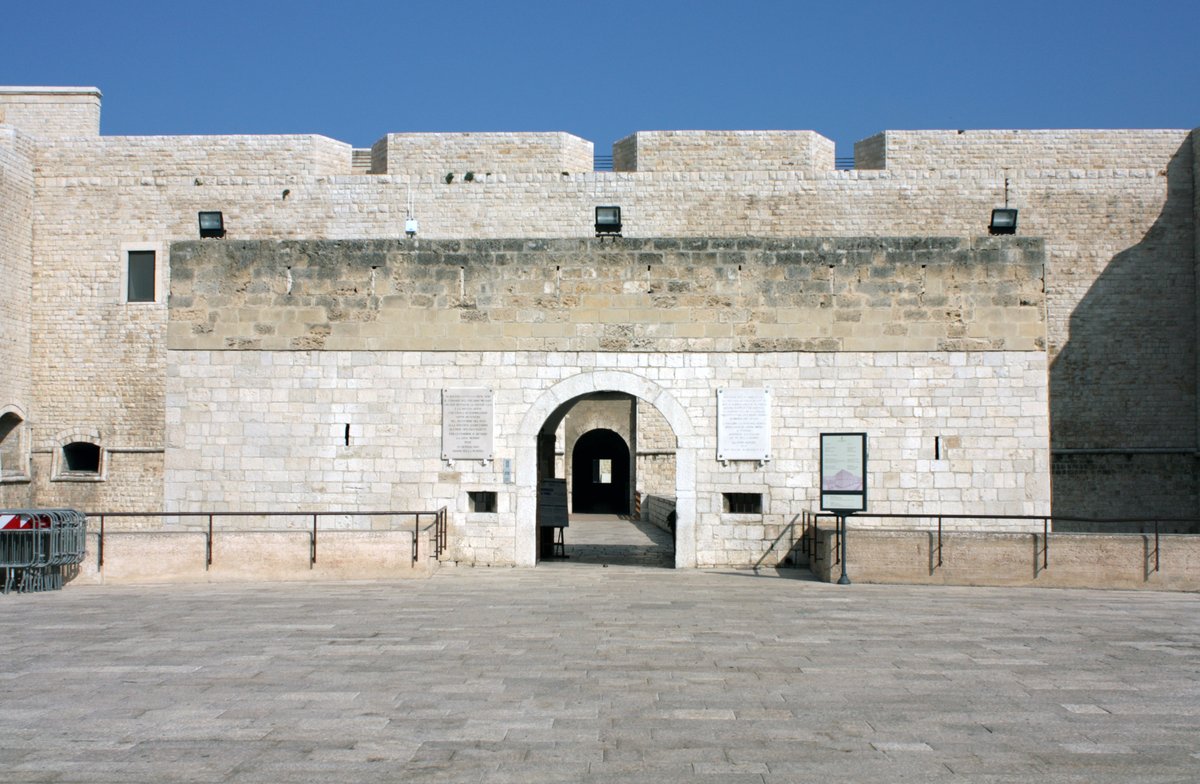
Just steps away from the museum, don’t miss the Basilica of the Holy Sepulchre, a Romanesque-Apulian jewel with a fascinating crypt. For a thematic experience, visit the Swabian Castle, a medieval fortress hosting exhibitions and cultural events, ideally connecting the history of the Colossus to the Norman-Swabian heritage of the city. These sites, together with the museum, create a coherent journey through the centuries, perfect for those wanting to delve into Barletta’s historical richness without straying far from the city center.
Itineraries nearby


💡 Did You Know…?
Legend has it that the Colossus, found in the sea in the 1300s, was a statue of Emperor Valentinian I, thrown into the water during a shipwreck. It’s said that the people of Barletta, by recovering it, averted a curse: ever since, the bronze giant has watched over the city. A detail that makes the visit almost magical.