Cavernago Castle: Renaissance Fortress Inhabited by Martinengo Descendants

Cavernago Castle is a 16th-century Renaissance fortress built by the Martinengo family, still inhabited today by their descendants. The visit includes inner courtyards, elegant loggias, and access to normally closed spaces like the dungeons. Ideal for atmospheric photography and away from tourist crowds, it is easily accessible from Bergamo and Brescia.

  • 16th-century Renaissance fortress with corner towers and brick walls
  • Still inhabited by descendants of the Martinengo family
  • Guided tours of noble halls, dungeons, and inner courtyards
  • Authentic and quiet atmosphere, away from tourist crowds


Events nearby


Copertina itinerario Cavernago Castle: Renaissance Fortress Inhabited by Martinengo Descendants
16th-century fortress with crenellated towers, inner courtyards, and visitable dungeons. Still inhabited by the Martinengo family, it offers guided tours of noble halls and personal anecdotes in the Bergamo plains.

Good to know


Introduction

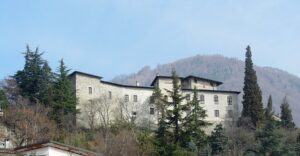
Just outside the village of Cavernago, the Martinengo Castle rises imposingly in the Bergamo plain, a true feast for the eyes that transports you to the Renaissance. Built in the 16th century at the behest of Bartolomeo Martinengo, this square-plan fortress with four corner towers dominates the landscape with its austere bulk. It’s not just a monument, but a place that breathes history: its brick and stone walls tell centuries of military and noble tales. Strolling through the inner courtyard, with its central well and arcades, makes you feel part of a bygone era. The castle, still privately owned but visitable on special occasions, retains an intact charm, far from mass tourist flows. Its isolated position, surrounded by fields, enhances the timeless atmosphere, ideal for those seeking authenticity.

Historical Overview

Cavernago Castle originated as a military fortress in the 16th century, commissioned by Bartolomeo Martinengo, a military commander serving the Republic of Venice. The structure replaced an earlier medieval manor, adapting to the new defensive needs of the era. The Martinengo family, a noble Brescian lineage, transformed it into a stately residence, enriching it with Renaissance elements. During the 17th and 18th centuries, the castle was at the center of military events, such as Spanish incursions, but always maintained its residential function. In the 19th century, it passed through various owners until its acquisition by the current proprietors, who oversee its preservation. Today, in addition to being a historical landmark, it occasionally hosts cultural events and weddings, keeping its connection to the local territory alive.

  • 16th century: construction commissioned by Bartolomeo Martinengo
  • 17th century: expansions and adaptation into a noble residence
  • 19th century: changes in ownership and restorations
  • Today: private property with event-driven visits

Military Architecture and Hidden Details

The castle’s architecture exemplifies a Renaissance fortress with residential functions. The square layout, four corner towers with sloping bases, and arquebus loopholes reveal its military origins. Inside, the courtyard with its loggia and the grand ballroom stand out, where coffered ceilings and monumental fireplaces showcase the luxury of the era. A lesser-known detail are the secret dungeons accessible via narrow staircases, used as temporary prisons. The private rooms preserve period furnishings and family coats of arms, while the cellars, once used as storerooms, now host temporary exhibitions. Local materials – brick for the walls, Sarnico stone for decorative elements – connect the castle to the Bergamo region, making it a symbol of craftsmanship and ingenuity.

Local Legends and Curiosities

Cavernago Castle is shrouded in popular legends that enhance its mystery. It’s said that a secret passage, now walled up, once connected the manor to the nearby Church of San Zeno, used by the Martinengo family to escape imminent dangers. Another story tells of a hidden treasure concealed by the owners during wars, never found, fueling the fantasies of treasure hunters. Local guides often mention nocturnal apparitions linked to former guests, though there’s no documented evidence. Interestingly, the castle appears in some 16th-century documents as a venue for diplomatic meetings between Venetian and Milanese representatives, highlighting its strategic role. These anecdotes, passed down orally, enrich the visit, transforming it into an experience that’s not just historical, but also emotional.

Why Visit It

Visiting Cavernago Castle is worthwhile for at least three concrete reasons. First, it’s a rare example of well-preserved Renaissance military architecture in Lombardy, with original elements like the corner towers and inner courtyard. Second, the guided tours, though limited, offer access to spaces normally closed to the public, such as the dungeons and noble halls, with detailed explanations about the Martinengo family. Third, the location is ideal for atmospheric photography, especially at dawn or dusk, when the light enhances the terracotta colors. Additionally, the absence of crowds allows you to enjoy the silence and authenticity of the place, away from the tourist chaos.

When to Go

The most enchanting time to visit is during the autumn days, when the morning fog from the plain envelops the castle, creating an almost fairytale-like atmosphere. On these occasions, the low-angled sunlight beautifully highlights the architectural details in terracotta, offering unique photographic opportunities. Avoid periods of heavy rain, as the outdoor areas can become muddy. If you prefer a more vibrant setting, check the local events calendar: sometimes the castle opens during village festivals, adding a touch of folklore to your experience.

In the Surroundings

To enrich your excursion, visit the Castle of Malpaga, just a few kilometers away—another Renaissance manor linked to the figure of Bartolomeo Colleoni, featuring well-preserved frescoes and a surrounding park. Another thematic option is a visit to the Adriano Bernareggi Museum in Bergamo, which expands the historical-artistic context of the area with artifacts related to local noble families, including the Martinengos. Both sites complete the picture of Bergamo’s history, offering ideas for a themed itinerary focused on castles and the Renaissance.

Itineraries nearby


💡 Did You Know…?

The most fascinating legend concerns the ghost of Bartolomeo Colleoni, the famous Bergamasque condottiero who allegedly frequented the castle. It is said that his spirit still appears on full moon nights, dressed in full armor. Another unique detail are the original 16th-century stables perfectly preserved, where you can still see the rings for tying horses and the stone feeding troughs. The castle also preserves a secret passage that connected the noble rooms to emergency exits, used during sieges.