
Discover the authentic charm of Forlì with this Forlì historic center itinerary, perfect for an intense day full of discoveries. Start from the majestic Ravaldino Fortress, symbol of the city, then immerse yourself in historic squares like Piazza Saffi, the vibrant heart with its market and Basilica of San Mercuriale. Visit the civic museums to admire local artworks and conclude with a relaxing stroll in Franco Agosto Urban Park. A route that combines history, culture, and relaxation, ideal for those who want to capture the essence of Forlì in just a few hours without missing the most significant details.
🗺️ Your trip at a glance
Discover the authentic charm of Forlì with this walking itinerary, perfect for a day filled with discoveries. A route that combines history, culture, and relaxation, ideal for those who want to capture the essence of Forlì in just a few hours.
- Ideal for: a cultural and relaxing day trip, exploring the history and architecture of Forlì.
- Highlights: a walking itinerary with 6 main stops, from Rocca di Ravaldino to the Urban Park, perfectly balanced between culture and moments of pause.
- Perfect for: curious travelers seeking an authentic experience, away from the more beaten tourist paths, appreciating both historical monuments and local daily life.
Itinerary stops
Stop no. 1
Rocca di Ravaldino
 Starting your itinerary at the Rocca di Ravaldino means immediately immersing yourself in Forlì's military history. This imposing Renaissance fortress, located on Via Giovanni dalle Bande Nere, was built at the behest of Girolamo Riario and Caterina Sforza between 1471 and 1480. Its massive red brick walls and moat testify to the strategic importance it held in controlling the Romagna territory. Today, while not always accessible internally, its exterior offers a powerful glimpse into the city's past. Walking around the structure allows you to appreciate architectural details like the corner towers and bastions, typical elements of fifteenth-century fortifications. It's a place that speaks of power, resistance, and the events that shaped Forlì, making it an essential stop for understanding the roots of the historic center.
- Go to the page: Ravaldino Fortress: Medieval Fortress with Towers and Panoramic View over Forlì
- Via Giovanni dalle Bande Nere, Forlì (FC)
- Open in Google Maps
- View on Google Images

You should go if...
Stop no. 2
San Mercuriale Abbey
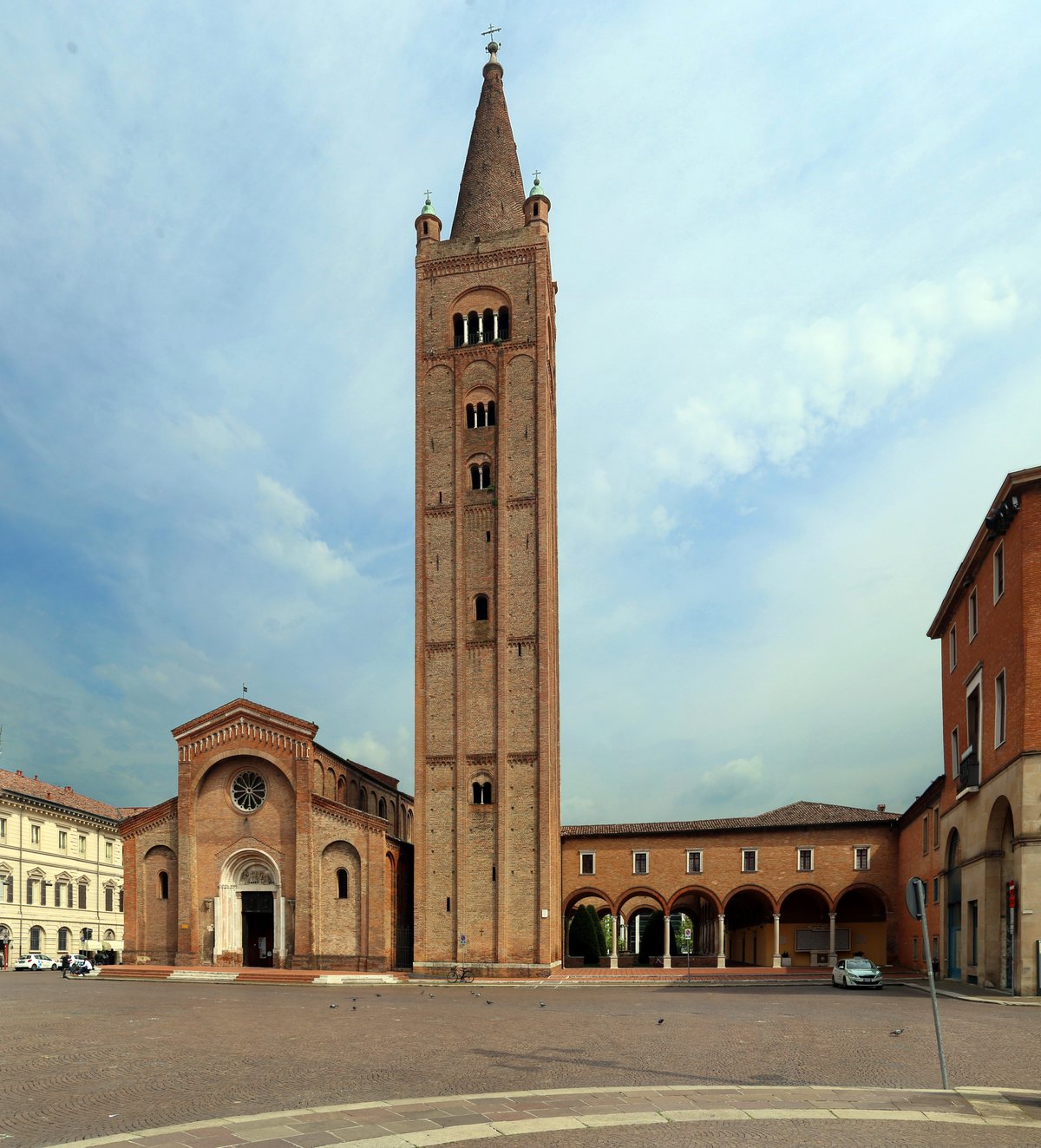 Leaving the Rocca di Ravaldino behind, you immediately immerse yourself in Forlì's medieval atmosphere as you reach San Mercuriale Abbey in Piazzetta delle Poste. The 75-meter-high Romanesque bell tower dominates the city skyline and is one of the most recognizable symbols of the city. The Benedictine abbey, founded in the 8th century but rebuilt in Romanesque style in the 12th century, houses artworks of considerable interest such as the sarcophagus of Barbara Manfredi and 14th-century frescoes. The brick facade features a rose window and a splayed portal that lead into the solemn interiors, where you can breathe in the centuries-old history of Forlì. Nearby, the small square offers a peaceful break before continuing to the next stops in the historic center.
- Go to the page: San Mercuriale Abbey Forlì: 75m Romanesque Bell Tower and Renaissance Cloister
- Piazzetta delle Poste, Forlì (FC)
- Open in Google Maps
- View on Google Images
You should go if...
Stop no. 3
Santa Croce Cathedral
 After admiring the Abbey of San Mercuriale, we move towards Via degli Orgogliosi where the Santa Croce Cathedral stands, the main Catholic place of worship in Forlì. The neoclassical facade, designed by Giuseppe Pistocchi in 1780, conceals a much older history: its origins date back to the 12th century, although the building has undergone numerous modifications. Inside, the Chapel of the Madonna del Fuoco, the city's patron saint, stands out with its precious 14th-century fresco miraculously saved from a fire, and the 1507 baptismal font. The Romanesque crypt preserves archaeological remains of previous constructions, offering a layered glimpse into Forlì's religious history. The cathedral, in addition to its liturgical function, hosts organ concerts and temporary exhibitions.
- Go to the page: Forlì's Santa Croce Cathedral: Neoclassical Facade and Romanesque Bell Tower
- Via degli Orgogliosi, Forlì (FC)
- Open in Google Maps
- View on Google Images
You should go if...
Stop no. 4
Civic Tower
 From the Cathedral of Santa Croce, you move towards Piazzetta della Misura where the Civic Tower rises, one of the most recognizable symbols of Forlì. Built in the 13th century as part of the city's defensive system, the tower stands 45 meters tall and represents a rare example of well-preserved medieval architecture. Its red brick structure defines the urban landscape, while the bell chamber still houses the ancient bell that once marked the hours for the city. The internal staircase, consisting of 196 steps, leads to a panoramic terrace from which you can take in the entire historic center, from the main churches to the noble palaces. The tower, recently restored, is accessible during certain periods of the year and offers an immersive experience in Forlì's history, recounting centuries of dominations and urban transformations.
- Piazzetta della Misura, Forlì (FC)
- Open in Google Maps
- View on Google Images
You should go if...
Stop no. 5
Piazza della Vittoria
 Leaving the Civic Tower behind, you arrive at Piazza della Vittoria, Forlì's main public square. This spacious rectangular piazza is bordered by porticoed buildings housing historic cafés and shops, creating a lively and welcoming atmosphere. At its center stands the Monument to the Fallen, an imposing marble work commemorating the people of Forlì who died during World War I. The square is always bustling: in the morning it's the preferred spot for breakfast, while in the afternoon it transforms into a meeting point for aperitivo. The porticoes provide shelter from sun and rain, allowing you to leisurely admire the architecture of the surrounding buildings, some of which date back to the 18th century. It's the perfect place for a refreshing break while exploring the historic center.
- Forlì (FC)
- Open in Google Maps
- View on Google Images
You should go if...
Stop no. 6
Franco Agosto Urban Park
 After exploring the squares and monuments of the city center, Franco Agosto Urban Park offers a pleasant change of pace. This expansive green space stretches along the banks of the Montone River, with tree-lined avenues perfect for relaxing strolls. The park is equipped with children's play areas, shaded benches, and picnic spots, making it a local favorite for Forlì residents. During the warmer months, it comes alive with outdoor events and evening concerts. Its proximity to the historic center makes it easily accessible on foot, allowing you to end your day immersed in nature without leaving the city. It's the ideal place to observe local daily life and enjoy a moment of tranquility.
- Forlì (FC)
- Open in Google Maps
- View on Google Images
You should go if...