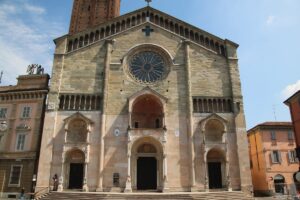
If you only have one day to visit Bologna, skip the usual crowded tourist routes and follow this walking itinerary that will take you to discover its medieval towers and UNESCO porticoes, recently inscribed as World Heritage. With 9 carefully selected stops, you’ll walk through hidden squares, historic basilicas, and less-trodden corners, without missing the city’s icons. Starting from Piazza Maggiore, you’ll immerse yourself in the medieval heart by climbing the Asinelli Tower for a breathtaking view, then stroll along the porticoes of via Indipendenza to the evocative Santo Stefano complex. The itinerary continues through historic markets and silent cloisters, offering an authentic experience. Ideal for art and history lovers, but also for those seeking unique photographic spots. This route will make you fall in love with Bologna in just a few hours, showing you the city’s most authentic side.
🗺️ Your trip at a glance
An itinerary that combines art, history, and local life in a single day, perfect for those who want to experience Bologna at a leisurely pace.
- Ideal for: curious travelers who love walking and discovering hidden corners, far from mass tours.
- Highlights: medieval towers, UNESCO porticoes, authentic squares, and history-rich basilicas, all within walking distance.
- For whom: low-budget backpackers and digital nomads seeking an intense cultural experience in a few hours.
Itinerary stops
Stop no. 1
Porta Saragozza: The Start of the World’s Longest Portico
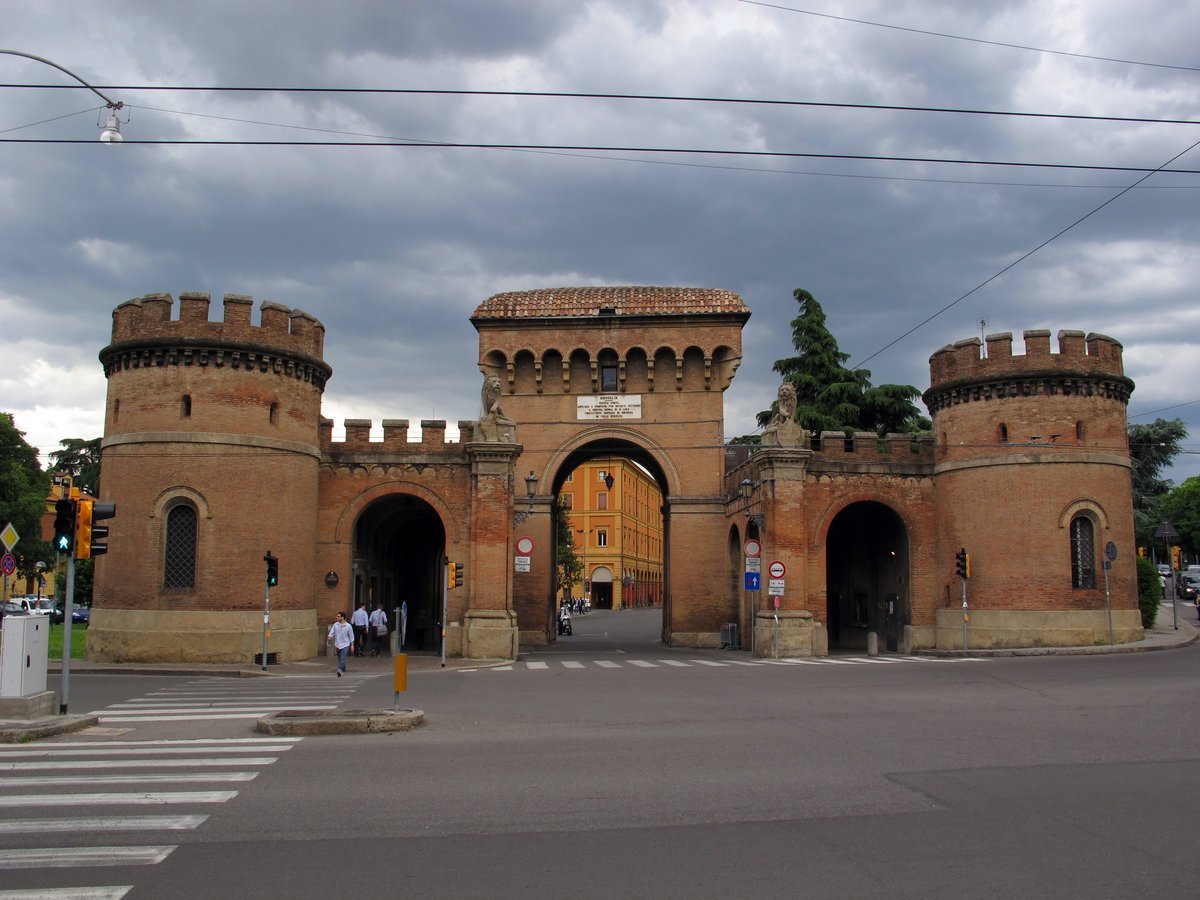 Our Bologna itinerary begins right here, at Porta Saragozza, one of the historic gates of the third city wall. It’s not just a monumental passage: it’s the starting point of the Portico of San Luca, the longest in the world with its 666 arches. The gate you see today is the result of a radical neo-Gothic reconstruction between 1857 and 1859, intended to celebrate the Madonna of San Luca. But Porta Saragozza is also a symbol of social change: in 1982, its guardhouse became the first public space in Italy granted to a homosexual association, the Circolo 28 giugno, now remembered as “Il Cassero.” Inside, you can visit the Museum of the Blessed Virgin of San Luca, which tells the story of popular devotion to the Marian image. In front of the gate, a small chapel commemorates the Madonna of Tears. It’s a place that blends faith, history, and modernity—perfect for starting to discover Bologna off the beaten path.
- Via Saragozza, Bologna (BO)
- Open in Google Maps
- View on Google Images

You should go if…
Stop no. 2
Santa Maria della Vita: Niccolò dell’Arca’s ‘Stone Scream’
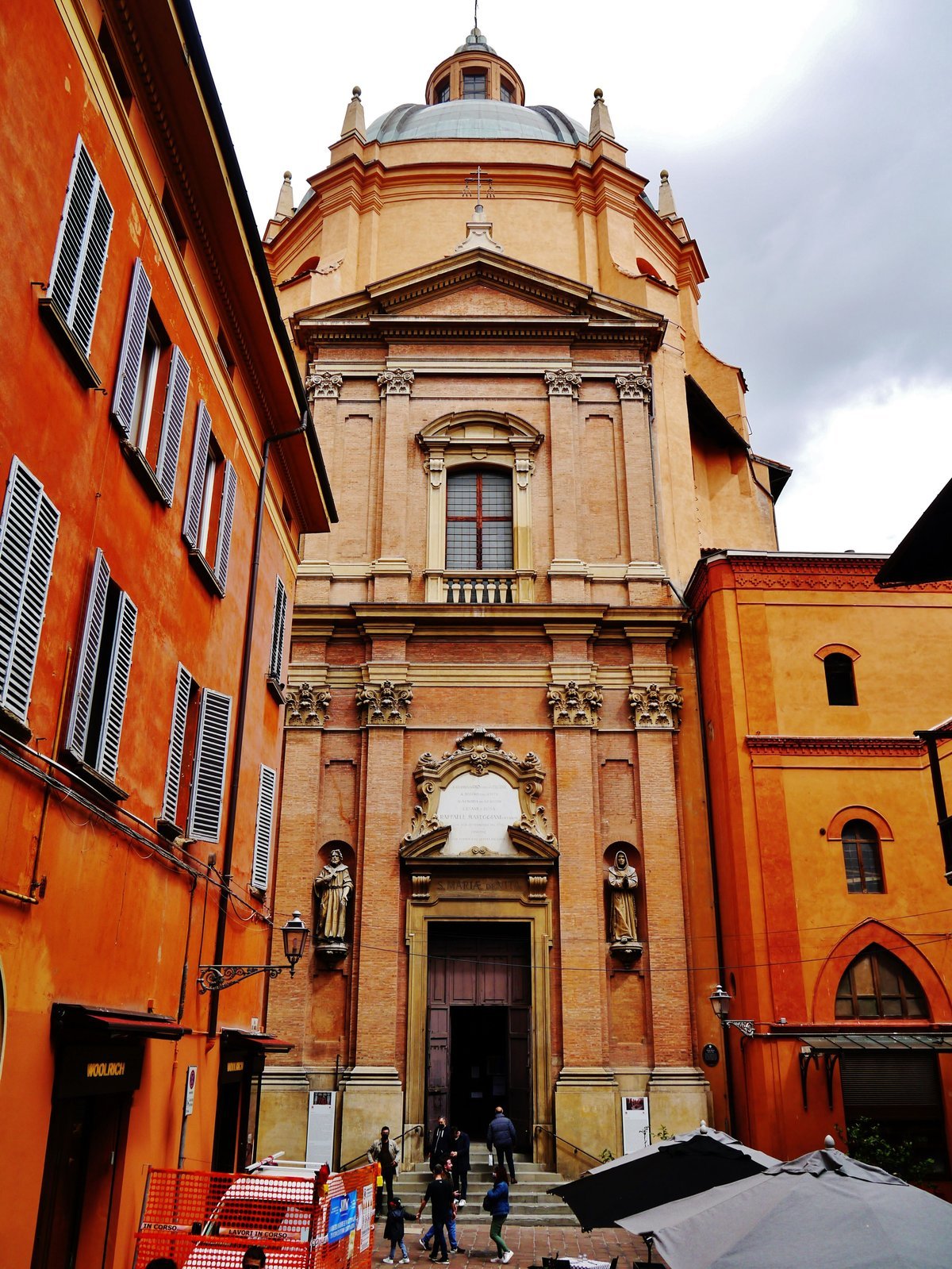 A stone’s throw from the bustling Quadrilatero, Santa Maria della Vita is a monumental complex that houses one of Bologna’s most intense works: Niccolò dell’Arca’s Lamentation over the Dead Christ. Gabriele D’Annunzio called it a ‘stone scream’, and there is no more fitting description for these seven terracotta statues, with faces twisted in grief and wind-swept drapery. The church, rebuilt in Baroque style with a dome designed by Bibiena, is a gem, but it is the adjacent Oratory that offers another emotion: Alfonso Lombardi’s Transit of the Virgin, more restrained yet just as moving. The complex is part of Genus Bononiae and also houses the Health Museum. Enter in silence, let yourself be enveloped by the intensity. Admission is €8 (reduced €5), free with Card Cultura or Bologna Welcome Card. Open daily 10:00 AM-6:30 PM.
- Via Pescherie Vecchie, Bologna (BO)
- Open in Google Maps
- View on Google Images
You should go if…
Stop no. 3
Piazza Galvani: Where Science Meets Porticoes
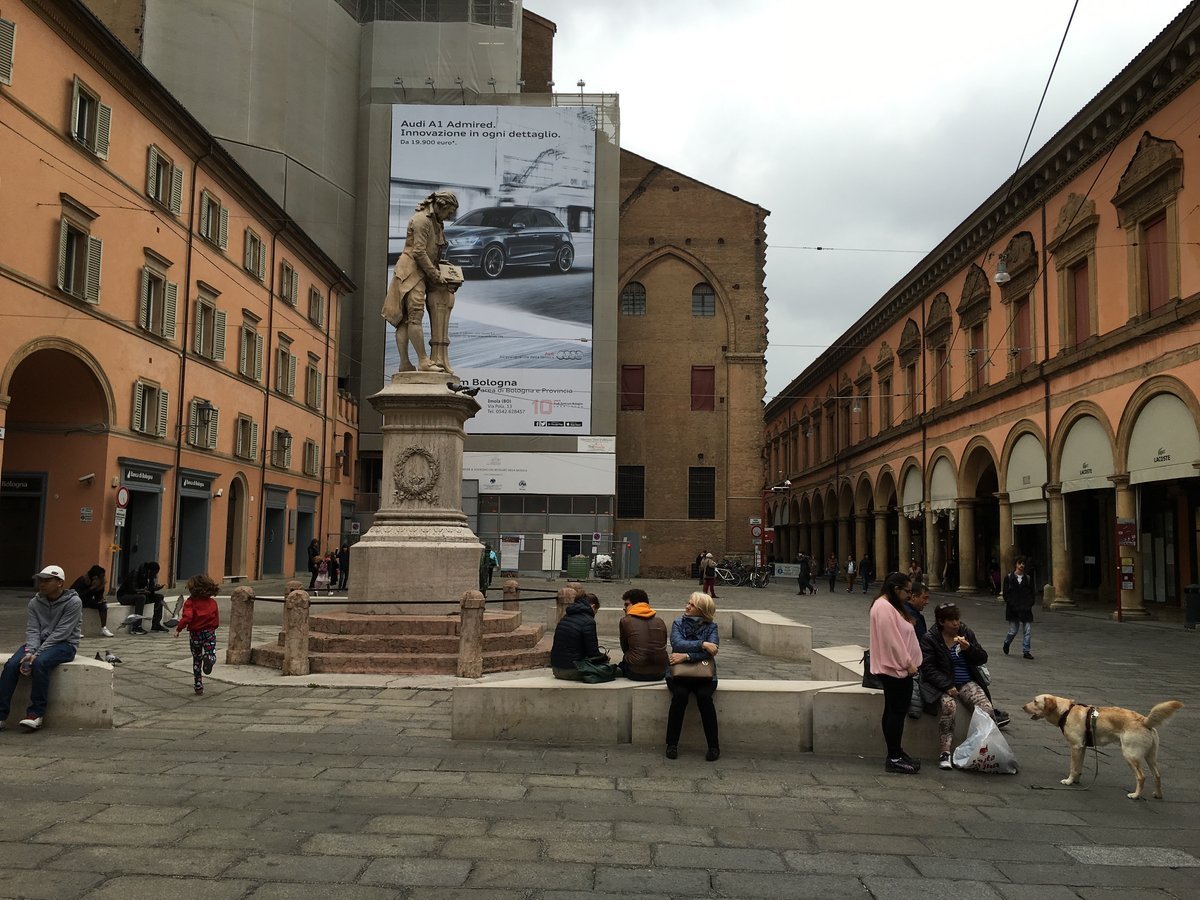 Leave behind the stone cry of Santa Maria della Vita, head down Via Pescherie Vecchie, and in a few minutes you’ll find yourself in Piazza Galvani. Here the rhythm changes: no crowds, just the sound of footsteps under the Portico del Pavaglione, which once housed the silk cocoon market, the heart of Bologna’s economy from the 1400s. At the center, the statue of Luigi Galvani—yes, the one with the frog—gazes at you, bent over his books. Sculptor Adalberto Cencetti immortalized him like this in 1879, complete with a frog on his table, symbolizing the discovery of bioelectricity. The square is dominated by the Archiginnasio, the ancient seat of the university, with its elegant façade. From here you enter to visit the Anatomical Theatre, but even from outside it’s worth observing the unfinished apse of San Petronio, with its exposed bricks. If you fancy a coffee, the historic Caffè Zanarini has been there since 1930, perfect for a break while watching the square. Tip: come early in the morning, when the porticoes are golden and the tourists are still in bed.
- Piazza Galvani, Bologna (BO)
- Open in Google Maps
- View on Google Images
You should go if…
Stop no. 4
Basilica of San Domenico: Renaissance Masterpieces
 From Piazza Galvani, just a few steps take you to Piazza San Domenico, a place steeped in history and spirituality. The basilica, consecrated in 1251, houses the Ark of Saint Dominic, a masterpiece by Nicola Pisano, Niccolò dell’Arca, and a young Michelangelo, who sculpted San Petronio, San Procolo, and the angel holding a candlestick here. In the Rosary Chapel, admire the organ played by Mozart in 1770—a unique emotion. The inlaid wooden choir by Fra Damiano da Bergamo, nicknamed the “eighth wonder of the world,” is a riot of perspective inlays. Admission is free, and the peace you breathe here is a perfect antidote to the bustle of the center. Don’t miss the cell where Saint Dominic died in 1221, visitable with the friars. A jewel uniting art, faith, and genius.
- Go to the page: Basilica of Saint Dominic: Art, History, and Mozart’s Organ
- Piazza San Domenico, Bologna (BO)
- Open in Google Maps
- View on Google Images
You should go if…
Stop no. 4
Basilica of San Domenico: Renaissance Masterpieces
From Piazza Galvani, just a few steps take you to Piazza San Domenico, a place steeped in history and spirituality. The basilica, consecrated in 1251, houses the Ark of Saint Dominic, a masterpiece by Nicola Pisano, Niccolò dell’Arca, and a young Michelangelo, who sculpted San Petronio, San Procolo, and the angel holding a candlestick here. In the Rosary Chapel, admire the organ played by Mozart in 1770—a unique emotion. The inlaid wooden choir by Fra Damiano da Bergamo, nicknamed the “eighth wonder of the world,” is a riot of perspective inlays. Admission is free, and the peace you breathe here is a perfect antidote to the bustle of the center. Don’t miss the cell where Saint Dominic died in 1221, visitable with the friars. A jewel uniting art, faith, and genius.- Go to the page: Basilica of San Domenico Bologna: Michelangelo’s Works and the Saint’s Ark
- Piazza San Domenico, Bologna (BO)
- Open in Google Maps
- View on Google Images
You should go if…
Stop no. 5
Piazza Santo Stefano: The Medieval Heart of Bologna
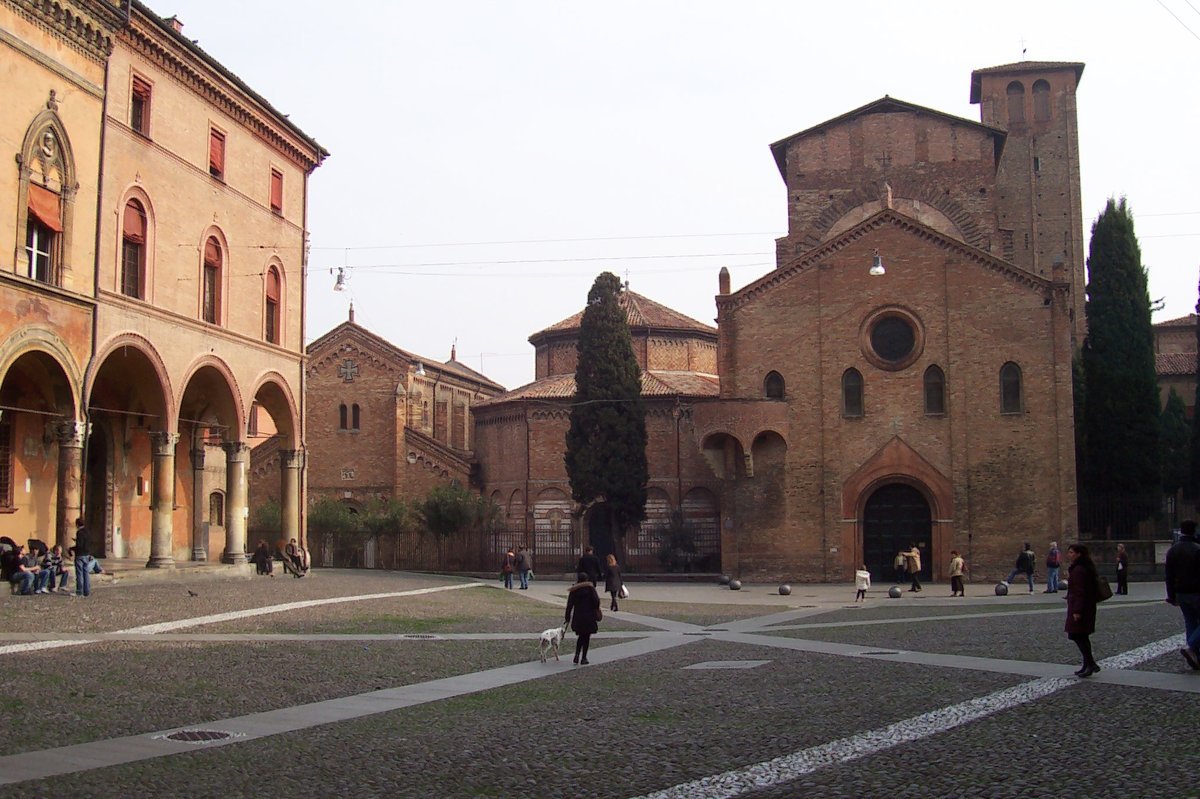 Leaving the peace of San Domenico behind, you slip into Via Santo Stefano and emerge into a square that looks like it came out of a painting. This is Piazza Santo Stefano, a triangular expanse that locals also call ‘Piazza delle Sette Chiese’ (Square of the Seven Churches). Here, time stands still. The Santo Stefano complex is not a single church but a labyrinth of sacred buildings built across different eras: from the 5th to the 12th century, all in red brick. You enter and find yourself in the Cortile di Pilato (Pilate’s Courtyard), with its 8th-century basin, then move into the Rotonda del Santo Sepolcro (Rotunda of the Holy Sepulchre), an octagonal structure that copies the Holy Sepulchre in Jerusalem. There’s the Church of the Crucifix with its Romanesque crypt and a column that is said to mark the height of Christ, and the oldest church of Santi Vitale e Agricola. Every corner has a story, a legend. The square is very lively: under the elegant porticoes are cafes and restaurants, and often there are concerts or markets. It’s a place that blends the sacred and the profane, history and nightlife. Take at least an hour to explore every nave, every cloister. And don’t forget to look up: the Romanesque capitals of the upper cloister have grotesque figures that are said to have inspired Dante.
- Piazza Santo Stefano, Bologna (BO)
- Open in Google Maps
- View on Google Images
You should go if…
Stop no. 6
Basilica of Santo Stefano: The Complex of the Seven Churches
 You enter Piazza Santo Stefano and the first impression is almost unreal: a cluster of brick facades that seem to embrace each other. The complex of the Seven Churches is not a single basilica, but a journey of faith and history that winds through courtyards and naves. The Courtyard of Pilate, with its 8th-century Lombard basin, introduces you to the symbolism of the Passion. Then the Rotunda of the Holy Sepulchre, octagonal in plan, reproduces the tomb in Jerusalem. There is the Romanesque crypt beneath the Church of the Crucifix, with columns from different eras (one is said to be as tall as Christ), and the oldest Basilica of Saints Vitale and Agricola, from the 5th century. Every corner tells a legend: the monstrous capitals of the upper cloister are said to have inspired Dante. Admission is free, and the light filtering through the Romanesque windows creates a unique atmosphere. Take time to explore: between the museum, the reliquaries, and the silence of the cloister, time here seems suspended.
- Piazza Santo Stefano, Bologna (BO)
- Open in Google Maps
- View on Google Images
You should go if…
Stop no. 7
Oratorio of Saint Cecilia: Bologna’s ‘Sistine Chapel’
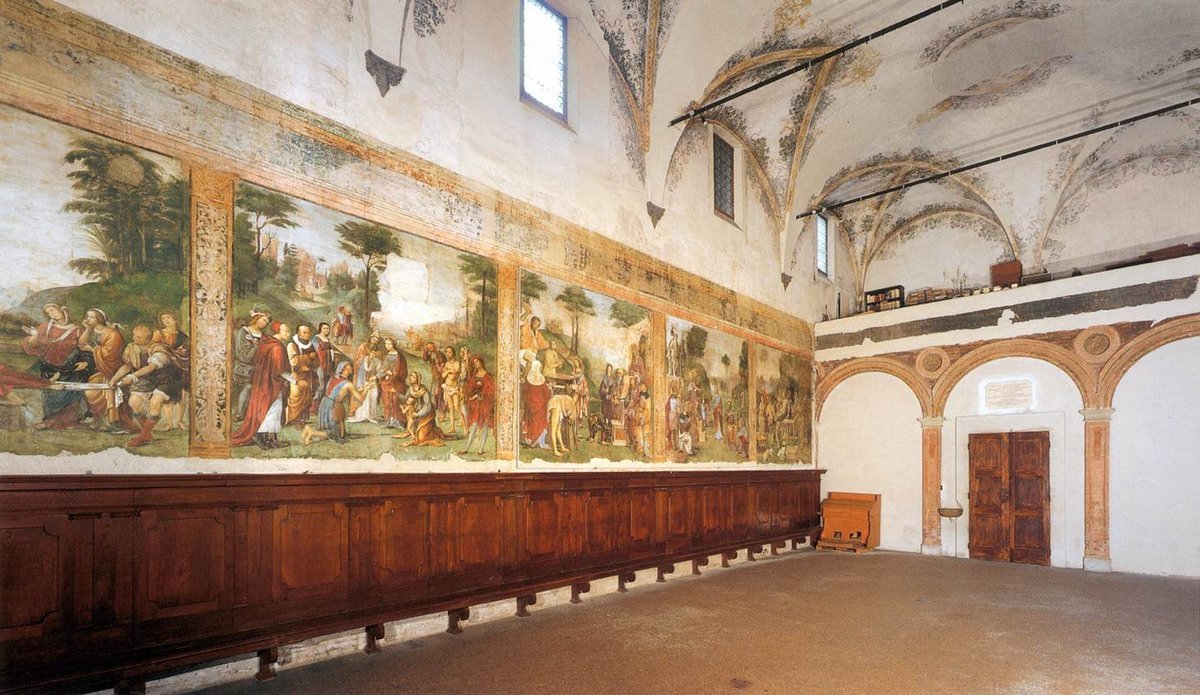 Leave behind the Santo Stefano complex and, walking along Via Zamboni, stop at number 15. Here, nestled against the Basilica of San Giacomo Maggiore, lies the Oratorio of Saint Cecilia, a gem that even many locals are unaware of. Enter and you’ll be amazed: the walls are a triumph of frescoes created between 1505 and 1506 by order of Giovanni II Bentivoglio. Artists such as Francesco Francia, Lorenzo Costa, and Amico Aspertini painted the stories of Saint Cecilia and her husband Valerian in ten panels separated by grotesque-decorated pilasters. For the overall quality, the oratory is nicknamed Bologna’s ‘Sistine Chapel’. The atmosphere is intimate, almost suspended: the soft light enhances the colors. Admission is free, and it is open every day in two time slots (10-1pm and 3-7pm, but closes earlier during concerts). It is a place that surprises for its concentration of beauty in such a compact space. Take your time to observe each scene: you’ll notice details like the coronation of the spouses or the beheading, rendered with a grace that will leave you breathless.
- Piazza Giuseppe Verdi, Bologna (BO)
- Open in Google Maps
- View on Google Images
You should go if…
Stop no. 8
Palazzo Poggi: Science, Art, and History in a University Palace
 From the Oratory of Santa Cecilia, just a few steps bring you to Via Zamboni 33. Here, between the Rectorate and the library, lies the Museum of Palazzo Poggi, a place that merges art and science in surprising ways. Be amazed by the 18th-century anatomical waxes: the famous Venerina by Clemente Susini, the obstetric models by Giovan Antonio Galli, and those of Anna Morandi, one of the few women professors of anatomy. The rooms tell the story of the Institute of Sciences founded in 1711 by Luigi Ferdinando Marsili: you’ll find naval models, ancient maps, physics instruments, and military architecture tools. On the piano nobile, frescoes by Pellegrino Tibaldi, Nicolò dell’Abate, and Prospero Fontana decorate the walls with stories of Ulysses, mythological and biblical scenes. Don’t miss the Carducci Room, where the poet taught for 43 years. The museum is open Tuesday to Sunday (Tuesday-Friday 10 am-4 pm, Saturday-Sunday 10 am-6 pm), admission €10. A tip: stop in the courtyard to admire the Hercules statue by Angelo Piò, a copy of the original. Here you feel the stratification of Bologna’s history.
- Via Zamboni, Bologna (BO)
- Open in Google Maps
- View on Google Images
You should go if…
Stop no. 9
Teatro Comunale: The Temple of Opera Awaits Restoration
 The final stop brings you to Largo Respighi, in front of the Teatro Comunale, an 18th-century architectural gem by Antonio Galli Bibiena. Inaugurated on May 14, 1763, with Gluck’s opera *Il trionfo di Clelia*, it was the first opera house built with public funds. The greatest conductors have performed here: Toscanini, Furtwängler, Karajan, Muti, Abbado. And voices like Pavarotti and Freni have enchanted audiences. Today the theater is closed for a restoration that will restore it to its former glory (reopening scheduled for 2027), but you can still admire the unfinished facade completed only in 1935-36, a mix of history and anticipation. Meanwhile, the opera season continues at the Comunale Nouveau and the Auditorium Manzoni, with programming that keeps the tradition alive. Strolling under the porticoes, you breathe the air of a city that has made music an art of living.
- Go to the page: Teatro Comunale Bologna: Perfect Acoustics and Opera Seasons Since 1763
- Largo Respighi, Bologna (BO)
- https://www.tcbo.it/
- Open in Google Maps
- View on Google Images
You should go if…