
🧭 What to Expect
Ideal for a cultural weekend or a day trip Highlights: Priamar Fortress, unique museums, lively historic center Recommended for families and history enthusiasts Best time: spring and autumn for mild weather
If you're planning what to see in Savona, get ready for a city that knows how to surprise. Many know Savona only as a pass-through, but its historic center deserves a thorough visit. From the majestic Priamar Fortress, the city's symbol, to the quirky All About Apple Museum, passing through the Palazzo Gavotti Art Museum and elegant squares like Piazza Sisto Quarto. Savona is not just a seaside city: it's a concentration of history, art, and culture. In this article, I'll guide you through Savona's unmissable places, with practical tips to make the most of your time. You'll discover charming corners like the Church of Santo Spirito and the Chiabrera Theatre. Ready for an offbeat visit? Here's what not to miss in Savona.
Overview
- Priamar Fortress: Between Past and Present
- All About Apple Museum: A Dive into Computer History
- Palazzo Gavotti Art Museum: A Dive Between Renaissance and Contemporary
- Neoclassical Treasure: The Chiabrera Theatre
- Piazza Sisto Quarto: The Living Room of Savona
- Piazza della Maddalena
- Forte della Madonna degli Angeli: Between History and Memory
- Church of Santo Spirito: History and Devotion in Savona
- Archaeological History Museum: A Dive into Savona's Past
- War Memorial: Echoes of Memory
- Castello Migliardi: A Liberty Gem Between History and Shelters
- La Torretta, Symbol of Savona
- Boselli Temple: A Ceramic Jewel in Savona's Gardens
- The Monument to Garibaldi: A Gaze Toward Nice
Itineraries nearby

Priamar Fortress: Between Past and Present
- Go to the page: Priamar Fortress: History, Museums, and Breathtaking Views in Savona
- Corso Giuseppe Mazzini, Savona (SV)
- Open in Google Maps
- View on Google Images
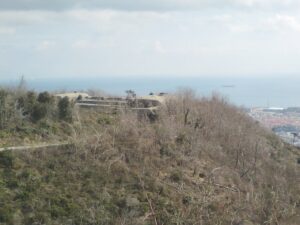
 As you climb toward the Priamar Fortress, you can't help but be struck by its austere bulk dominating the port of Savona. The name in Ligurian means 'stone on the sea,' and from the first glance you understand why. Built between 1542 and 1544 by the Republic of Genoa based on a design by Giovanni Maria Olgiati, this fortress wasn't meant to defend the city but to control it after its submission. To build it, the Genoese razed the entire medieval center to the ground: the Cathedral of Santa Maria di Castello, the bishop's palace, ten oratories, and three hospitals. A devastating blow for Savona, which felt the effects for centuries. Today, however, it is an unmissable cultural hub: inside you'll find the Civic Archaeological Museum, with Etruscan and Greek artifacts, and the Sandro Pertini Museum, featuring contemporary art. But the true highlight is the cell where Giuseppe Mazzini was imprisoned in 1830–31 and where, it is said, he conceived the Young Italy movement. Climbing onto the bastions, the view stretches from the sea to the mountains, and in summer the Maschio courtyard transforms into an open-air theater seating 600. Admission is free (the museums charge a fee), and hours are convenient: winter until 6:30 pm, summer until midnight. One tip: arrive at sunset, when golden light illuminates the stone walls and the panorama becomes pure poetry.
All About Apple Museum: A Dive into Computer History
- Piazza Fabrizio De Andrè 12r-14r, Savona (SV)
- https://www.allaboutapple.com/
- Open in Google Maps
- View on Google Images
- +39 019 9380100
 If you think a museum is just stuff to look at without touching, the All About Apple Museum in Savona will change your mind. Here, over 9,000 pieces are all switched on and working, ready to be used. You can sit down in front of an Apple Lisa or a NeXT Cube, the computer Steve Jobs created after leaving Apple. That’s something that got noticed in Cupertino, so much so that they invited the founders to California as an official museum. Inaugurated in 2015 in the new marina, the museum is run by the All About Apple ODV volunteer association, founded in 2002. The collection spans from 1976 to today: computers, peripherals, prototypes, and even computers from other brands like Commodore and Olivetti, to understand the pioneering context of the 1970s. Highlights include the Macintosh 128K, the PowerBook Duo, and the Newton. The museum is open only on Saturday afternoons and Sunday mornings (hours: Sat 2:30–5:30 PM, Sun 9:30 AM–12:30 PM). Tickets cost €7, reduced €5. It is recommended to book because volunteers are not always available. The best part is that every visit is unique: you can feel like you're in 1984 while tinkering with an old Mac, or be amazed by the design of the Twentieth Anniversary Macintosh. An experience that combines history, technology, and a touch of nostalgia.
Palazzo Gavotti Art Museum: A Dive Between Renaissance and Contemporary
- Piazza Gilbert Chabrol 1;2, Savona (SV)
- Open in Google Maps
- View on Google Images
 In the heart of Savona’s historic center, in Piazza Chabrol, stands Palazzo Gavotti, an elegant Renaissance building built between 1570 and 1580 for the Gavotti family. Today it houses the Palazzo Gavotti Art Museum, a hub that combines the Civic Art Gallery, the Milena Milani Foundation, and the Ceramics Museum (the latter in the adjacent Monte di Pietà). Unique in its kind, it takes you on a journey from the 14th century to the present day. Among the masterpieces, the Crucifixion by Donato de’ Bardi (1426), a unique blend of Italian and Flemish art, and the Fornari Altarpiece by Vincenzo Foppa (1489), a symbol of the flourishing under the della Rovere popes, stand out. Also unmissable are the 15th-century polyptychs and the 17th-century painting collection with Valerio Castello, Gioacchino Assereto, and Domenico Piola. On the second floor, the contemporary collection features works by Picasso, Fontana, De Chirico, Magritte, and Miró. The Ceramics Museum preserves over a thousand works from the 15th century, with a focus on Savona maiolica. Practical info: at Piazza Chabrol 1-2; closed Monday and Tuesday; Wednesday 10:00 AM–1:30 PM; Thursday–Saturday 10:00 AM–6:30 PM; Sunday 10:00 AM–1:30 PM. Full ticket €4, reduced €2. It is advisable to check updated hours on the official website.
Neoclassical Treasure: The Chiabrera Theatre
- Go to the page: Teatro Chiabrera Savona: The Cultural Temple with Drama Seasons and Concerts
- Piazza Armando Diaz, Savona (SV)
- https://www.teatrochiabrera.it/IT/HomePage
- Open in Google Maps
- View on Google Images
- +39 019820409
 If you're passing through Savona, the Teatro Comunale Gabriello Chiabrera is well worth a stop. Inaugurated in October 1853 with Verdi's Attila, it is considered the most beautiful historic theatre still in operation in Liguria. The neoclassical façade, with statues of Goldoni and Alfieri by Santo Varni and those of Metastasio and Rossini by Antonio Brilla, welcomes you in Piazza Diaz. Inside, the horseshoe-shaped auditorium with four tiers and 626 seats offers a bygone atmosphere. The ceiling, frescoed with the eight classical arts, suffered a detachment in 1999 that shattered it into 2,000 pieces: today it has been meticulously reassembled. A very young Renata Scotto made her debut here on Christmas Eve 1952, and legendary artists such as Tito Schipa and Eduardo De Filippo have performed. In 2024 it was declared a National Monument. The box office reopens on October 13, 2025 (hours: Mon–Sat 10:30 AM–1:00 PM and 5:00–7:00 PM). If you have mobility issues, there are reserved seats and an accessible side entrance. In short, a piece of operatic history that still breathes.
Piazza Sisto Quarto: The Living Room of Savona
- Piazza Sisto Quarto, Savona (SV)
- Open in Google Maps
- View on Google Images
 Piazza Sisto Quarto, officially Piazza Sisto IV, is the true pedestrian heart of Savona. With its paved stone flooring, it invites you to walk and linger. Designed by architect Luciano Grossi Bianchi in 1997, it is relatively recent but has already become the city's focal point for daily life. Overlooking the square are the Basilica Cathedral of Santa Maria Assunta, the Oratory of the Risen Christ, and the Municipality of Savona. Throughout the year, the square comes alive with events like New Year's Eve, complete with a stage and giant screens. But even on ordinary days, there's always a buzz of activity: the newsstand, the café, the shops. Nearby streets offer hotels, restaurants, and parking. The square connects Corso Italia and Via Santa Maria Maggiore, making it a must-pass spot. Personally, I like to sit at the café and watch life go by. It's not an ancient square, but it already has a soul. Architect Bianchi managed to create a space that invites you to pause. The stone paving is well-maintained, and the surrounding buildings are elegant. If you visit Savona, you can't miss a stroll here. And if you're lucky, you might find yourself in the middle of a concert or a festival.
Piazza della Maddalena
- Savona (SV)
- Open in Google Maps
- View on Google Images
 In the maze of alleys of Savona's historic center, Piazza della Maddalena is where past and present meet. Overlooking Via Pia, the main street of the old town, the square is surrounded by stately palaces and ancient portals that tell centuries of history. Its name comes from the ancient church of Santa Maria Maddalena, now incorporated into the Renaissance Palazzo Multedo-Sacco. In front of this building stands the 18th-century Marian shrine depicting the Madonna of Mercy, the city's patron saint: it was originally placed at the gates of the old Molo district, later demolished to make way for the Priamar fortress. Today, sitting on the steps of the square means immersing yourself in a secluded atmosphere, away from traffic, where time seems to slow down. Locals pass through every day, but first-time visitors are struck by this small oasis of beauty. Don't expect grandeur: it's an intimate, authentic place that invites you to look up and catch the details of the facades. A tip? Stop at the nearby bar for a coffee and watch the comings and goings of those who live in the historic center. Piazza della Maddalena is more than just a square: it's the symbol of a city that has managed to preserve its soul.
Forte della Madonna degli Angeli: Between History and Memory
- Go to the page: Forte della Madonna degli Angeli: Fortress, Memory, and Panoramic Trail
- Strada Ex Forte, Savona (SV)
- Open in Google Maps
- View on Google Images
 As you hike the trails behind Savona, you'll come across a somewhat forgotten piece of history: the Forte della Madonna degli Angeli. Built by the Savoy in 1881 at 232 meters above sea level, it was part of the coastal defense system along with Forte Ciuto and Madonna del Monte. The structure is imposing: two floors, the first housed stables and storage, the second hosted positions for 280 mm howitzers (later 149/23 cannons) and telemeter stations. In front of the fort, two additional platforms were connected by a drawbridge over a moat that has now almost disappeared. During World War II, it served as a German garrison and anti-aircraft battery with Flak 88 cannons. Unfortunately, the fort is also the scene of an open wound: on December 27, 1943, seven anti-fascists were executed here by Nazi-fascists. A plaque in the courtyard commemorates the massacre, and the bullet marks are still visible on the wall. Today the fort is abandoned and not open to the public, but you can reach it on foot along the Anello dei Forti trail (about 18 km). It's worth the hike for the breathtaking view of the city and to reflect on what remains of memory. Bring comfortable shoes and respect: it's a place to experience with caution, but it offers an authentic emotion.
Church of Santo Spirito: History and Devotion in Savona
- Via dei Bricchetti, Savona (SV)
- Open in Google Maps
- View on Google Images
 If you think there is only one Church of Santo Spirito in Savona, you are wrong. There are two, and they tell very different stories. The oldest, dating back to around 1300, stood in the Zinola district, founded by the Benedictine monks of Sant'Eugenio on the island of Bergeggi. For centuries it experienced moments of glory and neglect: during plague epidemics it was turned into a lazaretto, and it never received the title of parish. Today unfortunately it is in a state of ruin: the roof has collapsed, the walls are bare, and only the façade with small arches and a pointed portal recalls its ancient splendor. The bombings of World War II worsened the decay, and the original bell tower has disappeared, replaced by a simple bell gable.
But the community never stopped venerating the Holy Spirit. At the end of the 19th century, specifically from 1878, a new parish church was built on Via Nizza, designed by Cortese A. This is the church that today welcomes the faithful with daily Masses (Monday-Friday at 6:30 PM, Saturday same time, Sunday 8:00 AM and 10:30 AM) and the recitation of the rosary. The building is sober but functional, and represents the spiritual heart of the district. If you love sacred art, you will find some interesting points, but the true richness is the living devotion. And if you are passionate about archaeology, do not miss a walk to Zinola to see the medieval ruins: a contrast that speaks of resilience and faith.
Archaeological History Museum: A Dive into Savona's Past
- Rifugio antiaereo del Monticello, Savona (SV)
- Open in Google Maps
- View on Google Images
 Stepping into the Archaeological History Museum (or Màr, as the locals call it) is like traveling back in time. Housed since 1990 in the 15th-century Loggia del Castello Nuovo within the Priamàr Fortress, this museum is not just a collection of artifacts—it is a living archaeological site. The exhibition unfolds over two floors, integrating visible excavation areas. On the ground floor, the Byzantine necropolis (4th–7th century AD) immediately catches your eye, with traces of the Ligurian Sabazi village. Nearby, the remains of the ancient cathedral (7th–16th century) tell centuries of faith and transformation. Upstairs, you enter the heart of the city's history: medieval and modern ceramics, with a section dedicated to the San Domenico district and the Cassari neighborhood. 92% of the artifacts come from excavations conducted by the International Institute for Ligurian Studies, which has been unearthing the hill's history for over sixty years. The museum received the Francovich Prize (2016–2017) as a national best practice for layout and education. Modern amenities include audioguides in 8 languages, tactile paths for the visually impaired, and QR codes for in-depth smartphone exploration. If you visit Savona, don't miss this gem. Hours: closed Monday; Tuesday–Friday 10–16; Saturday and Sunday 10:30–15:30. Full ticket €5, reduced €3, free for under 18. Info: 019 2211770, info@museoarcheosavona.it.
War Memorial: Echoes of Memory
- Piazza Goffredo Mameli, Savona (SV)
- Open in Google Maps
- View on Google Images
 Strolling through Savona, in Piazza Goffredo Mameli, you come across a monument that is more than just a sculpture: it's a daily appointment with history. The War Memorial, inaugurated on September 18, 1927, in the presence of King Victor Emmanuel III, is a bronze work by Genoese sculptor Luigi Venzano. The bronze? It comes from the smelting of cannons from World War I. On the sides, two groups of figures tell the beginning and end of the conflict: on one side, a pensive veteran and a soldier leaving; on the other, an elderly mother mourning her fallen son, with her daughter-in-law and grandson beside her. In the center, four titanic figures support a bell, a copy of the historic Campanassa of Savona. But the real magic happens every day at 6:00 PM. For nearly a century, the bell rings 21 chimes (one for each letter of the alphabet) in memory of all war victims. For a minute, pedestrian and road traffic in the square stops. A silence filled with respect that makes you forget you're in a modern city. It's a unique ritual in Italy, born to remember the armistice and the sacrifice of those who never returned. The base is made of Balma syenite, and the first stone was laid on November 4, 1923. If you're in Savona, mark the time: at 6 PM the square becomes a living monument. Show respect, pause for a moment, and listen. It's an experience that ties you to history more than any guided tour.
Castello Migliardi: A Liberty Gem Between History and Shelters
- Via Nazionale Piemonte, Savona (SV)
- Open in Google Maps
- View on Google Images
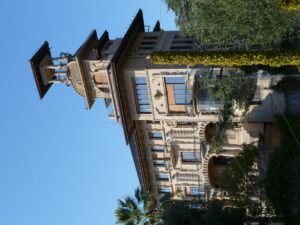
 If you stroll through Savona, in Lavagnola, you'll come across a residence that will leave you speechless: Castello Migliardi. Built between 1910 and 1911 in full Liberty style, it is a rare example of stately architecture with a curved front that seems to embrace the street. The balconies with balustrades follow that same curve, and the facades are embellished with floral motifs that run parallel to the second and fourth floors. A detail that catches the eye? The projecting side balconies, refined and a bit playful.
But the real surprise is inside: inside there is a pictorial cycle by the painter Raffaello Resio, the same one who frescoed the Cathedral of Albenga and the church of San Francesco in Genoa. Too bad it's not always open to the public, but it's worth taking a look even just from the outside.
And that's not all: the owner, Commendatore Cesare Bertani, during the Second World War had a 400-meter tunnel dug (now inaccessible and in a state of abandonment) that served as an air-raid shelter for the local population. A piece of history that deserves to be recovered. In short, Castello Migliardi is not just Liberty beauty, but also living memory.
La Torretta, Symbol of Savona
- Passeggiata e Caletta delle Capitanerie di Porto, Savona (SV)
- Open in Google Maps
- View on Google Images
 If you stroll along Savona's harbor, at the entrance to Via Paleocapa, you'll find yourself facing the city's symbol: the Torretta, officially Torre Leon Pancaldo. Standing 23 meters tall with a square base of 6 meters per side, this medieval tower dates back to the 14th century (first mentioned in 1392) and was part of the defensive walls. After the Genoese conquest in 1527, it was lowered but spared for pirate lookout purposes. In the 19th century, it risked demolition to make way for a new road, but the citizens saved it. Today it is dedicated to Savona's navigator Leon Pancaldo, who took part in the first circumnavigation with Magellan.
Architecturally, it is a gem: on the top stands the statue of Our Lady of Mercy (1662) by Filippo Parodi, a pupil of Bernini, accompanied by the couplet by Gabriello Chiabrera: “In mare irato, in subita procella, invoco te, nostra benigna stella.” The same phrase works in Latin and Italian. On the sea-facing facade is a fresco of the coat of arms of the Republic of Genoa.
Today, the interior is not open to visitors, but since 1990 the ground floor has housed the ANMI Group headquarters with memorabilia of the Italian Navy. It is one of the most photographed spots in the city, especially at sunset. A curiosity: since 1989, at a depth of 13 meters and 500 meters from shore, there is a small ceramic reproduction of the tower, a destination for divers. Nearby, on the pier, the Monument to the Sailor by Renata Cuneo commemorates those lost at sea. A place that encapsulates history, art, and maritime tradition.
Boselli Temple: A Ceramic Jewel in Savona's Gardens
- corso mazzini, Savona (SV)
- Open in Google Maps
- View on Google Images
 As you stroll through Savona’s Dante Alighieri Gardens, you’ll come across a small wonder: the Boselli Temple. This neoclassical temple, completed in 1785 by Savona-born ceramist Giacomo Boselli, is a true maiolica gem. Originally located in the private garden of his home on Via Torino, it was dismantled and relocated here in 1930 to save it from demolition. The building has a hexagonal plan, with a dome and six Ionic columns clad in polychrome tiles. The medallions adorning it – with mythological and allegorical figures – draw inspiration from the antiquities of Herculaneum and Wedgwood ceramics, a testament to Boselli’s European cultural influences. Among the subjects: Apollo with his lyre, Venus Callipyge, Bellerophon and Pegasus. Once, there were also biscuit busts of Boselli’s parents, now housed in the Ceramics Museum. The temple is a unique example of neoclassical architecture in Liguria and, in 2018, was included by FAI among its “Places of the Heart”. It stands behind a protective gate but can be admired from the outside. The gardens are open daily from dawn to dusk, with free admission. Bring a book and sit on a bench: the atmosphere is peaceful, almost suspended in time. It’s a shame you can’t enter the temple, but the fence helps preserve its delicate ceramics. For art and history lovers, this is an unmissable stop.
The Monument to Garibaldi: A Gaze Toward Nice
- Piazzale Eroe dei Due Mondi, Savona (SV)
- Open in Google Maps
- View on Google Images
 If you stroll along the Lungomare di Savona, you can't miss the equestrian statue of Giuseppe Garibaldi dominating Piazzale Eroe dei Due Mondi. Created in 1928 by sculptor Leonardo Bistolfi, it stands about three and a half meters tall and is cast from bronze obtained from enemy cannons – a detail steeped in history. The peculiarity? Garibaldi looks toward Nice, his hometown, instead of Rome like most of his statues. A deliberate choice that makes this monument unique. Its realization was lengthy: a popular committee raised funds as early as 1882, but between political hurdles and World War I, the inauguration only took place in 1928, with his grandson Ezio Garibaldi present. Today the monument is surrounded by gardens and benches, perfect for a stop and a moment of peace. But Savona is more than this: Garibaldi visited the city twice. The first in 1859, passing through by stagecoach to Nice, greeted by an enthusiastic crowd despite the rain. The second in 1880, already ill, on a stretcher: twenty thousand people awaited him at the station, but he did not disembark. A plaque in Piazza del Brandale recalls his passage at the Palazzo dell'Anziania. In short, between sea and history, the Garibaldi monument is a dive into the Risorgimento, but also a place to breathe the air of the Ligurian sea.