
The National Archaeological Museum of Adria, inaugurated in 1961, is the guardian of the millennia-old history of the Po Delta. Here you will find Etruscan and Roman artifacts testifying to Adria’s importance as a commercial crossroads. The Tomb of the Chariot is the highlight: a burial of three horses with a war chariot. Another highlight is the exceptional quality Roman glass. The museum is part of the ‘Stories on Water’ route and offers educational services.
– Etruscan artifacts and Attic pottery
– Tomb of the Chariot
– Roman glass collection
– Lapidary with inscriptions
Events nearby



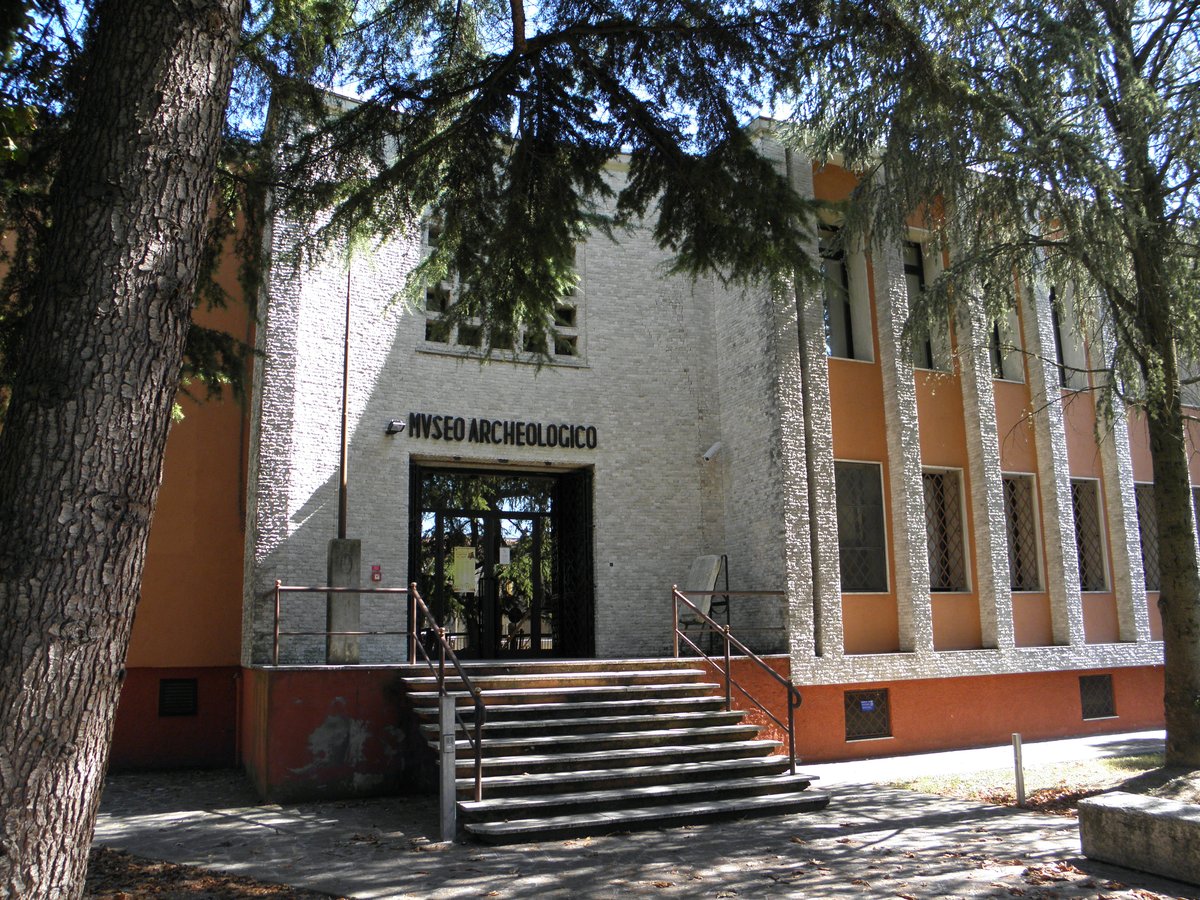
The museum tells the story of Adria, an Etruscan and Roman port, with unique artifacts such as the Tomb of the Chariot, Attic pottery, and an extraordinary collection of glass. Opening hours and tickets for your visit.
Good to know
Introduction
Historical Notes
- 1787: first Bocchi museum
- 1903: establishment of the Civic Museum
- 1961: inauguration of the new premises
- 1972: transfer to the State
- 2009: completion of the expansion
The Tomb of the Chariot: A War Chariot and Three Horses
The Roman Glass Collection: Transparency and Color
Why Visit It
When to Go
In the Surroundings
Itineraries nearby


💡 Did You Know…?
A curious anecdote: among the artifacts from the Tomb of the Chariot, one of the three horses is an oriental stallion from the Altai, evidence of long-distance trade. Additionally, the museum hosted a visit from epigraphist Theodor Mommsen, Nobel Prize winner in literature, who studied the inscriptions in the lapidary.