
The Asiago Astrophysical Observatory is an active research center of the University of Padua at 1,040 meters on the Sette Comuni Plateau, where you can see and use historic telescopes still in operation during guided tours with astronomers. Observation evenings are included in the ticket and allow you to observe real celestial objects with instruments used daily for scientific research.
- Galileo telescope from 1942 still functioning for observing the Moon and planets
- Copernicus 182 cm telescope for studying distant galaxies
- Observation evenings included in the ticket with real access to the instruments
- Demonstrations with photos taken the previous night and explanations of contemporary research
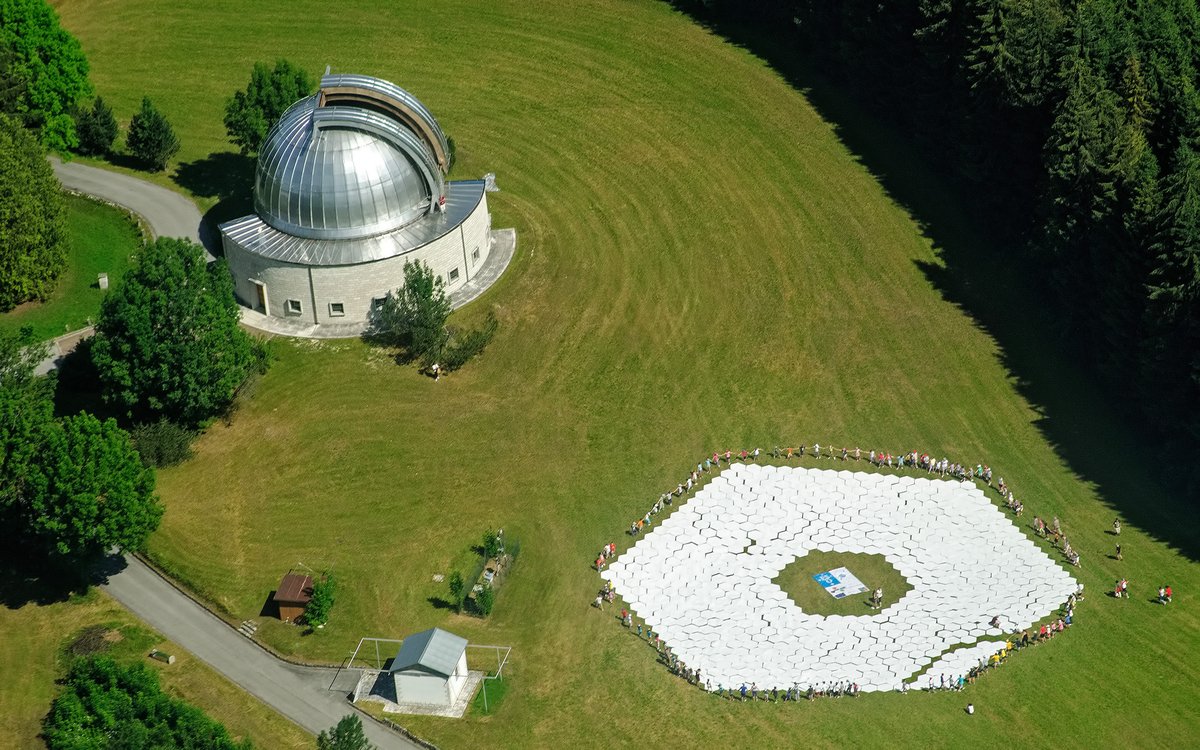
Guided tour of the Asiago Astrophysical Observatory with functioning Galileo (1942) and Copernicus telescopes, including observation evenings and explanations of contemporary astronomical research at 1,040 meters altitude.
Good to know
Introduction
On the Asiago Plateau, at an altitude of 1040 meters, the Astrophysical Observatory welcomes you with its white domes dotting the sky. It’s not just a research facility, but an experience that makes you feel small in the face of the universe’s immensity. Here, among green meadows and crisp air, you can admire historic telescopes still in operation and discover how astronomers study stars and galaxies. The night view, far from light pollution, is spectacular: constellations seem within reach. A unique place where science and nature meet, perfect for those seeking something different from the usual tourist route.
Historical Overview
Founded in 1942 by the University of Padua, the Observatory was established to take advantage of the clear skies of the Altopiano. By the 1950s, with the Galileo telescope, it had become a landmark for Italian research. Today it houses modern instruments like the Copernicus telescope, while preserving historical pieces such as the Schmidt, used for mapping the sky.
- 1942: Foundation
- 1958: Installation of Galileo telescope
- 1973: Arrival of Copernicus telescope
- Today: Active research and public visits
Telescopes You Can’t Miss
Two iconic instruments dominate the visit: the Galileo telescope, with its blue dome, allows you to observe details of the Moon and planets like Jupiter. Then there’s the more powerful Copernicus telescope, which with its 182 cm diameter is used to study distant galaxies. During observation evenings, guided by astronomers, you can point them at real celestial objects, not simulated ones. It’s a hands-on experience: you adjust the settings yourself, feeling the thrill of discovery. Remember, these are not static museum exhibits, but living instruments used every night for research.
Science in Real Time
Here you don’t just look at the past: the Observatory is an active research center, where teams work with real-time data. You can witness demonstrations on how exoplanet images are analyzed or asteroids are monitored. During visits, they often show you photos taken the previous night with local telescopes, explaining what they represent. If you’re lucky, you might bump into researchers who share their projects, like the study of variable stars. It’s a way to experience contemporary science firsthand, far from textbooks.
Why Visit
Three practical reasons: first, observing evenings are included in the ticket and give you actual access to the telescopes. Second, guided tours explain complex concepts in a simple way, suitable even for non-experts. Third, the location on the Plateau offers a dark and clear sky, rare in Italy, ideal for astronomy. Plus, there’s a small exhibition with meteorites and solar system models that enriches the experience.
When to Go
The best time is in winter, with clear skies and long nights, when the stars shine intensely. Avoid cloudy evenings or full moon nights, which reduce visibility. If you prefer daytime, daytime visits showcase the instruments and explain the work of astronomers, but the real magic happens at night, with the telescope pointed toward the unknown.
In the Surroundings
Complete your day with a stroll to the Asiago Military Shrine, for a dive into the history of the Great War, or sample local cheeses at a typical mountain dairy on the Plateau. Both locations are just a few minutes’ drive away and add a touch of culture and flavor to your astronomical experience.
💡 Did You Know…?
During World War II, the observatory was used as a lookout post. Today, researchers still discover new asteroids and study variable stars. On the night of July 20, 1969, the Apollo 11 moon landing was followed live from Asiago, with hundreds of people gathered here to watch the Moon together.