Church of San Trovaso: A Double Façade and Tintoretto

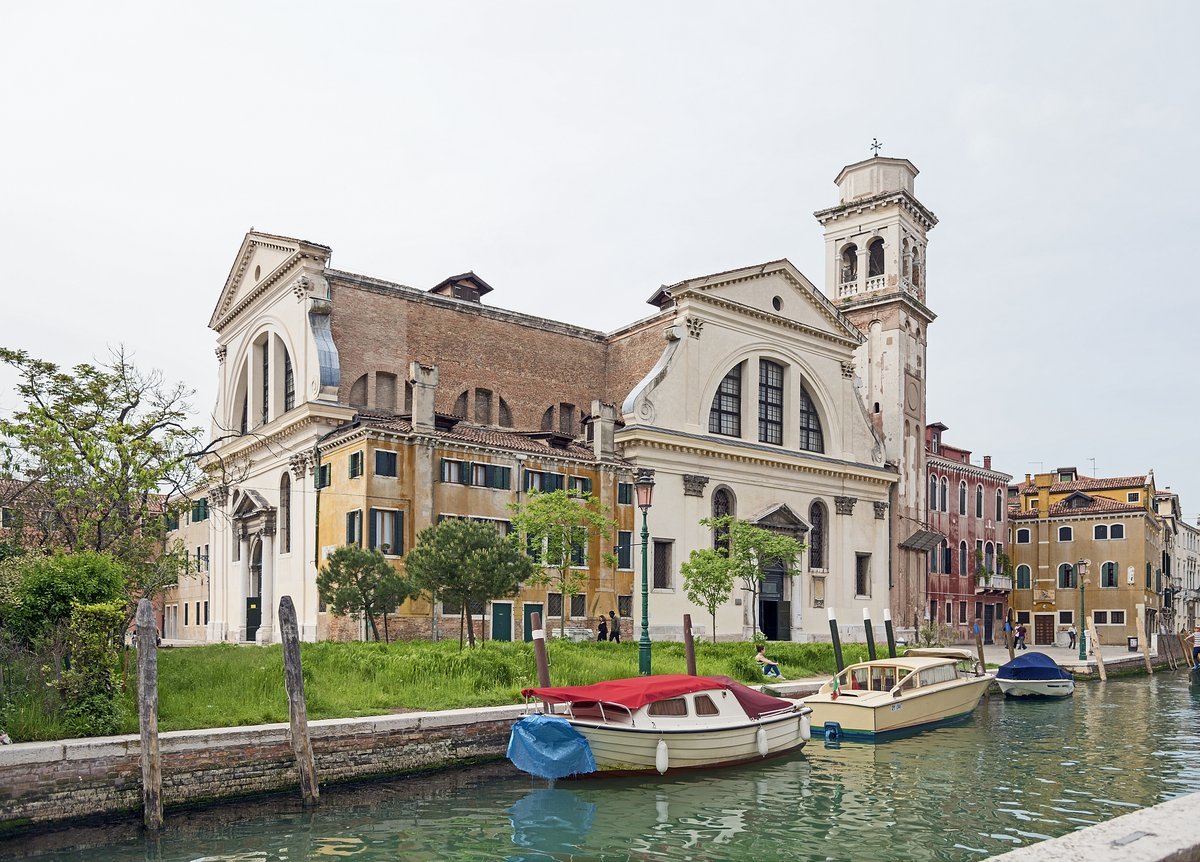
The Church of San Trovaso is located in the Dorsoduro sestiere of Venice and takes its Venetian name from Saints Gervasius and Protasius. It is striking for its almost identical double façade, one facing the campo and one the rio, and for its single-nave interior with a barrel vault. It houses Tintoretto’s Last Supper, while alongside runs the rio with the Squero di San Trovaso, one of the last gondola yards.
• Palladian double façade facing the campo and the rio.
• Tintoretto’s Last Supper and works by Palma il Giovane.
• Squero di San Trovaso, a historic gondola yard.
• Convenient location between the Zattere and the Accademia, in the heart of Dorsoduro.


Events nearby


Copertina itinerario Church of San Trovaso: A Double Façade and Tintoretto
In the Dorsoduro sestiere, the Church of San Trovaso brings together two Palladian façades, Tintoretto’s Last Supper and the working squero on the rio: an authentic spot between the Zattere and the Accademia.

Good to know


Church of San Trovaso: double façade and Tintoretto

The first thing that strikes you about the Church of San Trovaso is its two faces: one façade onto the campo, the other onto the rio. It almost feels as if the building wants to look at two parts of Venice at once, and perhaps that is exactly where its charm lies. We are in Dorsoduro, just a few steps from the Zattere, but the atmosphere is more intimate and everyday. In front flows the San Trovaso rio, with the Squero still active: you can see gondolas being worked on, wood, tools and that slow pace of a traditional boatyard. Inside, Tintoretto’s Last Supper (1555–1556) is the surprise you don’t expect in such a simple church. It is not a museum: it is a lived-in place, with light coming through the semicircular windows and the silence of the campo. For me it gave the sense of an authentic Venice, far from the busiest routes but very easy to include between the Zattere and the Accademia.

Historical background

The church is dedicated to Saints Gervasius and Protasius, from whom it takes its Venetian name, San Trovaso. Its origins are very ancient: it was built in the first half of the 9th century and soon became a parish church. By 1028 it lay in ruins and was rebuilt by the Barbarigo and Caravella families. In 1041 a compromise was reached between the Patriarch of Grado and the Bishop of Olivolo over the election of the vicar. In 1105 it was renovated after a fire. On the night of 11 September 1583 it collapsed; reconstruction began on 26 July 1584 and was completed in seven years. It was consecrated on 22 July 1657 by Bishop Pietro Rossi. The design is attributed to the Palladian circle, with attributions ranging from Palladio to Francesco Smeraldi. Further work followed in the 19th century.

  • 9th century: foundation and first parish
  • 1028: rebuilding by the Barbarigo and Caravella families
  • 1041: agreement between ecclesiastical authorities
  • 1583: collapse; 1584–1591: reconstruction
  • 1657: consecration

The Two Façades and the Legend of the Factions

The most curious thing is that the Church of San Trovaso has two almost identical façades: one facing Campo San Trovaso, the other onto the rio of the same name. Both have a gabled front, Neoclassical portals, four pilasters with Corinthian capitals and two large semicircular windows above, Palladian in inspiration. This meant people could enter both from land and from the water. Tradition has it that the double entrance was used to keep the Castellani and Nicolotti apart—the rival factions who gathered in the church for the feast of the saints—so as to avoid brawls. Another version speaks of two feuding families. Is it true? Who knows. What is certain is that the double façade is a rare and very photogenic detail. In the square in front, you can also notice a characteristic raised area, linked to the clay tanks used to filter rainwater from Venetian wells. Small traces that tell of a practical city as well as a picturesque one.

Inside the church: Tintoretto and the altarpieces

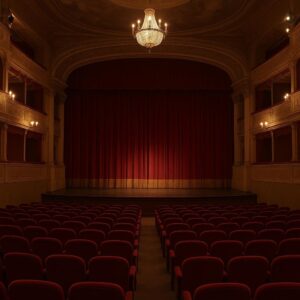
The interior is simpler than the double facade might suggest: a single nave with a barrel vault, a Latin-cross plan, side chapels and a spacious presbytery. But this is exactly where the surprise comes. On the wall stands out the Last Supper by Jacopo Tintoretto, dated 1555–1556: it is not a gigantic canvas, but it has a force all its own. Not far away is also the Temptations of Saint Anthony, again by Tintoretto. Among the other works are the old altarpiece of San Crisogono (1450), the Angels with the Instruments of the Passion (1470), two altarpieces by Palma il Giovane, canvases by Domenico Tintoretto, Gaspare Diziani and Pietro Malombra. The Squeraroli chapel recalls the link with the gondola builders. Don’t expect grand Baroque stage sets: here restraint wins, with low light and silence. I liked it precisely for this, because you can visit it without rushing.

Why it’s worth visiting

It’s worth stopping for three concrete reasons. First: the double facade is a Venetian rarity, and seeing it from the square and from the bridge over the canal gives you two different perspectives. Second: Tintoretto’s Last Supper is an important work, but you can view it without the crowds of the big museums; here you have room to get closer and observe the details. Third: next door is the Squero di San Trovaso, one of the last working gondola yards, with the coming and going of timber and tools that tells of a real craft. What’s more, the location is convenient: between the Zattere and the Accademia, yet away from the thickest crowds. If you’re looking for an authentic Venice, this is a short but rich stop. Don’t expect a monumental church: it is intimate, simple, and memorable precisely for that. I’d happily go back to revisit the canal and the side facade at a leisurely pace.

When to go

The best time? I’d say a weekday morning, when the campo is still quiet and the canal reflects the façades without too much bustle. The rising light hits the façade facing the campo and makes the Corinthian capitals and semicircular windows easier to read. If you happen to come in the late afternoon, on the other hand, the façade facing the canal takes on a softer light and the boatyard becomes the right place to stop and watch. Avoid the middle hours of the busiest days: the beauty here is the silence, not the queue. On mild days the atmosphere is more pleasant and walks towards Zattere are relaxing. There’s no need to plan too much: just avoid peak times and let the place work its effect. Always check opening hours before you go, because information found online can vary.

Nearby

From here you can extend your visit without leaving the neighbourhood. The Fondamenta delle Zattere are just a short walk away: once a landing point for salt cargoes, today they are a sunny, traditional promenade, with the water in front and a slow pace. It’s the perfect spot for a break or to watch the lagoon. On the other side, towards the Accademia, you can reach the Gallerie dell’Accademia and the Punta della Dogana area, another highlight of Dorsoduro. If you’re interested in art, the church of San Sebastiano is another stop on the local circuit, with works by Veronese. That’s what we did: church, squero, Zattere and then a walk towards the Accademia. Without rushing, it’s the best part. No need for distances or timings: just follow the calli and let yourself be carried along.

Itineraries nearby


💡 Did You Know…?

The most Venetian legend concerns the double façade: tradition says it served to keep the Castellani and Nicolotti, the two rival factions, apart when they entered the church for the feast of the saints. In front of the church, the raised paving of the campo recalls the clay jars used to filter rainwater from the wells; on the rio, the Squero continues to tell the story of the gondoliers’ craft.