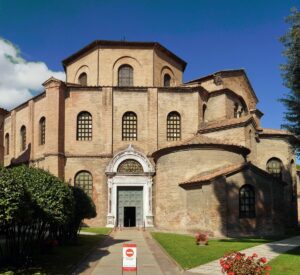
The Gambalunga Civic Library in Rimini is a gem for history and culture enthusiasts. Founded in 1617 by the nobleman Alessandro Gambalunga, it is recognized as Italy’s first public library, open to all without distinction. Today it houses a collection of over 300,000 volumes, including precious illuminated manuscripts and incunabula, in an intact Renaissance building.
– First public library: founded in 1617, open to all citizens.
– Extraordinary collection: 286,525 volumes, 1,350 manuscripts, and two Blaeu globes without Australia.
– Historic halls: three 17th-century halls and one 18th-century hall with original furnishings.
– Modern services: free Wi-Fi, study rooms, children’s and comics section.
Introduction
Entering the Gambalunga Library is like stepping back in time. In the silence of the Renaissance courtyard, with the eighteenth-century well in Istrian stone, you already breathe the atmosphere of a place that holds centuries of knowledge. It is the first public library in Italy – founded in 1619 by the will of Alessandro Gambalunga – and it still welcomes students, researchers, and curious minds with the same openness that distinguished it then. Here, among seventeenth-century walnut shelves and rococo rooms, time seems to have stood still.
Introduction
Entering the Gambalunga Library is like stepping back in time. In the silence of the Renaissance courtyard, with the eighteenth-century well in Istrian stone, you already breathe the atmosphere of a place that holds centuries of knowledge. It is the first public library in Italy – founded in 1619 by the will of Alessandro Gambalunga – and it still welcomes students, researchers, and curious minds with the same openness that distinguished it then. Here, among seventeenth-century walnut shelves and rococo rooms, time seems to have stood still.
Historical Overview
Alessandro Gambalunga, a lawyer and humanist, had the palace built between 1610 and 1614. Upon his death in 1617, he bequeathed the building and his book collection to the city, on condition that it be open to everyone. The library officially opened in 1619, with a paid librarian to assist readers. In 1741, young Giuseppe Garampi, future prefect of the Vatican Archives, studied here. During World War II, the palace was among the few spared from bombings. Today, after expansions and restorations, it holds over 300,000 volumes.
- 1610-1614: construction of the palace.
- 1617: Gambalunga’s will.
- 1619: opening to the public.
- 20th century: expansion and renovation.
Historical Overview
Alessandro Gambalunga, a lawyer and humanist, had the palace built between 1610 and 1614. Upon his death in 1617, he bequeathed the building and his book collection to the city, on condition that it be open to everyone. The library officially opened in 1619, with a paid librarian to assist readers. In 1741, young Giuseppe Garampi, future prefect of the Vatican Archives, studied here. During World War II, the palace was among the few spared from bombings. Today, after expansions and restorations, it holds over 300,000 volumes.
- 1610-1614: construction of the palace.
- 1617: Gambalunga’s will.
- 1619: opening to the public.
- 20th century: expansion and renovation.
The Historic Rooms and the Blaeu Globes
If you love details, don’t miss the four historic rooms on the first floor. Three are from the 1600s, one from the 1700s, with original furnishings and backgrounds. Among the wonders stand out two monumental globes – terrestrial and celestial – made by the famous Dutch cartographer family Blaeu in the 1600s. What’s special about them? Australia is missing, still undiscovered. A curiosity that leaves you speechless. The decorated ceilings and walnut shelves complete a picture of rare elegance.
The Historic Rooms and the Blaeu Globes
If you love details, don’t miss the four historic rooms on the first floor. Three are from the 1600s, one from the 1700s, with original furnishings and backgrounds. Among the wonders stand out two monumental globes – terrestrial and celestial – made by the famous Dutch cartographer family Blaeu in the 1600s. What’s special about them? Australia is missing, still undiscovered. A curiosity that leaves you speechless. The decorated ceilings and walnut shelves complete a picture of rare elegance.
Hidden treasures: manuscripts and modern sections
In addition to its 1,350 manuscripts – including an autograph by Basinio da Parma and an ancient copy of the Divine Comedy – the Gambalunga also offers modern services. There is the Spazio Holden for teens aged 14 to 18, a comics and manga section (founded in 2023), and a film library with over 16,000 documents. All free of charge. I loved the reading corner with newspapers and magazines on the ground floor, and the free Wi-Fi for studying.
Hidden treasures: manuscripts and modern sections
In addition to its 1,350 manuscripts – including an autograph by Basinio da Parma and an ancient copy of the Divine Comedy – the Gambalunga also offers modern services. There is the Spazio Holden for teens aged 14 to 18, a comics and manga section (founded in 2023), and a film library with over 16,000 documents. All free of charge. I loved the reading corner with newspapers and magazines on the ground floor, and the free Wi-Fi for studying.
Why visit it
Three reasons: 1) It’s free – no admission fee, all services are free. 2) A dive into history – ancient manuscripts and original furnishings make you feel part of another era. 3) Cultural events – over 100 appointments a year, including book presentations, exhibitions, and workshops. Perfect even for those traveling with teenagers: the Holden Space is welcoming and well-stocked.
Why visit it
Three reasons: 1) It’s free – no admission fee, all services are free. 2) A dive into history – ancient manuscripts and original furnishings make you feel part of another era. 3) Cultural events – over 100 appointments a year, including book presentations, exhibitions, and workshops. Perfect even for those traveling with teenagers: the Holden Space is welcoming and well-stocked.
When to Go
If you seek peace, go on a weekday morning, perhaps in autumn: the rooms are almost deserted and the silence is total. If instead you want to discover the secrets of the library, mark the last Saturday of the month at 11:00 for the free guided tour (reservation required, max 10 people). In summer the hours are reduced (only morning), but the coolness of the historic rooms is an oasis from the heat.
When to Go
If you seek peace, go on a weekday morning, perhaps in autumn: the rooms are almost deserted and the silence is total. If instead you want to discover the secrets of the library, mark the last Saturday of the month at 11:00 for the free guided tour (reservation required, max 10 people). In summer the hours are reduced (only morning), but the coolness of the historic rooms is an oasis from the heat.
Nearby
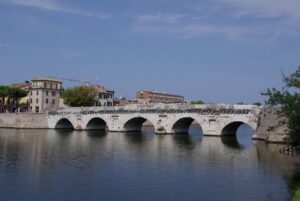
Gambalunga is in the heart of the historic center. Just a few steps away you’ll find Leon Battista Alberti’s Tempio Malatestiano, a Renaissance masterpiece, and Piazza Cavour with its town hall. If you enjoy walks, head to the Arch of Augustus and the Tiberius Bridge, two symbols of ancient Ariminum. After your visit, take a break at one of the square’s cafés for a coffee or gelato.
Nearby
Gambalunga is in the heart of the historic center. Just a few steps away you’ll find Leon Battista Alberti’s Tempio Malatestiano, a Renaissance masterpiece, and Piazza Cavour with its town hall. If you enjoy walks, head to the Arch of Augustus and the Tiberius Bridge, two symbols of ancient Ariminum. After your visit, take a break at one of the square’s cafés for a coffee or gelato.