Halaesa: Ancient Sicilian City with Greek Theater and Tyrrhenian Sea Views

Halaesa is a lesser-known archaeological site in Sicily, founded in the 5th century BC by the Siculi people. It offers an authentic and tranquil atmosphere away from mass tourism, with well-preserved remains in a scenic location.

  • Greek theater with seating carved into rock and remarkable acoustics
  • Sanctuary dedicated to Zeus with visible foundations and sacrificial altars
  • Defensive walls and sections of the ancient Sicilian city
  • Panoramic views of the Tyrrhenian Sea and surrounding hills


Events nearby


Copertina itinerario Halaesa: Ancient Sicilian City with Greek Theater and Tyrrhenian Sea Views
Well-preserved ruins of Halaesa in Castel di Tusa: Greek theater carved into rock, Sanctuary of Zeus, defensive walls, and panoramic views of the Tyrrhenian Sea. Convenient access from SS113.

Good to know


Introduction

Halaesa is not your ordinary archaeological site. It’s a place that catches you off guard, with a Greek theatre that seems to embrace the sea and a sanctuary that tells ancient stories. Arriving in Castel di Tusa, you might expect something smaller, but then you find yourself before these ruins dominating the Tusa valley. The feeling is strange, almost like a personal discovery, as if you were one of the first to set foot there. There are no crowds of tourists, just the wind whistling through the stones and a view stretching all the way to the coast. The atmosphere is intimate, authentic, far from the usual crowded destinations. I sat on a step of the theatre, imagining the voices of ancient spectators, and understood why this place is worth it. It’s not just history; it’s an experience that stays with you.

Historical Background

Halaesa was founded in 403 BC by the Sicels, an indigenous people resisting Greek expansion. It was not a colony but an autonomous city, making it unique in the Sicilian landscape. In the 3rd century BC, during the Punic Wars, it allied with Rome, becoming a federated city and enjoying certain privileges. Then, as often happens, came decline: looting, earthquakes, and gradual abandonment. Today, the theater, the sanctuary of Apollo, and parts of the walls remain. What stands out is how these ruins remain legible despite the centuries. The timeline summary:

  • 403 BC: Foundation by the Sicels
  • 3rd century BC: Alliance with Rome during the Punic Wars
  • Roman Imperial Age: Period of relative prosperity
  • Middle Ages: Gradual abandonment and spoliation
  • Modern excavations: Rediscovery and enhancement from the 20th century

The Greek Theatre and Its Acoustics

The theatre of Halaesa is small but has incredible charm. Built by taking advantage of the natural slope, it offers a direct view of the sea, which is rare for a Greek theatre. I stood in the centre of the orchestra and tried speaking in a low voice: the acoustics are astonishing, with words bouncing clearly all the way to the top row. It is said to have been used for dramatic performances and public assemblies. Today, it is a perfect spot for a contemplative break. Sitting there, with the sun warming the ancient stones and the sound of the wind blending with the silence, is an almost meditative experience. There are no barriers, you can walk freely inside, touch the stone, and imagine the scenes. Sometimes, in summer, they organise evening performances: imagine the emotion.

The Sanctuary and Scattered Relics

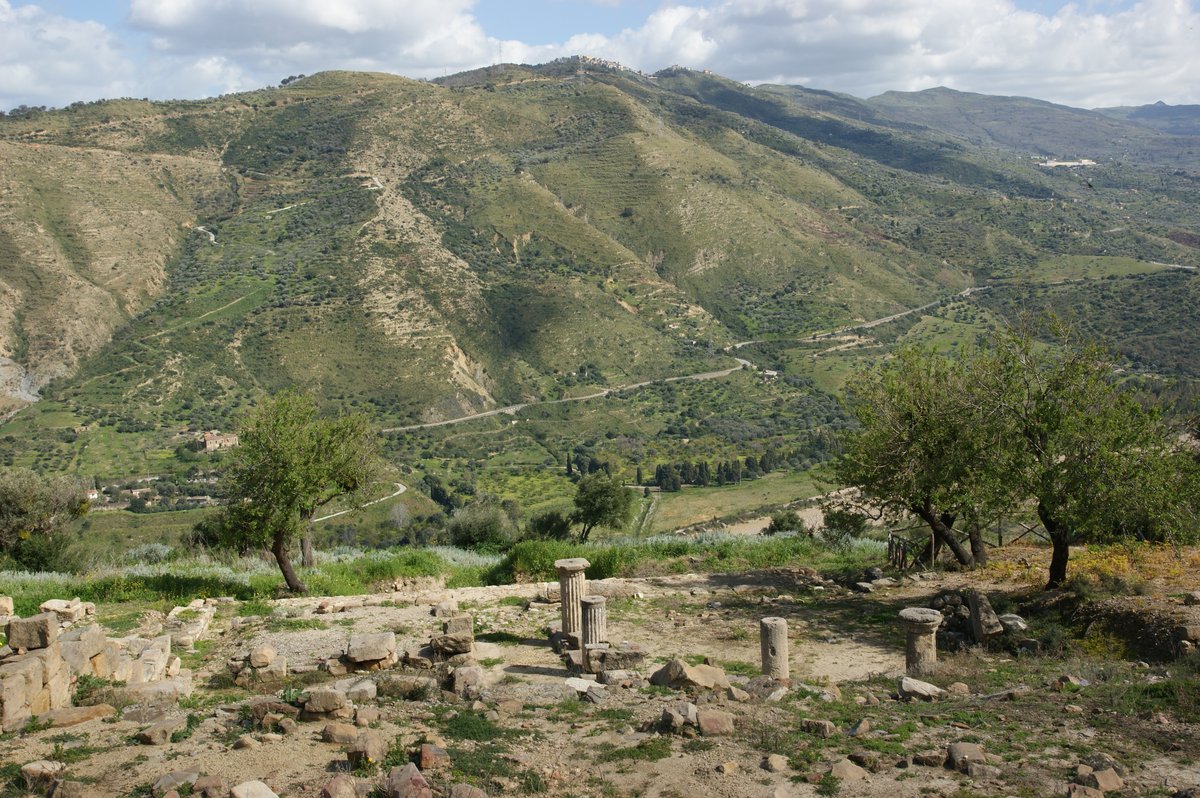
Not far from the theater lies the sanctuary area. Here you can see the foundations of a temple and sacrificial altars, all somewhat fragmented but evocative. Walking among the ruins, I noticed pieces of columns and stone blocks scattered in the grass, as if time had left them there by chance. What struck me was the feeling of continuous discovery: it’s not a perfectly restored site, but a living place where history emerges from the ground spontaneously. The channels for liquid offerings are still distinguishable, a detail that makes you think of ancient rituals. I recommend taking the time to explore the less obvious areas too, perhaps with a paper guide or an app, as some spots are poorly marked. It’s a place that requires a bit of curiosity, but rewards you with moments of genuine wonder.

Why Visit It

Visiting Halaesa is worthwhile for at least three concrete reasons. First, it’s an authentic and non-touristy archaeological site: no queues, no crowds, you can enjoy it at your own pace. Second, it offers a different perspective on ancient Sicily: not just Greeks and Romans, but also the Siculi, with their original culture. Third, the location is spectacular: from the ruins, you can see the sea and the inland hills, a mix of landscapes that enriches the visit. Additionally, it’s suitable for those looking for something off the beaten path, without grand pretensions but with plenty of substance. I found it perfect for a half-day of tranquil exploration, perhaps paired with a seafood lunch in Castel di Tusa.

When to Go

The best time? Late spring or early autumn, when the weather is mild and the vegetation isn’t too high. In summer, it can get very hot, though the wind offers some relief. For timing, I recommend early morning or late afternoon: the light is softer, and the atmosphere becomes magical, with the sun casting a golden glow on the stones. I’d avoid midday hours unless you love scorching sun. In winter, it can be windy and damp, but if you catch a clear day, the view is even sharper. In short, there’s no perfect season, but each moment has its charm.

In the Surroundings

If Halaesa has enchanted you, there are a couple of nearby spots that complete the experience. In Castel di Tusa, the Fiumara d’Arte Open-Air Museum of Contemporary Art is a surprise: giant sculptures scattered across the countryside, a striking contrast with antiquity. Then, just a few minutes’ drive away, there’s Tusa, a medieval hilltop village with narrow streets and breathtaking views. For a dip in the sea, Castel di Tusa’s beach is convenient and familiar. These aren’t the most famous places, but that’s precisely why they retain an authentic atmosphere.

Itineraries nearby


💡 Did You Know…?

The uniqueness of Halaesa is linked to its treasure of coins found during excavations: over 1,500 silver and bronze pieces, now displayed at the Archaeological Museum of Palermo, which testify to the city’s intense commercial activity. According to archaeologists, a healing cult related to nearby springs was practiced here, and the inscriptions found reveal it was an important administrative center under Rome. Walking among the ruins, you’ll notice signs of the 365 AD earthquake that caused its abandonment, making the visit a true journey through time.