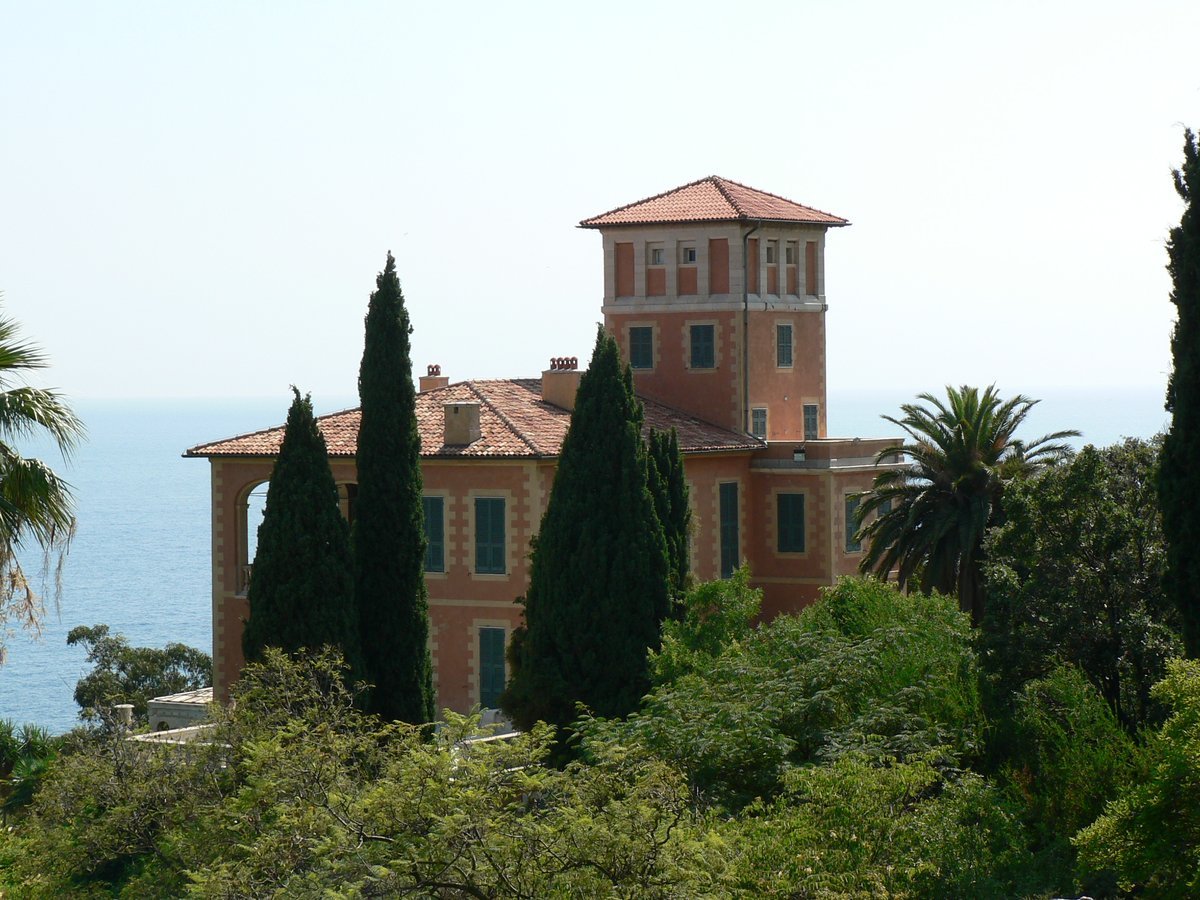
The Hanbury Botanic Gardens, on the Mortola promontory in Ventimiglia, are an 18-hectare botanical paradise with over 5,000 species from around the world. Created in 1867 by Thomas Hanbury, they offer a path through exotic plants, fountains, and historic architecture. The mild Riviera climate ensures blooms almost year-round, peaking between April and May.
- 58 hectares overlooking the sea: the garden slopes from the hill to the coast, offering breathtaking views
- Over 5,000 species: including agaves, aloes, palms, citrus, and tropical plants from every continent
- Marked itinerary: red arrow on the way there and blue on the way back, guides available at the ticket office
- Services: refreshment point, picnic area, electric car rental for disabled visitors by reservation
Introduction
Walking through the Hanbury Botanical Gardens is like taking a tour of the plant world in 18 hectares. Over 5000 species from every continent, all acclimatized on this Ligurian promontory. The scent of citrus blends with that of tropical plants, and every turn reveals a new surprise. Don’t miss the Moorish Mausoleum and the Dragon Fountain, or even the simple Avenue of Cypresses that leads to the ancient Roman road. In short, a place that takes your breath away.
Introduction
Walking through the Hanbury Botanical Gardens is like taking a tour of the plant world in 18 hectares. Over 5000 species from every continent, all acclimatized on this Ligurian promontory. The scent of citrus blends with that of tropical plants, and every turn reveals a new surprise. Don’t miss the Moorish Mausoleum and the Dragon Fountain, or even the simple Avenue of Cypresses that leads to the ancient Roman road. In short, a place that takes your breath away.
Historical Background
It all began in 1867, when the Englishman
Thomas Hanbury, returning from China, fell in love with this corner of Liguria. With the help of his brother Daniel and landscape architect Ludwig Winter, he transformed a farm into an acclimatization garden. After the war, the property passed to the state and has been managed by the
University of Genoa since 1987. Here are the main milestones:
- 1867: Thomas Hanbury acquires the estate.
- Late 19th century: expansion with exotic species.
- 1907: death of Hanbury, management by his son Cecil.
- World War II: abandonment.
- 1960: purchase by the Italian state.
- 1987: management transferred to the University of Genoa.
Historical Background
It all began in 1867, when the Englishman
Thomas Hanbury, returning from China, fell in love with this corner of Liguria. With the help of his brother Daniel and landscape architect Ludwig Winter, he transformed a farm into an acclimatization garden. After the war, the property passed to the state and has been managed by the
University of Genoa since 1987. Here are the main milestones:
- 1867: Thomas Hanbury acquires the estate.
- Late 19th century: expansion with exotic species.
- 1907: death of Hanbury, management by his son Cecil.
- World War II: abandonment.
- 1960: purchase by the Italian state.
- 1987: management transferred to the University of Genoa.
Must-See Highlights
The Moorish Mausoleum is the founders’ tomb, its oriental style standing out among the greenery. The Dragon Fountain, with its Japanese bronze centerpiece, is one of the most photographed symbols. Then there’s the Cypress Avenue: a 100-meter elevation walk leading to the Via Julia Augusta. Every corner has its reason, including the Rustic House with its herbarium and xylotheque.
Must-See Highlights
The Moorish Mausoleum is the founders’ tomb, its oriental style standing out among the greenery. The Dragon Fountain, with its Japanese bronze centerpiece, is one of the most photographed symbols. Then there’s the Cypress Avenue: a 100-meter elevation walk leading to the Via Julia Augusta. Every corner has its reason, including the Rustic House with its herbarium and xylotheque.
An Extraordinary Botanical Heritage
Nearly 6,000 species have been cataloged here, but the actual number is even higher. Plants from all over the world: from Australian forests to citrus groves, from desert succulents to eucalypts. The Casa Rustica houses the herbarium and a wood collection. And if you visit in spring, the blooms are explosive: echiums, salvias, roses. A true paradise for botany enthusiasts.
An Extraordinary Botanical Heritage
Nearly 6,000 species have been cataloged here, but the actual number is even higher. Plants from all over the world: from Australian forests to citrus groves, from desert succulents to eucalypts. The Casa Rustica houses the herbarium and a wood collection. And if you visit in spring, the blooms are explosive: echiums, salvias, roses. A true paradise for botany enthusiasts.
Why Visit
Three good reasons: first, it’s a unique example of an acclimatization garden, where species from different climates coexist thanks to the local microclimate. Second, the seaside location offers spectacular views from Liguria to France. Third, the peaceful atmosphere and well-marked path make it ideal for a half-day trip away from the crowds.
Why Visit
Three good reasons: first, it’s a unique example of an acclimatization garden, where species from different climates coexist thanks to the local microclimate. Second, the seaside location offers spectacular views from Liguria to France. Third, the peaceful atmosphere and well-marked path make it ideal for a half-day trip away from the crowds.
When to go
The best time? Undoubtedly spring, between mid-April and early May, when the blooms are at their peak. But autumn also has its charm, with warm colors. In winter it never fully closes, and sunny days offer mild temperatures. In short, each season has its appeal, but spring is spectacular.
When to go
The best time? Undoubtedly spring, between mid-April and early May, when the blooms are at their peak. But autumn also has its charm, with warm colors. In winter it never fully closes, and sunny days offer mild temperatures. In short, each season has its appeal, but spring is spectacular.
In the Surroundings
In Ventimiglia, just a few kilometers away, the medieval historic center is well worth a visit, especially on Fridays for the famous market. A little further on, the Balzi Rossi, an archaeological site with prehistoric caves and a museum, offer a dive into history. Two stops that complete the day at a leisurely pace.
In the Surroundings
In Ventimiglia, just a few kilometers away, the medieval historic center is well worth a visit, especially on Fridays for the famous market. A little further on, the Balzi Rossi, an archaeological site with prehistoric caves and a museum, offer a dive into history. Two stops that complete the day at a leisurely pace.