Introduction
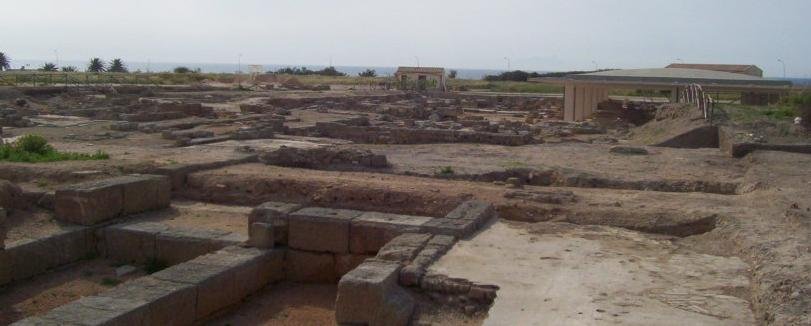
Walking among the ruins of the Lilibeo Archaeological Park in Marsala is like flipping through an open-air history book. Don’t expect just ancient stones: here, the polychrome mosaics captivate you with their still-vivid colors, telling stories of Phoenician and Roman daily life. The atmosphere is surprisingly intimate, far from the crowds of more famous sites. I was struck by how the sea, right there beside it, seems to converse with these millennia-old vestiges. A place where history isn’t studied, but breathed.
Historical Overview
Lilibeo is not just a settlement: it was the last Carthaginian stronghold in Sicily, founded by refugees from Mozia after the destruction of their island in 397 BC. The Romans conquered it in 241 BC, ending the First Punic War, and transformed it into a strategic port. Excavations have uncovered
an entire residential quarter with patrician houses, baths, and a necropolis. The timeline helps highlight key moments:
- 397 BC: Foundation by the Carthaginians.
- 241 BC: Roman conquest after the Battle of the Aegates.
- Roman Imperial Age: Urban development with villas and mosaics.
- Middle Ages: Gradual abandonment of the site.
- 1960s: Beginning of systematic excavations.
The Mosaics That Speak
The real surprise of Lilibeo lies beneath your feet. As you walk among the foundations of Roman domus, mosaic floors of moving beauty emerge. They are not merely decorative; they tell stories. I gazed for a long time at the one in the so-called ‘House of the Orpheus Mosaic’, where mythological animals dance around the poet. The colors of the tesserae – ochre, blue, green – are incredibly preserved. Another, more geometric, adorns the frigidarium of the baths. These are details that transform a heap of ruins into a home, into a lived-in space. They make you imagine who lived there, what they thought while looking at those same figures.
Between the Port and the Necropolises
The park has two distinct souls, both worth exploring. On one side, the Punic port area, with its warehouses (agger) and walls that ideally plunge into the sea. This is the oldest part, where you can sense the anxiety of a besieged city. On the other, moving inland, you’ll find the Punic necropolis of Birgi. Here, the chamber tombs carved into the rock speak of rituals and beliefs. Seeing them so close to the Roman residential quarter creates a powerful contrast: life and death, Carthage and Rome, all concentrated in a few hectares. It is this layering that makes the site unique.
Why Visit It
For three concrete reasons. First, it’s an authentic site, not reconstructed: you see exactly what archaeologists have unearthed, without filters. Second, its compactness: in a couple of hours you get a complete picture of the area’s ancient history, perfect if you have limited time or are traveling with children who tire easily. Third, the context: it’s within Marsala, not isolated in the countryside. You can combine the visit with a stroll through the town center, a seafood lunch, and perhaps a Marsala wine tasting. It becomes a natural part of your day, not a mandatory stop.
When to Go
The best time? Early afternoon in spring or early autumn. The light is low, warm, and highlights the stone reliefs and mosaic colors. In summer, midday hours can be scorching—there’s little shade. In winter, the mistral wind can be biting. My late September visit was perfect: the sun was gentle, the air fresh, and the site nearly deserted. Avoid windy days, as the park is exposed. And if it’s cloudy? Not a problem—in fact, the stone colors become more intense.
In the Surroundings
The visit to Lilybaeum pairs perfectly with another unique historical experience: the Island of Motya, reachable by a short ferry ride from the nearby Spagnola district. It is the Phoenician motherland from which the founders of Lilybaeum fled. There, beyond the ruins, you’ll find the famous Youth of Motya. Alternatively, immerse yourself in modern Marsala with a visit to a historic winery to discover the wine that made the city famous. These are two thematic extensions that complete the picture, from ancient history to winemaking tradition.