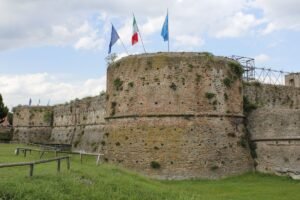
Roman Port of Classe: Ancient Maritime Hub with Visible Warehouses and Docks

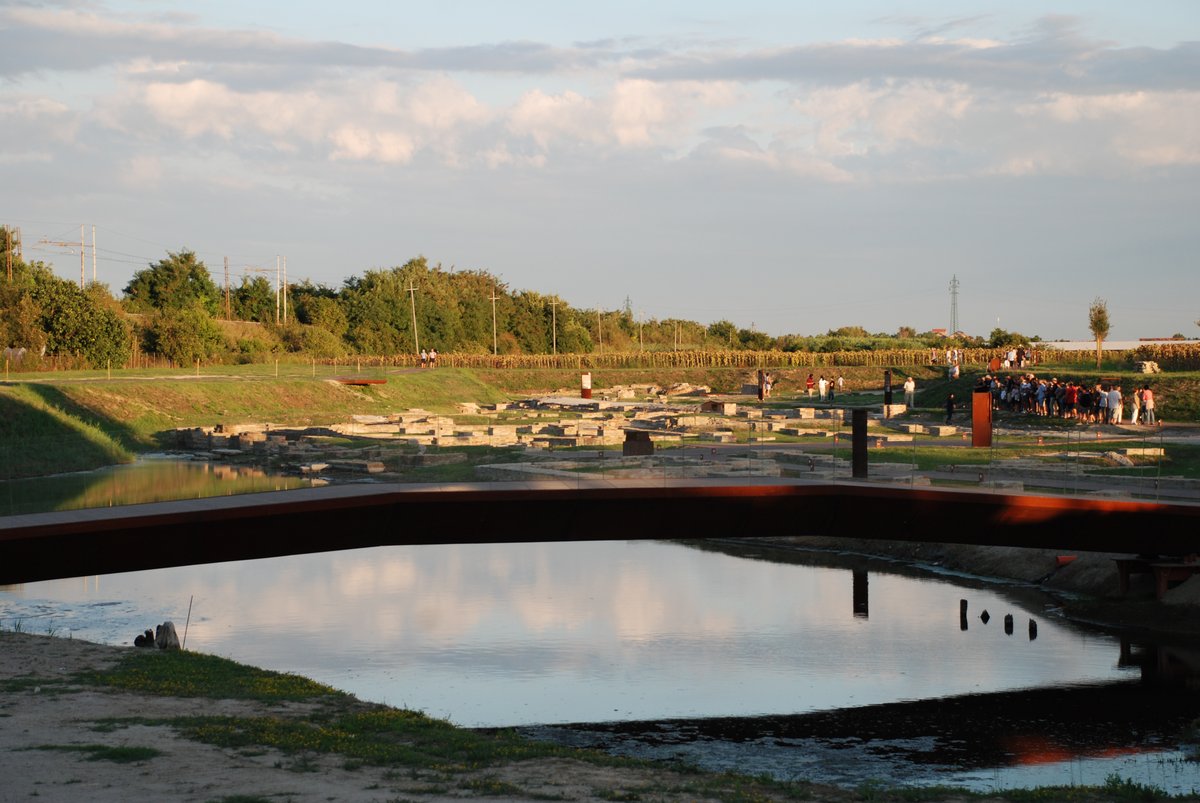
The Roman Port of Classe, founded by Augustus in the 1st century BC, was the strategic military and commercial port of Ravenna when it became the capital of the Western Roman Empire. Walk among the remains of ancient warehouses (horrea) and docks, imagining ships transporting grain, oil, and goods. The site offers a unique perspective on Roman maritime power, complementing the city’s famous Byzantine mosaics.

  • Authentic remains: Foundations of original Roman port warehouses and docks.
  • Open and safe space: Flat and wide path, suitable even for families with children.
  • Clear explanatory panels: Captions that guide the visit without excessive technicalities.
  • Unique historical context: Crucial site when Ravenna was an imperial capital, with capacity for 250 ships.


Events nearby

Copertina itinerario Roman Port of Classe: Ancient Maritime Hub with Visible Warehouses and Docks
The Roman Port of Classe in Ravenna is an open-air archaeological park with remains of warehouses and docks from the Roman Empire. Well-organized path with explanatory panels, ideal for families and history enthusiasts.

Good to know


Introduction

Walking among the ruins of the Roman Port of Classe is like taking a leap back in time, but without needing a time machine. You’re in Ravenna, yes, the city of Byzantine mosaics, but here you discover another side of the city: its Roman and maritime soul. The site is open, airy, with those remains of warehouses and docks stretching out under the sky. It’s not a closed museum, but a place where sea air mingles with history. Personally, I was struck by the sense of vastness: you immediately understand that this wasn’t just any small port, but a major commercial hub for the Empire. Perfect if you want to break away from the usual tourist circuit and immerse yourself in something authentic and a bit off the beaten path.

Historical Background

The history of the port is closely tied to that of Ravenna. Founded by Augustus in the 1st century BC, it became crucial when Emperor Honorius moved the capital of the Western Roman Empire here in 402 AD. Classe was the military port of the Roman fleet in the Adriatic, but also a vibrant commercial center, with warehouses (horrea) full of grain, oil, and goods. Imagine it could accommodate up to 250 ships! Decline came with the silting of the port and invasions, but excavations still reveal its former power today. A timeline to highlight key moments:

  • 1st century BC: Foundation of the port by Augustus.
  • 402 AD: Ravenna becomes the capital of the Western Empire, with Classe as its strategic port.
  • 6th-8th centuries: Gradual silting and abandonment after the fall of the Empire.
  • Modern excavations: Rediscovered and enhanced in the 20th century, now a visitable archaeological park.

What You Really See (Beyond the Stones)

Yes, they’re ruins, but don’t be fooled by appearances. The beauty of Classe is that imagination works at full throttle here. Looking at the foundations of the horrea, those large warehouses, you can almost hear the chatter of merchants and see the stacked amphorae. Then there are the docks: walk alongside them and try to picture the triremes that once moored here, laden with soldiers or spices from the East. The route is well-marked with panels, but in my opinion, the best way is to take your time and observe the details: the mooring holes, the different arrangement of the buildings. Don’t expect spectacular reconstructions; it’s more a place for those who love history ‘raw’ and authentic. I like to think that beneath my feet lie centuries of maritime stories.

A Port for Families (and Not Only)

You might think an archaeological site would be boring for children. However, at Classe, I’ve often seen families with curious kids enthusiastically exploring. Why? The space is wide and safe, there are no dangers, and little ones can run a bit between one ruin and another. Plus, the ‘port’ dimension fascinates: explaining that Roman warships used to dock here usually captures their attention more than a fresco! I recommend reading the simplest captions together or, even better, inventing a small treasure hunt (‘find the spot where ships were tied up’). It’s a different and active way to experience history. Even for adults without children, the relaxed and uncrowded atmosphere is a real strength.

Why Visit

Three concrete reasons why it’s worth it. First: it’s a unique piece of Roman ‘maritime’ history, often overlooked in favor of forums and amphitheaters. Here you understand the importance of trade and logistics. Second: the environment is pleasant and accessible, with no steep stairs or difficult paths, suitable for everyone. Third: it completes the picture of Ravenna. After the spiritual, golden Byzantine mosaics, you find its practical, commercial, and military roots. It’s like having the complete view of the city.

When to Go

The site is outdoors, so weather matters. I’d avoid the hottest summer hours because there’s little shade and it can become tiring. The ideal time? A lovely day in late spring or early autumn, when the air is crisp and the light is golden. Late summer afternoons can also offer evocative atmospheres, with the low sun casting long shadows over the stones. In winter, if it’s not raining, it has its own melancholic charm and you’ll practically have the place to yourself. In short, skip the August heat and choose a time when you can enjoy it at your leisure.

In the Surroundings

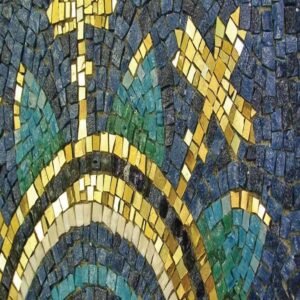
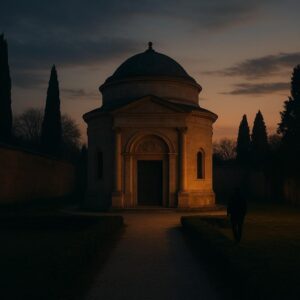
A visit to Classe pairs perfectly with two other sites for an ‘Ancient Ravenna’ themed itinerary. Just a stone’s throw away is the Basilica of Sant’Apollinare in Classe, a masterpiece of Byzantine art with breathtaking mosaics: the contrast between the port’s simplicity and the basilica’s splendor is striking. A bit further, in Ravenna’s city center, the Mausoleum of Theodoric transports you back to the Gothic era, with its monolithic dome that leaves you in awe. These two stops, together with the port, tell centuries of history in just a few hours.

Itineraries nearby


💡 Did You Know…?

An ultra-realistic curiosity that makes the site unique: during excavations, numerous organic artifacts, such as seeds and wood, were found preserved by the humid environment. These discoveries have allowed for precise reconstruction of the diet and goods that passed through here, offering a vivid snapshot of daily life in the port. Additionally, the port’s original location was more inland compared to today’s sea, due to alluvial deposits from the Po River—a geological detail that explains the landscape’s evolution and the site’s abandonment.