
The Messina astronomical clock, located in the bell tower of the Duomo, is considered the largest and most complex mechanical clock in the world. Every day at exactly 12 noon, 54 bronze statues come to life in a 15-minute show. An engineering masterpiece built in 1933 by the Ungerer company of Strasbourg, blending art, history, and astronomy.
- Daily noon spectacle with roaring lion, crowing rooster, and heroines Dina and Clarenza
- Carousel of the seven days of the week pulled by Greek gods and the four ages of life
- Planetarium with solar system and perpetual calendar 3.5 meters in diameter
- Free visit in Piazza Duomo: arrive shortly before noon for the best spot
Events nearby
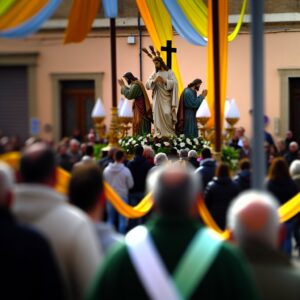

Every day at noon, the Messina astronomical clock, the world’s largest, brings the Duomo’s bell tower to life with bronze figures, biblical scenes, and astronomy. A mechanical wonder not to be missed in Piazza Duomo.
- https://www.messinarte.it/campanile-del-duomo-di-messina/
- Piazza Duomo, Messina (ME)
- +39 090 675175
- Open in Google Maps
- View on Google Images Orologio astronomico a Messina
Good to know
Introduction
When in Messina, you can’t miss the spectacle of the astronomical clock, which comes to life every day at noon on the bell tower of the Duomo. It’s the largest and most complex in the world, and seeing those 54 bronze statues spring into action is something that stays with you. The mechanism is an engineering masterpiece, but also a story woven from history, faith, and local legends. It all takes place in Piazza Duomo, for free, and lasts about 12 minutes. Take your time and find a good spot to watch.
Introduction
When in Messina, you can’t miss the spectacle of the astronomical clock, which comes to life every day at noon on the bell tower of the Duomo. It’s the largest and most complex in the world, and seeing those 54 bronze statues spring into action is something that stays with you. The mechanism is an engineering masterpiece, but also a story woven from history, faith, and local legends. It all takes place in Piazza Duomo, for free, and lasts about 12 minutes. Take your time and find a good spot to watch.
Historical Notes
The clock was made by the company Ungerer of Strasbourg in 1933, at the behest of Archbishop Angelo Paino, after the 1908 earthquake had razed much of the city to the ground. The bell tower had been rebuilt, and they wanted a clock that would be a sign of rebirth. The technical part was handled by Frédéric Klinghammer, the artistic part by Théodore Ungerer. Inaugurated on August 15, 1933, it has been working almost uninterruptedly since then.
- 1282 – Sicilian Vespers (heroines Dina and Clarenza)
- 1908 – Earthquake and tsunami destroy Messina
- 1933 – Inauguration of the clock
Historical Notes
The clock was made by the company Ungerer of Strasbourg in 1933, at the behest of Archbishop Angelo Paino, after the 1908 earthquake had razed much of the city to the ground. The bell tower had been rebuilt, and they wanted a clock that would be a sign of rebirth. The technical part was handled by Frédéric Klinghammer, the artistic part by Théodore Ungerer. Inaugurated on August 15, 1933, it has been working almost uninterruptedly since then.
- 1282 – Sicilian Vespers (heroines Dina and Clarenza)
- 1908 – Earthquake and tsunami destroy Messina
- 1933 – Inauguration of the clock
The Midday Spectacle
Shortly after 12, music begins (Schubert’s Ave Maria) and the bell tower comes to life. The lion at the top roars three times and waves the flag of Messina. Then the rooster crows and flaps its wings, while the heroines Dina and Clarenza ring the bells. Lower down, the Madonna della Lettera receives a message from an angel, and biblical scenes change according to the time of year. Every quarter hour, instead, the carousel of the four ages of life repeats, with Death raising its scythe. It is a fascinating mechanism that blends religion, mythology, and local history.
The Midday Spectacle
Shortly after 12, music begins (Schubert’s Ave Maria) and the bell tower comes to life. The lion at the top roars three times and waves the flag of Messina. Then the rooster crows and flaps its wings, while the heroines Dina and Clarenza ring the bells. Lower down, the Madonna della Lettera receives a message from an angel, and biblical scenes change according to the time of year. Every quarter hour, instead, the carousel of the four ages of life repeats, with Death raising its scythe. It is a fascinating mechanism that blends religion, mythology, and local history.
Astronomical Secrets
On the side facing the cathedral, the clock reveals its scientific side: a perpetual calendar 3.5 meters in diameter, an orrery with planets revolving around the Sun, and a lunar globe that displays the phases of the moon in real time. The marble angel indicates the current day. It is so precise that the lunar cycle is calculated at 29 days, 12 hours, 44 minutes, and 3 seconds. A true masterpiece of mechanical engineering, visible from the outside as well.
Astronomical Secrets
On the side facing the cathedral, the clock reveals its scientific side: a perpetual calendar 3.5 meters in diameter, an orrery with planets revolving around the Sun, and a lunar globe that displays the phases of the moon in real time. The marble angel indicates the current day. It is so precise that the lunar cycle is calculated at 29 days, 12 hours, 44 minutes, and 3 seconds. A true masterpiece of mechanical engineering, visible from the outside as well.
Why Visit It
First: it’s free and you can see it perfectly from the square. Second: it’s a one-of-a-kind work of art that blends mechanics and artistry in a breathtaking way. Third: the spectacle changes every day, as the biblical scenes rotate and the carousel of weekdays features a different deity. If you’re into engineering or local history, you’ll find layers upon layers of meaning here. And let’s be honest, watching a mechanical lion roar is unexpectedly satisfying.
Why Visit It
First: it’s free and you can see it perfectly from the square. Second: it’s a one-of-a-kind work of art that blends mechanics and artistry in a breathtaking way. Third: the spectacle changes every day, as the biblical scenes rotate and the carousel of weekdays features a different deity. If you’re into engineering or local history, you’ll find layers upon layers of meaning here. And let’s be honest, watching a mechanical lion roar is unexpectedly satisfying.
When to Go
Noon is the highlight, but during the day you can also observe the astronomical dials and the perpetual calendar. I recommend arriving around 11:45, grabbing a coffee at a nearby café, and then getting close for the show. It works all year round, but if you can choose, a clear day is best: the bronze colors stand out and the music spreads better in the square.
When to Go
Noon is the highlight, but during the day you can also observe the astronomical dials and the perpetual calendar. I recommend arriving around 11:45, grabbing a coffee at a nearby café, and then getting close for the show. It works all year round, but if you can choose, a clear day is best: the bronze colors stand out and the music spreads better in the square.
Nearby
As soon as the show ends, visit the nearby Messina Cathedral: it’s worth it for the mosaics and history. A few steps away is the Orion Fountain, another Renaissance work. If you have time, climb up to the Sanctuary of the Madonna di Montalto (the one mentioned by the clock) for a spectacular view of the Strait. A morning is all you need to immerse yourself in the heart of Messina.
Nearby
As soon as the show ends, visit the nearby Messina Cathedral: it’s worth it for the mosaics and history. A few steps away is the Orion Fountain, another Renaissance work. If you have time, climb up to the Sanctuary of the Madonna di Montalto (the one mentioned by the clock) for a spectacular view of the Strait. A morning is all you need to immerse yourself in the heart of Messina.
Itineraries nearby


💡 Did You Know…?
According to legend, the Madonna della Lettera sent a letter to the people of Messina in 42 AD, promising eternal protection. Still today, at noon, an angel delivers the letter to Mary in the animated scene of the clock. A perfect blend of faith and mechanics that moves every spectator.