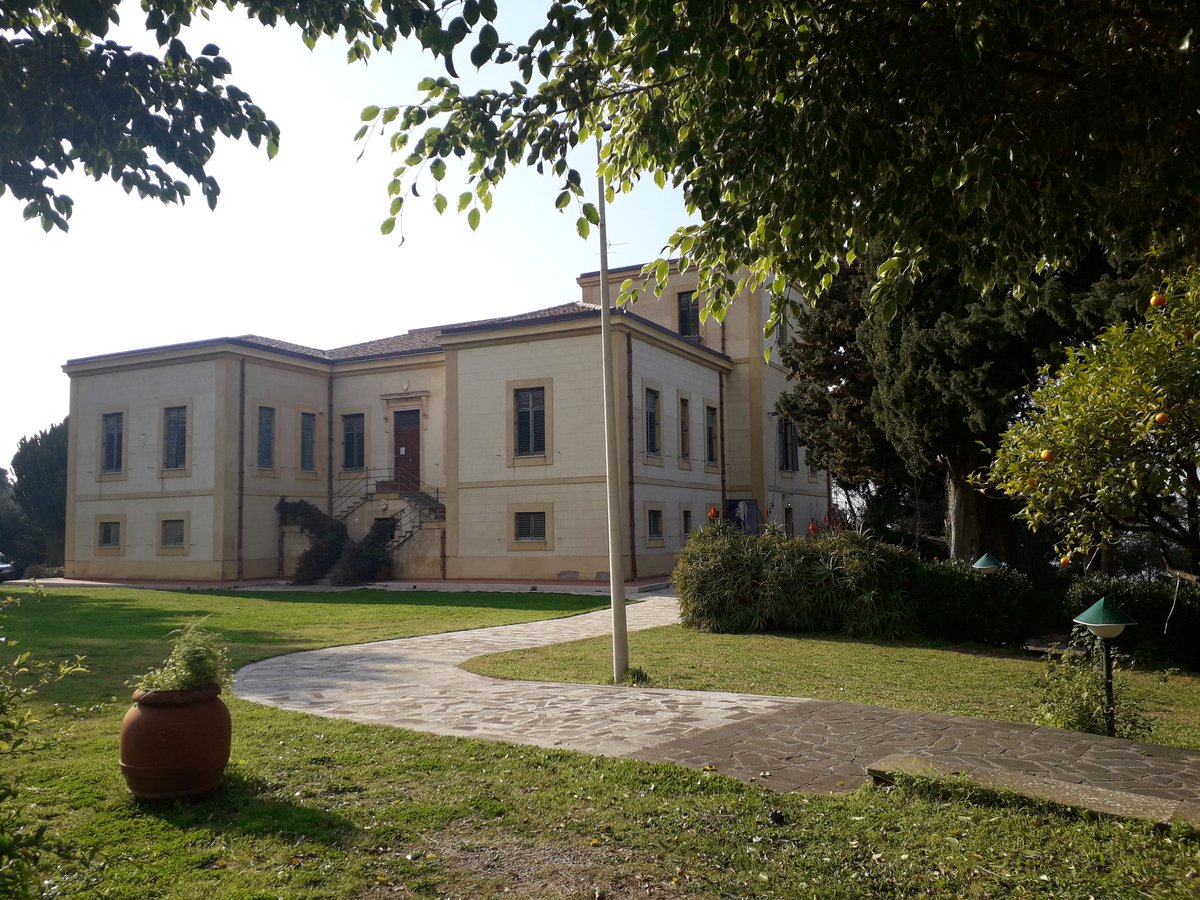
Villa Piccolo, on the hills of Capo d’Orlando, is a late 19th-century historic residence that was a refuge for the siblings Lucio, Casimiro, and Agata Giovanna Piccolo. Here their cousin Giuseppe Tomasi di Lampedusa spent summers and wrote some pages of The Leopard. Today it is a museum preserving furnishings, magic watercolors, a rich library, and a 20-hectare park.
4 things not to miss:
– Guest Room: where Tomasi di Lampedusa stayed
– Magic Watercolors by Casimiro Piccolo, with fantastic subjects
– Dog Cemetery: 35 graves for pets under the shade of a centenary pine
– Botanical Garden with rare species, such as the Puya berteroniana unique in Europe
Welcome to Villa Piccolo
If I say Villa Piccolo, it might not mean much to you. But if I tell you that here you can breathe the air of The Leopard, curiosity changes. This villa, a few km from Capo d’Orlando, is a hidden gem: a house-museum that seems frozen in time. Entering, you’ll feel like crossing the threshold of another era. Among fairy-tale watercolors, a park that seems straight out of a dream, and a dog cemetery – yes, you read that right – the place has a unique charm. It’s the refuge of the Piccolo brothers, a family of artists and dreamers who made this dwelling a magical place. Get ready to discover a piece of Sicily that you won’t find in traditional travel guides.
Welcome to Villa Piccolo
If I say Villa Piccolo, it might not mean much to you. But if I tell you that here you can breathe the air of The Leopard, curiosity changes. This villa, a few km from Capo d’Orlando, is a hidden gem: a house-museum that seems frozen in time. Entering, you’ll feel like crossing the threshold of another era. Among fairy-tale watercolors, a park that seems straight out of a dream, and a dog cemetery – yes, you read that right – the place has a unique charm. It’s the refuge of the Piccolo brothers, a family of artists and dreamers who made this dwelling a magical place. Get ready to discover a piece of Sicily that you won’t find in traditional travel guides.
A brief history
The villa was built in the late 19th century, but its true story begins in the early 1920s, when Baroness Teresa Tasca Filangeri di Cutò moved here with her children Lucio, Casimiro, and Agata Giovanna, leaving behind Palermo’s high society. The three siblings, known as the
‘last leopards’, led a secluded life, cultivating art, poetry, and botany. Lucio became a renowned poet, Casimiro an occultist painter, and Agata a botanist. The villa often hosted their cousin Giuseppe Tomasi di Lampedusa, who wrote part of his masterpiece here. After their deaths, Casimiro established the Foundation in 1970 to preserve their legacy. Key milestones:
- 1920: The family settles at Villa Piccolo
- 1969: Lucio Piccolo dies
- 1970: Foundation established
- 1974: Agata Giovanna dies
- Today: House museum open to the public
A brief history
The villa was built in the late 19th century, but its true story begins in the early 1920s, when Baroness Teresa Tasca Filangeri di Cutò moved here with her children Lucio, Casimiro, and Agata Giovanna, leaving behind Palermo’s high society. The three siblings, known as the
‘last leopards’, led a secluded life, cultivating art, poetry, and botany. Lucio became a renowned poet, Casimiro an occultist painter, and Agata a botanist. The villa often hosted their cousin Giuseppe Tomasi di Lampedusa, who wrote part of his masterpiece here. After their deaths, Casimiro established the Foundation in 1970 to preserve their legacy. Key milestones:
- 1920: The family settles at Villa Piccolo
- 1969: Lucio Piccolo dies
- 1970: Foundation established
- 1974: Agata Giovanna dies
- Today: House museum open to the public
Between Magic Watercolors and Rooms of the Past
Upon entering the villa, time stands still. Every room tells a story. Casimiro’s room is filled with photographs, palettes, and his famous ‘Magic Watercolors’: gnomes, fairies, and elemental spirits born from his passion for the occult. Agata Giovanna’s room preserves her embroidery and botanical studies, with a copy of the book on the Puya berteroniana, a rare Andean plant that grows in the park. The dining room is always set for mother Teresa. But the highlight is the guest room, where Giuseppe Tomasi di Lampedusa slept: it is said that he wrote some pages of The Leopard right here. After his death, it was Lucio who sent the typescript to Mondadori. An atmosphere that makes you feel part of history.
Between Magic Watercolors and Rooms of the Past
Upon entering the villa, time stands still. Every room tells a story. Casimiro’s room is filled with photographs, palettes, and his famous ‘Magic Watercolors’: gnomes, fairies, and elemental spirits born from his passion for the occult. Agata Giovanna’s room preserves her embroidery and botanical studies, with a copy of the book on the Puya berteroniana, a rare Andean plant that grows in the park. The dining room is always set for mother Teresa. But the highlight is the guest room, where Giuseppe Tomasi di Lampedusa slept: it is said that he wrote some pages of The Leopard right here. After his death, it was Lucio who sent the typescript to Mondadori. An atmosphere that makes you feel part of history.
The Enchanted Park and the Dog Cemetery
The park of Villa Piccolo is a small Eden. Over more than 20 hectares, Agata Giovanna planted rare species like the Puya berteroniana, unique in Europe, and a wisteria pergola that leads you to the far end. But the most surprising thing is the dog cemetery: 35 graves dedicated to the family’s pets, complete with epitaphs. An idea taken from the English tradition, which here seems perfectly integrated. There’s also the ‘Lampedusa pine’, a large maritime pine under which Tomasi and Lucio loved to sit and talk. The garden is an explosion of Mediterranean scents, with lily ponds and citrus groves all around. Walking here is like walking in a painting.
The Enchanted Park and the Dog Cemetery
The park of Villa Piccolo is a small Eden. Over more than 20 hectares, Agata Giovanna planted rare species like the Puya berteroniana, unique in Europe, and a wisteria pergola that leads you to the far end. But the most surprising thing is the dog cemetery: 35 graves dedicated to the family’s pets, complete with epitaphs. An idea taken from the English tradition, which here seems perfectly integrated. There’s also the ‘Lampedusa pine’, a large maritime pine under which Tomasi and Lucio loved to sit and talk. The garden is an explosion of Mediterranean scents, with lily ponds and citrus groves all around. Walking here is like walking in a painting.
Three Good Reasons Not to Miss It
First: the connection to The Leopard. If you love the novel, walking through the rooms where Tomasi wrote is a unique emotion. Second: Casimiro’s artistic and occult soul. His watercolors are visionary works of art that you won’t find elsewhere. Third: the park and the dog cemetery. A funny and moving experience that reveals the most intimate side of the family. Plus, the villa is off the mass tourist circuits: you can visit in peace, with the opportunity to ask questions to the Foundation volunteers. In short, it’s a dive into the most authentic soul of Sicily.
Three Good Reasons Not to Miss It
First: the connection to The Leopard. If you love the novel, walking through the rooms where Tomasi wrote is a unique emotion. Second: Casimiro’s artistic and occult soul. His watercolors are visionary works of art that you won’t find elsewhere. Third: the park and the dog cemetery. A funny and moving experience that reveals the most intimate side of the family. Plus, the villa is off the mass tourist circuits: you can visit in peace, with the opportunity to ask questions to the Foundation volunteers. In short, it’s a dive into the most authentic soul of Sicily.
The Best Time to Visit
If you want to enjoy the park in all its splendor, I recommend spring, when the citrus trees are in bloom and wisteria perfumes the air. Autumn is also lovely, with the warm colors of the leaves. But the villa has its charm in every season. The best time of day? Early morning or late afternoon, when light filters through the trees and casts playful shadows on the watercolors. Avoid weekends if you can – it’s closed on Sundays – and check the opening hours on the website. One piece of advice: take your time, don’t rush. Every corner is worth savoring.
The Best Time to Visit
If you want to enjoy the park in all its splendor, I recommend spring, when the citrus trees are in bloom and wisteria perfumes the air. Autumn is also lovely, with the warm colors of the leaves. But the villa has its charm in every season. The best time of day? Early morning or late afternoon, when light filters through the trees and casts playful shadows on the watercolors. Avoid weekends if you can – it’s closed on Sundays – and check the opening hours on the website. One piece of advice: take your time, don’t rush. Every corner is worth savoring.
What to See After Your Visit
After soaking up the magic of Villa Piccolo, hop over to Capo d’Orlando: the seafront is lively and the historic center preserves noble palaces and the Mother Church. If you fancy some sea, the beaches are just minutes away. Another must-see is the Santuario di Tindari, with its Black Madonna statue and a breathtaking sea view. Or, for nature lovers, the Nebrodi Park offers trails and unspoiled forests. But don’t worry: Villa Piccolo will stay in your heart and make you want to return.
What to See After Your Visit
After soaking up the magic of Villa Piccolo, hop over to Capo d’Orlando: the seafront is lively and the historic center preserves noble palaces and the Mother Church. If you fancy some sea, the beaches are just minutes away. Another must-see is the Santuario di Tindari, with its Black Madonna statue and a breathtaking sea view. Or, for nature lovers, the Nebrodi Park offers trails and unspoiled forests. But don’t worry: Villa Piccolo will stay in your heart and make you want to return.