Introduction
As soon as you cross the entrance of the Rocca Roveresca di Mondavio, time truly seems to stand still. It’s not just a museum, but a genuine plunge into the Middle Ages, with an immediacy that grabs you in the gut. The structure, massive and perfectly preserved, dominates the village from above and already from the outside promises an extraordinary experience. Inside, you don’t just find dusty display cases: here the armor seems ready to be worn, the weapons have a real weight, and the reconstructions of the environments – from the kitchen to the armory – make you feel like a guest in a fifteenth-century castle. The effect is powerful, especially if you visit with children: their eyes light up in front of the helmets and swords. It’s a place that speaks more than many pages of history.
Historical Background
The fortress housing the museum is not just any container, but an integral part of history. It was commissioned by Giovanni della Rovere, Lord of Senigallia and son-in-law of the Duke of Urbino, in the late 15th century. The architect? The great
Francesco di Giorgio Martini, the same genius who worked for the Duchy of Urbino. The fortress never saw fierce battles, which explains its excellent state of preservation. The reenactment museum was established later to enhance this gem and recount the military and daily life of the period. The timeline helps focus on key milestones:
- 1482-1492: Construction of the Rocca commissioned by Giovanni della Rovere.
- 1631: With the devolution of the Duchy of Urbino, the fortress passed to the Papal State, losing its military function.
- Subsequent centuries: Used as a prison and warehouse, risking deterioration.
- Second half of the 20th century: Restoration and establishment of the historical reenactment museum.
Weapons and Armor to Touch with Your Eyes
The section dedicated to weapons and armor is perhaps the most spectacular. These are not plastic reproductions, but faithful reconstructions based on historical models, crafted by specialized artisans. What stands out is the variety: not only the iconic full plate armor of the knight, but also helmets of every style, one- and two-handed swords, halberds, and even crossbows. Some pieces are displayed on mannequins in dynamic poses, giving a sense of movement and weight. For an enthusiast, observing the details of the iron mail work or the helmet closure mechanisms is a small treasure. For the less experienced, the atmosphere alone is enough: it feels like hearing the metallic clash of battles. A personal note: the horse armor is an unexpected rarity that leaves you in awe.
Reconstructed Environments: Experiencing the Castle
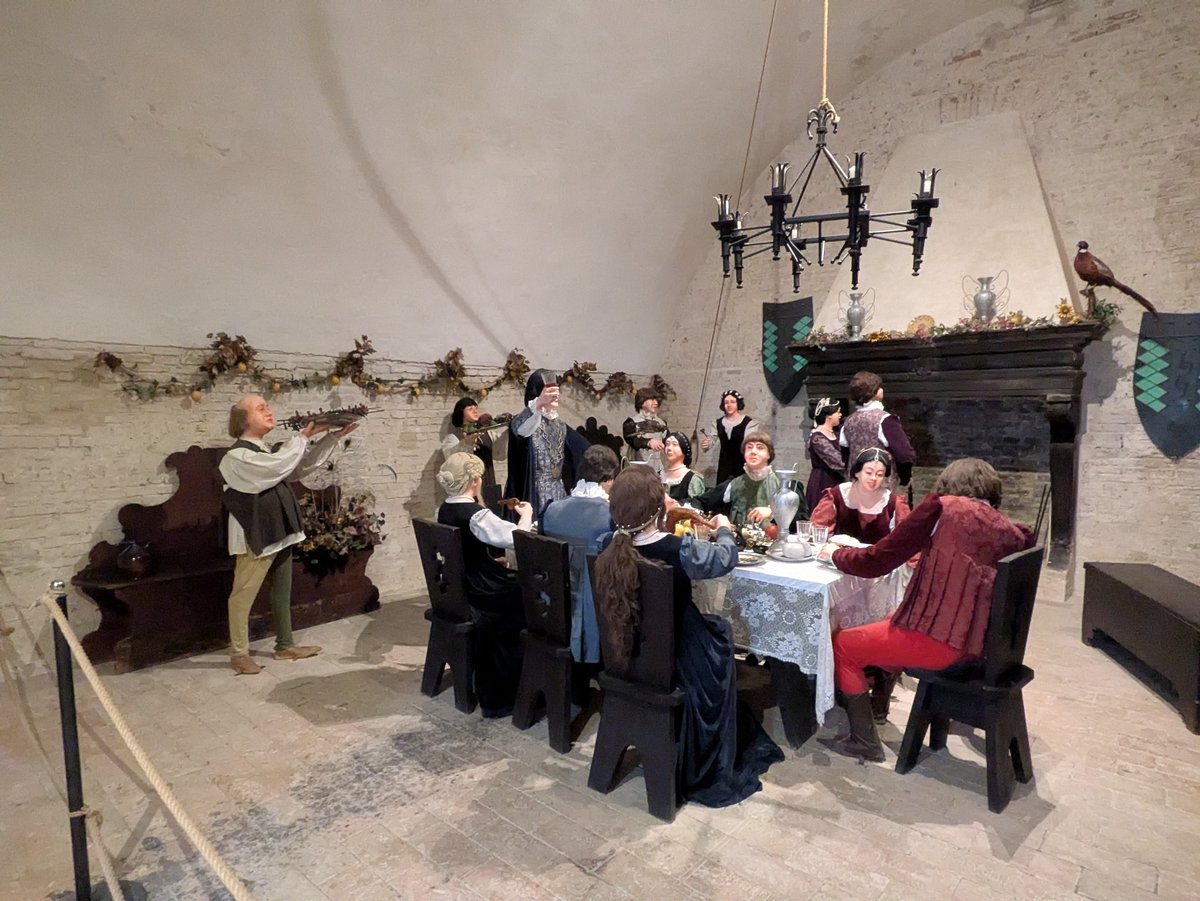
Beyond the weapons hall, the museum has meticulously recreated various living spaces. Entering the castle kitchen is a sensory experience: copper cauldrons, fireplace andirons, and wooden and terracotta utensils transport you directly to another era. You can imagine the warmth of the fire, the smells of food. Then there’s a room that likely reconstructs quarters for soldiers or servants, with cots, trunks, and personal items. The difference from other museums? Here the environments aren’t static; they seem recently abandoned. Only the people are missing. This attention to daily life, to ‘how people lived,’ balances the more martial aspects and makes the visit complete. It’s a detail you especially appreciate upon reflection later, because it adds human depth to history. Perhaps the weapons hall is more photogenic, but these corners are the ones that tell the most.
Why Visit It
For at least three concrete reasons. First: it’s an extremely hands-on museum for the imagination. There are no sophisticated digital interactives, but the power of material reconstructions stimulates the imagination of adults and children more than any screen. Second: the location itself is a work of art. Visiting the museum means exploring the Rocca Roveresca, an architectural gem with walkways, courtyards, and a breathtaking view of the Marche hills. Third: it’s an antidote to boredom for those who think historical museums are dusty. Here, history is tangible, almost noisy. It’s perfect for breaking up an itinerary between villages and good food with an hour of total immersion in another time.
When to Go
My honest advice? An autumn afternoon or a spring morning. In autumn, the slanting light filtering through the fortress windows creates spectacular shadow plays on the armor, and the atmosphere becomes more intimate and evocative. In spring, you can combine the visit with a stroll through Mondavio’s streets, which are lively and blooming in that season. In summer, it stays cool inside the fortress thanks to the thick walls, but the village can be very crowded. In winter, the atmosphere is more cozy and mysterious, perfect if you love silence. So, just avoid the hottest hours of August if you can’t stand crowds, but otherwise, every moment has its charm.
In the Surroundings
The museum visit pairs perfectly with exploring the medieval village of Mondavio itself, perched and surrounded by intact walls. Strolling through its cobblestone alleys is like completing the museum experience outdoors. For another thematically linked experience, just a few kilometers away is Corinaldo, another stunning fortified village, famous for its walls and the reenactment of the ‘Contesa del Pozzo della Polenta’. Both places give you a concrete idea of what life must have been like in these lands between the Middle Ages and the Renaissance.