Introduction
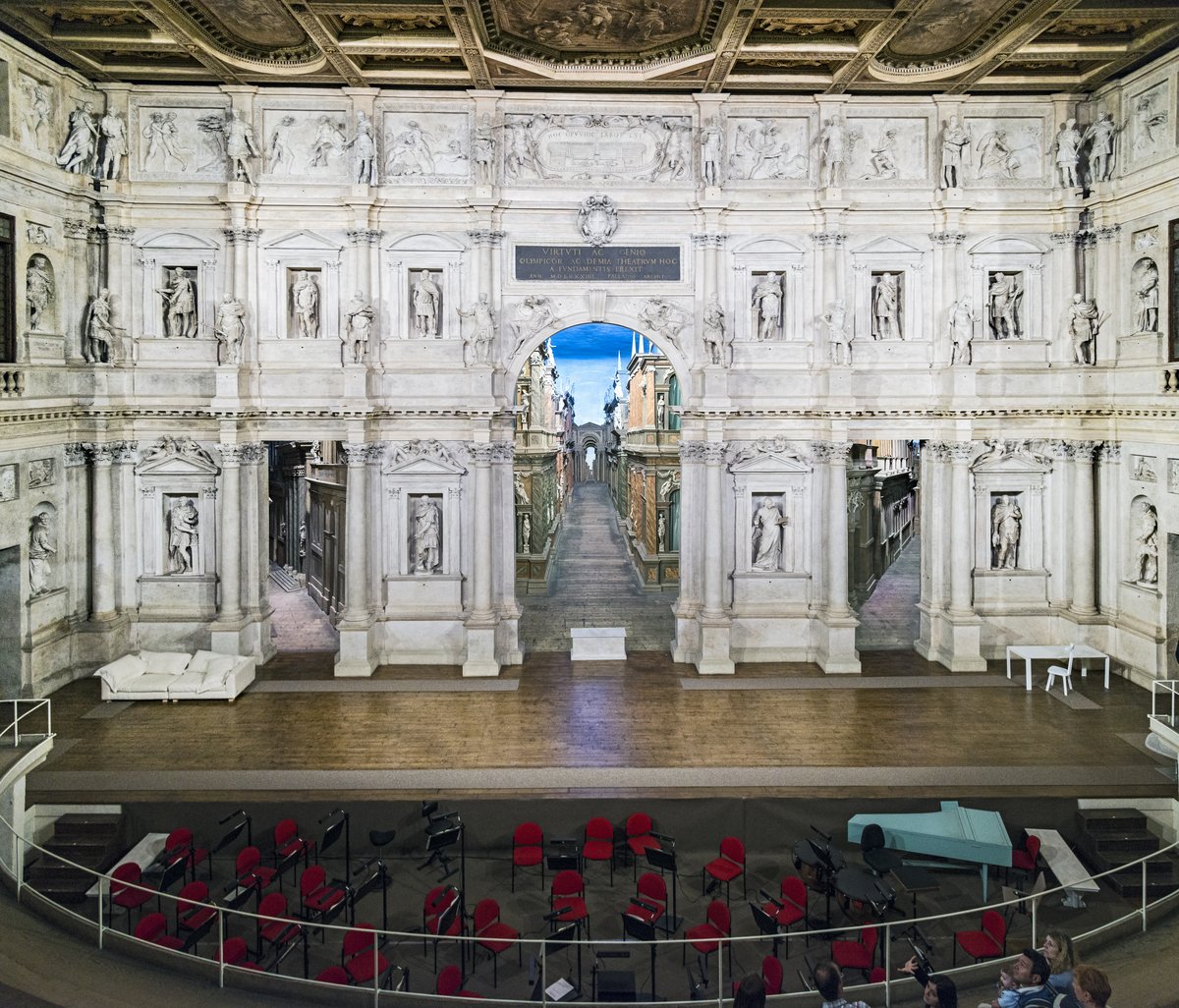
When you step into the Olympic Theatre of Vicenza, time seems to stand still. This Renaissance jewel in the heart of the historic center welcomes you with its unique atmosphere: the world’s first covered theatre, designed by Andrea Palladio in 1580. The feeling is like crossing a magical doorway that transports you directly to the 16th century. The semicircular cavea, the statues of the Olympic academicians, and the famous fixed stage with the streets of Thebes create a visual harmony that takes your breath away. It’s not just a monument, but an experience that combines art, history, and emotion all at once.
Historical Overview
The Olympic Theatre emerged from Andrea Palladio’s vision, commissioned by the Olympic Academy to create a permanent venue for classical performances. Palladio passed away just months after construction began, but his son Silla and Vincenzo Scamozzi completed the project, with Scamozzi adding the famous fixed stage with architectural perspectives. The theatre opened in 1585 with Sophocles’ Oedipus Rex. Today it forms part of the
UNESCO World Heritage Site along with the rest of Vicenza’s Palladian centre.
- 1580: Palladio begins the project
- 1585: Inauguration with Oedipus Rex
- 1994: Inclusion in UNESCO World Heritage Site
- Today: Theatre still used for performances
The Perspective Illusion
The magic of the Olympic Theatre lies in the brilliant perspective of its fixed stage. The seven streets of Thebes, crafted from wood and stucco, create an optical effect that makes the roads appear much longer than they actually are. This visual deception, meticulously studied by Scamozzi, is so perfect that even today visitors struggle to believe the streets are only a few meters deep. The architectural details – columns, statues, and faux windows – are so realistic they seem three-dimensional. It’s one of the few remaining intact Renaissance fixed stages in the world, a masterpiece of theatrical engineering that anticipated modern techniques by centuries.
Perfect Acoustics
Palladio studied the theatre’s acoustics drawing inspiration from classical Roman models. The result is sonic harmony that allows every word spoken from the stage to be heard clearly even from the highest tier, without the need for microphones. This acoustic perfection is due to the elliptical shape of the cavea and the materials used: wood for the seating and stucco for the decorations, which absorb and reflect sound in perfect balance. Even today, during performances, one can appreciate how a simple conversation on stage resonates clearly in every corner. It’s a characteristic that makes the theatre not only beautiful to behold but also extraordinary to listen to.
Why Visit It
Three practical reasons not to miss it: first, it’s the only intact Renaissance theater in the world, an unrepeatable experience for art and architecture enthusiasts. Second, its location in Vicenza’s historic center makes it easy to combine with other Palladian monuments. Third, despite its antiquity, it’s still a living theater: attending a performance here means experiencing the magic of shows as in the sixteenth century, with the same acoustics and atmosphere that enchanted the first audiences.
When to Go
The best time to visit the Olympic Theatre is in the early morning hours, when natural light filters through the openings and illuminates the fixed stage, creating spectacular shadow plays. Avoid crowded weekends if you want to enjoy it at a leisurely pace. For an even more evocative experience, try to time your visit with one of the evening performances: seeing the theatre lit by candles as in ancient times is an unforgettable emotion.
In the Surroundings
Complete your Palladian experience with two iconic nearby locations: the Basilica Palladiana in Piazza dei Signori, a masterpiece of Renaissance restoration with its white loggia, and Villa La Rotonda, just outside the city center, a perfect example of Palladian residential architecture with its circular layout. Both are easily reachable on foot from the theater and offer a comprehensive insight into Palladio’s genius in Vicenza.